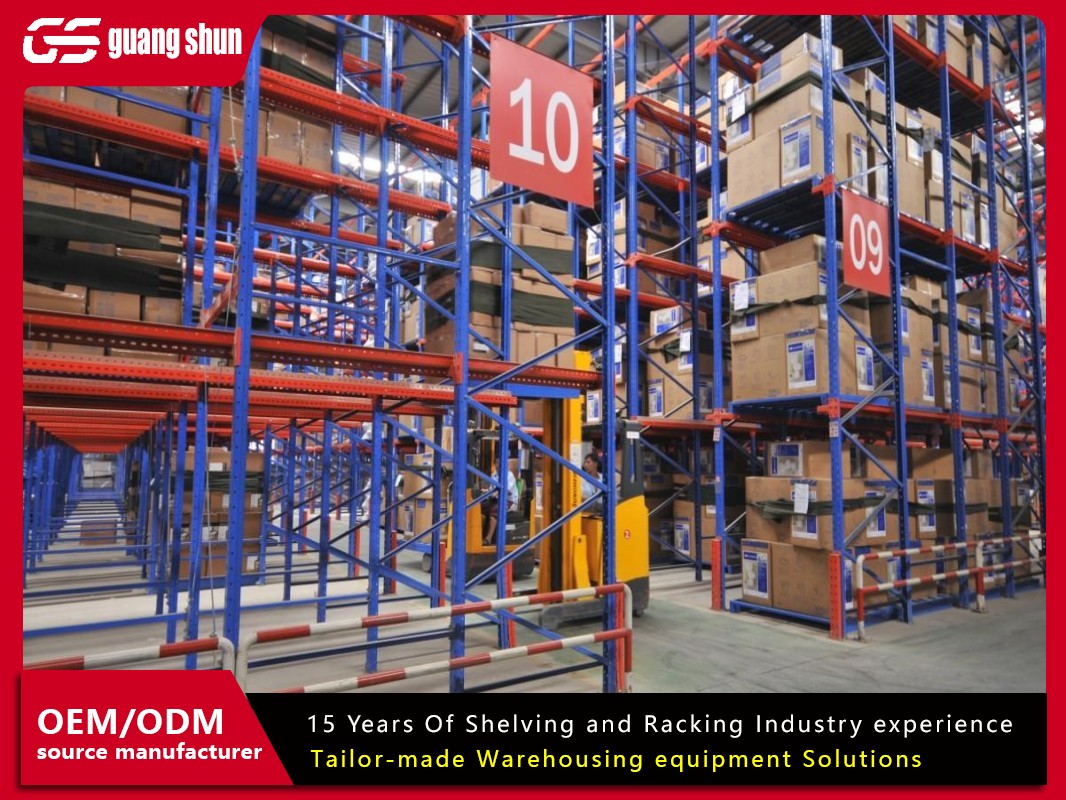
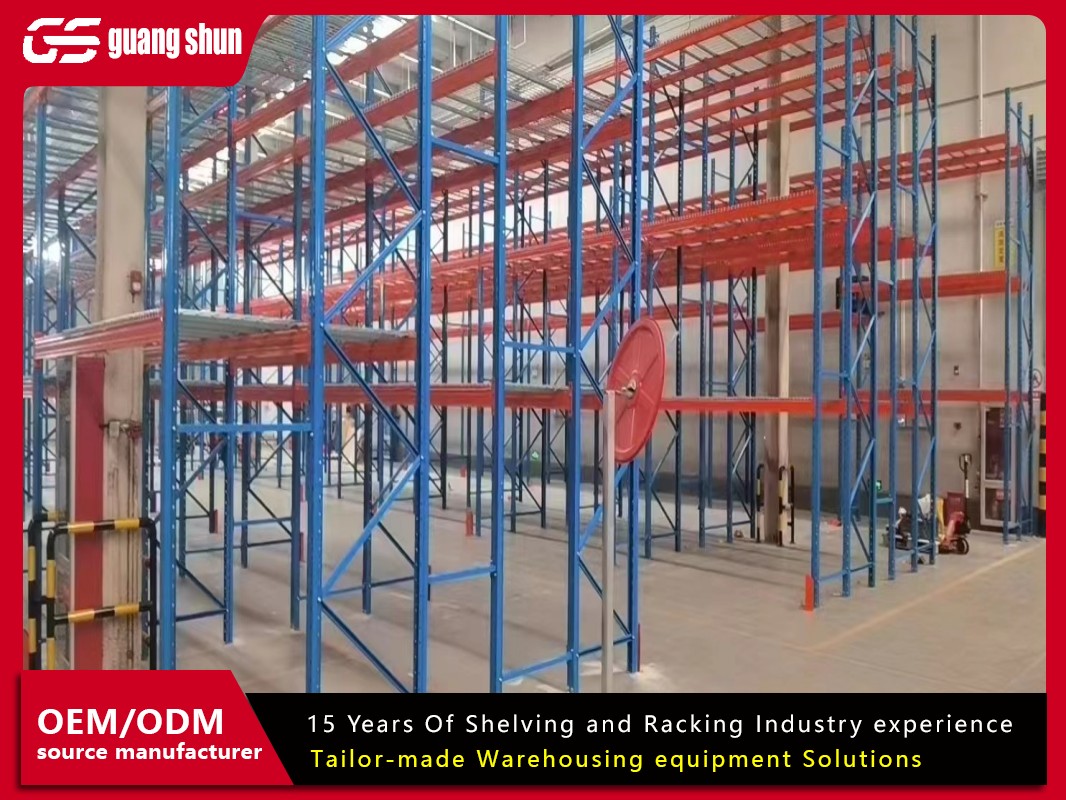
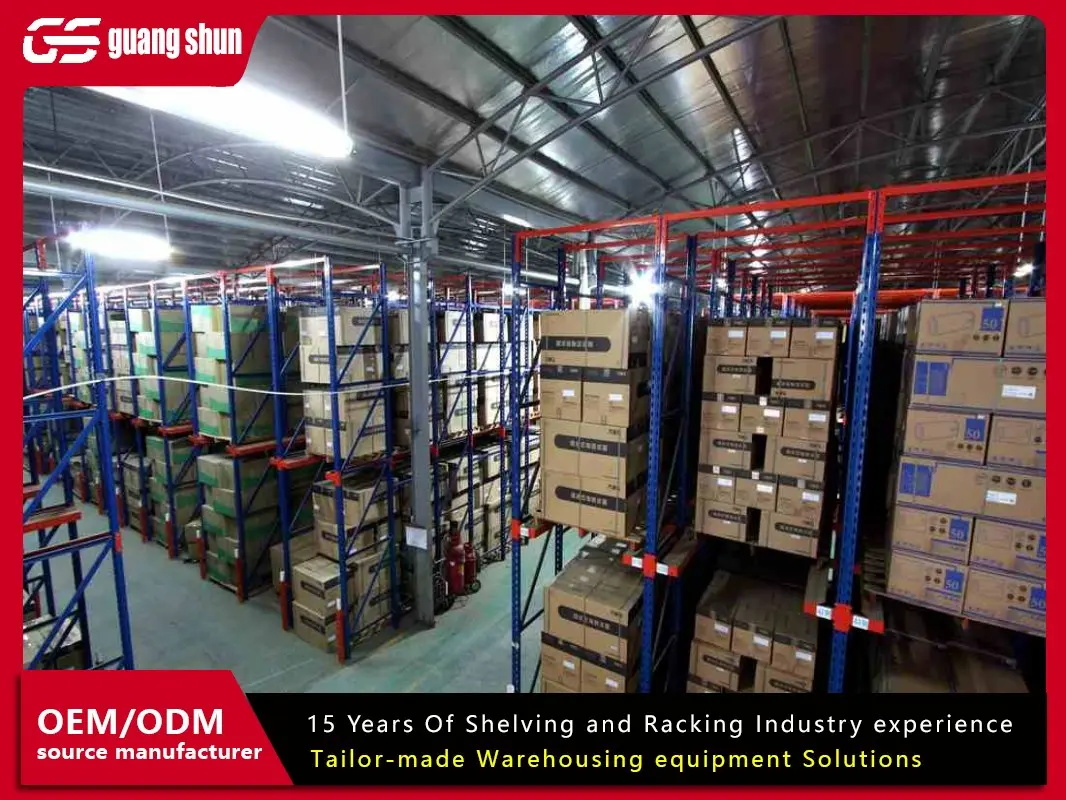
FIFO pallet racking remains the backbone of high-turnover distribution centers, yet many operators underutilize its potential. This article examines the engineering principles, operational economics, and application-specific configurations that separate efficient FIFO systems from costly bottlenecks. Drawing on field data and structural analysis, we provide a framework for evaluating, specifying, and maintaining first-in-first-out storage solutions in demanding industrial environments.
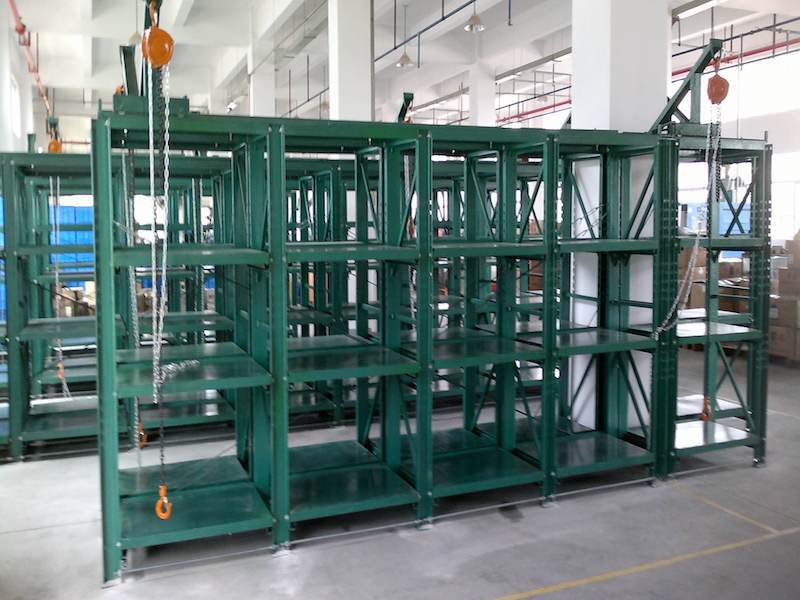
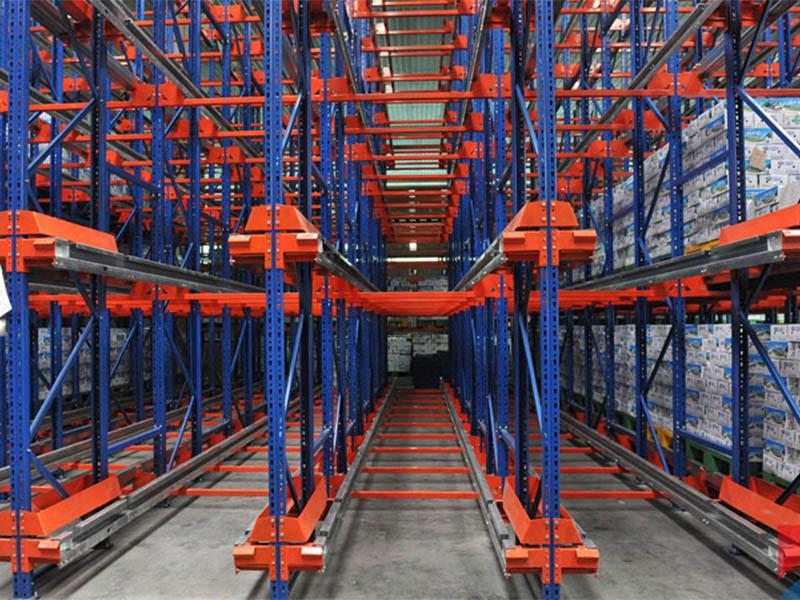
At its core, FIFO pallet racking relies on gravity or powered conveyors to move pallets from the loading (rear) end to the picking (front) end. This design enforces chronological rotation without requiring fork trucks to enter the storage lane. The typical system comprises:
Load capacity per lane ranges from 500 kg to 2,500 kg per pallet position, with system depths commonly spanning 6 to 12 pallet positions. Dynamic load calculations must account for the cumulative rolling friction of all pallets in the lane – a factor often underestimated in initial designs.
Compared to drive-in racking or selective pallet racking, the upfront cost per pallet position for FIFO pallet racking is roughly 30–45% higher. However, total cost of ownership (TCO) analyses consistently favor FIFO in three scenarios:
A 2023 study of 140 warehouses showed that facilities using flow racking achieved 98.6% inventory accuracy versus 94.2% for static systems, directly attributable to the enforced FIFO discipline.
Not every pallet performs equally on roller tracks. Plastic pallets with solid bottoms create higher rolling resistance than wood deckboards. For mixed fleets, we recommend:
Carton dust, wood splinters, and plastic shavings accumulate in roller bearings, increasing friction by up to 40% over 6 months. Guangshun addresses this with sealed-bearing roller carts and removable track covers for scheduled cleaning. Regular maintenance (quarterly) restores flow consistency and prevents lane jams.
In seismic zones, the longitudinal movement of pallets during an earthquake can induce pendulum forces. Proper bracing – including diagonal cross-ties at every third bay – and shock-absorbing end buffers are mandatory. Guangshun offers seismic-compliant systems certified to ASCE 7-22 standards.
Low temperatures increase roller grease viscosity and shrink pallet dimensions. Specialized FIFO pallet racking for cold storage uses:
For facilities handling >500 pallets per hour, motorized roller conveyors with variable frequency drives (VFD) replace gravity. These systems integrate with WMS to pre-stage pallets based on outbound schedules, effectively combining FIFO with sortation.
Ultra-deep lanes (up to 20 positions) require push-back cartridges that decouple the first pallet from the lane's full weight. This innovation reduces starting torque by 60%, allowing gravity flow even at shallow angles (2°).
Through 17 site audits conducted in 2024, we identified three repeated failures:
Guangshun provides site-survey checklists covering these parameters, and their engineering team performs finite-element analysis (FEA) for every custom project.
To justify capital expenditure, we use a five-factor ROI model:
Typical payback periods range from 18 to 30 months for high-velocity SKUs. One automotive parts distributor achieved a 27% increase in order fulfillment rate within 60 days of installing a 4,000-position system.
Modern FIFO pallet racking is no longer a standalone structure. Integration with AGV/AMR systems requires lane-end photoelectric sensors and barcode/RFID read points. The control logic must manage:
Protocols like OPC UA and MQTT are increasingly standard, enabling predictive maintenance alerts when roller resistance exceeds preset thresholds.
Environmental considerations now influence rack design. Guangshun offers powder-coated steel with 30% recycled content, and all roller bearings are manufactured with low-friction ceramics that reduce energy loss. The passive nature of gravity flow aligns with green warehouse certifications (LEED, BREEAM), contributing to energy credits.
A life-cycle assessment (LCA) comparing FIFO racking to automated shuttle systems shows that gravity FIFO emits 62% less CO₂ equivalent per pallet move over 10 years, primarily due to zero electrical consumption during storage and retrieval.
To preserve system performance, we recommend a tiered maintenance plan:
Documentation of these actions supports warranty claims and ensures compliance with OSHA and EN 15635 standards.
Embedded IoT sensors now enable predictive flow analytics. By monitoring roller rotation speed and vibration patterns, algorithms can forecast bearing failures 200 operating hours in advance. Some pilot installations use piezoelectric rollers that harvest small amounts of energy from pallet movement to power local sensors, eliminating battery replacements.
For high-mix warehouses, dynamic lane assignment software recalculates optimal lane depths based on real-time SKU velocity, effectively making FIFO pallet racking adaptive rather than static.
Q1: What is the maximum lane depth recommended for gravity FIFO pallet racking?
A1: For standard 1,000–1,200 kg pallets, the practical limit is 12 positions with gravity-only flow. Beyond that, cumulative rolling resistance and starting friction cause erratic movement. For depths up to 20 positions, we recommend incorporating powered roller assists or cartridge-based decoupling systems. FIFO pallet racking solutions with these features are available through specialized engineering firms.
Q2: How does FIFO racking handle non-standard pallet sizes (e.g., 800x1200 mm Euro-pallets)?
A2: Adjustable roller guides and side rails are essential. The lane width should be set to the maximum pallet dimension plus 40 mm clearance. For mixed pallet populations, we recommend using wider roller tracks (1,400 mm) with removable guide inserts. Always conduct a test run with your actual pallet fleet before finalizing the design.
Q3: Can FIFO racking be retrofitted into an existing selective racking layout?
A3: Yes, but it requires a structural assessment of floor anchors and overhead clearance. The flow rails are typically installed on top of existing beam levels, but the incline demands a minimum height difference of 300 mm per lane. Many facilities convert one or two bays initially as a pilot, then scale based on results.
Q4: What is the typical lifespan of the rollers and bearings under heavy use?
A4: With proper lubrication, roller bearings last 8–10 years in ambient conditions (20–30°C). In cold storage, that drops to 5–7 years. Regular cleaning of debris extends life by 40%. Replace rollers in batches (entire lane) to maintain consistent flow resistance.
Q5: How does FIFO racking compare to push-back racking for inventory rotation?
A5: Push-back is LIFO (last-in-first-out) by design – the last pallet loaded is the first available at the picking face. FIFO racking strictly enforces chronological order, which is mandatory for products with expiry dates. However, push-back offers higher density (up to 4–6 deep) and lower cost per position. The choice depends on your inventory turnover strategy and SKU shelf-life.
Q6: What certifications should I look for when purchasing a FIFO racking system?
A6: Ensure the supplier complies with FEM 10.2.02 (European) or RMI ANSI MH16.1 (US) standards. Also request load test certificates and material traceability for all steel components. For seismic zones, ICC-ES ESR reports are valuable. Guangshun provides full documentation packages for all their engineered systems.
Q7: Is it feasible to use FIFO racking for pallets with broken or uneven bottom decks?
A7: Not recommended. Uneven decks increase rolling resistance unpredictably and can cause jams or derailment. Implement a pallet inspection program – reject pallets with missing boards, protruding nails, or sagging corners. Alternatively, use roller tracks with wider support bars (e.g., 4 rollers per pallet instead of 3) to accommodate slight deformities.

 Wechat
Whatsapp
Wechat
Whatsapp