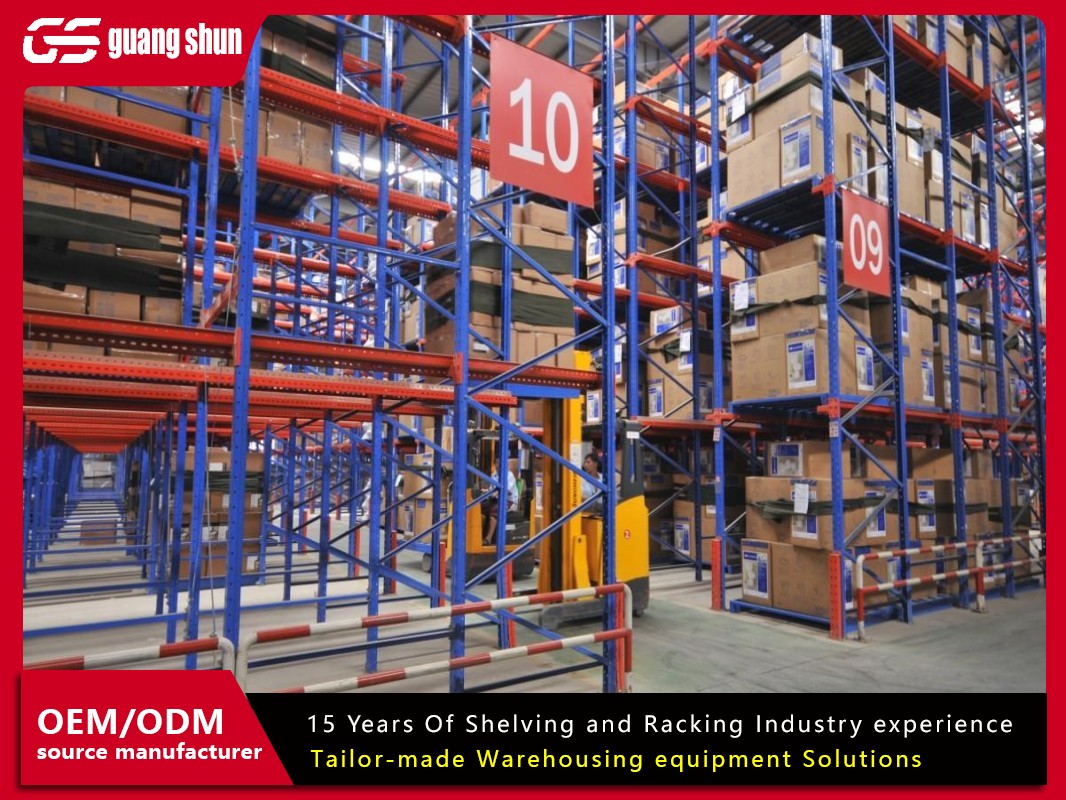
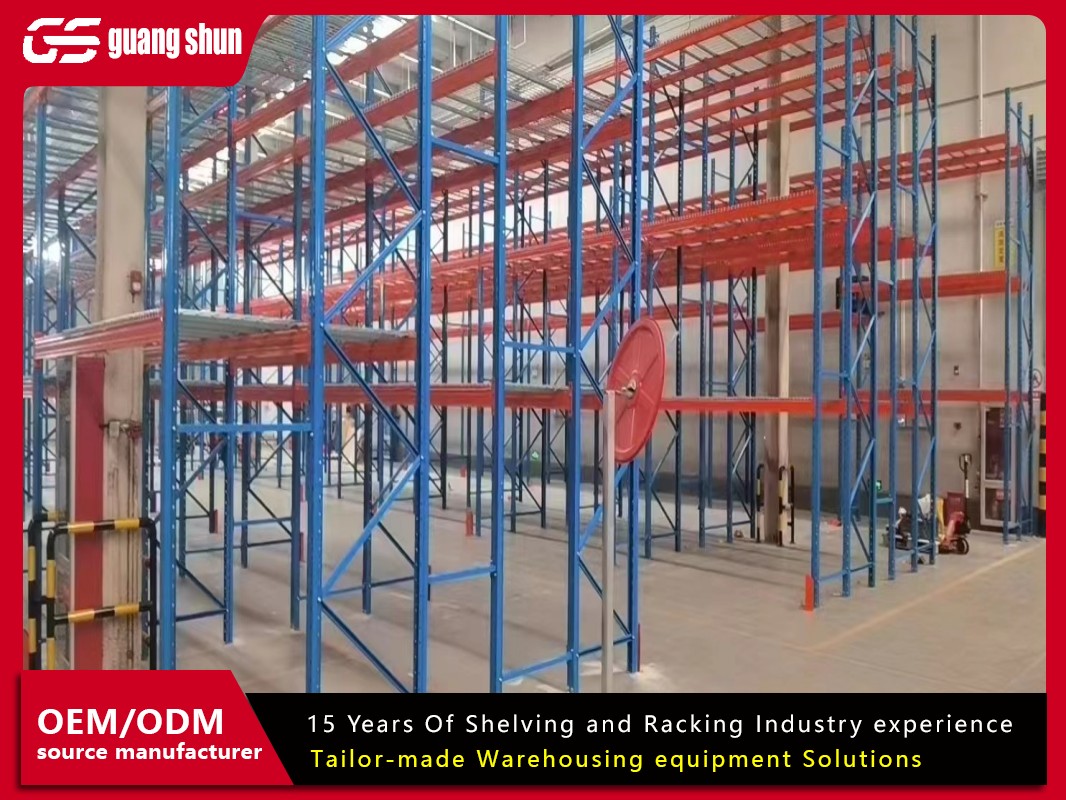
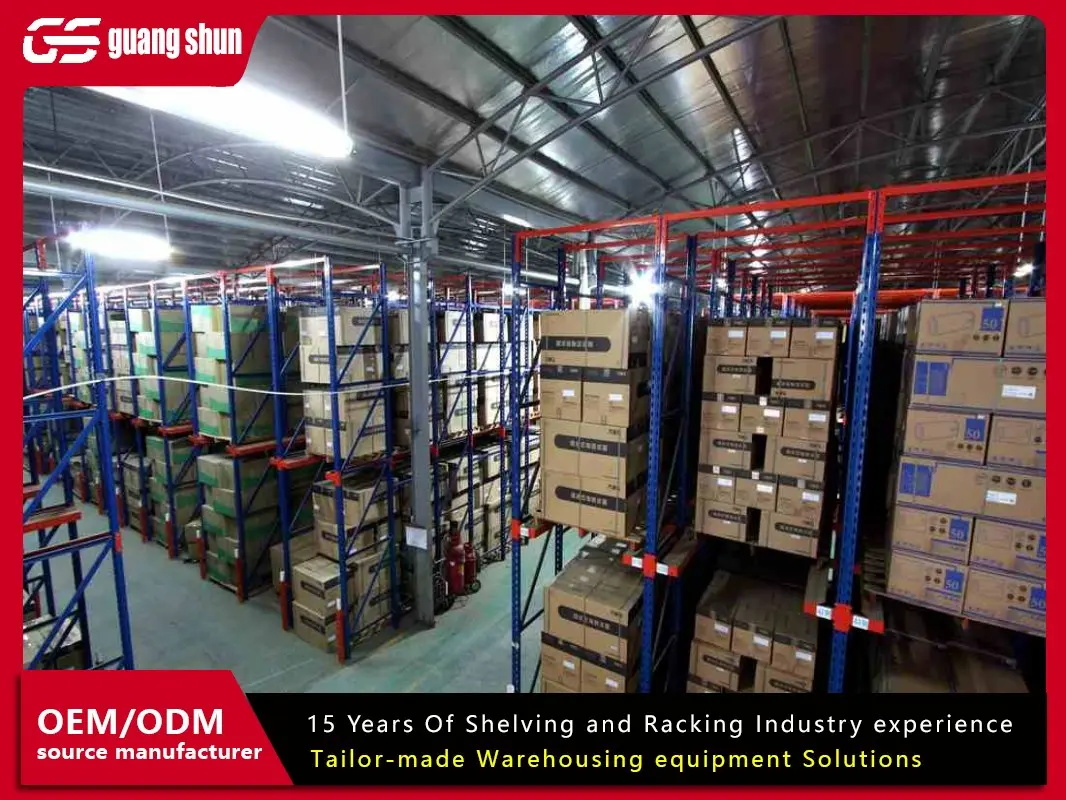
In modern industrial logistics, managing inventory with precise rotation is a primary challenge for distribution centers handling perishable goods, high-volume consumer products, and raw manufacturing components. Standard static storage configurations often lead to honeycombing, excessive travel times, and inefficient inventory rotation. Implementing a high-density fifo flow rack system addresses these inefficiencies by utilizing gravity to facilitate automatic inventory rotation and maximize floor space utilization.
This technical analysis examines the engineering principles, mechanical components, and design parameters necessary to plan, implement, and maintain a highly functional dynamic gravity-fed storage structure.
A gravity flow system operates on basic physical principles: potential energy is converted into kinetic energy as a pallet or carton moves down an inclined plane. Unlike static systems, dynamic racking requires a precise balance between gravity, static friction, and rolling resistance.
The movement of loads within the lane depends heavily on the coefficient of friction between the pallet bottom and the rollers. The initial breakout force required to move a stationary pallet is significantly higher than the force needed to maintain rolling velocity. Engineers must calculate these forces to ensure that pallets start flowing reliably from a dead stop without accelerating to unsafe speeds.
To construct a reliable dynamic storage channel, several specialized mechanical sub-systems must work in unison. Understanding these components is necessary for system design:
Roller Tracks and Wheel Rails: These form the bed of the lane. Depending on the load profile, systems utilize either full-width steel rollers or dual/triple polycarbonate skate wheel tracks. Steel rollers are typically used for heavy palletized loads, whereas skate wheels are integrated into carton flow configurations.
Centrifugal Speed Controllers: Also known as brake rollers, these devices govern the velocity of the descending pallet. Without speed regulation, heavy pallets would gather excessive momentum, risking structural damage or product spillage at the discharge face.
Entry Guides: Angled steel plates positioned at the loading gate to assist forklift operators in centering the pallet within the lane, reducing the risk of track misalignment.
End-Stops and Separators: Heavy-duty steel stops halt the lead pallet at the picking face. Separators isolate the second pallet in the queue, removing back pressure so the lead pallet can be extracted safely.
Designing a reliable dynamic storage lane requires careful calculation of the pitch, or slope angle. A slope that is too shallow results in hung-up pallets, while a slope that is too steep leads to excessive impact forces at the pick face.
For standard wood pallets weighing between 500 kg and 1,200 kg, the industry standard inclination is generally between 3% and 4% grade (approximately 1.7 to 2.3 degrees). However, adjusting the slope of the fifo flow rack channels requires evaluating the specific pallet quality, bottom board orientation, and the total travel distance.
Industrial manufacturers like Guangshun employ strict testing standards to evaluate how different pallet materials interact with roller bearings under simulated environmental loads, ensuring that the structural deflection does not exceed L/240 (where L is the span length between upright frames).
Temperature and humidity exert a direct influence on the performance of grease lubricants within roller bearings. In cold storage or deep-freeze environments (down to -30°C), standard bearing grease thickens, dramatically increasing rolling resistance. If this increase is not accounted for during the design phase, pallets may stall mid-lane.
For cold-temperature applications, engineers must specify low-viscosity synthetic lubricants and stainless-steel precision bearings. Conversely, high-humidity environments require anti-corrosive galvanized or powder-coated structural steel to prevent rust formation on the roller surfaces, which would otherwise degrade the smooth transit of storage units.
In deep-lane configurations containing five or more pallets, the cumulative gravity-induced force pushing down the lane is known as line pressure. The formula used to calculate this force is:
Line Pressure ≈ 0.06 × Total Weight of Following Pallets
If five pallets weighing 1,000 kg each are queued behind the lead pallet, the discharge face experiences approximately 300 kg of continuous forward pressure. This makes it difficult for a forklift to lift and remove the lead pallet without causing friction wear on the racking components or damage to the product. Integrating a mechanical pallet separator solves this issue by temporarily locking the second pallet in place while the lead pallet is being discharged.
The success of a gravity-fed dynamic storage system is highly dependent on the quality of the load carrier. Standard GMA (Grocery Manufacturers Association) pallets with intact bottom boards running parallel to the direction of flow are ideal.
Damaged wood pallets, protruding fasteners, cracked runners, or plastic pallets with hollow legs can stall the system or damage the rollers. When utilizing plastic pallets, the deflecting bottom surface can wrap slightly around the rollers, increasing static resistance. Testing pallet prototypes under full load conditions is a vital step before finalizing lane design.
Implementing dynamic storage systems is highly beneficial in sectors where product freshness, expiration tracking, or high-throughput sequencing is mandatory:
Food and Beverage Distribution: Managing perishable goods storage using a fifo flow rack configuration prevents stock obsolescence by ensuring that the oldest batches are always retrieved first.
Pharmaceutical Logistics: High-value medicines require strict batch control and first-expiry, first-out handling to comply with regulatory standards.
Automotive Parts Staging: Just-in-time (JIT) manufacturing plants utilize dynamic flow lanes to organize component kits in sequence for assembly lines, reducing staging footprints on the production floor.
By segregating replenishment activities on the charging side from picking activities on the discharging side, warehouse managers can reduce travel path conflicts, resulting in a safer and more efficient work environment.
Because dynamic lanes store significant potential energy, safety mechanisms are vital to protect personnel and structural components. Column protectors, row spacers, and heavy-duty floor-mounted guardrails should be installed at both the loading and picking zones.
Furthermore, structural engineers must design the racking frames to withstand the dynamic impact forces caused by forklift placement. Utilizing robust structural channel steel for the front uprights, rather than light-duty roll-formed steel, provides superior resistance against accidental impacts during pallet extraction.
While the initial capital expenditure for a dynamic gravity flow system is higher than that of standard selective racking, the long-term return on investment is driven by multiple operational factors:
| Operational Metric | Selective Racking | Dynamic Gravity Flow |
|---|---|---|
| Space Utilization | Low (requires multiple aisles) | High (up to 60% footprint reduction) |
| Travel Time Per Pick | High | Low (consolidated picking faces) |
| Inventory Rotation Accuracy | Manual tracking dependent | Automatic (physical FIFO enforcement) |
| Energy Consumption (Cold Storage) | High (larger volume to cool) | Low (compact storage volume) |
By reducing the number of required forklift aisles, facilities can convert unused aisle space into additional storage lanes or production zones. Additionally, expert engineering assistance from teams like Guangshun can mitigate commissioning errors, expediting the path to operational payback.
The long-term viability of a fifo flow rack installation depends on structured preventive maintenance. Over time, debris such as wood splinters from pallets, stretch wrap fragments, and dust can accumulate in the roller bearings, hindering smooth operation.
Maintenance teams should perform monthly visual inspections of the rollers, checking for free rotation and signs of bearing wear. Speed controllers must be inspected to ensure their internal braking mechanisms have not seized. Addressing localized bearing issues early prevents widespread lane failures and maintains a predictable flow rate across the warehouse system.
When designing high-density warehouse storage, integrating a fifo flow rack solution into your warehouse layout represents a practical approach to space optimization, labor reduction, and precise stock rotation. By evaluating structural loads, environmental conditions, pallet specifications, and safety measures, logistics managers can create a durable system that scales with operational demand. Selecting dynamic systems from trusted brands like Guangshun helps protect capital investment and ensures reliable performance for years to come.
Q1: What is the recommended maximum lane depth for a gravity-fed dynamic flow system?
A1: While lanes can technically be engineered to hold up to 20 or more pallets, the practical maximum depth for standard operations is typically between 10 and 12 pallets. Deeper lanes require more complex braking systems, heavier structural framing, and robust pallet separators to handle the accumulated line pressure safely.
Q2: Can plastic pallets be utilized in these systems without modifications?
A2: Plastic pallets can be used, but they present different physical characteristics than wood. Due to their tendency to flex under load, they require a higher roller density (more rollers per foot) or specialized triple-rail configurations to prevent the plastic from sagging between the rollers and stalling the lane.
Q3: How do speed controllers work to prevent pallet collision?
A3: Speed controllers use internal centrifugal brake systems. As a pallet passes over the controller roller, the rotation of the roller spins internal flyweights against a brake drum. This mechanism produces a braking force proportional to the speed of the passing pallet, preventing rapid acceleration without requiring external power.
Q4: What should be done if a pallet gets stuck or hung up in the middle of a lane?
A4: Operators should never enter a dynamic flow lane to manually free a stuck pallet due to the high risk of serious injury. Instead, a common industry technique is "back-loading," where a forklift operator gently pushes a second pallet into the lane from the loading side to assist in dislodging the stuck pallet, or specialized retrieval poles are used from a safe position outside the rack.
Q5: Can these dynamic systems be integrated with automated storage and retrieval systems (ASRS)?
A5: Yes. Gravity-fed flow lanes are frequently paired with automated crane systems or shuttle units. The automated equipment handles high-speed loading at the replenishment face, while manual or automated picking takes place at the discharge face, creating an efficient high-density automated buffer zone.

 Wechat
Whatsapp
Wechat
Whatsapp