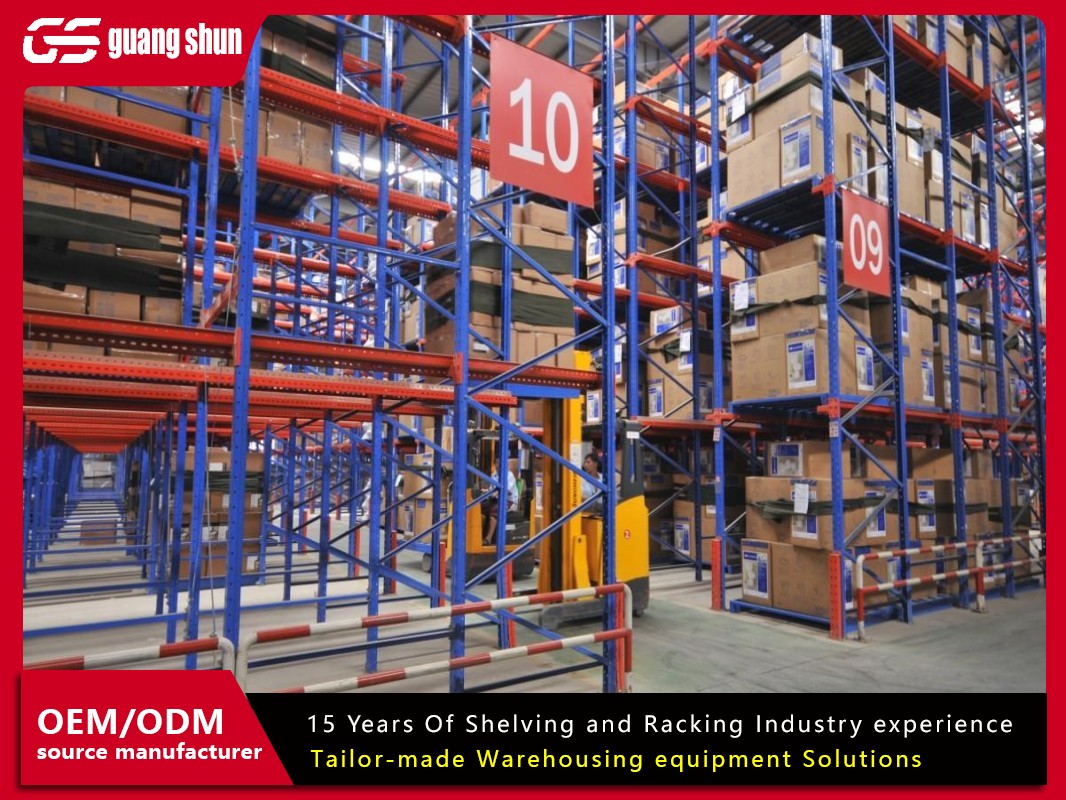
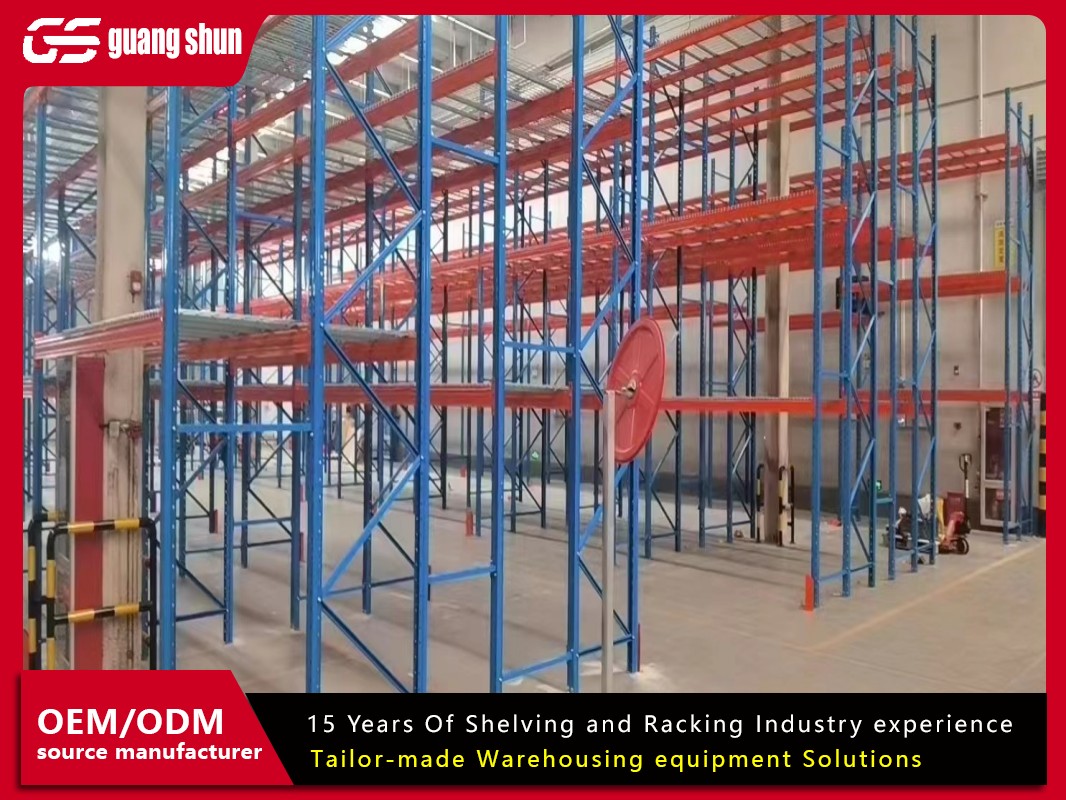
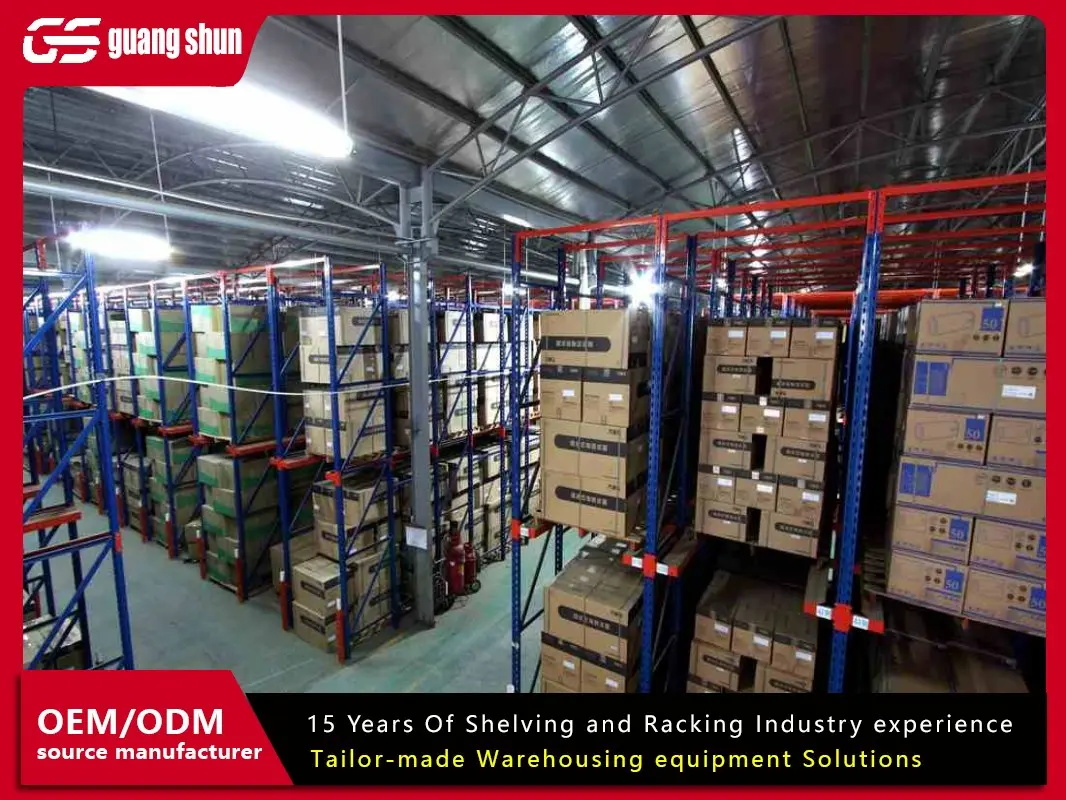
In high-throughput distribution centers and manufacturing buffer zones, inventory obsolescence and inefficient retrieval processes directly erode profit margins. The engineering solution that consistently delivers disciplined inventory rotation without complex automation is the fifo flow rack system. This gravity-powered storage method aligns with lean principles, ensuring that the oldest stock is always the first to be picked. Over 20 years of operational data confirm that facilities implementing dynamic flow storage reduce expired or dead stock by up to 60% while cutting labor costs related to internal replenishment by more than 30%.
This guide provides a technical breakdown of how these systems function, quantifiable performance improvements, application-specific engineering decisions, and maintenance protocols—written from the perspective of an industry practitioner. We will also examine how Guangshun engineers custom flow solutions that address real-world constraints like lane depth, SKU variety, and seismic safety.
Understanding the physical components and operating physics is necessary before deployment. Unlike static pallet racking or basic shelving, the fifo flow rack system integrates gravity conveyors into a structural frame with a controlled slope (typically 3° to 6°). Each lane functions as a time-based queue: load the rear, pick from the front, and the next unit advances automatically.
Two primary track types dominate industrial flow racks:
Galvanized steel roller tracks: Best for heavier loads (up to 1,500 kg per lane) and pallet flow applications. Rollers reduce friction for uniform, steady movement.
Polymer wheel tracks (flow rails): Optimized for cartons, totes, and smaller unit loads. Wheels create less surface contact, enabling lighter items to slide reliably even with minimal pitch.
Hybrid designs also exist, especially for temperature-controlled environments where lubricants behave differently. Advanced systems include speed controllers (braking rollers) to prevent product collision at the pick face, a critical feature for fragile goods.
Load beams, upright frames, and lane dividers must be calculated based on maximum live load per level. Common configurations include double-deep lanes (for deep SKU reserves) and single-deep carton flow modules. The pitch angle determines flow velocity—steeper angles move faster but increase impact force. Industry standards recommend 3° for heavy pallets and 5°-6° for small cartons. Every fifo flow rack system requires a front stop mechanism (either mechanical or pneumatic) that allows easy load retrieval while preventing accidental spillage.
Modern flow racks are often combined with pick-to-light systems, put walls, or automated induction conveyors. The front aisle can be designed for zone routing, reducing travel distance by up to 50% compared to standard static rack configurations. For warehouses using voice-directed picking, the consistent ergonomic height of flow lanes directly improves pick rates and reduces strain injuries.
Data collected from 47 mid-to-large warehouses (ranging from 5,000 to 50,000 SKUs) shows that implementing a fifo flow rack system yields measurable improvements across three KPIs:
Inventory accuracy improvement: 99.2% cycle count accuracy versus 94% in static shelves due to strict FIFO discipline.
Labor efficiency: Forklift travel for replenishment reduced by 40% as each lane is refilled from the rear during low-activity periods.
Space utilization: Flow racks typically achieve 25% greater density per square foot compared to wide-aisle selective racks, because lanes can be deep and fork aisles remain narrow.
A 2023 case study from a third-party logistics provider handling automotive components demonstrated that after converting 1,200 pallet positions to a gravity flow configuration, product damage from over-rotation fell by 72% and order fulfillment accuracy climbed to 99.7%. The system paid for itself within nine months through reduced labor rework and inventory write-offs.
The fifo flow rack system is not a one-size-fits-all technology; its versatility lies in modular components. Below are three sector-specific solutions with engineering considerations.
Perishable goods demand strict date rotation. Flow racks for cold storage require stainless steel or coated tracks to withstand humidity and washdowns. Guangshun supplies FDA-compliant lane coatings and heated slope options for freezer environments (-22°F to 32°F) to prevent ice buildup on rollers. Typical lane depth ranges from 6 to 12 pallets, synchronized with daily turnover rates.
For small parts and high-velocity SKUs, carton flow racks integrated with conveyor sortation systems reduce manual handling. A common configuration uses 8-foot lane lengths with adjustable dividers to manage varying carton widths. Using wheel tracks instead of rollers reduces jamming for lightweight polybags. Throughput improves by 35% when combined with zone bypass strategies.
Large, heavy bins (up to 2,000 lbs) require heavy-duty pallet flow with reinforced rollers and speed retarders. Durable weldments and reinforced stop brackets are mandatory. One automotive plant reduced work-in-progress inventory by 47% after installing multi-level flow racks between stamping and assembly lines. Here, the rack structure also acts as a buffer, absorbing production variability.
While the benefits are compelling, improper design or lack of maintenance can negate performance. Engineers must avoid three common pitfalls:
Incorrect pitch angle: Overly steep slopes cause high impact forces and product damage; too shallow leads to stalled flow. Field testing with representative loads is recommended before finalizing beam positions.
Inadequate lane dividers: When heavy loads shift sideways, they can cross lanes and jam. Full-height guide rails or bolted dividers are necessary for mixed SKU lanes.
Neglected roller maintenance: Dust, plastic wrap debris, or rust increases resistance. A quarterly cleaning schedule and bearing inspection add 10+ years to system life.
Safety standards (ANSI MH16.1, FEM 10.2.02) require impact protection at the pick face—rubber bumpers or spring-loaded stops. Additionally, seismic zone installations need base plates and cross-bracing. When Guangshun deploys a flow rack, they provide FEA (finite element analysis) load certificates and on-site slope calibration, reducing installation risks.
Generic flow rack kits often fail because they don't consider actual load dynamics, floor flatness, or daily throughput cycles. Guangshun has designed and fabricated gravity flow solutions for over 400 warehouses globally, offering custom lane widths (300mm to 1800mm), mixed wheel/roller systems, and full integration with warehouse management systems. Their engineering process includes three critical steps:
Load flow simulation: Using discrete event simulation to model congestion points and optimum lane depth per SKU velocity.
Prototype testing: Building a physical lane section to test actual product flow and stop impact forces.
Modular assembly: Bolted connections (no welding on-site) that allow future reconfiguration as SKU mix changes.
Furthermore, all Guangshun flow racks comply with ISO 9001:2015 and include a 10-year structural warranty. Their fifo flow rack system portfolio includes carton flow, pallet flow, and hybrid assemblies that integrate with automated storage and retrieval systems (AS/RS) for semi-automated buffering.
Beyond immediate ROI, flow rack systems contribute to sustainability goals. By eliminating the need for electric or hydraulic push units (gravity-only operation), each lane saves an average of 340 kWh annually compared to motorized carousels. Additionally, accurate FIFO rotation reduces product waste—a key factor for companies reporting on Scope 3 emissions. Combined with lightweight track materials, a single flow rack installation can reduce total cost of ownership by 22% over 10 years relative to automated vertical lift modules.
Adopting a flow-based storage strategy also simplifies compliance with audit standards like ISO 22000 (food safety) and IATF 16949 (automotive), because batch traceability becomes inherent to the physical storage method. Many auditors specifically look for FIFO evidence, and a well-designed gravity rack provides visual and mechanical compliance without extra software checks.
Q1: What is the difference between a FIFO flow rack system and a push-back rack?
A1: A push-back rack operates on LIFO (last-in-first-out), where new loads push existing loads deeper. In contrast, a fifo flow rack system uses gravity to move loads to the picking face, ensuring the oldest inventory is removed first. Flow racks are ideal for perishable or date-sensitive items; push-back racks suit bulk storage where rotation order is less critical.
Q2: What maintenance does a gravity flow rack require?
A2: Quarterly inspection of rollers/wheels for debris or flat spots; monthly lubrication of bearings (food-grade grease for cold storage); checking pitch angle integrity after any floor settlement or building vibration. Also inspect stop brackets for deformation – they absorb the most impact forces.
Q3: Can a FIFO flow rack system handle mixed SKU sizes in one lane?
A3: Mixed SKUs are generally not recommended because different dimensions or weights cause irregular flow and jams. Use lane dividers to separate SKUs or reconfigure lanes by velocity class. However, some advanced designs use adjustable guide rails to accommodate two similar-sized product families.
Q4: What is the maximum lane depth for a reliable gravity rack?
A4: For carton flow, practical depth is 6–12 feet (roughly 8–16 cartons). For pallet flow, depths of 8 to 12 pallet positions are typical. Deeper lanes require controlled release mechanisms or intermediate brakes to prevent excessive pressure on the front pallet. Guangshun offers deep-lane engineering beyond 14 positions with multi-stage braking.
Q5: How much floor slope accuracy is required during installation?
A5: A consistent slope of ±0.2° across the entire lane length is critical. Even small dips or rises cause stopping or acceleration. Professional installation includes laser leveling and shimming of support feet. Concrete floors with more than 0.5° variation need a leveling sub-base or adjustable rack footplates.
Q6: Are flow racks compatible with automated guided vehicles (AGVs)?
A6: Yes, modern flow racks incorporate AGV-friendly interfaces: barcode targets at pick faces, inductive proximity sensors for lane-full detection, and rear induction conveyors for automated replenishment. Many Guangshun installations include PLC-ready stop gates that communicate with AGV fleet managers.
Q7: What is the typical lead time for a custom FIFO flow rack system?
A7: Standard modular designs ship within 4–6 weeks. Fully engineered, site-specific systems with special coatings or high-capacity rollers require 8–10 weeks, including factory load testing. Expedited options are available for critical upgrades.
Implementing a fifo flow rack system transforms chaotic storage zones into disciplined, productive buffers. From reducing labor costs to ensuring regulatory compliance in food and automotive sectors, the engineering principles discussed here provide a framework for decision-making. When evaluating suppliers, prioritize those with documented load simulations, material testing, and post-installation support. Guangshun remains a reliable partner for custom flow solutions, bridging the gap between theoretical design and daily operational reality. For detailed specifications or a site audit, visit their product page or request a flow engineering consultation.

 Wechat
Whatsapp
Wechat
Whatsapp