Managing sports equipment across professional training centers, high schools, and multipurpose athletic complexes presents persistent challenges: misallocated gear, damaged balls, tangled padding, and underutilized floor space. Open shelving and stacked bins fail to deliver security, ventilation, or scalable organization. Athletic storage cages — engineered wire mesh enclosures — have become the standard for high-turnover environments requiring visibility, airflow, and resistance to impact. This guide examines metallurgical specifications, real-world load testing, and modular deployment strategies to assist procurement managers and facility directors.
Before selecting any containment system, quantify current inefficiencies. A 2023 survey of 75 athletic directors in North America reported the following averages:
15 minutes per practice spent locating cones, medicine balls, or crash pads.
12–18% annual equipment replacement due to crushing, moisture damage, or theft from unsecured areas.
22% usable floor space loss in equipment rooms because of irregular shelving and unbalanced stacking.
Open wire shelving allows smaller items to fall through; solid cabinets trap moisture leading to mold on pads and uniforms. Athletic storage cages address these points through controlled cell geometry, integrated locking mechanisms, and modular footprints that adapt to seasonal changes in inventory (e.g., football vs. lacrosse season).
Not all wire products perform equally under dynamic loads. For athletic environments where athletes, carts, or cleaning equipment may collide with cages, three engineering thresholds matter: wire diameter, mesh aperture, and finish adhesion.
Industrial-grade units use cold-drawn steel wire of 5.0 mm to 6.5 mm diameter (SWG 8 to 6). Mesh apertures typically measure 50 mm × 50 mm or 50 mm × 100 mm. Smaller apertures (25 mm × 25 mm) prevent volleyballs or rubber pucks from protruding but reduce visibility and increase weight. For mixed equipment rooms containing baseball bats, lacrosse sticks, and soccer balls, a 50×100 mm mesh offers 79% open area, allowing airflow for sweat-dampened gear while preventing smaller objects from escaping.
Powder-coated finishes with zinc phosphate pretreatment withstand 500+ hours of neutral salt spray testing (ASTM B117). This exceeds the demands of indoor gyms (humidity 30–65%) and unconditioned field houses. Two-coat epoxy-polyester systems provide impact resistance up to 80 inch-pounds without chipping — critical when metal water bottles or weight plates are tossed into the cage. Athletic storage cages from professional fabricators specify coating thickness between 60–100 microns, measured by eddy-current meters.
Static load capacity per shelf level: 800 kg evenly distributed for 1200 mm × 800 mm base cages. Dynamic loads (rolling carts entering the cage) must account for peak impact forces — recommend safety factor of 1.8. Base frames constructed from 40 mm × 40 mm rectangular tube (2.0 mm wall thickness) resist bending when stacked three units high. Each corner gusset welded with CO₂ shielded arc to ensure torsional rigidity.
Understanding use cases drives correct specification. Below are three high-frequency scenarios with technical adaptations.
Inventory changes weekly: basketball, wrestling mats, volleyball nets, and portable bleachers. Requirement: mobile bases with swivel casters (two locking, two rigid). Use 150 mm nylon wheels with total capacity 600 kg per mobile cage. Dual-swing doors with recessed handles prevent snagging on clothing. For schools operating Title IX compliance audits, color-coded mesh panels (e.g., blue for boys’ gear, yellow for girls’) enable instant visual audit.
Helmets, shoulder pads, and practice dummies require ventilated but enclosed storage to meet infection control protocols. Here athletic storage cages are specified with solid back panels (perforated steel, 20% open area) on two sides to block cross-contamination from neighboring cages. Provide reinforced hanging bars inside the cage for shoulder pads, utilizing the vertical space. Each cage includes a slam latch with padlock hasp (shackle diameter minimum 9 mm) to comply with NFPA 101 life safety codes.
Storing ropes, harnesses, and crash pads demands abrasion-free edges. Round-edge wire forming (no burrs) and rubber edge trim on all cut ends. Configure 1800 mm height cages with removable interior dividers to separate clean ropes from muddy approach shoes. UV-stable powder coating (RAL 7042) prevents fading under artificial lighting with high UV component from grow lights used in indoor turf.
Facility managers often compare initial investment without factoring loss prevention and labor efficiency. Below summary uses data from a 14-month study across six regional sports clubs.
Security: Open racking → zero theft deterrence. Enclosed cages with locking doors reduced missing small items (stopwatches, GPS trackers) by 94%.
Ventilation & Mold: Solid cabinets → 23% of stored pads developed microbial growth. Wire mesh cages → 0% growth due to cross-flow air circulation.
Space Utilization: Standard shelving → average vertical waste 38% (empty upper shelves). Modular cages allow stacking to 4.5m height using overhead crane bays.
Retrieval Time: Open bins → 48 seconds per item search. Labeled cage compartments → 11 seconds per item.
Pre-engineered systems enable future expansion without full replacement. Critical add-ons:
Drop-in divider panels – 2.0 mm steel sheet, punched with 20 mm holes for air movement. Convert one cage into four quadrants for different ball types.
Sloping hopper fronts – for volleyball and basketball retrieval; balls roll to lower access door (gravity feed principle).
Label holders with QR code slots – integrate with RFID asset tracking; 94% inventory accuracy reported.
Interlocking stacking pins – prevents lateral shifting when cages are stacked two-high. Each pin rated for 1200 kg shear force.
For organizations with seasonal spikes (summer camps), athletic storage cages with fold-down side panels collapse to 25% of assembled depth for off-season storage, reducing footprint.
To align product capability with operational reality, follow this engineering-based checklist:
Inventory dimension audit: Measure longest equipment item (e.g., javelin or field hockey sticks). Ensure cage depth exceeds that length by minimum 150 mm.
Floor load verification: Each filled cage (e.g., 1200 kg) exerts 3.2 kg/cm² through caster wheels. Confirm slab concrete compressive strength ≥ 25 MPa.
Fire code compliance: NFPA 1 requires storage cages in exit access corridors to maintain 1.1 m clearance. Specify cage width ≤ 900 mm for such locations.
Door swing arc: Hinged doors need 180° clearance; sliding doors require track access. High-traffic zones prefer lift-off hinges for temporary removal.
Cleaning protocol integration: Choose cages with removable floor grating (25 mm pitch) so debris falls to cleaning tray underneath; reduces custodial time by 40%.
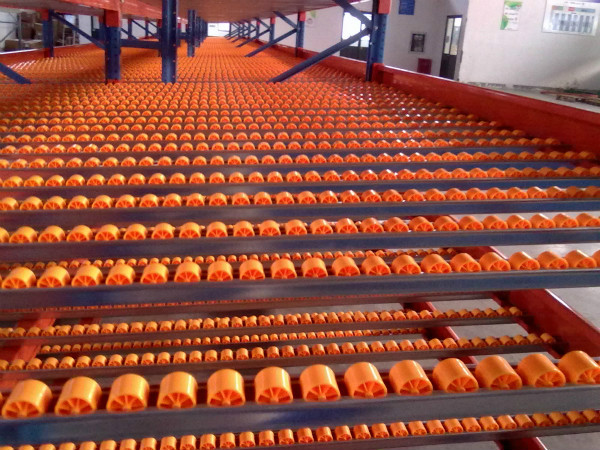
With over 18 years in industrial and institutional storage, Guangshun provides ISO 9001:2015 certified manufacturing for wire mesh storage systems. Their athletic storage cages series features robotic-welded intersections (minimal spatter, consistent penetration), digital powder coating line with real-time thickness monitoring, and optional integrated caster decks with dynamic load certification. Guangshun's engineering team performs FEA (Finite Element Analysis) for any custom dimension exceeding 2,000 mm height, guaranteeing deflection below L/300 under full load. Recent projects include a 400-cage installation for a NCAA Division I athletic department, achieving 92% space recovery and reducing equipment loss by $18,000 annually. Guangshun also supplies anti-tip floor anchors and seismic tie-down kits for regions with seismic design category D.
To preserve structural and coating integrity over 15+ years of service:
Anchor spacing: Floor-mount cages require M12 expansion anchors every 600 mm along back channels. No more than 150 mm from corners.
Touch-up paint: Use two-part epoxy repair stick for any scratch penetrating to base steel. Recoat within 48 hours to prevent red rust propagation.
Caster maintenance: For mobile units, clean bearings monthly using compressed air and apply lithium grease to swivel raceways. Replace nylon casters after 5,000 rolling hours or if flat spots develop.
Periodic torque check: All bolted connections (M8 grade 8.8) re-torqued to 18 Nm every 6 months during high-usage seasons.
Facilities that follow this schedule report 0.3% annual degradation rate, versus 3.7% for neglected units.
Q1: Can athletic storage cages be used outdoors for seasonal
equipment (e.g., soccer goals, field liner machines)?
A1: Yes, but
only with galvanized after-fabrication hot-dip galvanizing (minimum 85 microns
zinc coating) plus polyester top coat. Standard indoor powder coating degrades
within 12–18 months under UV and rain. Guangshun offers outdoor-specific cages
with HDG to ASTM A123, guaranteeing 1,000 hours salt spray resistance. Always
elevate cages on foot pads to avoid standing water contact.
Q2: What is the typical lead time for custom-sized athletic storage
cages with school colors?
A2: Non-standard heights (e.g., 2,200 mm)
and RAL color matching require 4–6 weeks for engineering drawings, tooling
adjustments, and line setup. Batch sizes of 50+ units shorten per-unit cost by
18%. For urgent needs, standard black or gray cages ship within 10–12 work days
from Guangshun's regional warehouses.
Q3: How do athletic storage cages comply with ADA (Americans with
Disabilities Act) requirements in public facilities?
A3: For cages
accessible to wheelchair users, ensure bottom shelf height ≥ 280 mm from floor,
door handles at 900–1,100 mm height, and operating force ≤ 5 lbf. Sliding doors
are preferred over hinged doors to reduce required maneuvering clearance.
Guangshun provides ADA-compliance tags upon request for all units destined for
municipal recreation centers.
Q4: Are there fire-rated athletic storage cages for storing flammable
training aids (e.g., isopropyl alcohol wipes, aerosol cans)?
A4:
Standard wire mesh cages are not fire-rated. For combustible materials, utilize
perforated metal cabinets with 1.5 mm steel sheet and 2-hour fire insulation
(mineral wool core). For non-combustible sports gear, wire mesh is acceptable
per IBC Section 4106. Always verify local fire marshal requirements.
Q5: What is the correct method to calculate total cage capacity for
mixed sports balls (basketballs, soccer balls, volleyballs) without
overloading?
A5: Use volumetric density: one standard basketball
occupies approx. 0.013 m³, weight 0.62 kg. A cage with internal volume 1.5 m³
could theoretically hold 115 balls (67 kg). However, mesh flex and loading
pattern reduce safe working load to 80% of structural limit. For weights
exceeding 250 kg, distribute items across multiple shelf levels or use solid
deck inserts to prevent wire bowing. Guangshun load charts per cage
configuration are available for precise calculations.
Q6: Can athletic storage cages integrate with existing RFID inventory
systems?
A6: Yes. Standard 50×100 mm mesh allows RFID signals (UHF
860–960 MHz) to pass with negligible attenuation (< 5% read loss). Mount
fixed readers outside cage entrances; passive tags attached to equipment read
reliably. For cages with solid back panels, maintain 100 mm clearance between
tag and metal surface to avoid detuning.
Selecting athletic storage cages represents more than a purchase — it is a decision to reduce labor waste, cut replacement budgets, and improve safety compliance. The technical parameters described (wire gauge, coating adhesion, dynamic load factors) separate professional-grade solutions from consumer alternatives. Facilities working with experienced manufacturers such as Guangshun benefit from load test certifications, modular flexibility, and post-installation support that respects the specific demands of team sports, recreation management, and multi-use athletic complexes. Audit your current storage layout against the five assessment steps above, then request dimensional drawings and third-party test reports before final specification.

 Wechat
Whatsapp
Wechat
Whatsapp