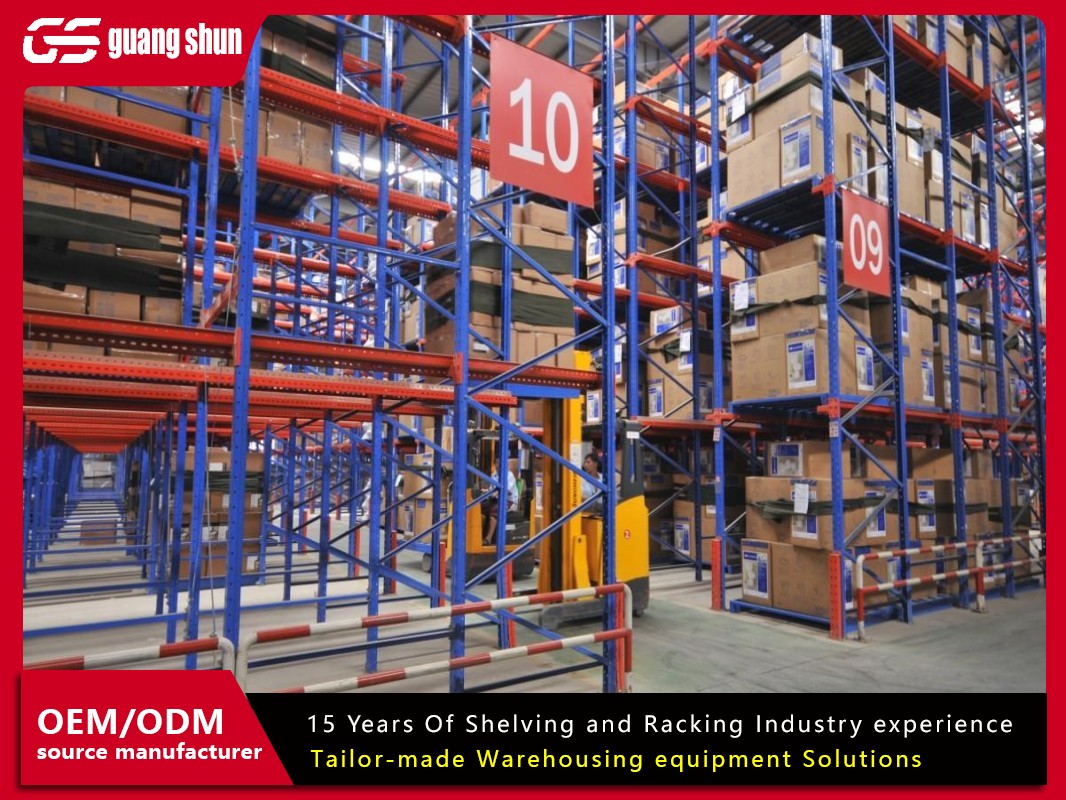
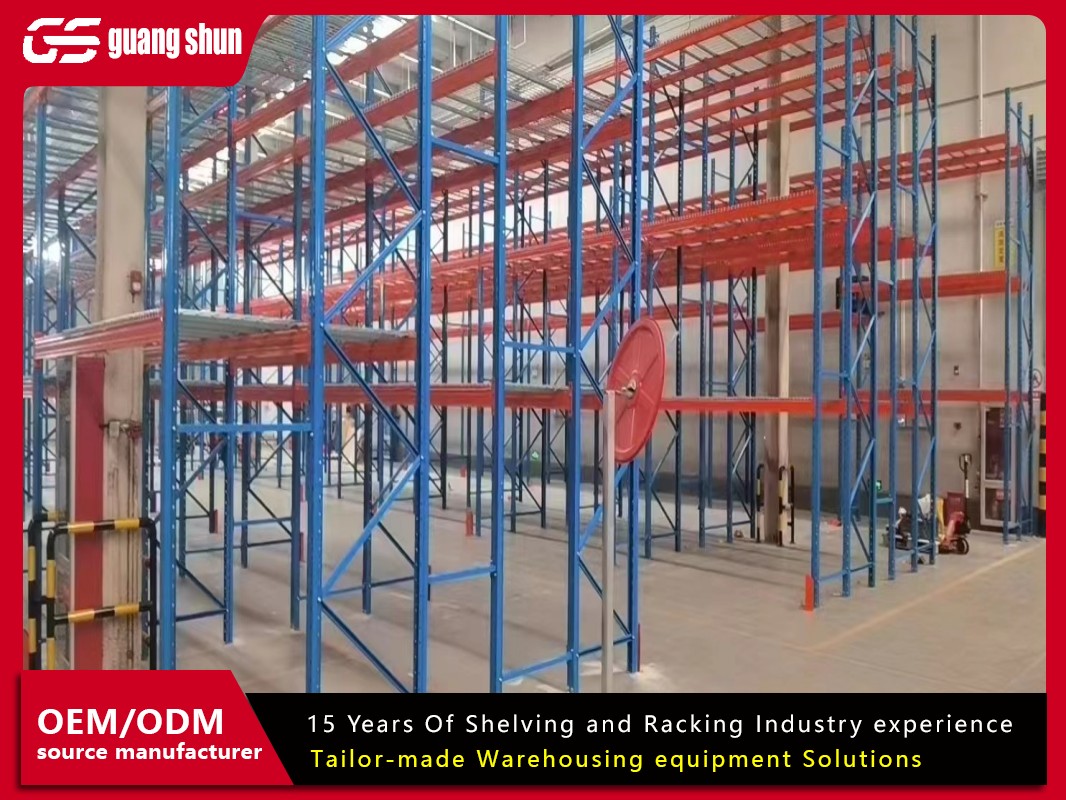
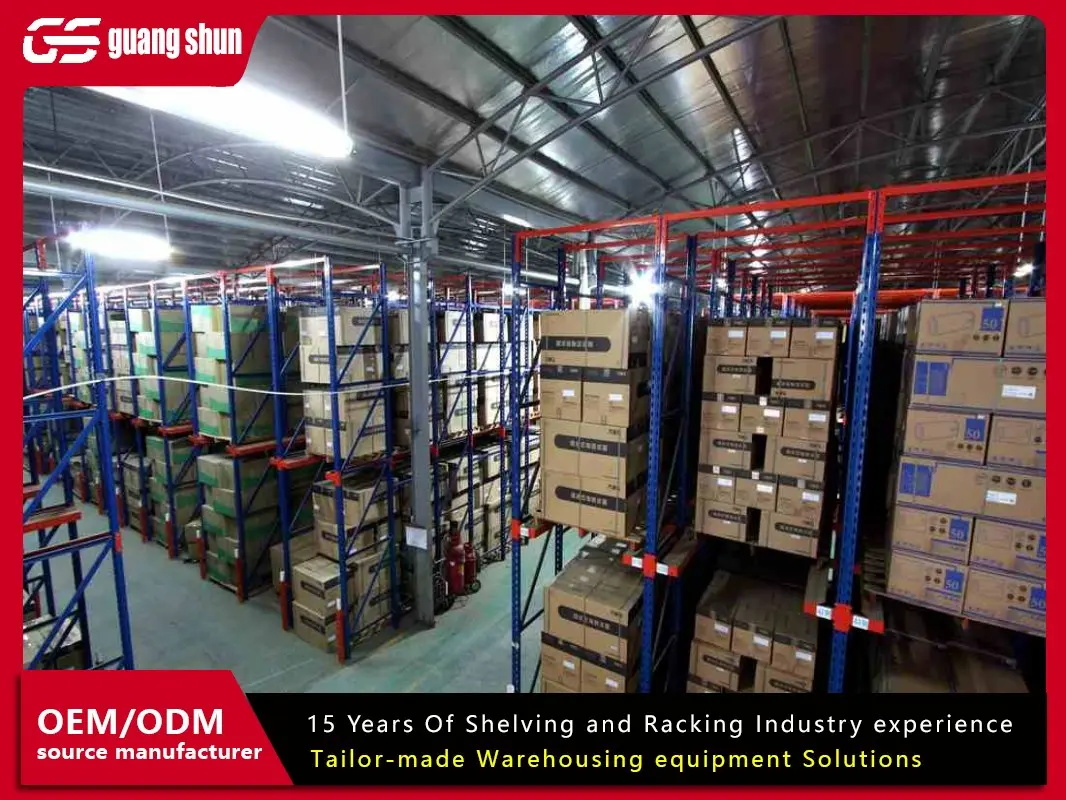
Metal racks for warehouse storage are the structural backbone of industrial logistics, supporting everything from light cartons to heavy palletized goods. Unlike generic shelving, engineered metal racking systems must withstand continuous dynamic loads, seismic events, and forklift impacts while maintaining dimensional stability over decades. This article provides a comprehensive technical framework for specifying metal racks for warehouse storage, covering material science, structural mechanics, connection design, and environmental durability. Guangshun has engineered and installed metal racking across automotive, cold storage, and e-commerce sectors, and the following insights derive from those implementations.
The foundation of reliable metal racks for warehouse storage is high-quality steel with appropriate mechanical properties and corrosion resistance.
SS400 / A36: 36–40 ksi (250–275 MPa) yield; standard for light-to-medium industrial applications.
Q355B / A572 Grade 50: 50 ksi (345 MPa) yield; allows 20–30% weight reduction for same capacity; preferred for heavy-duty systems.
HSLA (High-Strength Low-Alloy): 60–80 ksi grades; used for specialized high-capacity beams where weight reduction is critical.
S355NL: Low-temperature notch-tough steel for freezer applications (-40°C).
Guangshun's metal racking uses certified steel with mill traceability; material certificates accompany every order.
Beam stiffness is governed by the moment of inertia (I). For the same steel grade, deeper beams exponentially increase stiffness:
Box section (rectangular tube): Highest torsional rigidity; ideal for seismic zones and high-impact areas.
C-channel (step beam): Optimized for pallet support with integrated deck ledge; common in selective racking.
I-beam (structural hot-rolled): Maximum bending efficiency; used for extra heavy-duty applications.
Angle sections: Used for light-duty shelving or bracing components.
Powder coating: Polyester or epoxy, 60–80 μm; color-coded for safety; abrasion-resistant; standard for ambient warehouses.
Hot-dip galvanizing (HDG): 50–80 μm zinc coating; ideal for cold storage, chemical plants, coastal areas, and wash-down environments.
Pre-galvanized steel: Zinc coating applied before roll-forming; consistent but less durable at cut edges.
Stainless steel: Used for pharmaceutical, food, or cleanroom applications requiring maximum corrosion resistance and sanitization.
Salt spray testing (ASTM B117) verifies coating performance; high-quality metal racks for warehouse storage exceed 1,000 hours of salt spray resistance.
All metal racking must satisfy limit states design per RMI MH16.1, FEM 10.2.02, or AS4084. Key calculations include bending, shear, deflection, and stability.
Beams are designed for uniformly distributed loads (UDL) with deflection limited to L/180 (typically). For a 2.5 m span, maximum deflection is 13.9 mm. Excessive deflection causes pallet instability, interference with automated systems, and premature fatigue at connections. Beam capacity is determined by:
Moment capacity: M = Z × Fy, where Z = plastic modulus, Fy = yield strength.
Shear capacity: V = 0.6 × Fy × Aw, where Aw = web area.
Upright columns are typically perforated for beam adjustment, reducing buckling capacity. The critical buckling load is calculated using Euler's formula with an effective length factor (K). Bracing (horizontal and diagonal) reduces K, increasing capacity. For seismic zones, closed tubular columns (e.g., 100x100x3 mm) resist torsion better than open C-sections.
Beam-to-column connections must resist moment and shear without failure. Connection types include:
Tab-and-slot (boltless): Integral tabs engage keyholes; safety locks prevent dislodgement. Suitable for medium loads (≤3,000 kg).
Bolted end-plate: Grade 8.8 or 10.9 bolts; semi-rigid connections for heavy loads and seismic zones.
Welded connections: Full penetration welds per AWS D1.1; used in structural steel systems for extra heavy-duty applications.
Guangshun tests each connection design to 1.5× rated capacity, with permanent set after unloading <0.2% of connection height.
Metal racks for warehouse storage are categorized by configuration, each optimized for specific operational profiles.
The most common configuration, selective racking provides 100% accessibility to every pallet. Beams connect to upright frames at adjustable heights, typically supporting 2–4 pallets per bay. Load capacities range from 2,000–6,000 kg per beam level. Ideal for high-SKU environments but aisle space consumes 40–60% of floor area.
Drive-in racking eliminates aisles by allowing forklifts to enter the storage structure. Pallets rest on rails, with LIFO (Last-In, First-Out) rotation. Lane depths typically range from 3–10 pallets. Storage density increases 50–80% compared to selective racking. Upright frames require reinforced impact protection—full-height column guards are mandatory.
Push-back systems use nested carts or rollers on inclined rails, storing 2–6 pallets per lane. When a new pallet is loaded, it pushes existing pallets back. This offers higher density than selective while maintaining better selectivity than drive-in. Throughput improves by 20–30% due to reduced forklift travel.
Pallet flow uses gravity rollers or wheels to move pallets from the loading (high) end to the unloading (low) end. Speed controllers regulate descent. Lane depths can exceed 20 pallets, making this the most space-efficient FIFO solution for high-turnover goods.
Cantilever racks consist of vertical columns with horizontal arms extending outward, supporting long materials like lumber, pipes, or steel bars. Arms are adjustable vertically (typically 50–100 mm increments). Load capacities per arm range from 500–4,000 kg, with column heights up to 12 m.
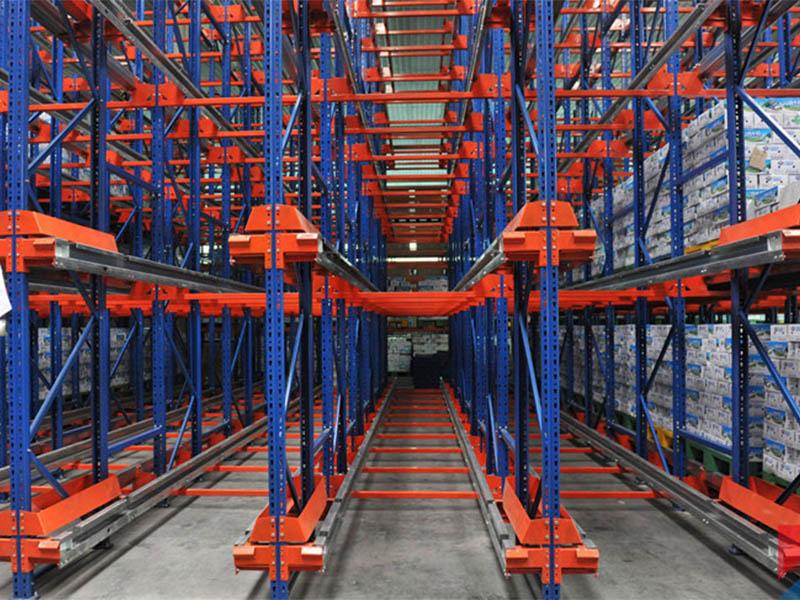
Different industries require tailored metal racks for warehouse storage.
Automotive components (engines, transmissions, body panels) require per-level capacities of 2,000–5,000 kg. Structural steel systems with adjustable beam heights accommodate varying part sizes. Drawer inserts and bin locations organize small parts. Guangshun's automotive installations have reduced retrieval times by 35% through optimized configurations.
Freezers require low-temperature steel (S355NL), HDG coating, and slip-base connections to accommodate thermal contraction. Shelving must allow airflow for uniform temperature distribution. Metal racks for warehouse storage in cold storage operate reliably at -30°C with documented material certifications.
High-throughput e-commerce uses multi-tier shelving with pick modules. Carton flow and static shelving are combined for fast-moving and reserve storage. Metal racking for e-commerce supports continuous picking operations with minimal deflection and integrates with pick-to-light systems.
Coils, bars, and sheet metal require cantilever or structural steel racks with arm capacities up to 10,000 kg. Deflection limits are critical—excessive sag can cause material slippage. Forklift guides and column protectors are essential.
In seismic zones, metal racks must resist horizontal accelerations without collapse. Design per ASCE 7 or Eurocode 8 includes:
Ductile expansion or epoxy anchors; embedment depth calculated for tension pull-out. Anchor torque verified (typically 150–250 N·m for M16). In high seismic categories, post-installed anchors require on-site pull-out testing.
Cross-aisle bracing (rods or angles) limits drift. Down-aisle ductility provided by moment connections or energy-absorbing devices. Non-linear time-history analysis using site-specific ground motions is standard for critical facilities.
Shelves and stored items must be restrained from falling. Wire decks, shelf lips, or mesh panels prevent dislodgement. Guangshun's seismic systems include certified calculations for permitting.
Field installation directly affects performance of metal racking. Key parameters per FEM 10.2.02:
Plumbness: ≤2 mm per 3 m of height.
Baseplate level: Steel shims only (no wood).
Beam level: Within 5 mm across bay length.
Anchor torque: Verified with calibrated torque wrench.
Laser alignment ensures compliance. Guangshun's installation crews are factory-trained and follow OSHA-compliant safety protocols.
Regular inspection per ANSI MH16.3 identifies damage. Common damage classes:
Class 1 (minor): Paint scratches; monitor.
Class 2 (moderate): Bent components <5 mm; monitor or reinforce.
Class 3 (severe): >5 mm deformation or cracks; replace immediately.
Maintenance includes re-torquing anchors, replacing damaged beams, and cleaning debris. Preventive maintenance extends system life to 20+ years.
When specifying metal racks for warehouse storage, initial material cost is only one factor. TCO includes:
Maintenance: Annual inspections, impact repairs, coating touch-up.
Downtime: Rack failure halts operations; cost can exceed $10,000/hour in large DCs.
Insurance: Certified systems may reduce premiums.
Modifiability: Adjustable shelving adapts to changing loads without replacement.
Guangshun's modular designs enable reconfiguration without welding, reducing future modification costs by 40–60%.
Metal racks for warehouse storage are engineered structures requiring rigorous analysis of loads, materials, and environmental factors. From selective pallet racking to high-density drive-in systems, each configuration must comply with international standards and be installed with precision tolerances. Metal racks for warehouse storage from Guangshun integrate FEA-validated structures, certified steel, and factory-trained installation to deliver safe, durable, and efficient storage. By applying the technical parameters above, facility managers can select racking that maximizes space utilization while ensuring worker safety and operational efficiency.
A1: For most industrial applications, A572 Grade 50 (50 ksi yield) offers the best balance of strength and cost. For freezer environments, S355NL provides low-temperature toughness. Metal racks for warehouse storage from Guangshun use certified steel with mill traceability.
A2: Heavy-duty industrial metal racks typically support 1,500–5,000 kg per level. Extra heavy-duty structural systems can exceed 10,000 kg per level. Always consult manufacturer load tables for specific beam span and configuration.
A3: Yes, with freezer-rated components: low-temperature steel (S355NL), hot-dip galvanized coating, and slip-base connections to accommodate thermal contraction. Guangshun provides freezer-rated systems with documented performance at -30°C.
A4: ANSI/RMI standards recommend formal inspection at least annually, with monthly visual checks by warehouse staff. Immediate inspection required after any forklift impact or seismic event. Inspections should document damaged components, loose anchors, and missing safety clips.
A5: With proper maintenance, 20–30 years. Galvanized systems in controlled environments have exceeded 40 years. Cumulative damage from forklifts often dictates earlier replacement. Regular inspection and prompt repair extend service life.
A6: Boltless (tab-and-slot) racks offer quick assembly and adjustability, suitable for loads up to 3,000 kg per level. Bolted structural racks use Grade 8.8 or 10.9 bolts, providing higher rigidity and seismic resistance for loads exceeding 3,000 kg.
---
For load tables, seismic calculations, or project consultations,
visit Guangshun's metal racking
page or contact our engineering team.

 Wechat
Whatsapp
Wechat
Whatsapp