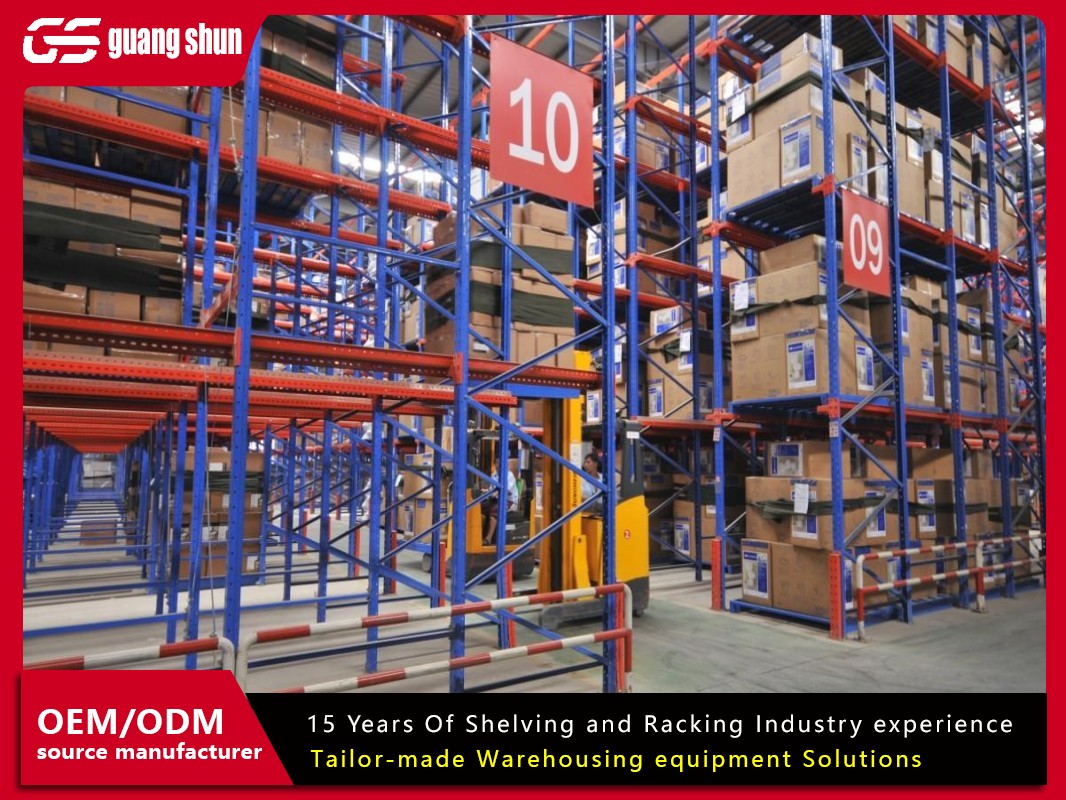
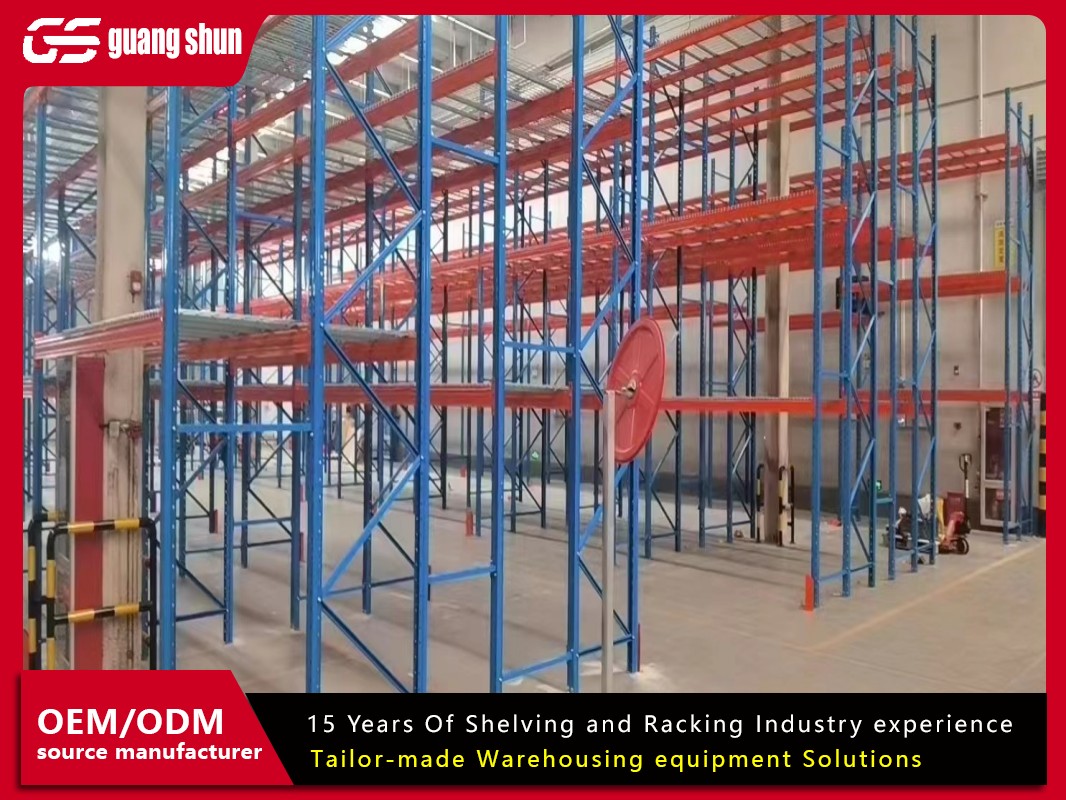
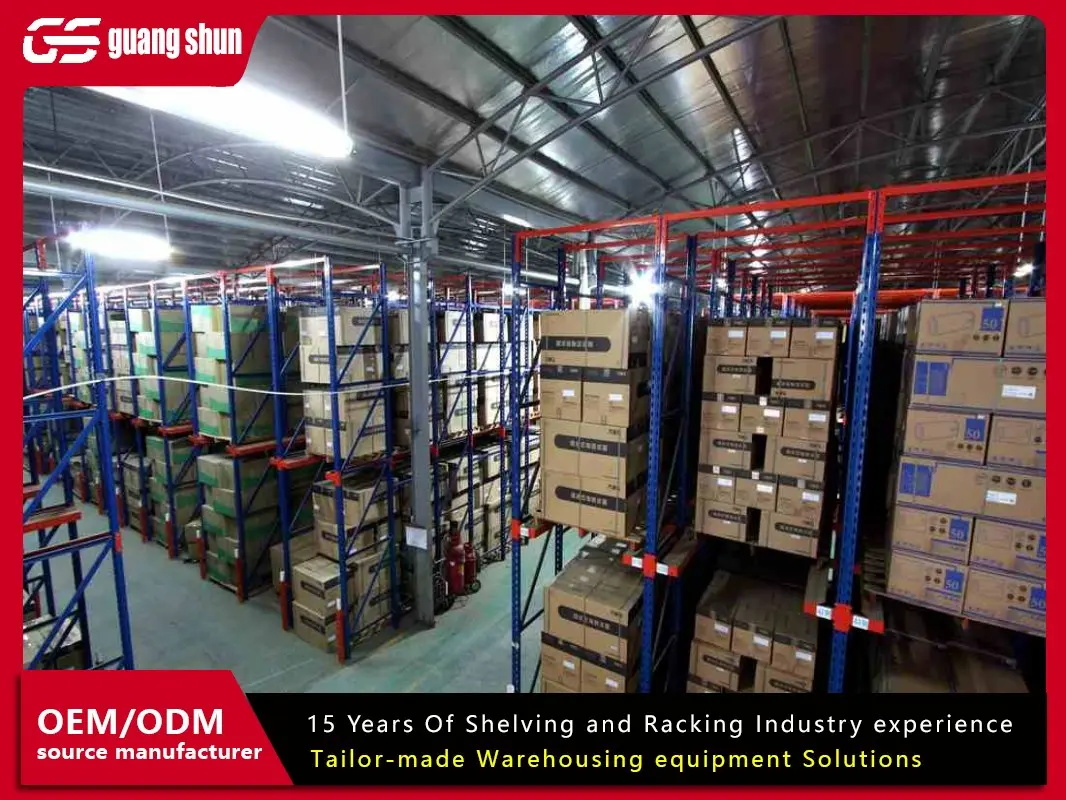
For warehouse operators managing high-turnover inventory, the choice between static and dynamic storage often decides profitability. Roller pallet racking systems represent a mature engineering response to the conflicting demands of storage density and retrieval speed. Unlike conventional selective racks that rely on forklift access for every pallet position, these systems use inclined roller beds and speed controllers to enable gravity-fed, first-in-first-out (FIFO) inventory flow. This configuration reduces aisle traffic, lowers labor hours per pick, and maximizes cubic utilization—provided the system is specified correctly for the load profile and throughput targets.
Across Europe and North America, distribution centers handling perishables, automotive parts, and consumer packaged goods have progressively adopted roller-based lane storage. Data from the Material Handling Institute indicates that dynamic flow racking can improve picking productivity by 22–35% compared to static pallet positions, while reducing damage claims by up to 18% due to controlled deceleration. However, these outcomes are not automatic; they depend on precise roller pitch, frame gauge, and brake mechanism selection. This article dissects the technical anatomy of roller pallet racking systems, addresses common operational pitfalls, and provides a decision framework for integration.
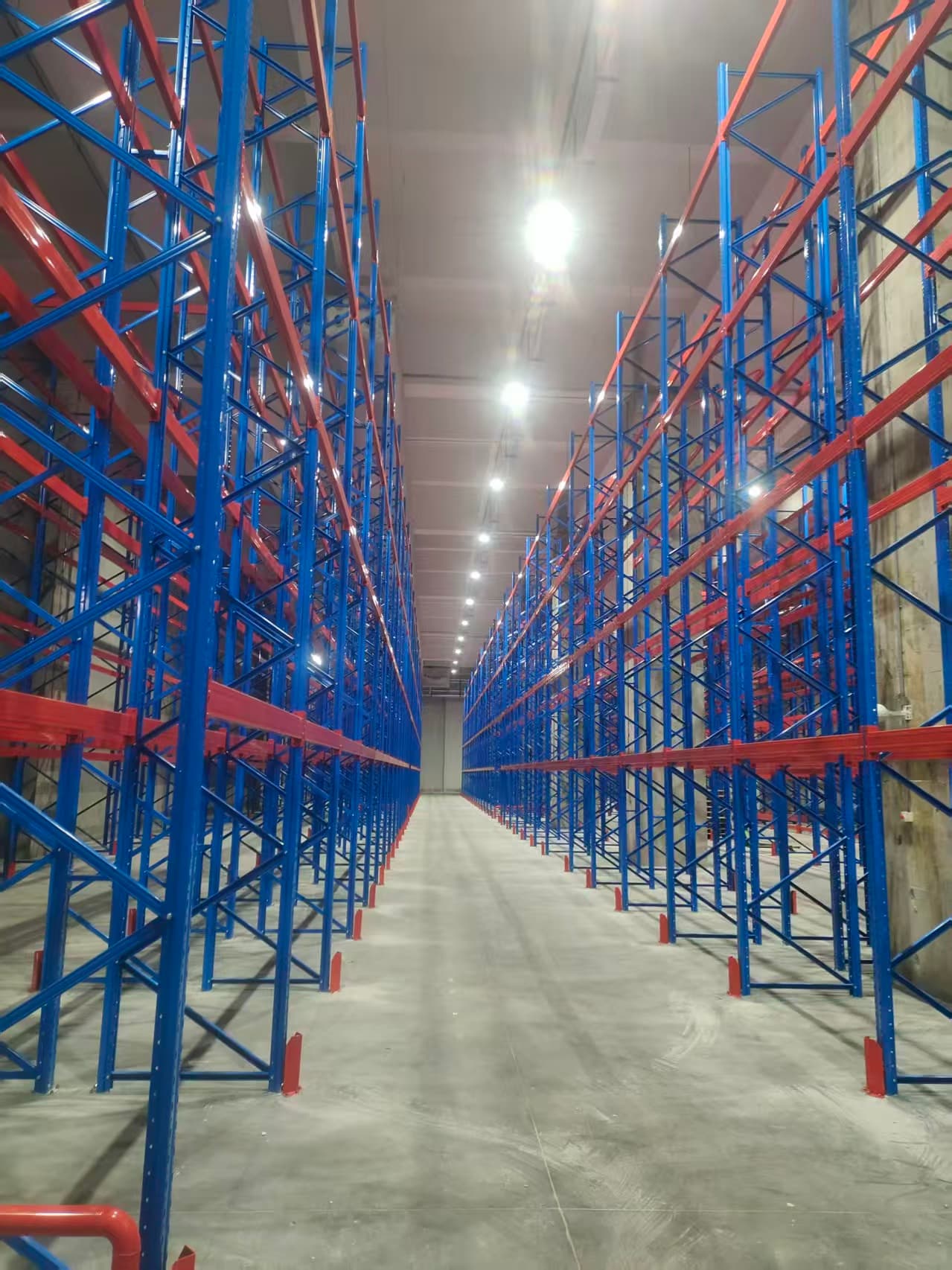
Every lane in a flow rack consists of parallel roller tracks mounted on structural supports. The roller diameter, spacing, and material (galvanized steel or polymer-coated) directly influence friction coefficients and wear rates. For standard Euro-pallets (1200x800 mm) or GMA pallets (40x48 inches), engineers typically specify rollers with 50–76 mm diameter at 75–100 mm centers. This ensures at least three rollers support the pallet at any position, distributing the load and preventing deformation of bottom deck boards. Load capacity per roller pair is rated for static and dynamic conditions—dynamic loads (rolling friction) are approximately 30% lower than static ratings, a factor frequently overlooked in procurement.
Uncontrolled pallet acceleration on steep inclines generates impact forces that damage goods and rack uprights. Modern roller pallet racking systems incorporate hydraulic or mechanical speed governors—often called retarders—that maintain descent speeds between 0.3 and 0.6 m/s regardless of pallet weight. Two principal designs exist: roller-mounted centrifugal brakes and lane-mounted friction pads. Centrifugal brakes offer consistent performance across variable loads but require periodic calibration; friction pads are simpler but wear out faster with abrasive pallets. For cold storage applications (below -20°C), specialized low-temperature lubricants and non-ferrous rollers are mandatory to prevent seizure.
Columns and beams in flow racks must resist not only vertical dead and live loads but also horizontal forces from pallet braking and seismic events. According to FEM 10.2.02 standards, the horizontal force exerted by a moving pallet at braking can reach 0.5g of its weight. Consequently, base plates, anchor bolts, and cross-aisle bracing must be engineered with safety factors of at least 1.8. Many installers under-specify these components to reduce costs, leading to premature fatigue failures. Guangshun emphasizes in its project documentation that frame stiffness directly correlates with brake performance—a flexible frame absorbs energy differently than a rigid one, affecting speed controller tuning.
Not every warehouse benefits from flow racks. The following table summarizes the ideal conditions based on throughput, SKU count, and pallet consistency:
Conversely, for slow-moving items or irregular loads (e.g., drums, sacks), static pallet racks or cantilever systems remain more practical. The return on investment for roller pallet racking systems typically materializes within 18–24 months in high-turnover environments, driven by reduced forklift travel (up to 40% less distance per pallet) and lower labor costs.
One of the most frequent complaints is pallets veering off course and wedging between rails. Root causes include uneven pallet bottom boards, roller misalignment, or insufficient lateral guides. The solution involves installing adjustable guide rails with a clearance of 10–15 mm per side, plus tapered entry guides that self-center the pallet during loading. For existing systems, retrofitting with polyurethane-coated rollers increases lateral friction and reduces skew by up to 60%, according to tests conducted by the Warehouse Education and Research Council.
At peak throughput, the cumulative noise of dozens of pallets rolling simultaneously can exceed 85 dB, requiring hearing protection and disturbing adjacent office areas. Vibration also loosens bolts and accelerates roller bearing wear. Engineers mitigate this by using rubber-damped roller mounts and specifying spiral-bevel gear retarders instead of planetary types, which generate higher-frequency noise. Regular lubrication intervals—every 500 operating hours—are non-negotiable; Guangshun provides a predictive maintenance schedule based on cycle counters, aligning with ISO 10823 standards for chain and roller maintenance.
A system designed for 800 kg pallets will behave unpredictably when handling 1200 kg loads—either too fast (dangerous) or too slow (inefficient). Advanced flow racks now incorporate load-sensing rollers that adjust brake pressure via a proportional valve, maintaining a constant kinetic energy dissipation rate. While this adds 15–20% to the initial cost, it eliminates the need for separate lanes for heavy and light SKUs, increasing overall lane utilization. Field data from a third-party logistics provider showed a 12% increase in average lane utilization after adopting adaptive braking.
Proper installation begins with a floor flatness survey—deviations greater than ±5 mm over 3 m require leveling shims or a structural steel subfloor. Anchor bolt torque must be verified with a calibrated wrench; under-torquing is responsible for 70% of post-installation structural corrections. Additionally, every lane must have an end-stop rated for the maximum pallet kinetic energy (E = ½ mv²), with a redundant mechanical catch in case the primary brake fails. Fire safety is another dimension: sprinkler systems must be designed to penetrate the rack structure without obstruction, often requiring in-rack sprinkler heads with deflector plates positioned 150 mm above the top beam.
Operational training for forklift drivers is equally critical. Misalignment during insertion—approaching at an angle >5°—can damage entry rollers and create bent axles. Many facilities now use laser-guided alignment indicators or LED floor markers to assist drivers. Guangshun includes a comprehensive operator manual with every installation, covering insertion angles, speed limits, and emergency stop procedures.
Let’s quantify the cost-benefit using a mid-sized DC with 5,000 pallet positions and daily throughput of 3,000 pallets. For static selective racks, average travel time per pallet (including lift, drive, and deposit) is 3.2 minutes; for flow racks, it drops to 1.9 minutes—a saving of 1.3 minutes per pallet. At $30/hour labor cost, that translates to $0.65 per pallet. Over 260 working days, annual savings exceed $500,000, which often covers the premium of flow rack installation within the first year. Additionally, flow racks reduce product damage from handling—estimated at 0.8% of inventory value for static racks versus 0.3% for flow—adding another 0.5% margin.
However, the total cost of ownership must include periodic roller replacement (every 8–10 years) and brake overhaul (every 5 years). Using high-grade bearing steel and hardened rollers extends these intervals by 30–40%, justifying the upfront premium. Many procurement teams underweight these lifecycle factors, leading to false economy.
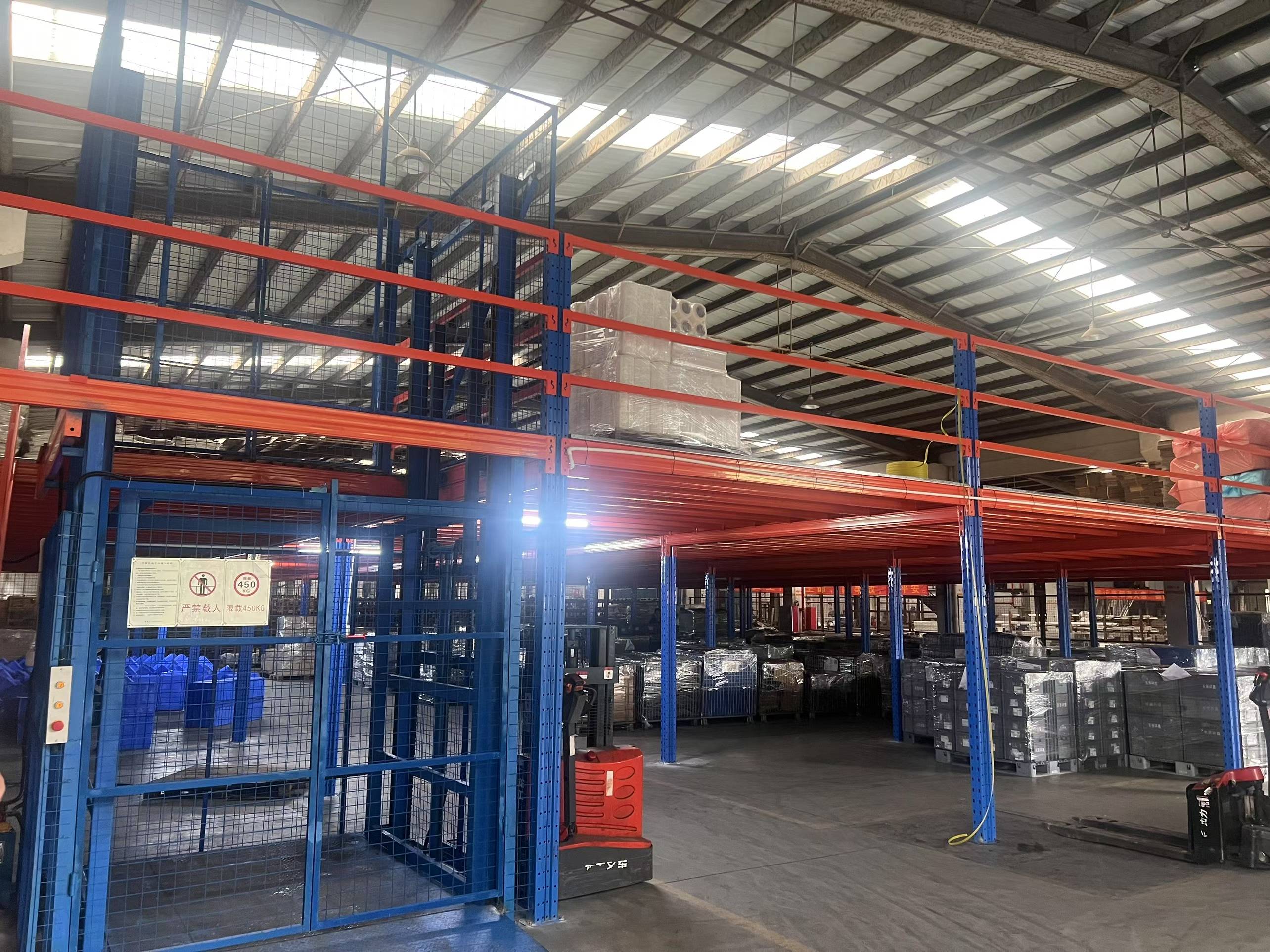
Modern roller pallet racking systems are no longer standalone; they interface with warehouse execution systems (WES) that prioritize lane replenishment based on real-time order queues. Sensors at the lane entry and exit count pallets and detect blockages, transmitting alerts to the control dashboard. This data enables predictive replenishment—restocking a lane only when the last two pallets are depleted, reducing overstock and improving inventory accuracy. For facilities using autonomous mobile robots (AMRs), flow rack endpoints can be outfitted with transfer decks that enable seamless handover to robotic lifters, eliminating manual pallet jack handling.
One notable integration case involved a cold-chain operator that combined flow racks with a gantry robot for layer picking. The roller lanes fed pallets to an automated de-stacker, achieving 98.7% uptime over 18 months. The key success factor was the precise alignment between roller pitch and robot gripper spacing—a detail often missed in generic system designs.
The next generation of flow racks incorporates embedded load cells and accelerometers in each roller cartridge, transmitting real-time weight and vibration data via LoRaWAN. This allows condition-based maintenance, replacing the traditional time-based schedule. Early adopters report a 25% reduction in unplanned downtime and a 40% extension of roller bearing life. As data analytics matures, machine learning models can predict jams before they occur by recognizing subtle changes in roller rotation patterns—a development that promises to make roller pallet racking systems even more reliable for mission-critical supply chains.
Furthermore, modular designs enable reconfiguration of lane widths and angles without welding, accommodating changing SKU profiles. This flexibility is particularly valuable for e-commerce fulfillment centers where product mix shifts seasonally. Manufacturers like Guangshun now offer quick-change roller cassettes that can be swapped in under 15 minutes per lane, reducing reconfiguration downtime from days to hours.
Selecting roller pallet racking systems demands a rigorous analysis of load spectra, throughput profiles, and facility constraints. The technology offers quantifiable advantages in productivity, space efficiency, and product care, but only when engineered with precision and maintained with discipline. Generic off-the-shelf configurations often underperform, leading to frustration and hidden costs. By focusing on component quality, brake technology, and structural integrity, warehouse operators can achieve ROI well beyond the initial investment. As supply chains face increasing pressure for speed and accuracy, roller flow racks remain a cornerstone of high-performance logistics—not as a trend, but as a proven industrial solution.
Q1: What is the maximum height for roller pallet racking systems?
A1: With proper engineering and seismic bracing, heights up to 14 meters are common in modern facilities. However, practical limits are often set by local fire codes (which require in-rack sprinklers at intervals) and forklift lift capacities. For heights above 12 meters, we recommend a structural analysis including wind and earthquake loads per ASCE 7 or Eurocode 8.
Q2: How do roller flow racks handle non-standard pallets (e.g., plastic or open-bottom)?
A2: Plastic pallets with solid bottoms or skids require narrower roller spacing (≤ 60 mm) to prevent sagging. Open-bottom pallets (e.g., stringer-type) are compatible with standard spacing but may need additional cross-supports if the deck boards are thin. We always advise testing a sample pallet on the actual roller bed before full-scale purchase.
Q3: What is the typical lifespan of rollers and brakes under 24/7 operations?
A3: High-grade hardened steel rollers with sealed bearings last approximately 8–10 years under 2-shift operation (16 hours/day). Brake units typically require refurbishment every 4–5 years, depending on cycle frequency. Regular lubrication and visual inspections every 500 hours extend these intervals significantly.
Q4: Can roller pallet racking be retrofitted into an existing static rack structure?
A4: Retrofit is possible but rarely cost-effective unless the existing beams and frames meet the dynamic load requirements. You must replace horizontal beams with roller track supports and add speed controllers. Most engineers prefer a new dedicated structure, as retrofitting often leads to compromised alignment and increased maintenance.
Q5: How do I calculate the required incline angle for gravity flow?
A5: The angle depends on pallet weight, roller friction, and brake drag. A standard starting point is 3.5–4.5 degrees for clean, dry conditions. Heavier pallets (over 1000 kg) may require 5–6 degrees to overcome static friction, but this increases speed, demanding more robust brakes. We recommend using the manufacturer’s dynamic friction coefficient chart and performing a trial with actual loads before fixing the slope.
Q6: Are these systems suitable for food-grade or pharmaceutical storage?
A6: Absolutely, provided the rollers and frames are made from food-safe materials (e.g., stainless steel or zinc-nickel plated) and meet hygienic design standards (no crevices for debris). Many pharmaceutical DCs use flow racks with encapsulated bearings and washdown-capable coatings. Always verify compliance with FDA or EFSA regulations for contact surfaces.
For tailored specifications and site-specific engineering support, consult Guangshun—a provider with over two decades of experience in dynamic storage solutions across 40+ countries.

 Wechat
Whatsapp
Wechat
Whatsapp