For warehouse operators and logistics engineers, the selection of storage systems directly impacts throughput, labor efficiency, and inventory accuracy. Among the various solutions available, the gravity flow roller rack stands out as a highly engineered system that leverages basic physics to solve complex material handling challenges. This article provides a comprehensive examination of gravity flow roller rack technology—from roller pitch calculations to lane depth optimization—grounded in operational data and real-world applications.
At its foundation, a gravity flow roller rack converts gravitational potential energy into controlled horizontal motion. The system consists of inclined roller tracks mounted within a structural framework, where pallets or cartons move from the loading (high) end to the picking (low) end under the influence of gravity. The critical engineering parameters include:
These parameters are not arbitrary; they are derived from physics-based models that account for rolling resistance, bearing efficiency, and load distribution. A well-calibrated gravity flow roller rack reduces the need for powered conveyors in pick modules, cutting energy consumption by 60–70% compared to motorized systems, according to industry benchmarks.
The versatility of the gravity flow roller rack makes it suitable for a wide range of storage environments. Its primary advantage—automatic product rotation based on First-In-First-Out (FIFO) principle—is critical in industries where inventory shelf life or batch traceability is paramount.
Perishable goods require strict FIFO compliance. Gravity flow roller rack lanes are configured to handle standardized pallets or totes, with lane depths ranging from 6 to 12 positions. The system supports high-density storage—up to 85% space utilization compared to 60–65% with selective racking—while ensuring that older stock is picked first. Temperature variations (−10°C to +40°C) are accommodated through the use of low-temperature lubricants and stainless-steel rollers in cold storage environments.
In high-volume pick-and-pack operations, carton gravity flow racks are deployed in forward pick zones. These systems handle individual cartons weighing up to 50 kg, with lane widths adjustable from 200 mm to 600 mm. Integration with pick-to-light or voice-directed picking systems increases pick rates by 30–40%, as workers do not need to reach into deep storage locations.
Heavy components such as brake rotors, exhaust systems, and transmission housings are stored on heavy-duty pallet flow racks. The gravity flow roller rack supports loads up to 2,000 kg per lane, with reinforced roller bearings and wear-resistant steel tracks. The system reduces fork truck travel distances by consolidating fast-moving SKUs into compact flow lanes.
Despite its advantages, gravity flow roller rack implementation presents several challenges that require careful engineering design. The following are the most common operational issues and their solutions:
Jamming occurs when pallet or carton dimensions deviate from specifications, or when debris accumulates in the roller tracks. The solution lies in lane guide systems—adjustable side rails that maintain a clearance of 10–15 mm on each side of the load. Additionally, self-cleaning roller designs with scraper rings prevent debris buildup, while regular maintenance schedules (weekly cleaning and monthly bearing inspection) ensure consistent performance.
Uncontrolled acceleration can lead to load damage and worker injury. Modern gravity flow roller rack systems incorporate velocity regulators (mechanical governors or oil-damped brakes) that maintain a constant speed regardless of load weight. For pallet flow, end-of-lane bumpers made of polyurethane or rubber absorb residual impact forces, reducing damage by 80% compared to unbraked systems.
When a warehouse carries thousands of SKUs, allocating dedicated lanes for each can be inefficient. The solution is mixed-lane configuration with adjustable lane dividers, allowing multiple SKUs per lane with separate pick faces. Alternatively, dual-depth lanes can store two pallets per position, increasing density by 40% while maintaining FIFO integrity.
Choosing the right gravity flow roller rack requires a systematic evaluation of operational data. Key decision factors include:
For warehouses with complex requirements, Guangshun offers custom-engineered gravity flow solutions that integrate with existing racking infrastructure. Their modular design allows for future lane reconfiguration as SKU profiles evolve.
To sustain peak performance of a gravity flow roller rack, a structured maintenance program is essential. The following practices are recommended by industry experts:
Data from Guangshun installations indicates that proactive maintenance extends system lifespan by 8–12 years, with mean time between failures (MTBF) exceeding 50,000 operating hours.
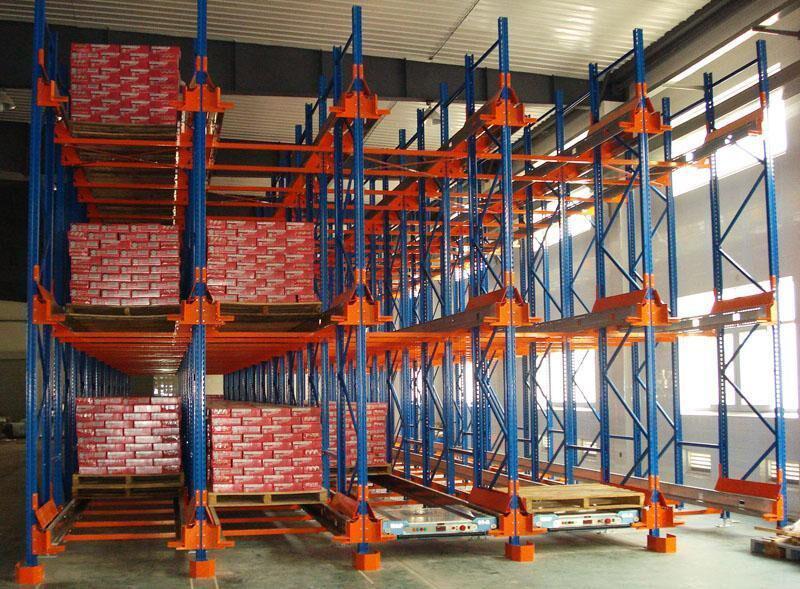
Investing in a gravity flow roller rack involves higher upfront costs compared to selective racking—typically 25–40% more per pallet position. However, the long-term returns justify the premium. A comparative analysis for a mid-sized warehouse (10,000 pallet positions) reveals:
The payback period for a gravity flow roller rack installation typically ranges from 18 to 30 months, depending on throughput volume and local labor costs.
Modern gravity flow roller rack systems are not isolated storage islands; they are integral components of automated material handling ecosystems. Integration points include:
These integrations require standardized communication protocols (e.g., OPC UA, MQTT) and careful synchronization of material flow rates. When properly executed, the gravity flow roller rack becomes a data-rich node in the digital warehouse, supporting predictive maintenance and dynamic slotting optimization.
The gravity flow roller rack remains one of the most efficient and reliable storage solutions for operations that prioritize FIFO, space density, and labor productivity. Its engineering principles—rooted in physics and refined through decades of industrial application—provide a robust foundation for both manual and automated warehouses. By addressing common pain points with targeted engineering solutions and maintaining a rigorous maintenance schedule, operators can achieve ROI within two years and enjoy decades of dependable service. For organizations seeking to optimize their material handling workflows, the gravity flow roller rack represents a proven investment that continues to deliver measurable operational gains.
A1: Load capacity varies by design, but standard heavy-duty pallet flow lanes support up to 1,500 kg per position, with reinforced versions handling 2,000 kg or more. Carton flow racks typically support 50–100 kg per carton. The exact capacity depends on roller diameter, bearing type, and structural frame specifications. Always refer to the manufacturer's load charts and ensure that lane loading does not exceed the dynamic load rating, which accounts for the combined weight of all pallets in the lane.
A2: The incline angle depends on three variables: load weight, roller material, and ambient temperature. As a rule of thumb, heavier loads require steeper angles (up to 6°), while lighter cartons can operate at shallower angles (4–5°). Conduct on-site tests with representative loads to measure descent speed and adjust the angle until the load moves smoothly without excessive acceleration. Most systems allow for angle adjustments in 0.5° increments during installation.
A3: Yes, with custom lane widths and adjustable guide rails. Standard lane widths range from 800 mm to 1,200 mm for Euro pallets, and up to 1,500 mm for custom industrial pallets. For non-standard dimensions, manufacturers like Guangshun offer bespoke designs with variable roller spacing and side-guard configurations. It is recommended to provide pallet drawings during the design phase to ensure proper fit and smooth flow.
A4: Speed controllers (mechanical governors or hydraulic brakes) require inspection every 6–12 months, depending on usage intensity. Key maintenance tasks include checking fluid levels in hydraulic brakes, lubricating moving parts, and verifying that the control mechanism engages smoothly at the start and end of the lane. Any signs of erratic speed variation or delayed response should be addressed immediately by a qualified technician.
A5: Cold storage (down to −30°C) requires special considerations: low-temperature grease for bearings, stainless steel or galvanized rollers to resist corrosion, and reinforced seals to prevent moisture ingress. Roller materials must maintain impact resistance at low temperatures—polyurethane-coated rollers are preferred for carton flow, while hardened steel rollers are used for pallet loads. Additionally, lane heaters or air circulation systems may be needed to prevent ice buildup on the tracks.
A6: Yes, when properly integrated. AGVs can deliver pallets to the induction (high) end of gravity flow lanes using standardized transfer stations. The key requirement is precise alignment between the AGV's load deck and the lane infeed, typically achieved through guide rails or laser positioning. For outbound picking, AGVs can retrieve pallets from the discharge (low) end, though this is less common than manual or conveyor-based extraction.

 Wechat
Whatsapp
Wechat
Whatsapp