Selecting the appropriate storage medium directly impacts warehouse operational costs, inventory accuracy, and worker safety. With dozens of configurations available, understanding the distinct mechanical principles and load characteristics of various types of warehouse shelving is critical for supply chain engineers. This analysis covers eight primary categories, from selective pallet racking to dynamic flow systems, providing load data, space efficiency metrics, and industry-specific applications. Guangshun has engineered storage solutions across these categories for three decades, and the insights below reflect real-world performance data rather than theoretical marketing claims.
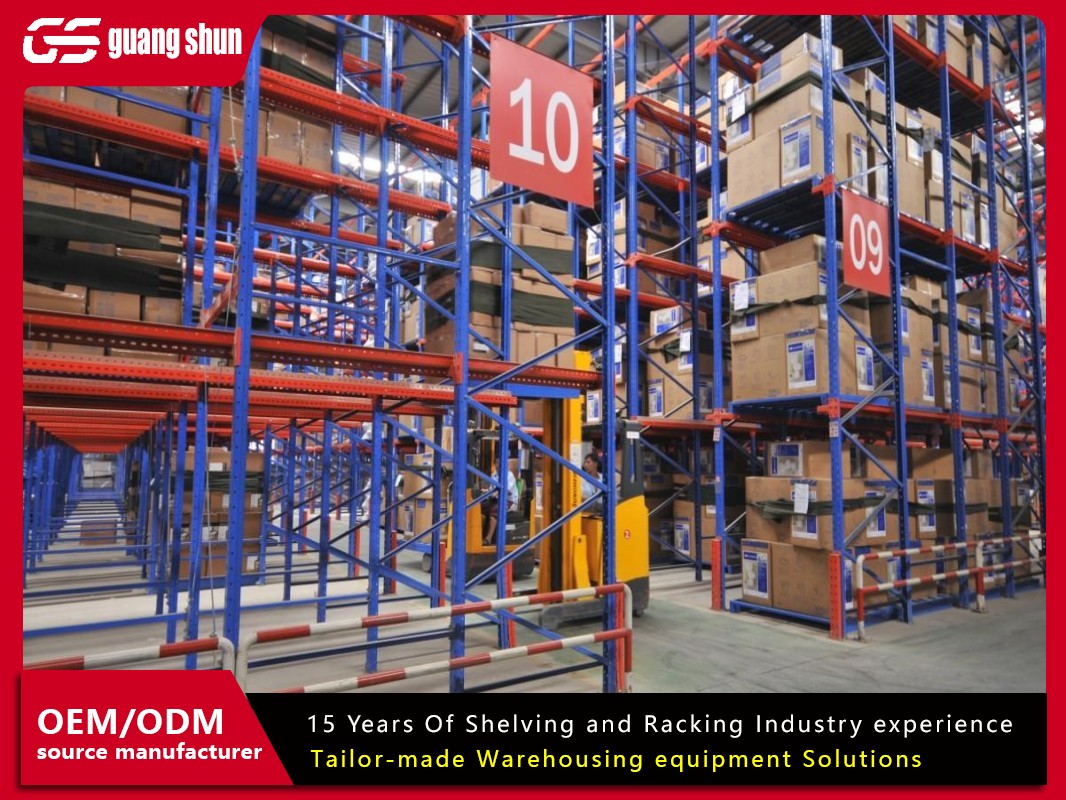
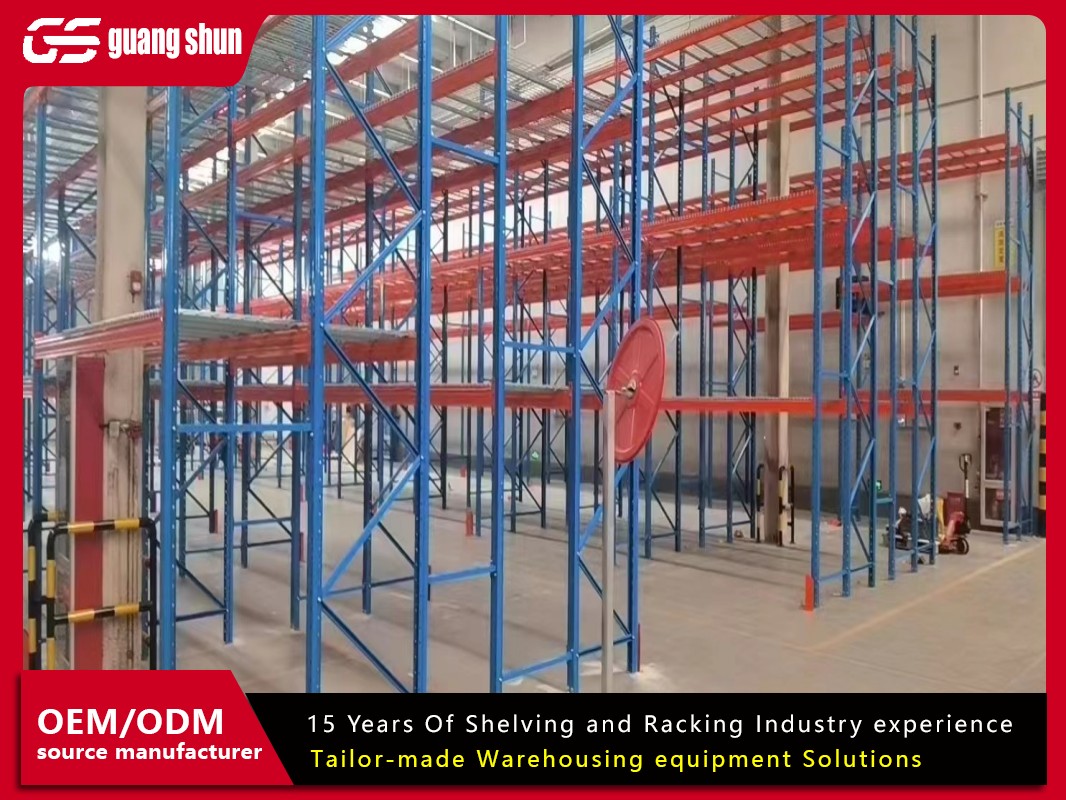
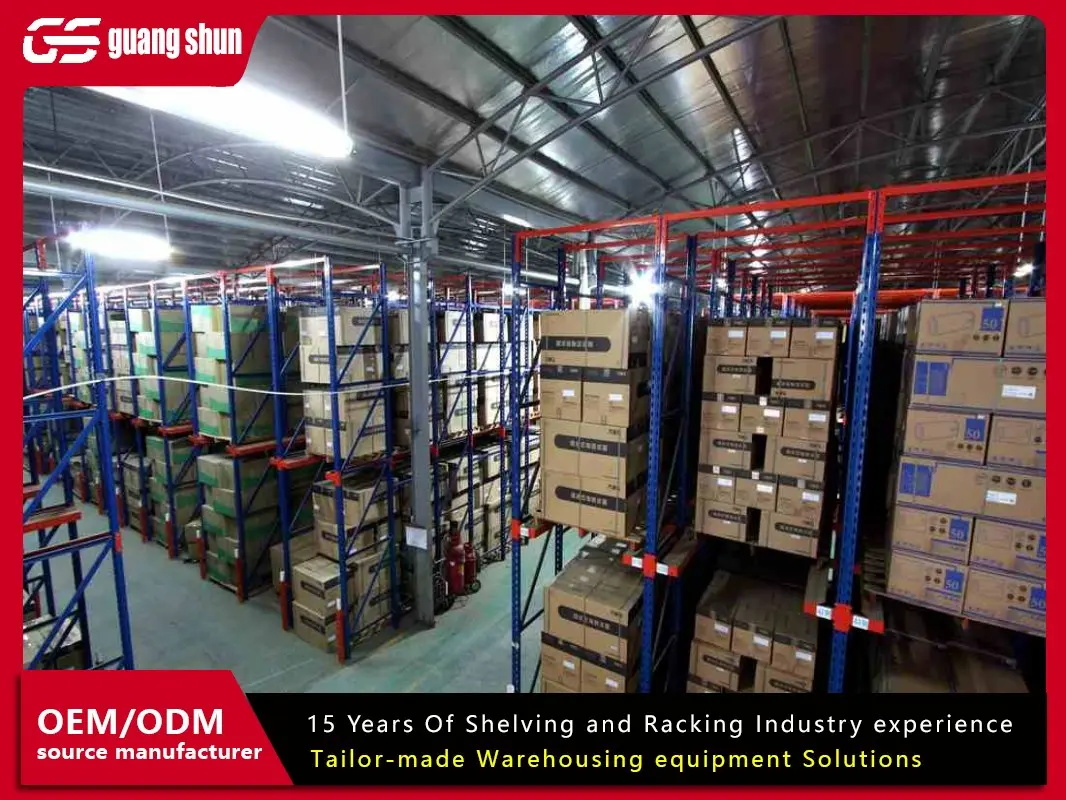
Selective racking remains the most common configuration, offering 100% accessibility to every pallet. Beams connect to upright frames, forming bays that typically accommodate 2–4 pallets per level. Load capacities range from 2,000 kg to 6,000 kg per beam pair, depending on steel gauge (commonly 2.5–3.0 mm for roll-formed profiles). The key advantage is FIFO (First-In, First-Out) compliance and ease of forklift operation. However, aisle space consumes 40–60% of the floor area. For operations requiring high SKU variety, selective types of warehouse shelving are the baseline against which others are compared. Structural steel versions (hot-rolled) are specified for seismic zones or extreme impact risks.
Roll-formed: Cold-rolled from sheet steel; cost-effective for loads ≤4,000 kg; lighter weight reduces shipping costs.
Structural: Hot-rolled angles or channels; higher strength-to-weight ratio; withstands forklift impacts better; used in cold storage due to thicker material.
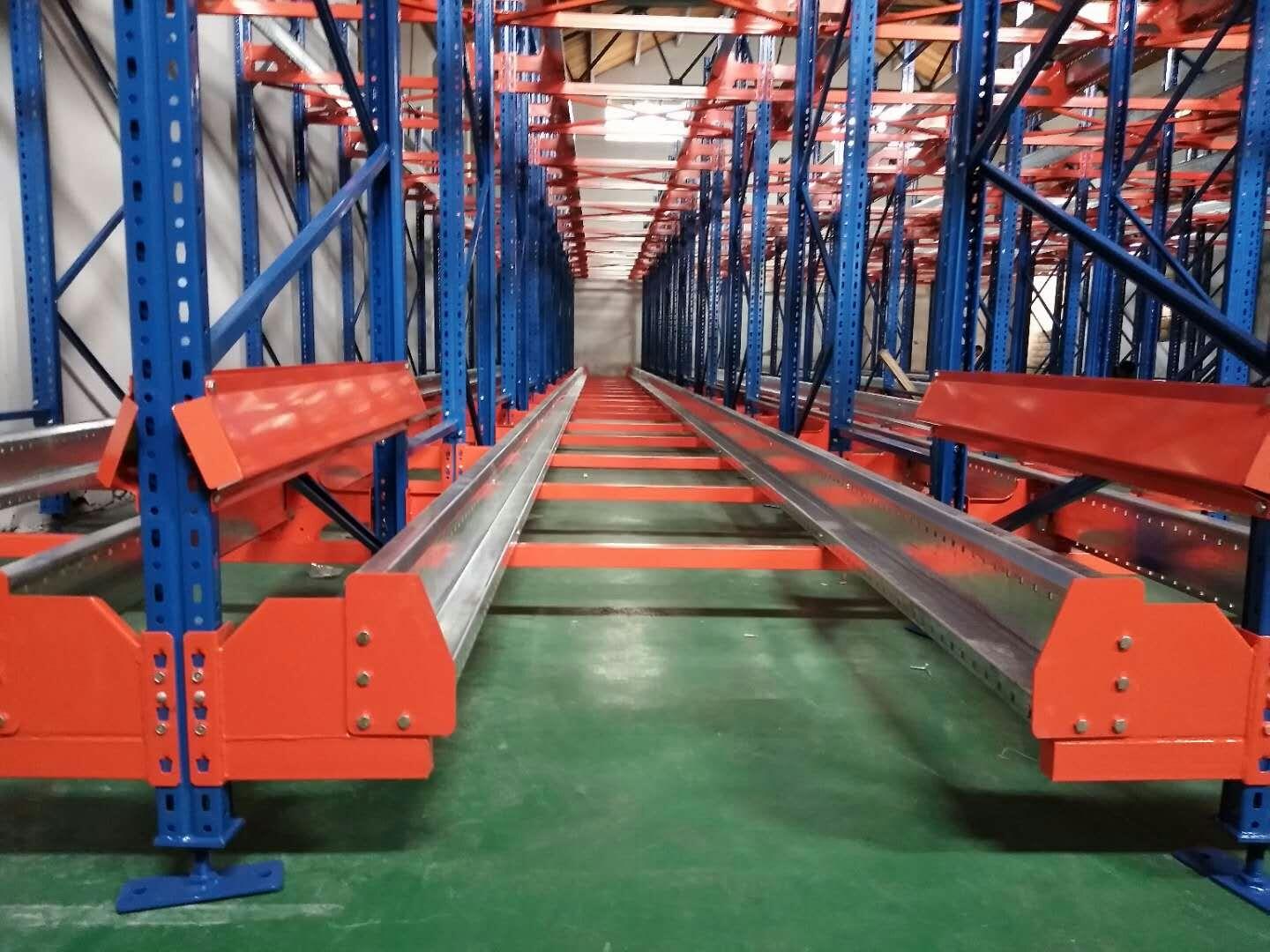
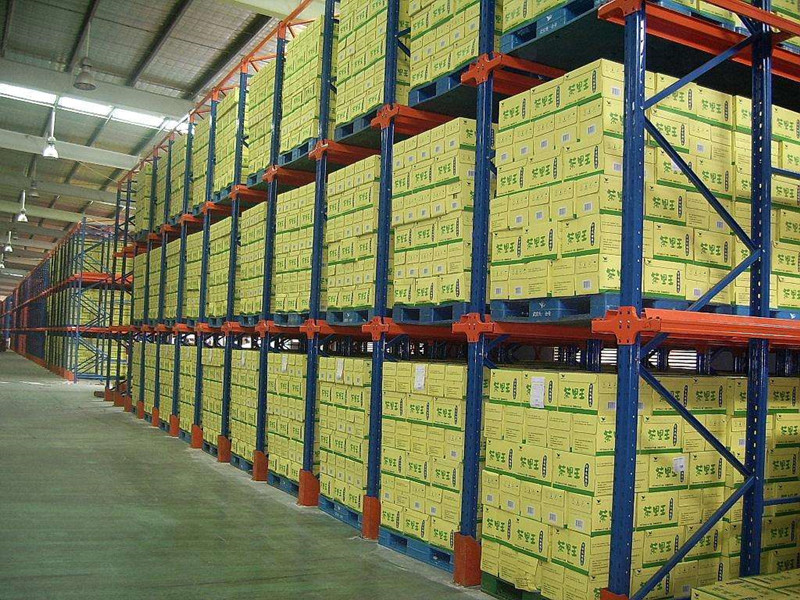
Drive-in racking eliminates aisles by allowing forklifts to enter the storage structure. Pallets are stored on rails from the same side (LIFO) or opposite sides (drive-thru, FIFO). Lane depths typically range from 3 to 10 pallets. This configuration increases storage density by 50–80% compared to selective racks but reduces accessibility. It is ideal for bulk storage of uniform products (e.g., beverage pallets, building materials). Load capacities per pallet position can reach 1,500 kg, but upright frames must resist impact forces—reinforced columns with full-height guards are essential. Types of warehouse shelving like drive-in require precise floor flatness (FM2 or better) to ensure stable forklift movement inside the bay.
Push-back systems use nested carts or inclined rails that allow several pallets to be stored per lane (typically 2–6 deep). When a new pallet is loaded, it pushes the previous ones back. This offers higher density than selective (reducing aisles by 40%) while providing better selectivity than drive-in (each lane contains a single SKU). Push-back operates on gravity with a slight slope (3/8" per foot). Cart systems require minimal maintenance but must be specified with correct wheel materials (polyurethane or steel) based on ambient temperature. Guangshun advises that push-back is best for medium-turnover SKUs with 3+ pallets per SKU.
Pallet flow racking uses gravity rollers or wheels to move pallets from the loading (high) end to the unloading (low) end. Speed controllers regulate descent, preventing damage. Lane depths can exceed 20 pallets, making it the most space-efficient FIFO solution for high-turnover goods (e.g., food, pharmaceuticals). Roller pitch and width must match pallet condition—wooden pallets require heavy-duty galvanized rollers with a pitch of 75–100 mm. Dynamic types of warehouse shelving like flow rack reduce fork travel time by up to 50% but have higher upfront cost. Seismic restraint calculations must account for moving loads.
Cantilever racks consist of vertical columns with horizontal arms extending outward, supporting long materials like lumber, pipes, steel bars, or furniture. Arms are adjustable vertically (typically 50–100 mm increments) and can be single- or double-sided. Load capacities per arm range from 500 kg to 4,000 kg, with column heights up to 12 m. The absence of front columns allows overhead cranes or side-loaders to place loads directly. For cantilever types of warehouse shelving, arm deflection is critical—industry standards limit it to L/180 to prevent load slippage. Guangshun uses tubular arms with reinforced gussets for heavy-duty applications.
When ceiling height exceeds 7 m, mezzanines effectively double or triple storage area without expanding the building footprint. Structural mezzanines are freestanding, supported by columns, and can bear floor loads of 500–1,200 kg/m². Multi-tier shelving integrates shelving units on multiple levels connected by stairs and often includes conveyor take-offs. These systems combine static shelving (for small parts) with pallet locations above. Engineering considerations include column grid spacing (typically 5–8 m), fire suppression integration, and vibration damping. They are considered hybrid types of warehouse shelving that merge bulk and piece storage.
For items too small for pallets, static shelving (bolted or rivet types) and carton flow racks optimize piece-picking. Rivet shelving (with keyhole connections) allows quick shelf adjustments and supports up to 500 kg per level. Carton flow uses wheel beds or rollers on a slight decline, presenting goods to pickers at the front. This reduces pick time by eliminating the need to reach deep shelves. Common in e-commerce fulfillment, these types of warehouse shelving integrate with put-to-light systems. Bin locations and dividers enable fine organization. Guangshun’s carton flow installations have reduced labor costs by 22% in documented trials.
Wide span shelving (also called boltless shelving) features horizontal beams with fewer uprights, allowing widths up to 4.5 m and heights up to 4 m. It bridges the gap between standard shelving and pallet racking, handling bulky but lighter items (e.g., automotive parts, boxes). Load capacities typically range from 1,000–2,000 kg per level. Beams are often punched at 50 mm centers for flexibility. The absence of diagonal bracing in the front allows unobstructed access, making it popular in retail backrooms and industrial workshops. It represents one of the most versatile types of warehouse shelving for mixed loads.
Choosing among these types of warehouse shelving requires evaluating five parameters: storage density, selectivity, throughput, cost per pallet, and SKU profile. Below is a simplified decision matrix:
High selectivity, low density: Selective pallet racking.
High density, low selectivity (homogeneous): Drive-in.
Medium density & selectivity: Push-back or pallet flow.
Long loads: Cantilever.
Small parts: Carton flow or static shelving.
Multi-level: Mezzanine.
Guangshun offers a free layout simulation that models throughput and space utilization based on actual SKU dimensions and order profiles—critical for avoiding costly mismatches.
All types of warehouse shelving must comply with regional design codes (RMI/ANSI MH16.1 in North America, FEM 10.2.02 in Europe, or AS4084 in Australia). Key engineering checks include:
Upright impact resistance: Column guards or sacrificial posts required in forklift zones.
Beam deflection limits: L/180 for safe load support.
Anchor bolt tension/shear: Verified by torque testing post-installation.
Seismic bracing: Cross-aisle and down-aisle bracing according to SDC.
Floor flatness tolerances are especially stringent for flow and drive-in systems; deviations exceeding 5 mm over 3 m can cause pallet jams or instability.
The optimal types of warehouse shelving emerge from a rigorous analysis of load characteristics, inventory turnover, and retrieval patterns. Selective racking remains the workhorse, but dynamic and high-density systems unlock significant ROI when product profiles align. Guangshun’s portfolio includes all eight categories, each validated with finite element analysis and field testing. By engaging engineers early in the planning phase, facilities can avoid the common pitfalls of underspecified racks—bent frames, wasted vertical space, and safety incidents. Evaluate your current storage against the parameters above; adjustments may yield capacity gains without new construction.
A1: The primary types of warehouse shelving for pallets are selective racking, drive-in racking, push-back racking, pallet flow racking, and cantilever racks (for long loads). Each offers different trade-offs between density, accessibility, and cost.
A2: Drive-in is LIFO (Last-In, First-Out) and suits homogeneous products with few SKUs (e.g., bulk storage). Push-back allows 2–6 pallets per lane with LIFO but offers slightly better selectivity because each lane holds one SKU. If you have 3+ pallets per SKU and need moderate throughput, push-back is preferable; for deep lanes with identical product, drive-in maximizes density.
A3: Yes, but sheet goods require arms with a flat, broad surface (often with wood lagging) to prevent sagging. Cantilever racks for plywood typically have deeper arms (up to 1.2 m) and closer vertical spacing. Guangshun offers specialized plywood cradles that integrate with cantilever columns.
A4: Wide span shelving levels usually support between 1,000 kg and 2,500 kg, depending on beam gauge and span. For spans exceeding 3.5 m, engineers may specify thicker beams (2.5 mm) or add reinforcement to meet deflection limits. Always check the manufacturer's load chart for specific configurations.
A5: Yes. Freezer storage requires materials that remain ductile at sub-zero temperatures. Structural steel (hot-rolled) is preferred over roll-formed due to its consistent impact properties. Galvanized finishes resist condensation corrosion. All types of warehouse shelving in freezers must also account for thermal contraction in uprights—slip-base connections may be needed.
A6: Aisle widths vary by equipment: standard counterbalance forklifts require 3.5–4.0 m aisles; reach trucks need 2.8–3.5 m; very narrow aisle (VNA) turret trucks can operate in 1.6–2.0 m aisles. Drive-in and push-back systems reduce aisle count but require wider turning areas at lane entrances. Flow rack and carton flow typically have pick aisles of 1.0–1.5 m for manual picking.
For detailed specifications or engineering support, visit Guangshun’s shelving types overview or contact a storage solutions specialist.

 Wechat
Whatsapp
Wechat
Whatsapp