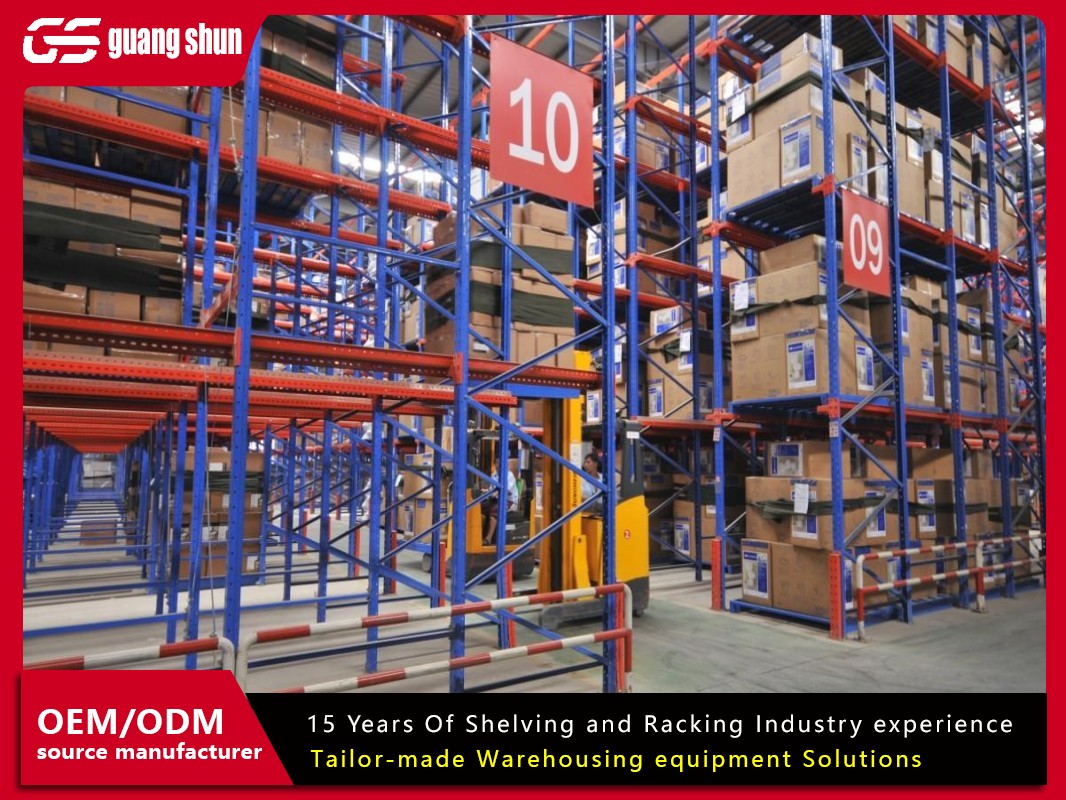
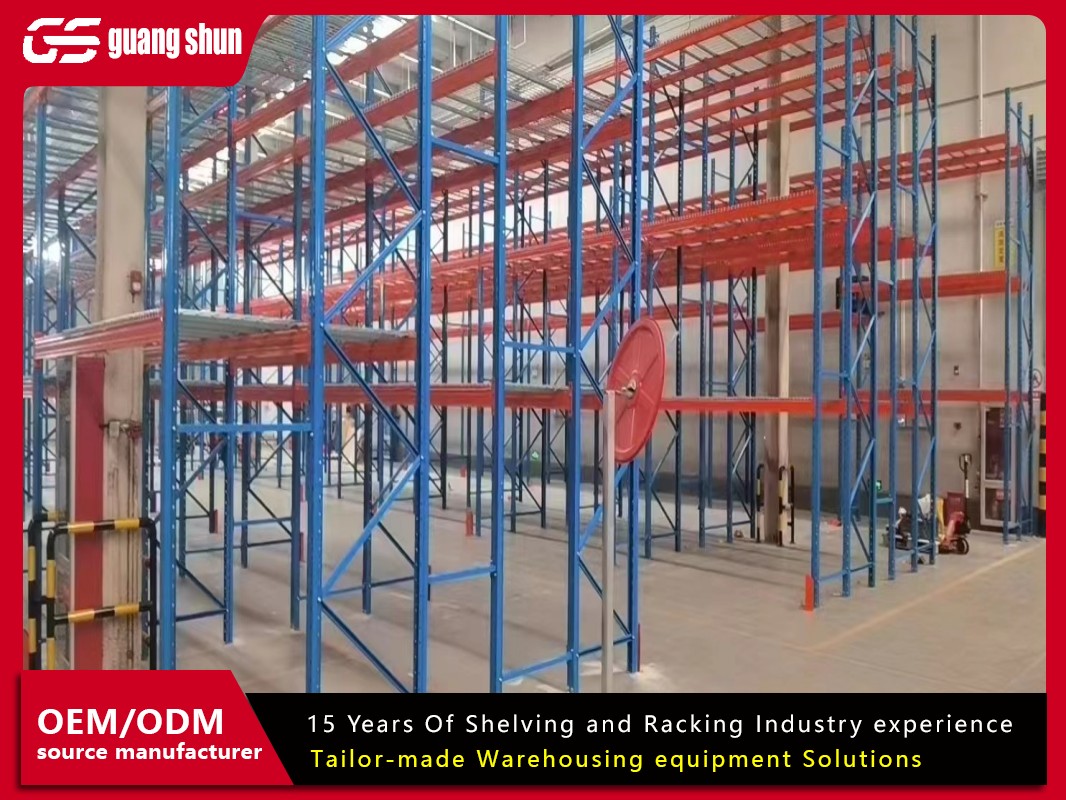
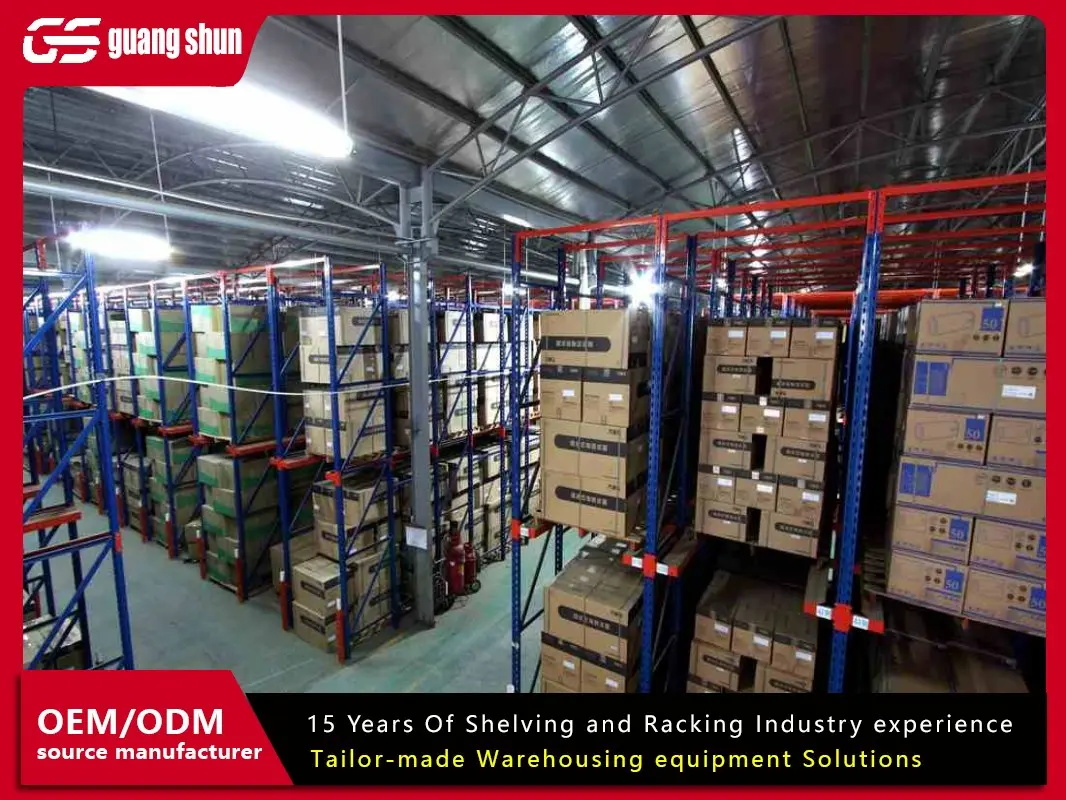
In modern logistics and manufacturing, heavy industrial shelving is not merely a storage accessory—it is the backbone of operational efficiency. When loads exceed 1,000 kg per level, standard shelving fails, leading to safety hazards and downtime. This article dissects the technical architecture, material science, and application-specific configurations of high-capacity racking, referencing industry standards and real-world implementations. Whether you manage a steel service center or an e-commerce fulfillment hub, understanding the nuances of heavy industrial shelving ensures your investment delivers 20+ years of reliable service.
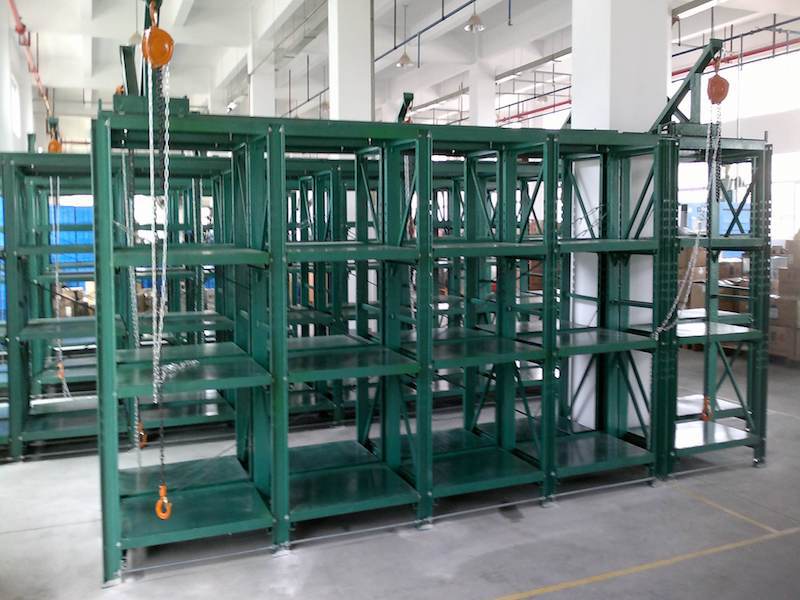
True industrial-grade shelving differs fundamentally from light-duty units. Engineers calculate static and dynamic loads, considering factors like beam deflection (typically limited to L/180) and column compression. Below are the core technical parameters:
Heavy industrial shelving systems commonly support per-level loads from 2,000 kg to 10,000 kg. Beam profiles—whether box-section, channel, or step beams—are roll-formed from high-strength steel (e.g., SS400 or Q235B) with thicknesses ranging from 2.0 mm to 3.5 mm. For extreme loads, structural steel beams (hot-rolled) are specified, offering higher moment resistance. Guangshun’s Guangshun engineering team validates each beam’s capacity through FEA (Finite Element Analysis) to prevent buckling under eccentric loads.
Upright frames utilize tubular or C-channel bracing, welded or bolted in an X or V pattern. This triangulation resists torsional forces from forklift impacts. Base plates are typically 150 mm x 150 mm x 10 mm, anchored to floors with expansion bolts (M16–M20) to meet OSHA and FEM standards. Seismic zones require additional anchor shear tests—a detail often overlooked in generic shelving.
Zinc-plated/galvanized: Ideal for cold storage or humid environments (e.g., food warehouses).
Powder-coated: Polyester or epoxy finishes (60–80 μm thickness) resist chipping and chemicals.
Pre-painted steel: Often used in combination with galvanized substrate for extended life.
Different sectors demand tailored heavy industrial shelving designs. Below are three prevalent use cases where standardized shelving fails without customization.
Automotive suppliers store heavy dies, engines, and transmission assemblies. Here, heavy industrial shelving often incorporates cantilever arms for long items (axles) or multi-tier platforms with integrated mezzanines. Load capacities frequently exceed 5,000 kg per bay, requiring reinforced beam locks and anti-removal pins. Guangshun recently supplied a tiered system for a German automaker’s plant, achieving 35% space savings through vertical utilization.
Coils, sheets, and bars demand robust racking. Coil storage cradles or pyramid racks with hardwood facing protect material edges. For sheet stacks, wide-span shelving (up to 4.5 m length) with reinforced decks prevents sagging. Forklift guides and column protectors are mandatory here—impact forces can reach 10,000 N.
With the rise of bulky-item e-commerce (furniture, fitness equipment), warehouses need heavy industrial shelving that combines bulk storage with pick-face accessibility. Pallet flow rails or push-back systems maximize density while maintaining FIFO rotation. Guangshun’s dynamic shelving solutions integrate skatewheel conveyors directly into shelf levels, reducing forklift travel time by 28% in documented case studies.
Facility managers often face three recurring issues: inefficient space usage, shelf damage from forklifts, and inventory inaccessibility. Here’s how modern heavy industrial shelving addresses these.
Double-deep selective racking or very narrow aisle (VNA) systems increase density up to 60% compared to standard selective racks. Rail-guided trucks (man-up or man-down) operate in aisles as narrow as 1.6 m, with shelving heights reaching 14 m. However, this requires exceptional upright plumbness (≤2 mm per 3 m height) and precision floor flatness—specs that Guangshun engineers survey before installation.
Forklift collisions are the leading cause of rack failure. Heavy industrial shelving now often incorporates sacrificial guards, wrap-around column protectors, and high-visibility markings. Post-impact inspection protocols (based on RMI or SEMA guidelines) determine whether a column can be straightened (cold bending only) or must be replaced. Modular boltless designs allow single-beam replacement without dismantling the entire bay.
In earthquake-prone regions, seismic codes (IBC, ASCE 7) dictate additional cross-aisle bracing and baseplate details. Engineers calculate the seismic design category (SDC) and apply factors like R=4 for rack structures. Special moment frames or buckling-restrained braces (BRBs) may be integrated into the shelving for buildings in SDC D–F. All heavy industrial shelving destined for such areas should undergo full-scale shake-table testing—a non-negotiable for responsible vendors.
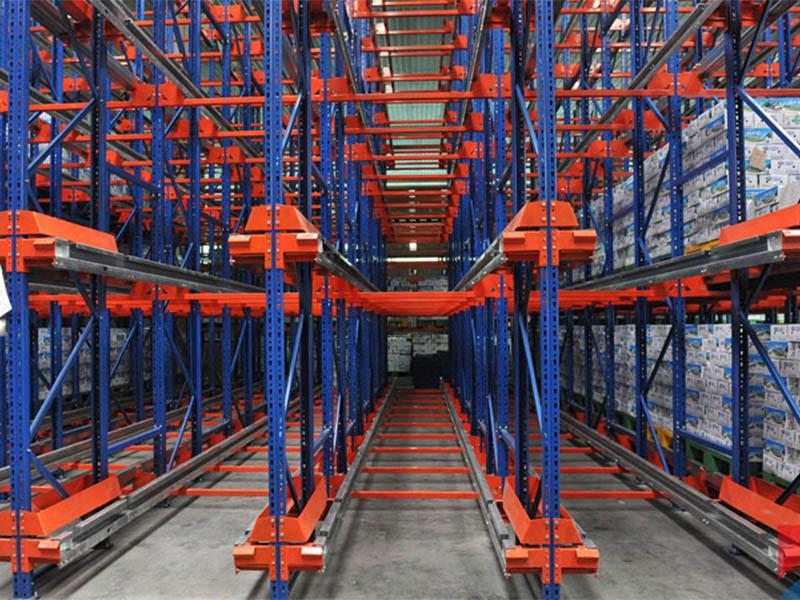
Even the finest heavy industrial shelving underperforms if installed on substandard floors. Below is a checklist derived from 30+ years of field experience:
Floor flatness: FM 2 or better (≤ 4 mm deviation over 3 m) for VNA systems.
Anchor torque: Verify with a torque wrench per engineering specs; typically 150–250 N·m for M16 anchors.
Shim usage: Steel shims only (not wood) under baseplates to maintain vertical alignment.
Periodic audits: Inspect for bent frames, loose anchors, and missing safety clips every 6 months.
While initial procurement of high-end heavy industrial shelving may be 15–20% higher than standard units, the total cost of ownership over a decade reveals savings: fewer replacements, less product damage, and lower insurance premiums. Insurance carriers often offer reduced rates for facilities using RMI-certified racks. Moreover, automated inventory systems (WMS) integrate seamlessly with barcoded beam faces, enabling real-time tracking that reduces search time by up to 40%.
Selecting heavy industrial shelving is a strategic decision that impacts safety, productivity, and space utilization. By prioritizing engineering integrity—from steel grade to seismic details—facilities avoid the pitfalls of collapsed racks and inefficient workflows. Partnering with a manufacturer like Guangshun, who offers full FEA validation and on-site project management, transforms storage from a passive expense into an active profit center. Evaluate your current storage against the criteria above; if gaps exist, consider a professional audit to align your racking with future operational demands.
A1: Most heavy industrial shelving systems are rated for per-level capacities between 1,000 kg and 10,000 kg. However, custom-engineered solutions from manufacturers like Guangshun can exceed 15,000 kg per level by using heavier steel profiles (e.g., 4.0 mm columns) and structural beams. Always verify the Uniform Distributed Load (UDL) rating—point loads may require additional reinforcement.
A2: Yes, provided the racking is designed and tested to meet local seismic codes (IBC, ASCE 7, or Eurocode 8). This includes adding cross-aisle bracing, baseplate anchors with ductile capacity, and possibly energy-dissipating devices. Guangshun offers seismic-engineered systems with full documentation for permitting.
A3: Roll-formed steel is cold-rolled from sheet coils into C or Z profiles; it is lighter and cost-effective, suitable for medium-heavy loads (up to ~4,000 kg). Structural steel uses hot-rolled angles or channels (e.g., ASTM A36), offering higher strength and impact resistance for loads above 5,000 kg or harsh environments. Your choice depends on load requirements and budget.
A4: Industry standards (RMI, ANSI MH16.1) recommend a formal inspection at least annually, and after any significant impact or seismic event. In high-usage warehouses, monthly visual checks for bent frames, missing safety pins, or loose anchors are advisable. Heavy industrial shelving in corrosive environments (chemicals, salt air) may need more frequent coating inspections.
A5: In freezers or chillers (-20°C to +4°C), galvanized finishes (hot-dip or electro-galvanized) are highly recommended to resist condensation-induced rust. Powder coatings can become brittle at sub-zero temperatures. Guangshun supplies heavy industrial shelving with Z275 galvanization specifically for cold environments, ensuring 15+ years of corrosion-free service.
A6: Increasing load capacity on existing heavy industrial shelving should only be attempted after an engineering evaluation. Adding extra beams or bracing may help, but upright columns and anchors have fixed limits. Retrofitting with heavier gauge components might be possible, but often it is safer and more economical to replace the system. Always consult a structural engineer before modifications.
For technical drawings or load charts, visit Guangshun’s heavy industrial shelving product page or speak with a storage solutions engineer.

 Wechat
Whatsapp
Wechat
Whatsapp