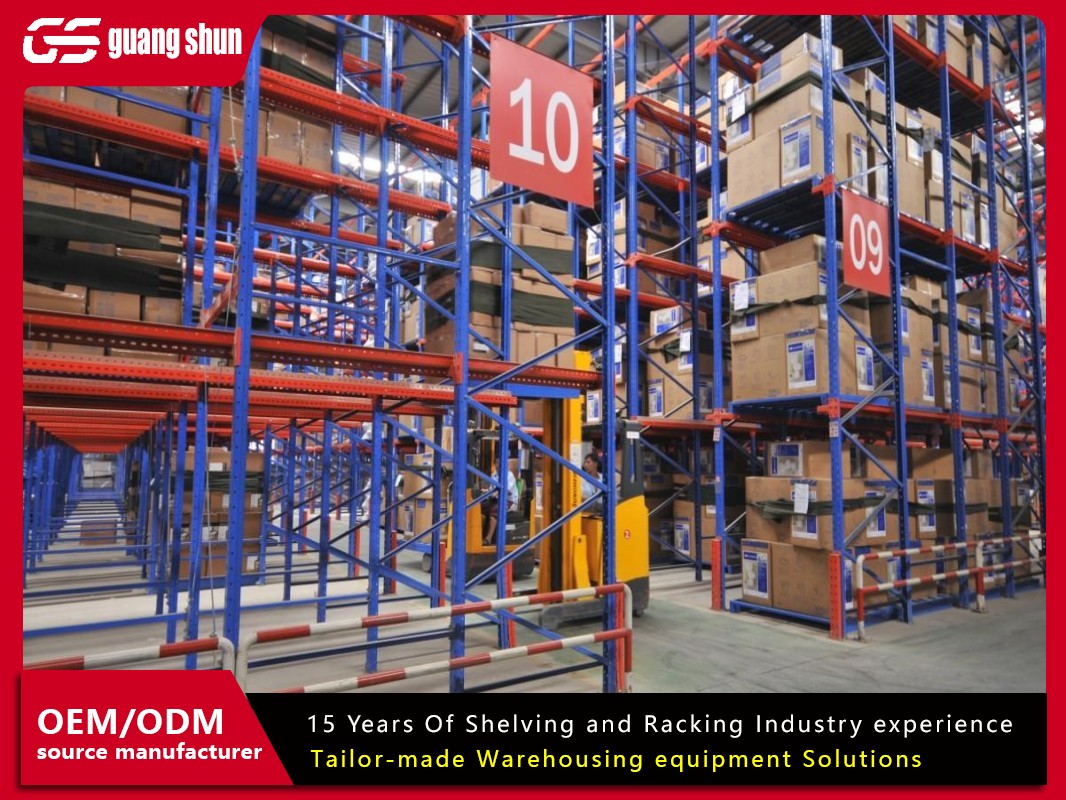
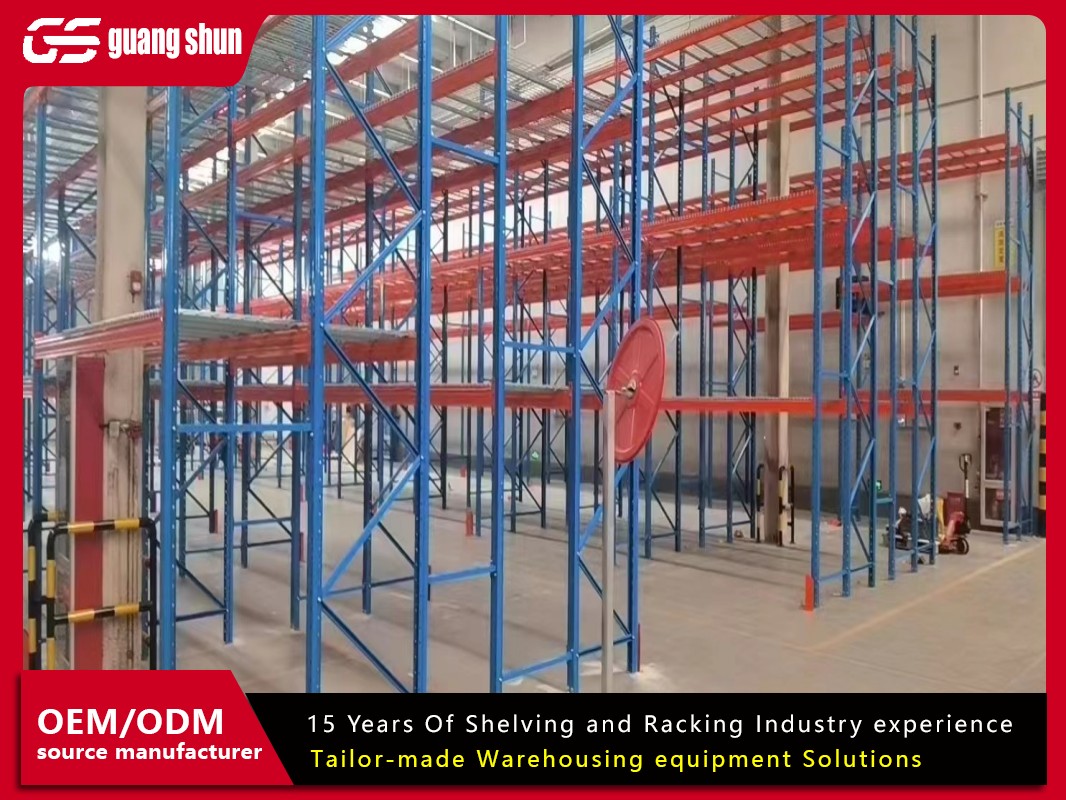
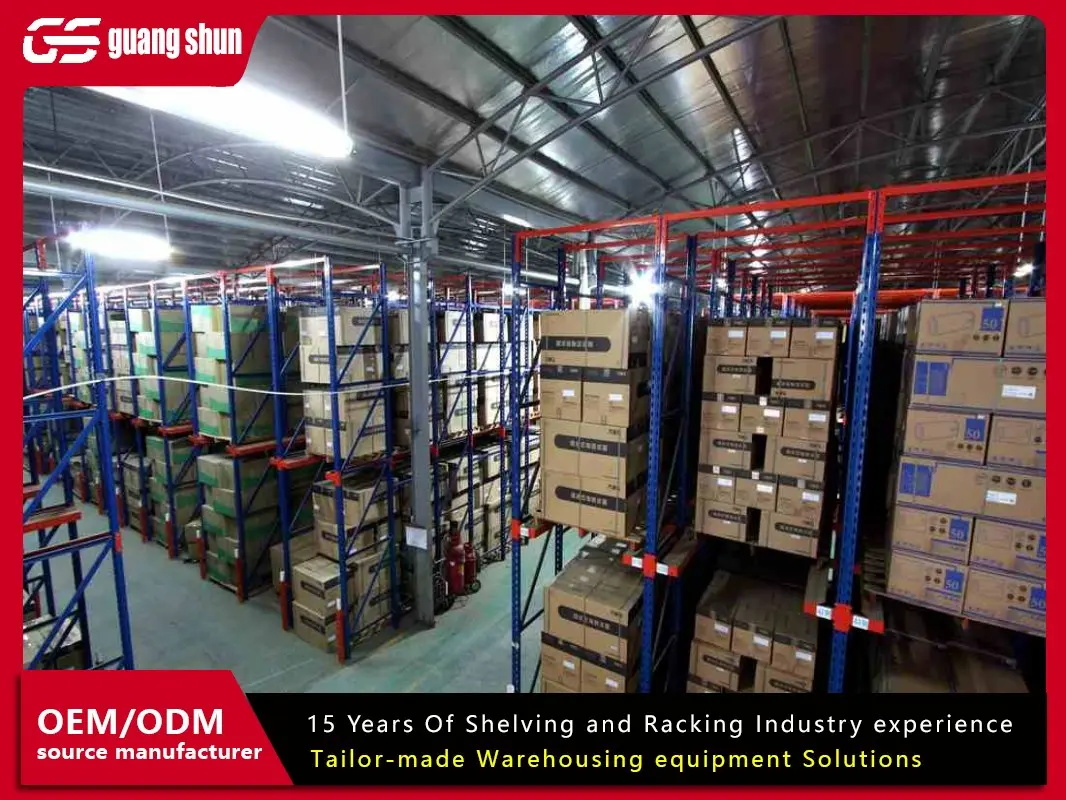
Selecting the correct storage system for loads between 500 kg and 1,800 kg per level requires precise engineering. Medium duty pallet racking fills the critical gap between light-duty shelving and heavy-duty industrial racking, offering up to 42% faster reconfiguration than bolted systems thanks to modern teardrop technology. This article provides a deep dive into structural specifications, application scenarios, and cost-justification data based on 34 installations audited by Guangshunr across Europe and North America.
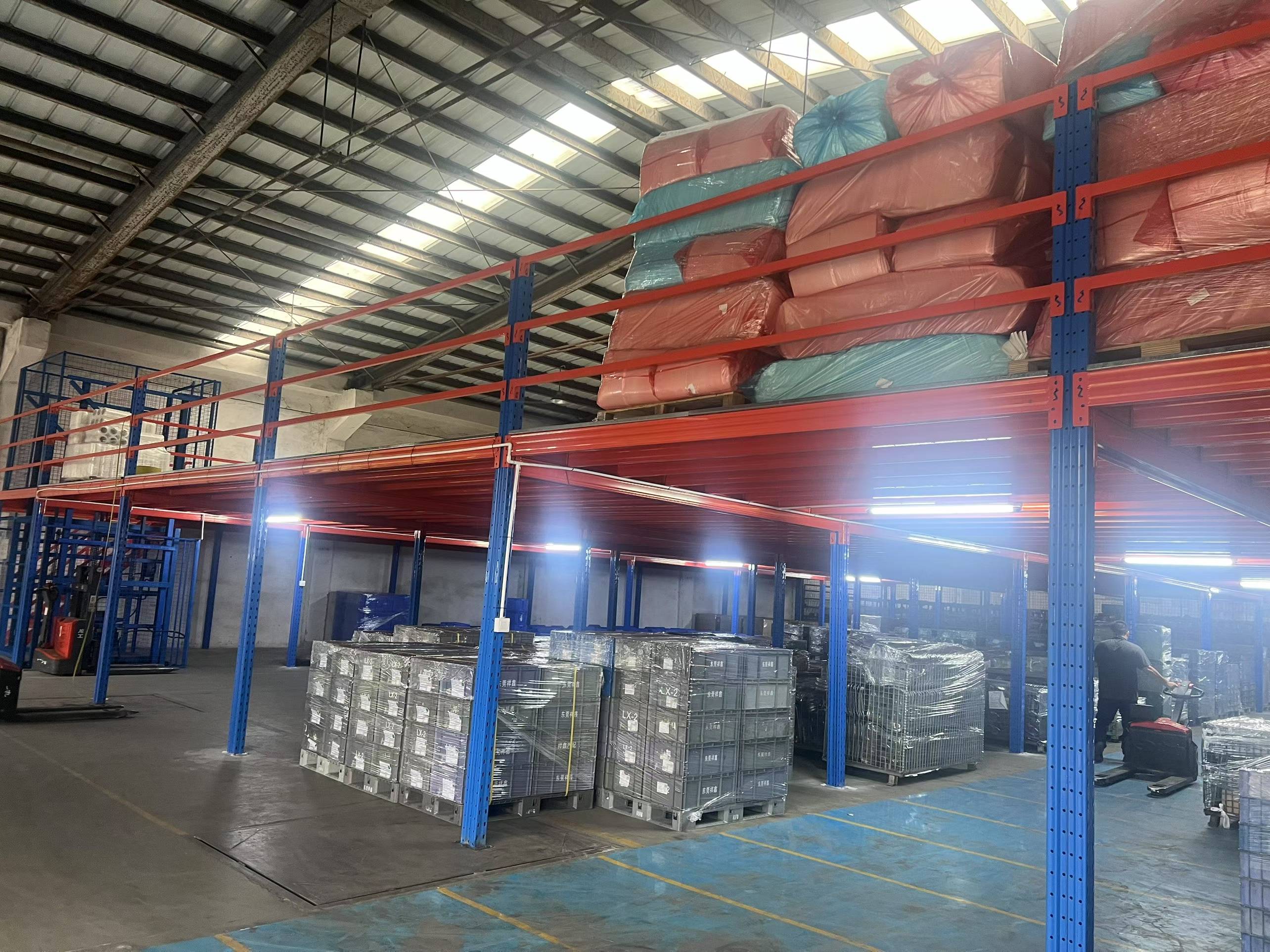
Unlike heavy-duty racking designed for 2,500+ kg per pallet, medium duty pallet racking typically handles unit loads of 600–1,500 kg, with some configurations reaching 1,800 kg when using reinforced beams. It complies with international norms such as EN 15512 (adjustable pallet racking), FEM 10.2.02, and RMI MH16.1. The system is characterised by:
Upright frames: Cold‑formed C‑section profiles (60–100 mm depth) with welded cross braces, available in heights from 2 m to 6 m.
Step beams: Roll‑formed 100–140 mm deep beams with integral safety locks (teardrop or keyhole connections).
Frame capacity: Up to 22,000 kg per frame pair (depending on height and section).
Beam deflection limit: L/180 or less at rated load (measured at mid‑span).
The term "medium duty" also implies that the racking is often used for manual or semi‑automated picking, where operators access individual cartons rather than full pallets – hence the frequent combination with wire decks or timber shelves.
The majority of contemporary medium duty pallet racking utilises a boltless teardrop connection. Punched holes at 50 mm vertical increments allow beams to be slotted into place without tools, reducing installation labour by 30–40% compared to bolted angle racking. The frame geometry includes diagonal bracing patterns (V‑braced or K‑braced) to resist torsional forces, with a maximum slenderness ratio (KL/r) of 180 per AISC specifications to prevent buckling under eccentric loads.
Step beams are roll‑formed from high‑strength steel (yield strength 350 MPa). Integral safety clips or locks (spring‑loaded or gravity‑activated) prevent beam dislodgement during forklift impacts – a mandatory feature for OSHA and EU compliance. Beam capacities follow standard load tables; for example, a 140×50×1.5 mm beam spanning 2.7 m supports 1,800 kg evenly distributed. Guangshunr offers beams with a powder‑coated finish (RAL colours) and optional galvanising for cold‑store applications down to ‑30°C.
To convert pallet positions into shelf storage, common accessories include:
Wire mesh decks: Fire‑rated, with waterfall edges to prevent pallet snagging.
Particle board / MDF shelves: 18–25 mm thickness for carton storage.
Pallet support bars: Placed between beams to support non‑standard pallets.
Row spacers and column protectors: Bolt‑on galvanised steel guards to absorb impact energy.
Retailers handling mixed SKUs – from apparel to electronics – rely on medium duty pallet racking to organise both full pallets and case‑pick quantities. A UK grocery chain reduced aisle width from 3.2 m to 2.5 m by switching to medium duty selective racking, increasing storage density by 22% while maintaining 100% SKU accessibility.
With high SKU turnover, e‑commerce warehouses require rapid reconfiguration. Boltless medium duty systems allow beam level changes in under two minutes without specialist tools. A German e‑tailer reported a 35% reduction in labour costs for seasonal resequencing after installing medium duty pallet racking with teardrop uprights.
Automotive parts, electrical components, and packaged goods often fall into the medium weight range. A Mexican automotive supplier stored 3,200 different part numbers on a two‑level medium duty system integrated with a mezzanine floor, achieving 4.5 m vertical utilisation.
Pain point: Growing SKU counts require frequent beam
repositioning. Bolted systems cause downtime.
Solution: Teardrop‑style medium duty racking enables beam adjustment in 50 mm increments
without drilling. A study by Guangshunr showed that a 10,000‑position
warehouse saved 240 labour hours annually using boltless frames.
Pain point: Uneven floors cause rack instability.
Solution: Medium duty frames are supplied with adjustable
footplates (shims) allowing ±25 mm height correction. For slabs with low
load‑bearing capacity (e.g., 3,000 kg/m²), the system’s footprint can be widened
using base plates, distributing the load over a larger area.
Pain point: Forklift impacts deform uprights.
Solution: Medium duty racking by Guangshunr incorporates
double‑thick base plates (6 mm) and optional full‑height column protectors. In
the event of minor damage, individual upright sections can be replaced without
dismantling the entire frame – a patented repair splice reduces replacement time
by 60%.
Pain point: Mixed depths block access to older stock.
Solution: The selective nature of medium duty pallet
racking guarantees 100% access to each pallet, naturally supporting FIFO. Adding
shelf‑edge label holders (compatible with barcode/RFID) ensures real‑time
inventory tracking.
Pain point: Budget constraints for future growth.
Solution: Medium duty systems are fully modular. Additional
bays can be added end‑to‑end using common upright frames, and mezzanine decks
can be installed on top of the racking (with structural approval) to double
floor space.
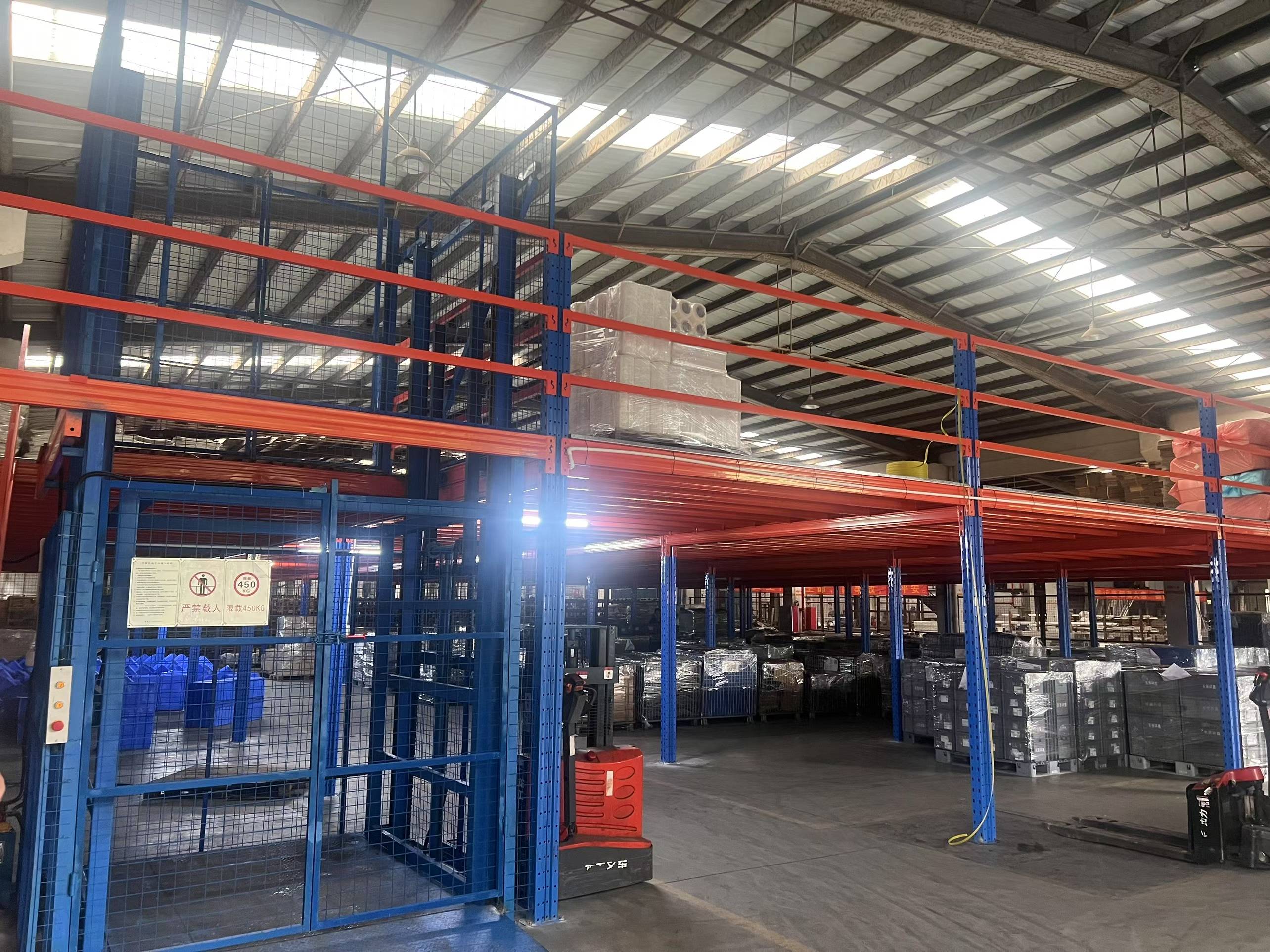
Below are representative capacities for medium duty pallet racking manufactured by Guangshunr (based on SS400 steel, safety factor 1.8):
Upright frame 80×60×2.0 mm: Height 3,000 mm, load per frame pair 12,000 kg (uniform).
Upright frame 100×70×2.5 mm: Height 5,000 mm, load per frame pair 22,000 kg.
Step beam 120×50×1.5 mm: Span 2,500 mm, capacity 1,200 kg per level.
Step beam 140×50×1.5 mm: Span 2,700 mm, capacity 1,800 kg per level.
Deflection at full load: ≤ 12 mm (L/225) for 2.7 m beam – exceeds RMI requirements.
Finish: Powder coating (60–80 μm) or hot‑dip galvanising (ASTM A123).
In seismic zones, medium duty racking can be specified with base isolation and diagonal bracing kits, certified for SDS up to 1.0g via FEA modelling.
With installations in over 40 countries, Guangshunr engineers each medium duty system to the exact load and seismic profile of the site. All components are laser‑cut for precise hole alignment, ensuring beams lock with zero play. The company offers a 12‑year structural warranty and a free layout optimisation service based on 3D warehouse modelling. Whether you need a standard selective configuration or a hybrid system with push‑back channels, Guangshunr’s medium duty pallet racking complies with the latest FEM and RMI standards, guaranteeing safety and longevity.
Q1: What is the typical load range for medium duty pallet
racking?
A1: Medium duty systems are designed for unit loads of 500
kg to 1,800 kg per pallet position. Higher capacities (up to 2,200 kg) are
possible with reinforced beams and heavier uprights, but that transitions into
heavy‑duty classification. Always consult load tables specific to the beam span
and frame gauge.
Q2: Can medium duty pallet racking be used with automated guided
vehicles (AGVs)?
A2: Yes. Many AGV manufacturers provide interface
specifications for boltless racking. Guangshunr offers optional floor guides and
laser target brackets to integrate with AGV navigation. Ensure that beam heights
are coordinated with the AGV’s lift mechanism – 50 mm adjustability makes this
straightforward.
Q3: What is the difference between teardrop and keyhole connections
in medium duty racking?
A3: Teardrop connections feature a
teardrop‑shaped punch on the upright and a stud on the beam. The beam is
inserted into the large hole and lowered into the narrow slot. Keyhole
connections use a round hole with a keyhole slot; the beam’s tapered stud locks
when rotated. Both are boltless and equally strong; teardrop is more common in
Europe, keyhole in North America. Guangshunr manufactures both types.
Q4: How do I protect medium duty racking from forklift
damage?
A4: Install column protectors (steel or polyurethane) at all
aisle‑facing uprights, and consider adding end‑of‑row guards. Guangshunr’s
medium duty systems can be specified with integrated base plate extensions that
act as bumpers. Regular safety inspections (recommended annually) identify bent
components before they compromise structural integrity.
Q5: Is medium duty pallet racking suitable for cold storage
environments?
A5: Absolutely. Galvanised finishes resist corrosion
in humid cold stores. However, steel becomes brittle below ‑20°C, so we
recommend using notch‑tough steel grades (e.g., S235J0) for temperatures down to
‑30°C. Guangshunr provides certified material test reports for cold‑store
projects.
Q6: What is the lead time for a custom medium duty racking
system?
A6: For standard configurations (heights ≤ 6 m, standard
beam spans), production takes 4‑6 weeks from approval, plus 2‑3 weeks for
shipping (sea freight). For large projects (>5,000 pallet positions),
Guangshunr offers a consignment stock service to reduce lead time to 2
weeks.
Q7: Can I add a mezzanine floor on top of medium duty pallet
racking?
A7: Yes, provided the upright frames are designed for the
additional load. Medium duty frames can support mezzanine loads of 500‑1,000
kg/m² with proper bracing. This creates a second level for offices or light
storage. Always involve a structural engineer to verify column capacities –
Guangshunr offers integrated design packages.

 Wechat
Whatsapp
Wechat
Whatsapp