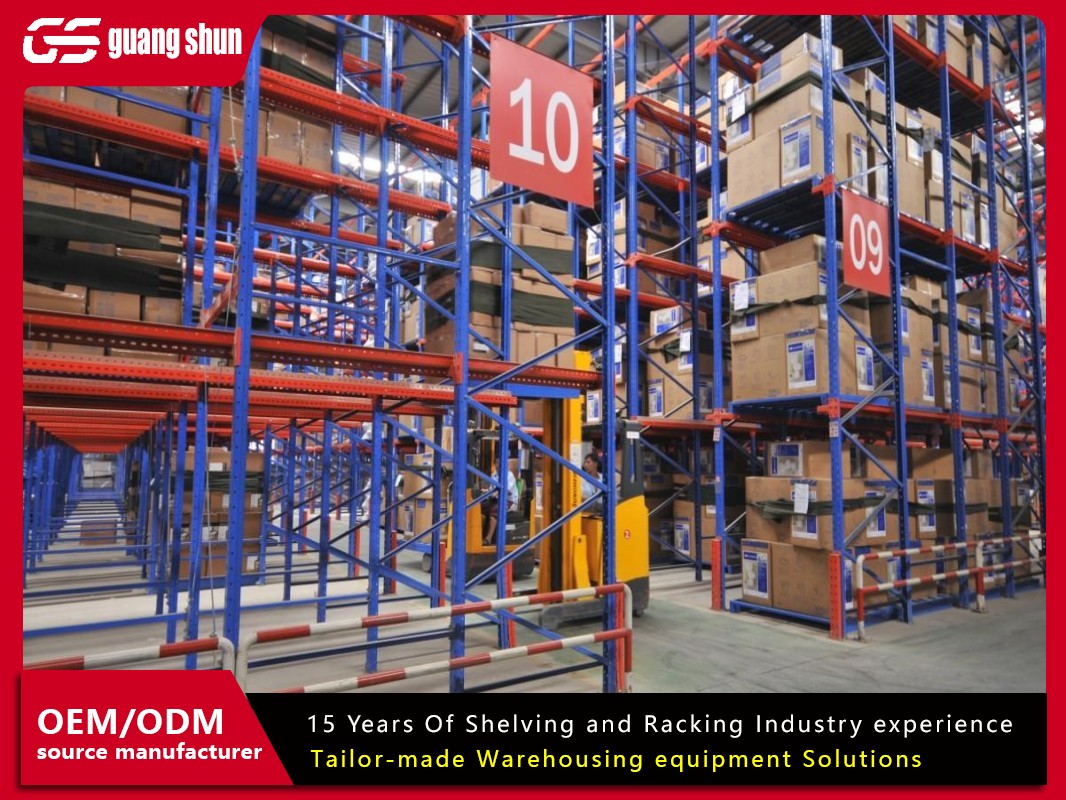
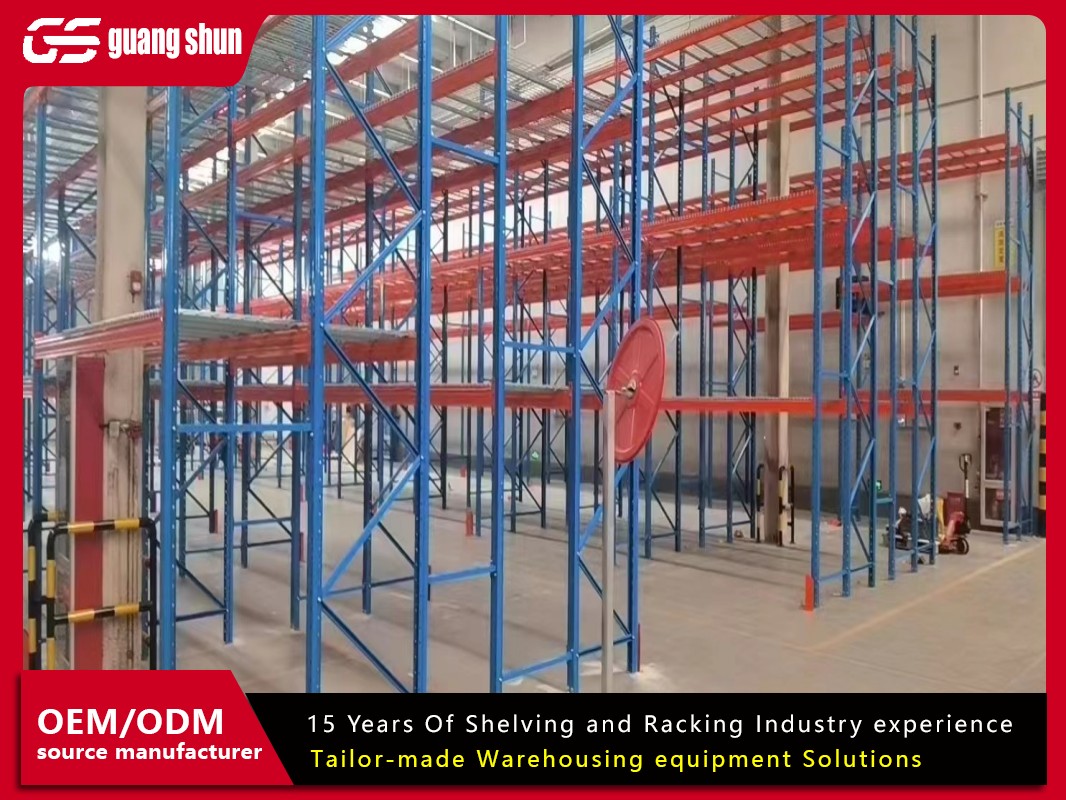
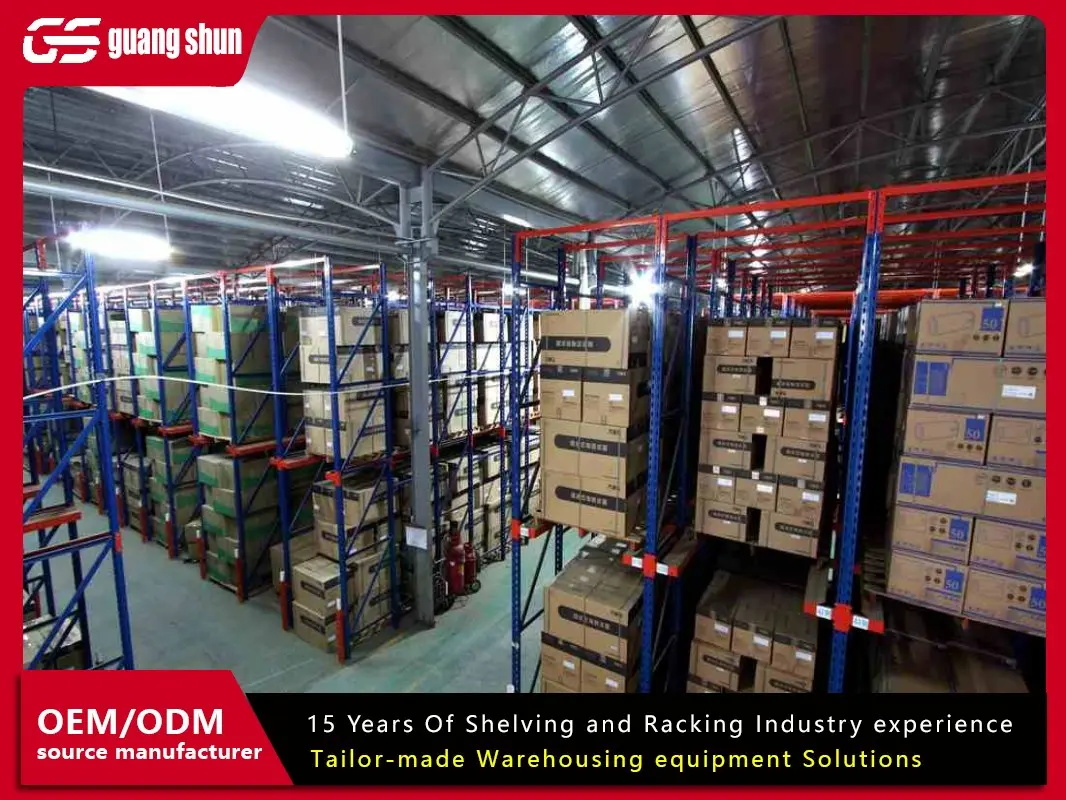
Industrial warehousing operations face a fundamental engineering challenge: maximizing cubic storage density while maintaining precise inventory accessibility and structural safety. The choice of storage medium directly impacts throughput rates, labor efficiency, and capital expenditure. Understanding the distinct mechanical principles, load distribution characteristics, and application-specific constraints across the different types of pallet racking is essential for facility planners and logistics engineers.
This analysis provides a systematic examination of seven primary pallet racking configurations, supported by load capacity data, seismic considerations, and operational metrics. Drawing on field performance data and structural engineering standards, we will evaluate how each system addresses specific warehousing objectives—whether prioritizing selectivity, density, or specialized load handling. For each configuration, we reference engineering best practices employed by Guangshun in their industrial racking solutions.
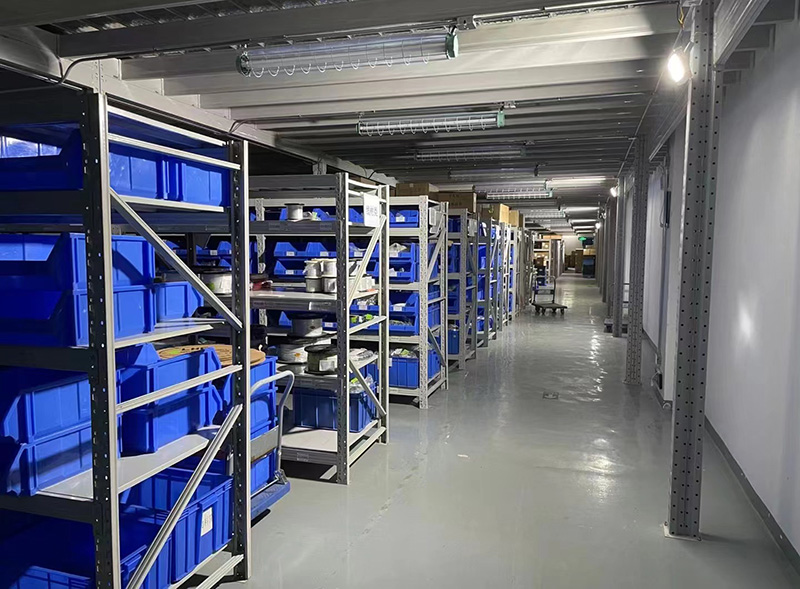
Selective pallet racking remains the most widely deployed configuration due to its fundamental advantage: 100% pallet accessibility. Each pallet position is independently accessible without relocating other loads. This configuration uses upright frames connected by load beams, with pallets resting on the beams or wire decking.
Frame capacity: Typically engineered for 12,000–40,000 lbs per upright frame, depending on column gauge (1.8mm to 3.0mm steel thickness) and bracing pattern.
Beam capacity: Standard step beams accommodate 2,500–6,000 lbs per beam pair, with box beams used for higher uniform loads.
Height limitations: Conventional systems reach 40 feet when using bolted connections; taller installations require seismic bracing and overhead tie bars per RMI (Rack Manufacturers Institute) standards.
Selective systems are optimal for facilities with high SKU counts, FIFO (first-in, first-out) inventory requirements, and variable throughput demands. The primary trade-off is aisle space: conventional selective racking dedicates 35–45% of floor area to aisles, which directly reduces storage density.
Drive-in racking eliminates aisles between rows, allowing forklifts to enter the storage structure to deposit or retrieve pallets. This configuration achieves density increases of 50–70% compared to selective systems, but with significant operational constraints.
Drive-in systems rely on continuous rail supports rather than independent beam levels. Pallets are stored on cantilevered rails attached to upright frames. The structural integrity depends on the lateral bracing provided by the stored pallets themselves—a critical consideration during partial loading conditions.
Depth limitations: Typically limited to 3–7 pallet positions deep due to forklift mast reach and rail deflection constraints.
Load capacity per position: Rail capacities range from 2,000–3,500 lbs per pallet location; deeper configurations require heavier rail profiles (4–6mm steel thickness).
LIFO constraint: Drive-in systems inherently operate as LIFO (last-in, first-out), making them unsuitable for perishable goods requiring FIFO rotation.
These systems excel in uniform product storage, such as bulk commodities, packaged goods with stable demand, and cold storage applications where maximizing cubic utilization outweighs selectivity requirements.
Push-back racking uses nested carts on inclined rails. When a pallet is loaded, it pushes the preceding pallet(s) backward. Unloading reverses this sequence. This configuration offers higher density than selective racking while providing organized storage lanes.
Cart systems: Each lane contains 2–6 carts, typically fabricated from steel with polyurethane wheels or sealed bearings. Cart capacities range from 1,500–3,000 lbs per position.
Rail incline: A 3–5% grade enables gravity-assisted movement; precision alignment (±1/16 inch over lane length) is critical to prevent cart binding.
Depth configurations: Common depths are 2 to 6 pallet positions deep; each additional position increases required push force proportionally.
Push-back systems are particularly effective for operations managing moderate SKU counts with varying turnover rates. They reduce aisle requirements while maintaining organized lane segregation—an advantage for mixed-product storage where SKU integrity must be preserved.
Pallet flow racking combines density with FIFO inventory rotation using gravity conveyors. Pallets are loaded from the rear (high side) and flow forward to the picking face. This configuration is prevalent in distribution centers handling perishable goods or time-sensitive materials.
Conveyor types: Wheel-type conveyors for standard pallets (40×48 inches) or skatewheel configurations for non-uniform bottom surfaces. Heavy-duty roller conveyors for loads exceeding 3,000 lbs.
Flow control: Speed controllers (mechanical or hydraulic) limit pallet descent velocity to 0.5–1.5 ft/second to prevent impact damage.
Lane depth: Typically 6–15 pallet positions deep; deeper lanes require segmented conveyor sections and intermediate braking zones.
Pallet flow systems require precise leveling during installation—typically within ±1/8 inch over 50 feet—to ensure consistent flow. The capital cost per pallet position is higher than selective racking, but labor savings from reduced travel time and improved inventory rotation often justify the investment in high-throughput environments.
Double-deep racking uses two pallet positions deep per bay, accessed with reach forklifts equipped with extended forks (typically 72–96 inches). This configuration offers a middle ground between selective and drive-in systems.
Forklift specifications: Reach trucks with pantograph mechanisms must achieve 48–60 inches of fork extension to access the second-deep position.
Structural modifications: Double-deep configurations require heavier upright frames and increased lateral bracing compared to selective systems due to asymmetric loading conditions.
Inventory management: The configuration supports both FIFO and LIFO depending on lane organization; however, accessing second-deep pallets requires relocating front pallets, reducing throughput for high-turnover SKUs.
Double-deep racking typically achieves 30–40% density improvement over selective systems while maintaining reasonable selectivity. It is well-suited for facilities with moderate SKU counts and consistent pallet dimensions.
Cantilever racking is purpose-engineered for materials that cannot be stored on conventional pallet positions: lumber, piping, sheet metal, structural steel, and furniture. The design uses vertical columns with protruding arms, eliminating front obstructions.
Arm capacity: Single-arm capacities range from 1,500–10,000 lbs depending on arm length (24–72 inches) and column spacing.
Column design: Columns are typically fabricated from C-channel or I-beam sections; double-column configurations provide additional stability for high-bay installations exceeding 20 feet.
Load distribution: Unlike pallet racking where loads are point-loaded on beams, cantilever loads exert significant moment forces at column connections. Base plates must be engineered for uplift forces, often requiring deeper footings or heavier anchorage.
Cantilever systems are measured by both weight capacity and arm spacing; typical arm vertical spacing is 4–6 feet to accommodate varying material heights. For operations handling long goods, this configuration eliminates the inefficiency of custom palletizing.
Mezzanine-integrated systems combine structural steel platforms with pallet racking below, creating multi-level storage or work areas within the same footprint. This approach is increasingly used in facilities where horizontal expansion is constrained.
Column integration: Mezzanine columns must be coordinated with racking uprights to maintain clear floor space; combined structural analysis must account for superimposed dead loads (mezzanine structure) and live loads (rack inventory).
Floor slab requirements: Combined load concentrations often exceed 20,000 lbs per column; existing slabs may require reinforcement or thickened sections to accommodate point loads.
Fire protection: NFPA 13 standards require in-rack sprinkler systems for mezzanine-integrated storage when clear heights exceed specific thresholds; sprinkler design must account for obstruction caused by both racking and mezzanine decking.
Mezzanine-integrated configurations offer the highest space utilization among all different types of pallet racking but require the most rigorous engineering analysis during design and installation phases.
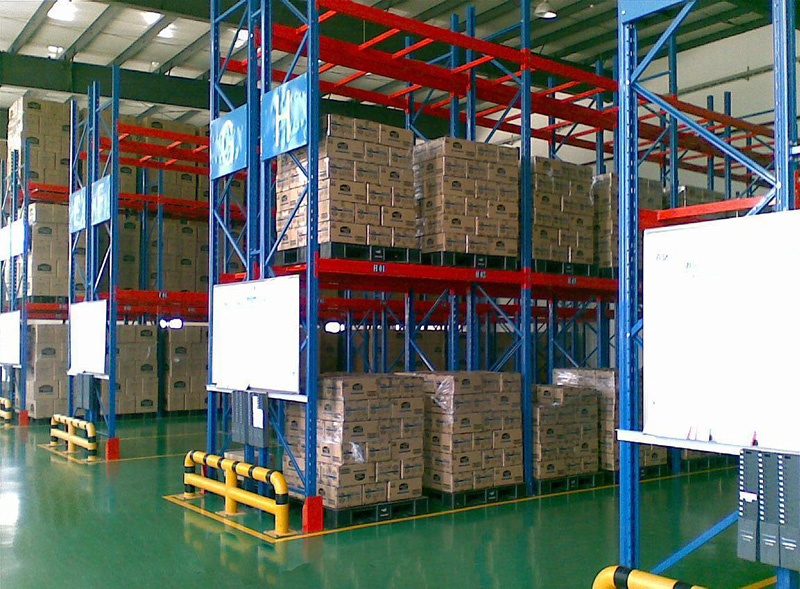
Selecting among the different types of pallet racking requires quantifying trade-offs across three primary metrics: storage density, selectivity (accessibility), and capital cost per pallet position.
Selective: Density baseline (1x), selectivity 100%, relative cost baseline.
Double-deep: Density increase 30–40%, selectivity reduced by access constraints, cost per position 10–15% higher.
Drive-in: Density increase 50–70%, LIFO constraint, cost per position comparable to selective.
Push-back: Density increase 40–60%, LIFO per lane, cost per position 20–35% higher.
Pallet flow: Density increase 50–80%, FIFO optimized, cost per position 30–50% higher.
ROI calculations must incorporate labor efficiency, real estate cost avoidance, and inventory carrying costs. For facilities with land values exceeding $50 per square foot, the incremental investment in high-density configurations often yields payback periods under 24 months.
Guangshun provides engineering consultation services that include load analysis, seismic zone compliance, and ROI modeling to assist clients in selecting optimal rack configurations for their specific operational parameters.
Regardless of configuration, all pallet racking installations must comply with ANSI MH16.1 (specification for the design, testing, and utilization of industrial steel storage racks). Compliance requires documented load capacity placards, seismic zone calculations, and periodic inspections.
Installation precision directly impacts system safety and longevity. Critical parameters include:
Anchor bolt torque: Typically 80–120 ft-lbs for wedge anchors; under-torquing leads to loosening under vibration; over-torquing compromises concrete holding strength.
Upright plumbness: Maximum deviation of 1/4 inch over 10 feet; out-of-plumb uprights create eccentric loading that reduces effective capacity.
Beam seat engagement: Minimum 1.5 inches of engagement; safety clips or bolts required in seismic zones.
Post-installation, facilities must implement inspection protocols per OSHA guidelines, including monthly visual inspections and third-party engineering audits every 2–3 years for high-utilization systems.
The selection among different types of pallet racking is fundamentally a structural engineering decision with direct operational consequences. Each configuration—from selective racking’s universal accessibility to pallet flow’s FIFO optimization—offers distinct advantages that must be matched to inventory profiles, throughput requirements, and facility constraints. A systematic approach, incorporating load analysis, seismic considerations, and lifecycle cost modeling, ensures that the selected system contributes to long-term operational efficiency rather than creating bottlenecks.
For facilities undergoing expansion or modernization, engaging with engineering-led manufacturers ensures that structural integrity, safety compliance, and application-specific requirements are integrated from the conceptual phase through installation and ongoing maintenance.
Q1: What is the maximum height for different types of pallet racking
systems?
A1: Height limits depend on rack configuration and seismic
zone classification. Selective racking can reach 40 feet in non-seismic zones,
but seismic zones typically limit height to 25–30 feet unless additional bracing
(horizontal tie bars, back-to-back connectors) is installed. Drive-in and
push-back systems are typically limited to 25–30 feet due to structural
stability requirements. Cantilever systems can exceed 35 feet but require larger
column sections and deeper footings. All installations must comply with RMI and
local building codes.
Q2: Can existing selective racking be converted to push-back or
pallet flow?
A2: Conversion is generally not feasible due to
fundamentally different structural requirements. Push-back systems require
specific rail inclines, cart guides, and beam profiles that are not compatible
with standard selective rack components. Pallet flow systems require conveyor
supports, speed controllers, and dedicated lane dividers. A new engineered
system is required; attempting retrofits compromises safety certifications and
structural integrity.
Q3: How do seismic zones affect pallet racking design and
installation?
A3: In seismic zones (e.g., California, Alaska,
Pacific Northwest), racking must comply with ASCE 7 seismic provisions.
Requirements include: overhead tie bars connecting rack rows, base plates with
increased anchorage (typically 4–6 anchors per upright), seismic clips on beam
connections, and lateral bracing at intervals not exceeding 8 feet. Some
municipalities require third-party structural engineering review and shake-table
test data for systems exceeding specific heights or load capacities.
Q4: What maintenance is required for pallet flow and push-back
racking mechanisms?
A4: Pallet flow systems require quarterly
inspection of wheel bearings, speed controller calibration, and conveyor surface
wear. Push-back cart systems require annual lubrication of wheel bearings with
NLGI grade 2 grease, inspection of rail alignment (checking for bends or
debris), and verification of cart synchronization across lanes. Both systems
require immediate attention if carts show uneven movement or binding, as uneven
loading can cause structural overload on individual rails.
Q5: How do I determine the correct load capacity label for my pallet
racking system?
A5: Load capacity labeling is mandated by OSHA and
ANSI MH16.1. Each rack section must display a placard specifying maximum uniform
load per level, maximum point load per beam, and total system capacity.
Capacities must be determined by the original system engineer based on upright
frame gauge, beam profile, and bracing configuration. Unlabeled racks are
considered non-compliant; operators must engage a qualified structural engineer
to perform load analysis and generate compliance labels if original
documentation is unavailable.
For technical specifications, capacity charts, or engineering consultation on pallet racking configurations, contact the industrial storage specialists at Guangshun.

 Wechat
Whatsapp
Wechat
Whatsapp