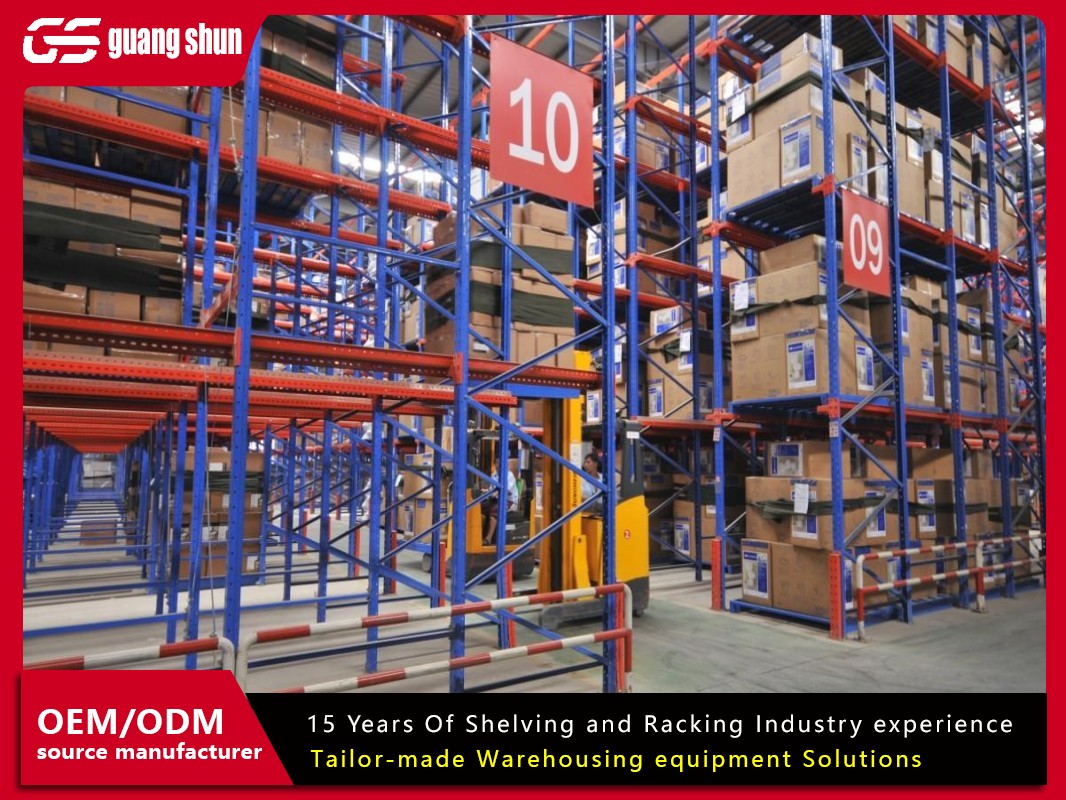
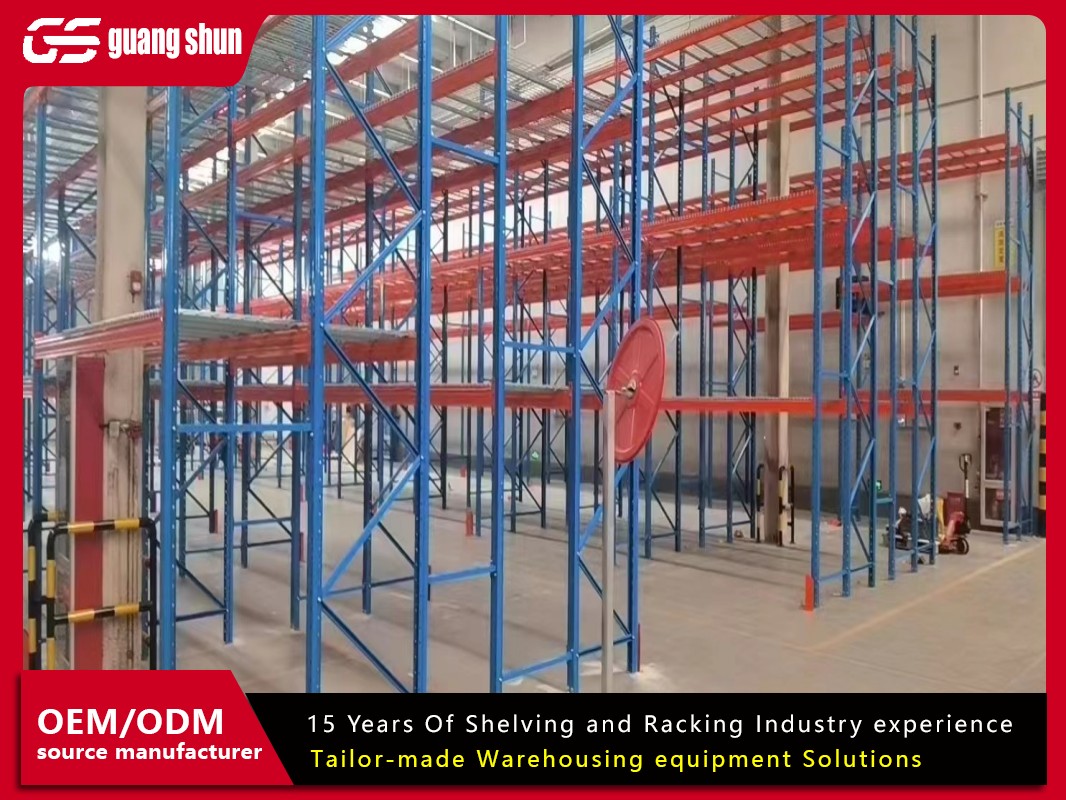
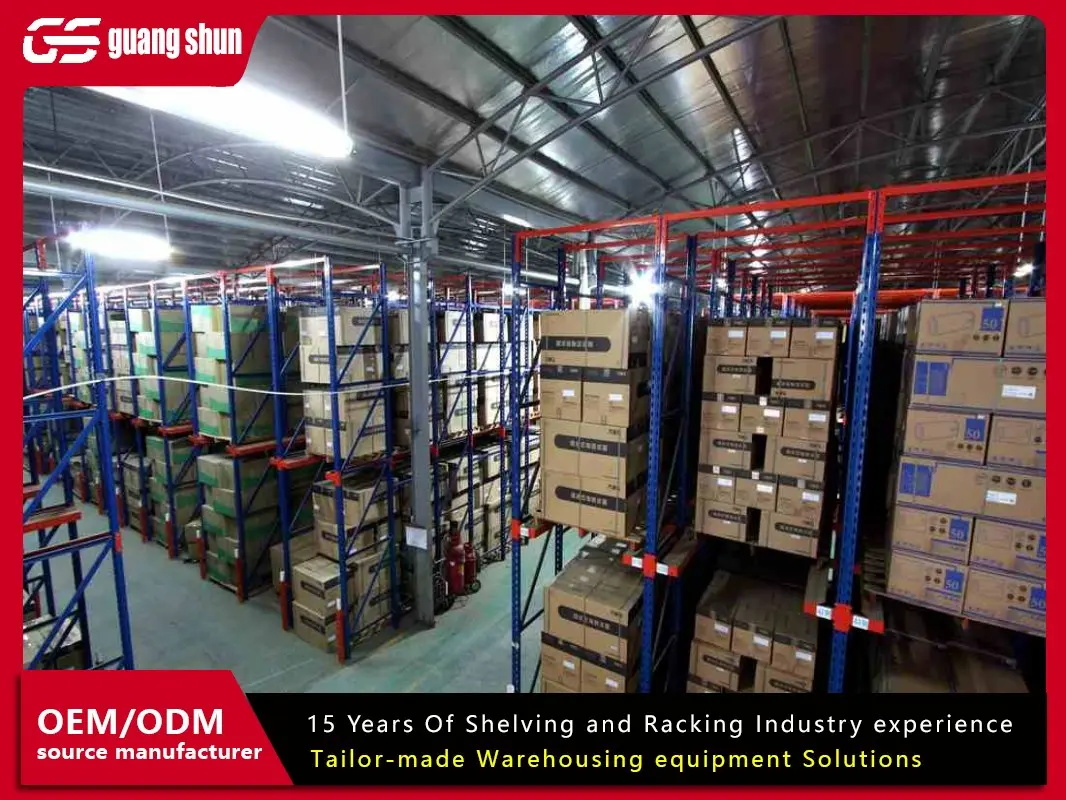
In the high-stakes environment of industrial warehousing and distribution centers, static storage is no longer a viable option for operations seeking to maximize cubic utilization while maintaining rigid safety protocols. The evolution toward mobile, high-density systems has placed heavy duty rolling storage shelves at the forefront of material handling engineering. These systems are not merely shelves on wheels; they are precision-engineered structures designed to withstand extreme vertical loads, dynamic horizontal forces, and the relentless demands of 24/7 industrial workflows.
This article provides a technical deep dive into the architecture, application scenarios, and quantifiable operational benefits of industrial-grade mobile storage systems. Drawing on engineering data and field performance metrics, we will examine how modern heavy duty rolling storage shelves solve critical floor space constraints, enhance inventory organization, and deliver a compelling return on investment (ROI) for sectors ranging from automotive logistics to heavy equipment parts distribution.
The term “rolling shelves” often understates the complexity of these systems. Industrial heavy duty rolling storage shelves are engineered as integrated systems comprising four core components: the carriage base, integrated rail system, load-bearing columns, and a mechanical or electromechanical movement mechanism. Unlike traditional pallet racking, which relies solely on floor anchorage, mobile systems must account for dynamic load transfer during movement.
A critical engineering consideration is the load per wheel or per rail section. A standard static pallet rack may exert point loads of 2,000–4,000 lbs per foot. However, a mobile carriage system consolidates this weight into a moving footprint. For high-density configurations, the floor flatness must adhere to ACI 117 standards with a tolerance of ±1/8 inch over 10 feet. Furthermore, the subfloor's load-bearing capacity must support concentrated loads that can exceed 15,000 lbs per wheel assembly in extreme-duty applications.
Dynamic Load Rating: Quality systems are rated for both static (parked) and dynamic (moving) loads. For heavy industrial use, the dynamic load rating must be at least 80% of the static capacity to ensure mechanical longevity.
Rail Systems: Embedded steel rails vs. surface-mounted tracks. Embedded systems offer superior stability for very high bay applications, eliminating trip hazards and ensuring alignment under heavy lateral stress.
Carriage Construction: 8–10 mm structural steel base plates with robotic welds ensure that torsional forces during movement do not compromise structural alignment.
Guangshun implements finite element analysis (FEA) in the design phase of their mobile systems, simulating load scenarios up to 1.5 times the rated capacity to validate yield strength and fatigue resistance over a 20-year operational lifespan.
The decision to integrate heavy duty rolling storage shelves is typically driven by three interconnected operational bottlenecks: the depletion of available floor space, rising labor costs associated with travel time, and safety incidents related to improper load distribution. Let’s analyze each through a quantitative lens.
Traditional selective pallet racking dedicates 35% to 45% of warehouse space to aisles. Mobile rolling systems condense multiple aisles into a single moving aisle, effectively increasing storage density by 50% to 70% within the same footprint. For facilities operating in high-cost real estate markets or with physical expansion limitations, this translates to a capital expenditure avoidance of $30–$80 per square foot that would otherwise be required for new construction.
Safety concerns regarding mobile storage often center on tip-over risks. Advanced systems incorporate multiple fail-safes:
Seismic Base Isolation: In seismically active zones, systems are engineered with base isolators that decouple the structure from ground motion.
Anti-Tip Anchoring: A combination of floor anchors and overhead stabilizers (for high-bay applications exceeding 25 feet) ensures structural stability even during simultaneous movement and seismic events.
Infrared Light Curtains: Movement is halted instantly upon breach of the aisle perimeter, meeting ANSI MH27.1 safety standards for industrial mobile storage.
In logistics, “travel time” constitutes 40–60% of order-picking labor. By consolidating inventory into a compact mobile array, travel distances are geometrically reduced. A case study in automotive aftermarket warehousing demonstrated a 47% reduction in picker travel time after converting static long-span shelving to a motorized heavy duty rolling storage shelves configuration. This directly impacts labor efficiency metrics and order fulfillment speed.
Not all industrial environments are equal. The material composition and configuration of mobile storage must be tailored to the specific operational environment—whether it’s cold storage, chemical warehousing, or high-humidity manufacturing support.
Standard powder-coated steel may degrade in environments with frequent washdowns or corrosive agents. For such applications, systems utilize hot-dip galvanized components after fabrication, providing a zinc coating thickness of 85 microns minimum. Stainless steel guide rails and sealed bearing assemblies prevent galvanic corrosion that could compromise movement precision.
Operating in temperatures as low as -22°F (-30°C) introduces specific challenges: lubricant viscosity, contraction of materials, and condensation. Specialized heavy duty rolling storage shelves for cold storage utilize low-temperature hydraulic fluids, Teflon-coated bearings, and heated control panels to prevent electronic failure. The load capacities in such environments are typically derated by 10-15% to account for material brittleness.
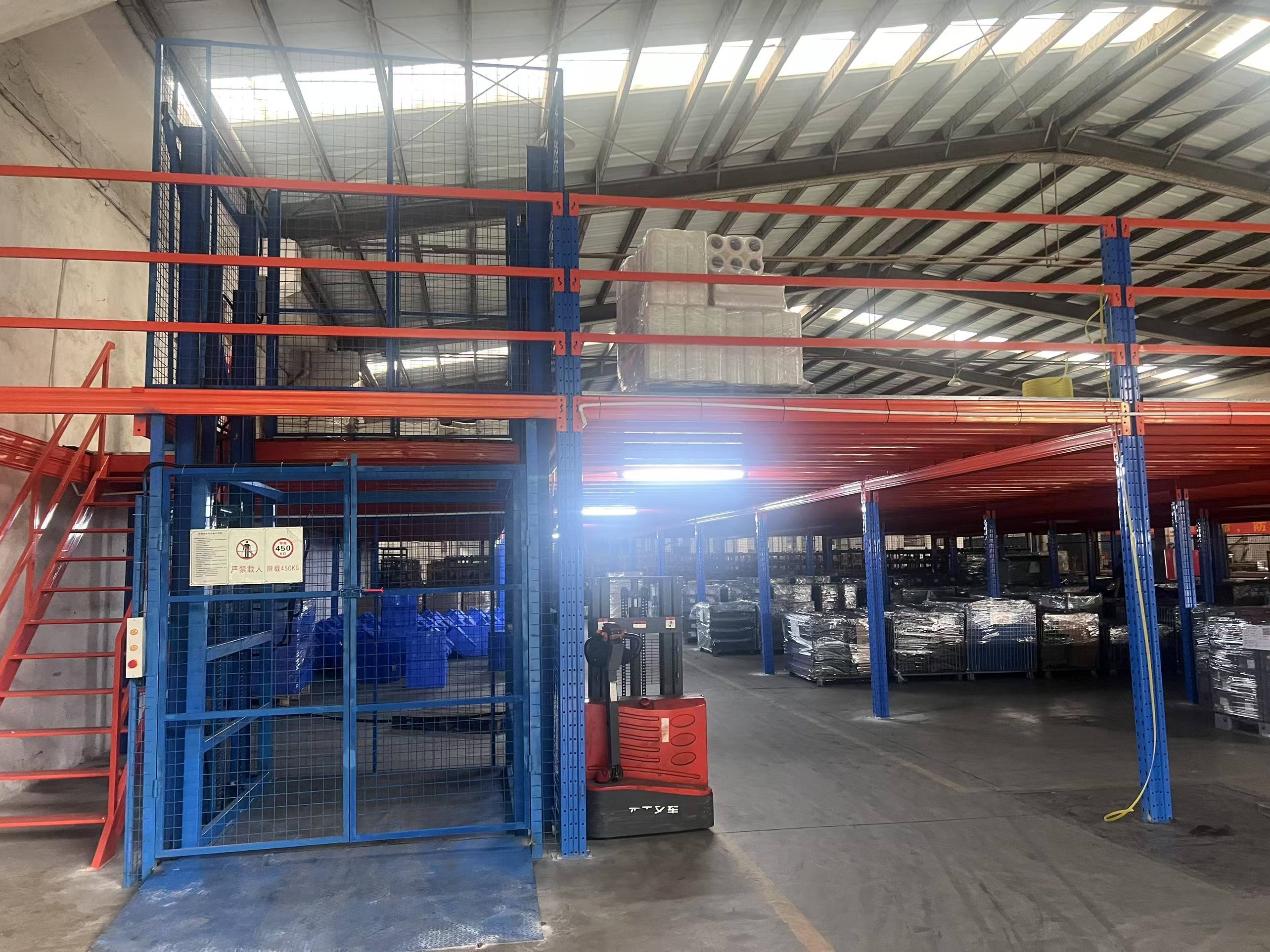
To maximize vertical space, some facilities integrate mobile storage beneath structural mezzanines. This hybrid approach requires precise coordination between the mezzanine column placement and the mobile carriage travel path. Engineering calculations must account for the combined dead load of the mezzanine, the rolling system, and the dynamic live load during movement—often requiring reinforced floor slabs with 4,000+ psi concrete strength.
Modern industrial storage has transcended manual operation. The latest generation of heavy duty rolling storage shelves incorporates IoT-enabled sensors that provide real-time operational data, aligning with Industry 4.0 principles. These digital integrations offer tangible value in maintenance cost reduction and operational visibility.
Load Cell Monitoring: Integrated load cells at the carriage level provide continuous weight distribution data, alerting operators to unbalanced loads before they cause mechanical stress or tip hazards.
Vibration Analysis: Accelerometers monitor rail and wheel assembly health, predicting bearing failure or rail deformation with 90% accuracy, enabling condition-based maintenance rather than reactive repairs.
RFID Integration: Mobile systems can be integrated with warehouse execution systems (WES) to automatically position the correct aisle based on incoming pick lists, reducing operator wait time to near zero.
Guangshun has developed proprietary control systems that offer API connectivity to major WMS platforms, allowing seamless orchestration between inventory data and physical storage movement. This reduces human error in aisle selection and provides audit trails for high-value inventory control.
When evaluating capital expenditure for mobile storage, the financial model must account for direct savings in real estate, labor, and product damage reduction. A typical ROI calculation for a 50,000 sq. ft. warehouse converting to heavy duty rolling storage shelves yields the following quantifiable metrics:
Real Estate Avoidance: At an average industrial construction cost of $120/sq. ft., avoiding a 25,000 sq. ft. expansion represents a $3 million deferred capital outlay.
Labor Productivity: Reducing travel time by 40% for a team of 20 pickers at $28/hr (loaded rate) generates annual labor savings of approximately $93,000 per year.
Inventory Accuracy: Dense, organized mobile systems reduce misplaced inventory (shrinkage) by an average of 15-20%, according to industry benchmarks from the Material Handling Institute (MHI).
Tax Depreciation: Mobile racking systems qualify for accelerated depreciation under MACRS (7-year property), improving net present value (NPV) calculations compared to building expansions (39-year property).
From a lifecycle perspective, high-quality mobile systems constructed with heavy-gauge steel and precision bearings offer a 25+ year lifespan with proper maintenance, significantly outperforming static bolt-together racking which often requires component replacement after 10-15 years in high-throughput environments.
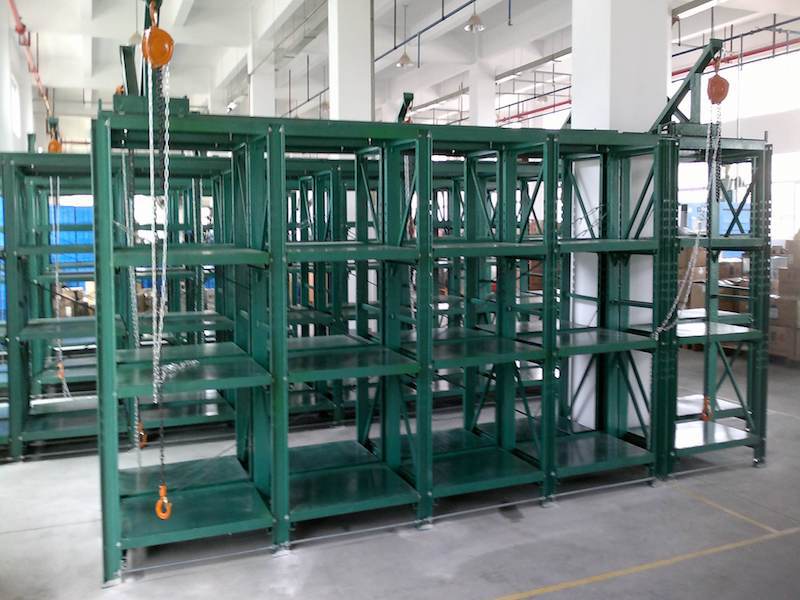
The successful deployment of heavy duty rolling storage shelves hinges on rigorous installation protocols. Unlike bolt-together racking, mobile systems require certified installation teams who understand rail alignment tolerances and electrical integration. Misalignment during installation by as little as 1/16 of an inch across a 100-foot run can result in accelerated wheel wear, uneven load distribution, and eventual system failure.
Installation should follow a phased approach:
Site Assessment: Concrete testing (core samples) to verify thickness and compressive strength. Verification of flatness using laser profiling equipment.
Rail Installation: Precision laser alignment to ensure parallelism within ±0.5 mm over the entire run. Grouting of anchor bolts with epoxy for seismic resistance.
Carriage Placement: Sequential placement and leveling of carriages, with initial movement tests under incremental load.
Commissioning: Performance testing at 125% of rated load, including emergency stop tests and seismic simulation (if specified).
Operator Certification: Training programs covering manual override procedures, load configuration protocols, and infrared sensor troubleshooting.
Partnering with manufacturers who provide turnkey installation—such as the services offered through Guangshun’s engineering division—ensures that the system's performance aligns with the original design specifications and safety certifications.
Heavy duty rolling storage shelves represent a convergence of structural engineering, material science, and digital control systems. For industrial operations facing space scarcity, high inventory SKU counts, and the need for rapid throughput, these systems offer a scientifically validated pathway to operational efficiency. The key to maximizing ROI lies in specifying the system based on accurate load data, environmental conditions, and integration with warehouse software. When engineered and installed correctly, mobile storage becomes not merely a storage solution, but a strategic asset that enhances safety, reduces operational costs, and extends the functional life of industrial facilities.
Q1: What is the maximum load capacity per shelf for heavy duty
rolling storage shelves?
A1: Capacity depends on the specific
engineering configuration. Standard industrial mobile systems accommodate loads
ranging from 2,500 lbs to 6,000 lbs per shelf level, with total carriage loads
often exceeding 50,000 lbs. For specialized applications such as die storage or
heavy machinery parts, custom-engineered carriages can support up to 10,000 lbs
per shelf using reinforced beam profiles and dual-wheel assemblies. Always
consult the manufacturer's load chart, as dynamic loads during movement require
a safety factor reduction.
Q2: How do heavy duty rolling storage shelves perform in seismic
zones (e.g., California, Japan)?
A2: Seismic performance is governed
by strict engineering standards such as ASCE 7 and CBC (California Building
Code). Seismic-certified mobile systems incorporate base isolation, anti-tip
restraints, and structural bracing that allow the system to sway with ground
motion without tipping or rack collapse. These systems undergo shake-table
testing to simulate earthquake forces up to 0.8g peak ground acceleration.
Facilities in seismic zones must specify "seismic-rated" systems and have
installation inspected by a structural engineer.
Q3: Can existing static racking be converted into a mobile rolling
system?
A3: In most cases, static racking components are not
structurally designed for the dynamic forces of movement. Attempting to retrofit
static rack onto mobile carriages voids safety certifications and risks
catastrophic failure. The appropriate approach is to engineer a new mobile
system that matches the required load specifications, though the existing rack
beams and uprights may sometimes be reused if they meet the dynamic load
criteria and are inspected for fatigue. A full engineering analysis is
mandatory.
Q4: What maintenance schedule is required for heavy duty rolling
storage shelves?
A4: Preventive maintenance should follow a tiered
schedule: Monthly inspections include rail cleaning, wheel alignment checks, and
emergency stop testing. Quarterly maintenance involves lubricating bearings with
manufacturer-specified grease (NLGI grade 2 for most industrial applications)
and verifying electrical connections. Annually, a comprehensive inspection
should measure rail wear, carriage levelness, and control system calibration.
Maintenance records are essential for warranty compliance and OSHA/ANSI safety
audits.
Q5: How do I determine if my concrete floor can support a mobile
rolling system?
A5: A concrete floor assessment must be performed by
a structural engineer or the racking manufacturer's site team. Critical factors
include: concrete compressive strength (minimum 3,000 psi for most mobile
systems, though 4,000+ psi is preferred), slab thickness (6 inches minimum for
heavy duty), reinforcement (rebar or fiber mesh presence), and subgrade
conditions. The assessment will calculate point load concentrations—often
10,000–20,000 lbs per wheel—and determine if slab reinforcement or a new
structural slab is required before installation.
For detailed engineering specifications, load capacity charts, or to request a site assessment for your facility, consult the industrial storage experts at Guangshun.

 Wechat
Whatsapp
Wechat
Whatsapp