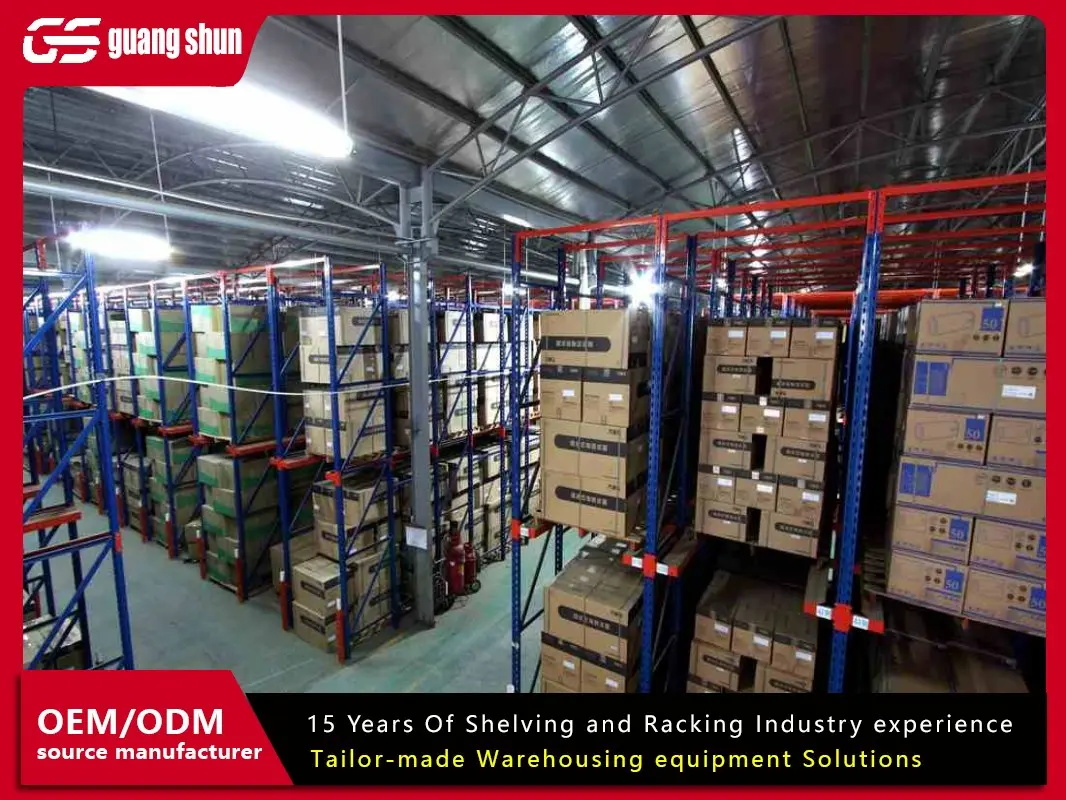
Selecting the wrong storage system for your warehouse is a costly mistake. It leads to wasted space, slower operations, and unsafe working conditions.
With so many racking system types available, the choice can feel overwhelming. Each design serves a specific purpose, and the best fit depends entirely on your inventory, workflow, and business goals.
This article breaks down the most common industrial racking systems. We’ll explain how they work, what they store best, and the key factors you should consider before making a decision. By the end, you'll have a clearer understanding of which systems deserve a closer look for your facility.
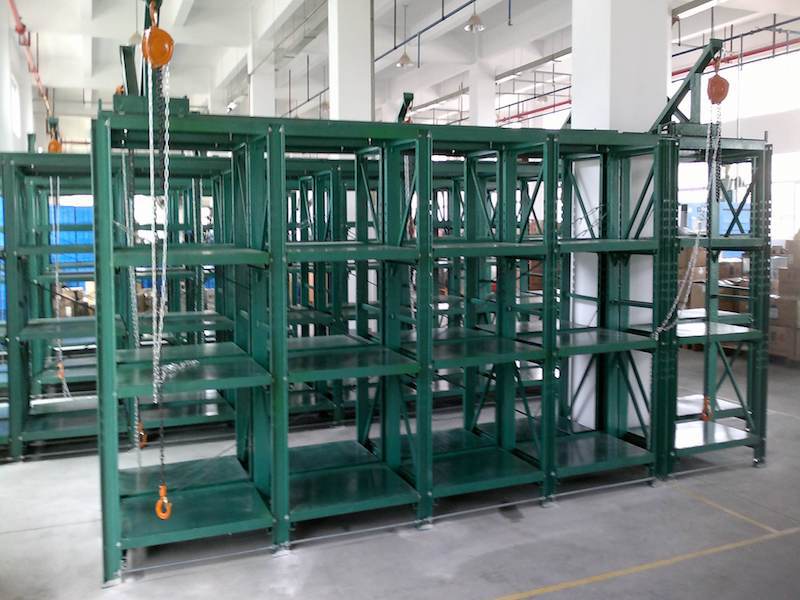
Warehouse storage is not just about putting things on shelves. It’s the backbone of your entire operation. The right pallet racking system directly impacts three critical areas.
Efficiency is the first. A well-chosen system minimizes travel time for workers and machines. It allows for faster picking and storing, which speeds up order fulfillment.
Space utilization comes next. Some types of warehouse racking make much better use of your building’s cubic volume than others. Maximizing vertical space is often cheaper than expanding your facility’s footprint.
Finally, safety and accessibility are non-negotiable. A properly designed and loaded rack protects your inventory and, more importantly, your employees. It ensures loads are secure and easy to reach without unnecessary risk.
There is no single "best" racking solution. The market offers a variety of racking system types, each engineered for different storage strategies. Here are the primary categories you will encounter.
Selective Pallet Racking
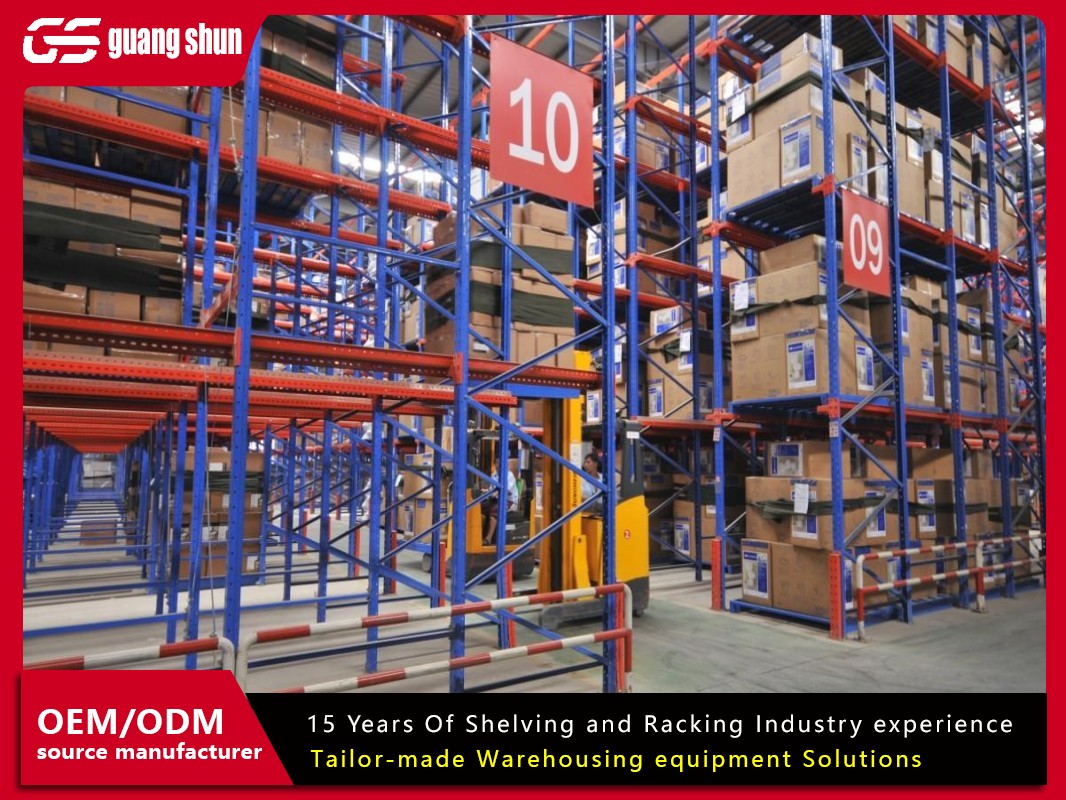
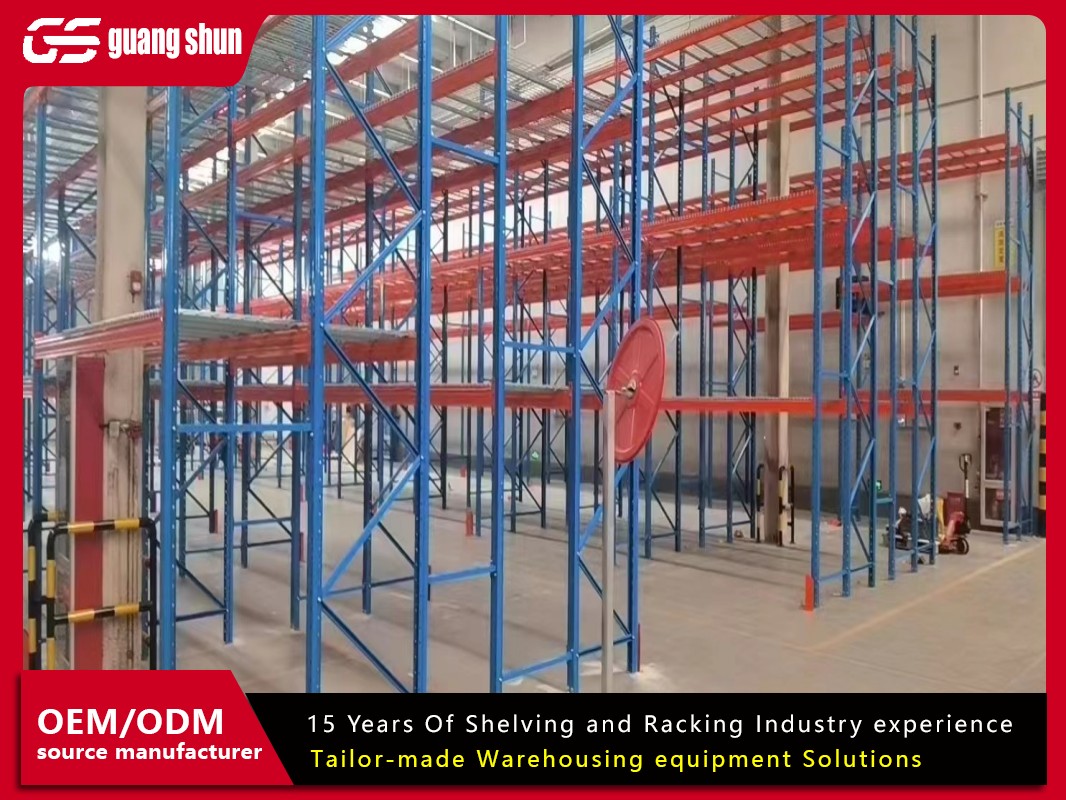
This is the most common and recognizable type of warehouse racking. If you picture a standard warehouse, you’re likely thinking of selective rack.
Its structure is simple. It consists of vertical upright frames connected by horizontal load beams. Each pallet position is directly accessible from the warehouse aisle, hence the name "selective."
The main advantage is 100% direct access to every single pallet. This makes it ideal for warehouses with a high variety of SKUs where any pallet might need to be picked at any time.
The downside is space efficiency. It requires wider aisles for forklifts to maneuver, which limits storage density. It's a versatile workhorse but not the most compact option.
Drive-In and Drive-Thru Racking
These racking system types prioritize dense storage over immediate access. They are designed for high-volume storage of a lower number of SKUs.
The design eliminates interior aisles. Pallets are stored on rails that run multiple loads deep. A forklift literally drives into the rack structure to place or retrieve a load from a specific lane.
Drive-In rack has entry from only one side. Drive-Thru rack allows entry from both ends. This makes Drive-Thru better for First-In-First-Out (FIFO) inventory management.
These systems are perfect for storing large quantities of seasonal items, beverages, or packaged foods. The trade-off is that you cannot access any pallet randomly; you must go through the ones in front.
Push-Back Racking
Push-back racking offers a good balance between density and selectivity. It provides more accessible storage than Drive-In systems while still being space-efficient.
It works on a simple principle. Pallets are stored on inclined carts nested between guide rails, typically two to five pallets deep. When a new pallet is loaded, it pushes the previous pallets back in the lane.
Retrieval is easy. The forklift simply removes the front pallet, and the next one rolls gently forward into the ready position. It operates on a Last-In-First-Out (LIFO) basis.
This system is excellent for warehouses that need multiple SKUs per aisle but want better density than selective rack allows. It’s a popular choice for distribution centers.
Pallet Flow Racking
This is a high-density, dynamic storage system. It uses gravity to move pallets from the loading end to the picking end of a rack lane.
Inside each lane, a series of slightly inclined rollers or wheels allows pallets to glide smoothly. New pallets are loaded at the high "back" end. They flow forward to the low "front" end, where they are picked.
This system enforces strict FIFO inventory control. It is ideal for perishable goods, products with expiration dates, or high-turnover homogeneous items.
The initial cost is higher due to the mechanical components. However, the gains in throughput and perfect stock rotation can justify the investment for the right application.
Cantilever Racking
When your inventory isn't on pallets, you need a different solution. Cantilever racking systems are the answer for long, bulky, or awkward items.
The design features strong vertical columns with horizontal arms that protrude outwards. This creates clear, unobstructed access to the entire length of the stored item.
It is the go-to system for storing lumber, pipes, steel bars, furniture, and carpets. The arms are adjustable in height, offering great flexibility for changing inventory profiles.
Mezzanine Racking
Sometimes, the best way to expand isn't outward, but upward. A mezzanine is essentially a second floor installed within your warehouse.
This structure creates a new level of storage or workspace above the main floor. It effectively doubles your usable square footage without the cost of a new building.
Mezzanines are often combined with standard selective pallet racking or shelving systems on both levels. They are perfect for storing lighter, slower-moving inventory or for creating office space.
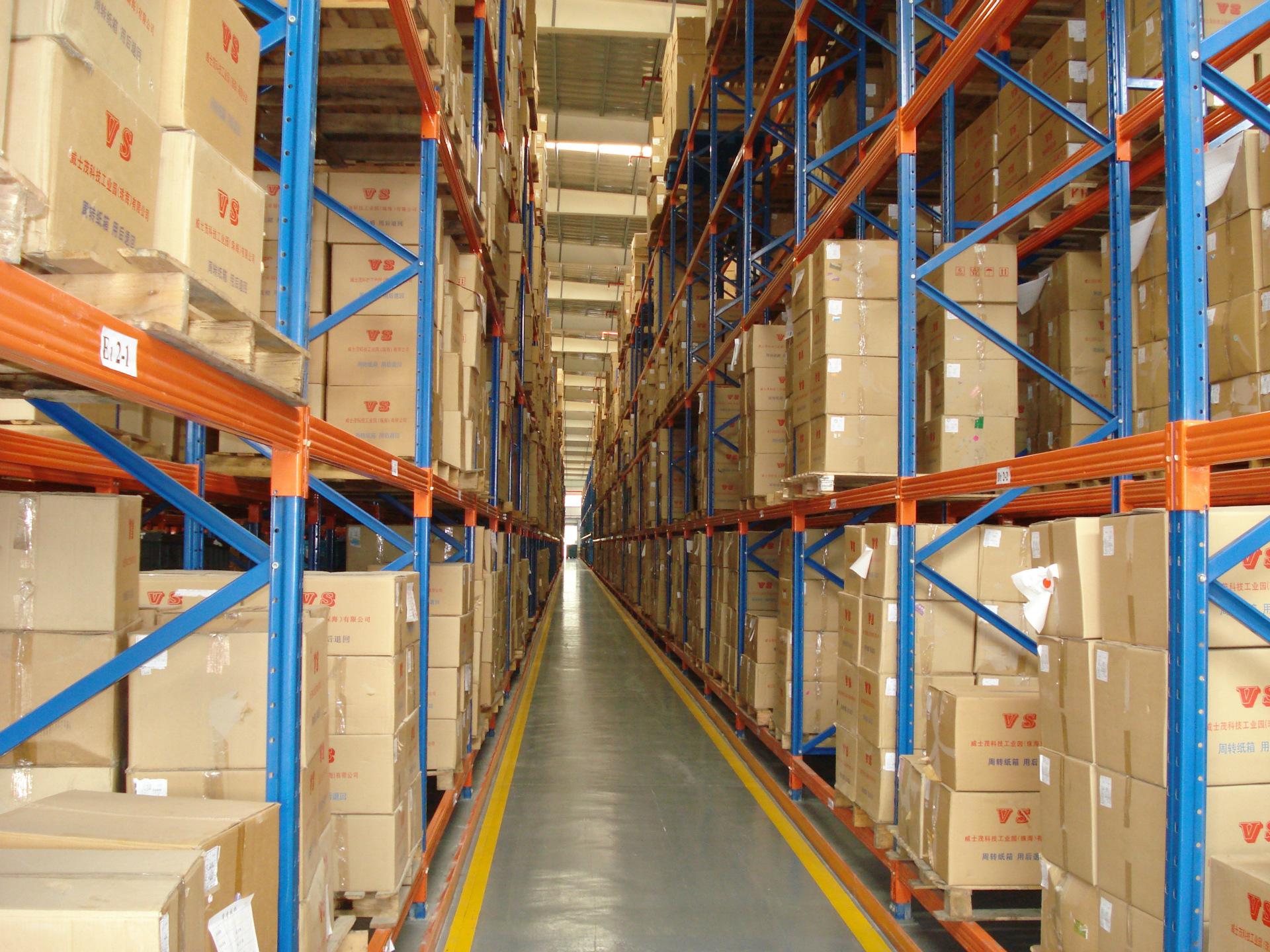
With these racking system types in mind, how do you decide? Focus on these practical questions about your own operation.
First, analyze your inventory. What are the physical dimensions and weight of your pallets or products? How many different SKUs do you have? What is your inventory turnover rate for each?
Next, consider your inventory management method. Do you require strict FIFO or LIFO control? Or do you need random access to every pallet? Your answer will immediately rule certain systems in or out.
Then, look at your available space and equipment. What are your ceiling height and floor dimensions? What type of forklifts or material handling equipment do you use? Some systems, like narrow-aisle racking, require specific forklifts.
Finally, be realistic about your budget. This includes both the initial purchase and installation cost and the long-term value. A higher-density system might have a greater upfront cost but save significantly on future warehouse expansion.
Mixing different types of warehouse racking is common. A single facility might use selective rack for fast-moving items, push-back for medium-turnover goods, and drive-in for bulk seasonal storage.
Q1: What is the most common type of pallet racking system?
A1: Selective pallet racking is by far the most common type. Its simple design, full accessibility to every pallet, and flexibility make it a suitable default choice for a vast number of warehouses with diverse product ranges.
Q2: How do I know if I need a high-density storage system like drive-in or push-back racking?
A2: Consider high-density racking system types if you have high quantities of a limited number of SKUs, especially if they are not all required for immediate picking at once. If you are running out of space but have available vertical height, these systems can dramatically increase your storage capacity within the same floor area.
Q3: What racking is best for First-In-First-Out (FIFO) inventory control?
A3: Pallet flow (gravity flow) racking is specifically designed for perfect FIFO control. Drive-thru racking can also support FIFO effectively. For these racking system types, the first pallet loaded is always the first one retrieved, which is critical for perishable or time-sensitive goods.
Q4: Can I install a new racking system myself?
A4: It is highly discouraged. Professional installation is critical for safety and performance. Installers ensure the rack is level, plumb, properly anchored to the floor, and that all components are secured to rated specifications. Improper installation can lead to catastrophic collapse.
Q5: Is it possible to reconfigure or expand my racking system later?
A5: This depends heavily on the racking system types you choose. Selective racking is very modular and easy to reconfigure or expand. Systems like drive-in or pallet flow are more fixed in their design. Push-back and cantilever racks offer a middle ground, with some adjustability. Always discuss future expansion plans with your supplier during the initial design phase.

 Wechat
Whatsapp
Wechat
Whatsapp