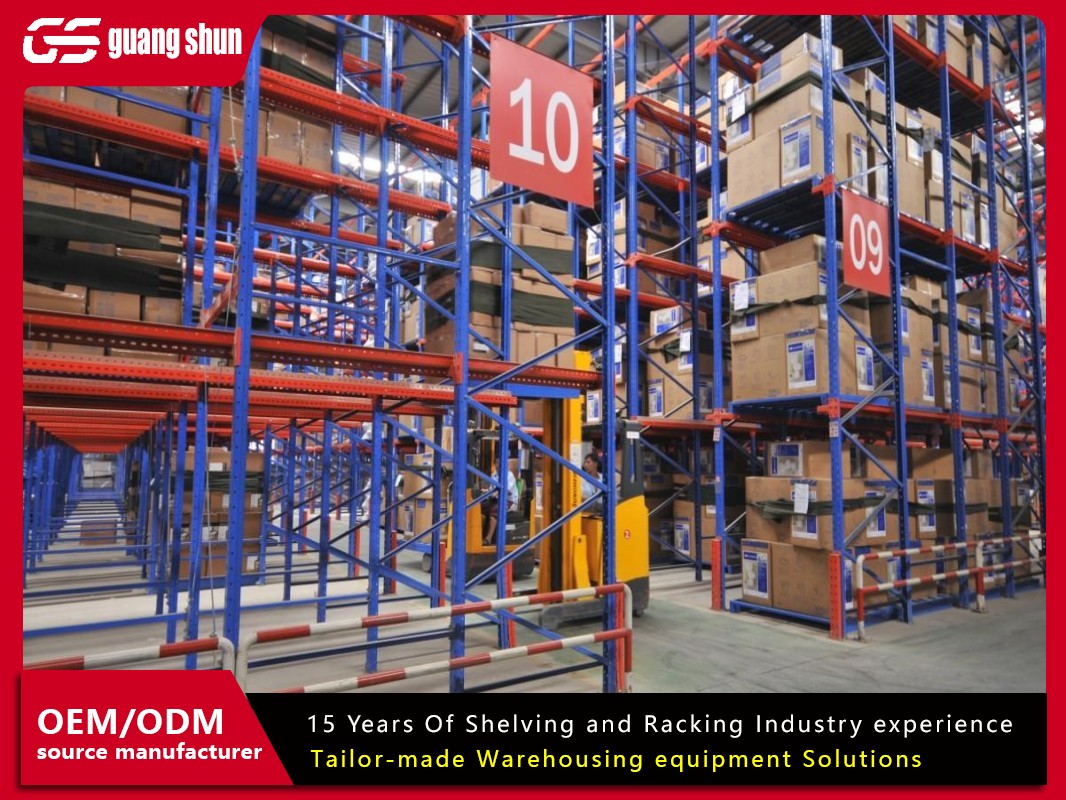
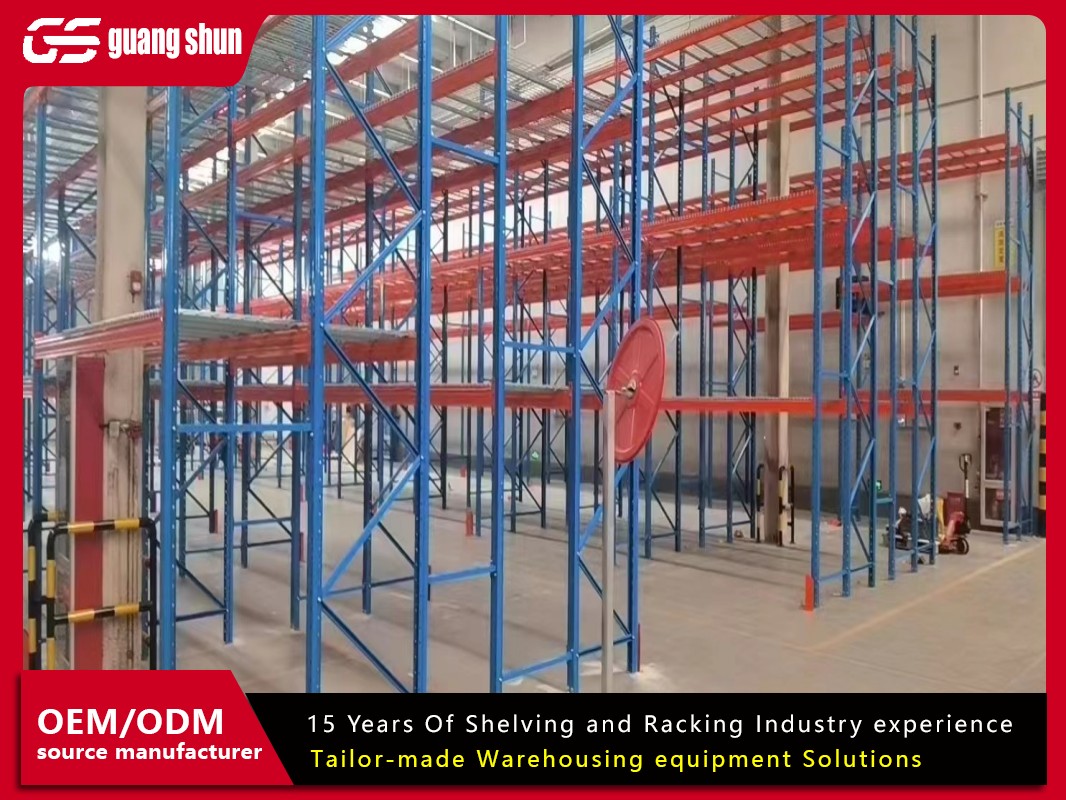
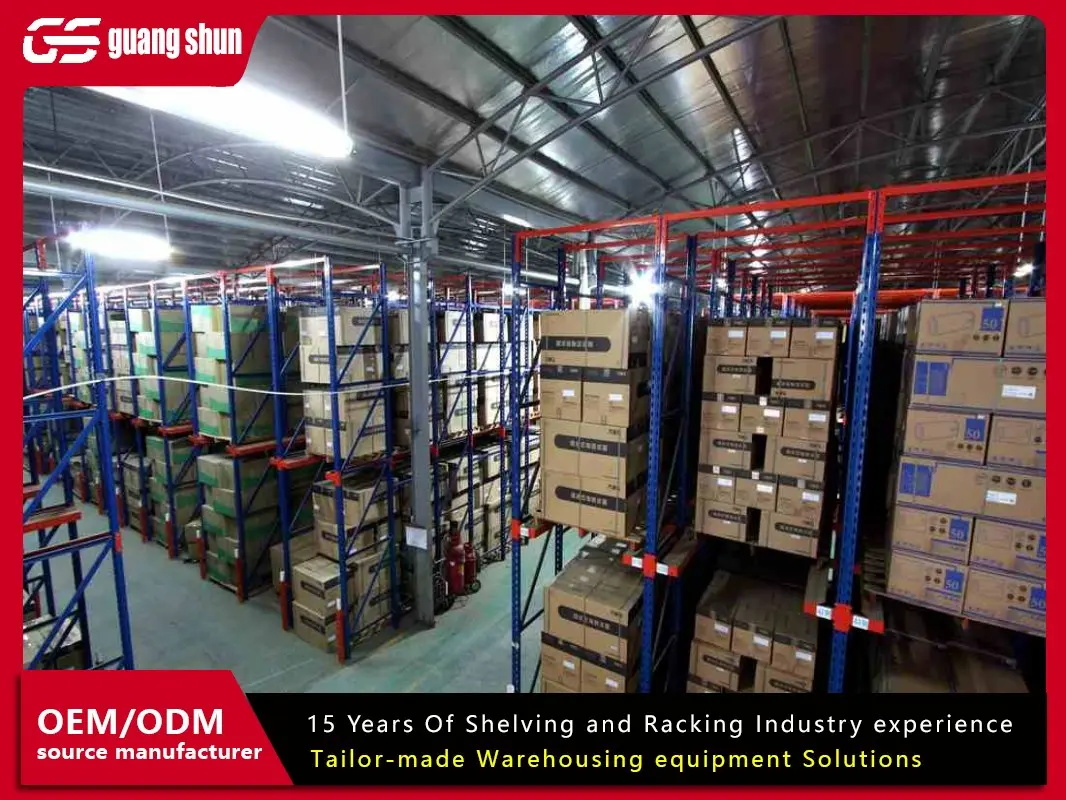
In modern logistics and distribution, selecting the optimal rack types in warehouse directly impacts space utilization, operational efficiency, and total cost of ownership. With warehouse real estate costs rising 4.5% annually (CBRE 2023) and SKU proliferation intensifying, facility managers must navigate a complex matrix of load capacities, throughput requirements, and building constraints. This guide dissects each major rack category through the lens of engineering principles, application scenarios, and ROI drivers, helping you align your storage infrastructure with business objectives.
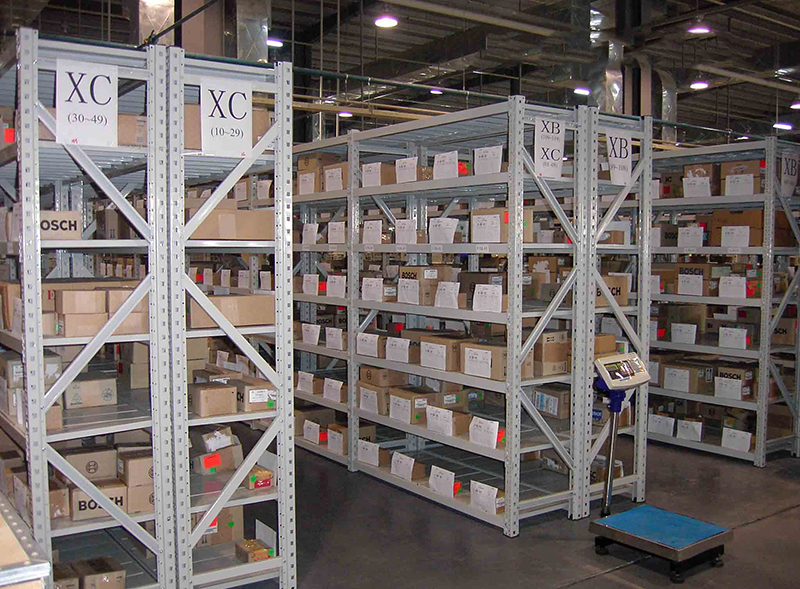
Each rack configuration addresses distinct storage challenges. Below we analyze seven fundamental structures, their load mechanics, and ideal operational contexts. For specialized multi-level applications, mezzanine rack systems offer unique vertical expansion capabilities without altering building footprint.
Accounting for approximately 65% of installed rack types in warehouse environments, selective racks provide direct access to every pallet. Standard configurations utilize 3-4 inch thick uprights and step beams rated for 2,500–5,000 lbs per level. The primary trade-off is aisle space: typical layouts require 11–13 ft wide forklift aisles, reducing storage density to 25–35% of theoretical maximum. However, when SKU variety exceeds 800 and order profiles demand high frequency access, selective racks remain the most flexible rack types in warehouse design.
Beam profiles: 4"x2" or 5"x3" roll-formed steel, adjustable in 2" increments.
Frame bracing: Bolted or welded, with channel or tube braces based on seismic zone.
Anchoring: Minimum 3/4" expansion bolts into 4,000 PSI concrete, verified by pull tests.
Drive-in racks eliminate aisles by allowing forklifts to enter the structure directly. Pallets are stored LIFO (last-in, first-out) with typical depths of 3 to 10 pallets. Storage density can reach 85% of available cube, ideal for bulk storage of homogeneous products (e.g., beverage pallets, seasonal goods). However, the absence of beams on the entry side requires reinforced rail systems and precise forklift guidance. Structural analysis must account for dynamic impact forces; column protection is mandatory.
Drive-thru variants, designed for FIFO, have entry and exit on opposite ends. They suit perishable goods with shelf-life constraints. Both configurations require stricter SKU discipline compared to other rack types in warehouse.
Push back racks use nested carts and slightly inclined rails (3°–5°). Forklifts deposit pallets at the front, pushing existing pallets rearward. Standard depths are 2 to 5 pallets deep, combining high density (up to 75% space utilization) with better selectivity than drive-in. Cart systems require low-friction bearings and maintenance checks quarterly. Load capacities per pallet position typically range 2,000–3,000 lbs.
Pallet flow racks employ gravity rollers or wheels, with speed controllers to regulate pallet descent. They are the preferred choice for high-throughput distribution centers requiring FIFO inventory rotation. Lane depths often exceed 12 pallets, and system design must consider pallet condition (warped pallets can jam lanes). Brake rollers are tuned to pallet weight and ambient temperature (lubricant viscosity changes). This rack type in warehouse can achieve 90%+ pick-face utilization but demands precise SKU slotting.
For lumber, pipes, or furniture, cantilever racks offer unobstructed horizontal storage. Arms are available in 12" to 72" lengths, with capacities from 1,000 to 10,000 lbs per arm. Columns are typically single- or double-sided, braced vertically. Torsional stability under eccentric loads is critical; base plates must be engineered for moment forces. Industry standards (RMI & MH16.1) provide design formulas for arm deflection limits (usually L/180).
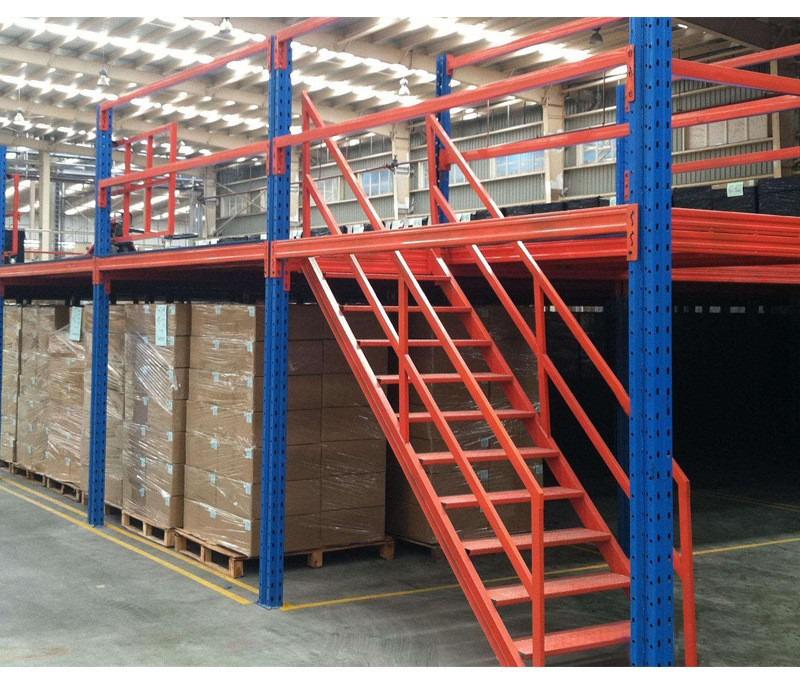
When ceiling height exceeds 20 ft, mezzanine racks create an elevated storage or picking level. These structures integrate pallet rack frameworks with steel decking, staircases, and sometimes conveyor transfers. Load capacities can reach 250 psf, with seismic bracing integrated into the main rack system. They are one of the most versatile rack types in warehouse, accommodating light assembly or returns processing on the upper level. For design assistance and custom solutions, explore our mezzanine rack systems engineered to IBC 2021 standards.
Choosing the optimal mix of rack types requires multi-criteria decision analysis. Below we evaluate key performance indicators across five common scenarios.
SKU diversity & order profile: >2,000 active SKUs → selective racks (90%+ accessibility). 50–200 SKUs, high volume → drive-in or push back.
Throughput requirements: >500 picks/hour → flow racks or pick modules (often combined with mezzanines).
Building constraints: Low ceiling (under 22 ft) limits flow/push back depths. Column spacing impacts rack orientation.
Investment horizon: Selective racks offer lowest upfront cost ($40–$80 per pallet position), while flow racks range $150–$250 per position but double throughput.
Life-cycle cost models should include maintenance (moving parts in flow and push back) and energy costs (denser racks may reduce lighting/heating zones). Consulting a structural engineer is advised when mixing different rack types in warehouse to ensure uniform seismic response.
Low temperatures embrittle steel; welds must meet CVN (Charpy V-Notch) requirements for -20°F operation. Timberland’s 2022 study found 14% higher maintenance costs in freezers due to ice buildup on flow rollers. Solution: use galvanized finishes and sealed bearings. Drive-in racks reduce door openings, preserving temperature.
Rapid assortment changes demand reconfigurable racks. Boltless selective systems allow beam adjustments without tools. Integrating pick-to-light on pallet flow racks improves accuracy by 30% (WERC 2023). Mezzanine levels can host conveyor merges to accelerate packing.
Die storage often exceeds 6,000 lbs per position. Cantilever arms with doubler plates and structural channel columns are mandatory. Upright impact protection (guards) reduces collision risks from overhead cranes.
All rack types in warehouse must comply with ANSI MH16.1 (2023) or RMI specifications. Key design parameters include:
Seismic design category (SDC): In SDC C–F, racks require additional diagonal bracing and baseplate detailing. Non-linear time-history analysis may be needed for very tall structures.
Floor flatness/levelness: ACI 117 tolerances are critical for flow racks; deviations >1/8" in 10 ft can cause pallet stoppages.
Fire protection: NFPA 13 requires in-rack sprinklers when storage exceeds certain height and commodity class. ESFR sprinklers often dictate flue space minimums (6" transverse flues).
Protective coatings: Polyester powder coat (2–3 mils) for standard environments; zinc-rich epoxy for coastal/humid warehouses.
Automated storage and retrieval systems (AS/RS) are reshaping traditional rack types in warehouse. Mini-load cranes operate in narrow aisles (±1/4" tolerance), requiring laser-cut beam pockets and precision uprights. Shuttle systems (satellite vehicles) within rack channels allow deep-lane storage with FIFO capability. These hybrid rack types in warehouse achieve 98% space utilization but require upfront capital of $3M–$8M. Meanwhile, robotic case picking (e.g., autonomous mobile robots) now interfaces with pallet flow lanes, reducing human travel time by 60%.
Q1: What are the most common rack types in warehouse for high-volume beverage storage?
A1: For beverage warehousing (e.g., canned drinks, bottled water), drive-in racks are widely used due to high pallet uniformity and LIFO rotation. Some facilities combine push back for faster access to top-selling SKUs.
Q2: How do I decide between selective and narrow-aisle rack configurations?
A2: Selective racks with counterbalance forklifts require 12 ft aisles; narrow-aisle systems (reach trucks, turret trucks) reduce aisles to 6–9 ft, increasing density by 35%. Choose narrow aisle if your facility has at least 28 ft clearance and you can invest in wire guidance.
Q3: Can mezzanine racks be integrated with existing pallet rack systems?
A3: Yes, mezzanine racks can be attached to existing selective racks using beam connectors and additional support posts, provided the original frames are designed for the added load. Always involve a structural engineer. For engineered solutions, see our mezzanine rack systems.
Q4: What safety certifications should industrial racks comply with?
A4: In North America, racks should meet RMI/ANSI MH16.1-2023. In Europe, EN 15512 certification is mandatory. Also, ensure seismic compliance per local building codes (ASCE 7).
Q5: Are there specific rack types in warehouse suitable for cold storage environments?
A5: Yes. Galvanized selective or drive-in racks perform well. For flow racks, use low-temperature hydraulic speed controllers and stainless-steel axles. Insulated mezzanine decks can create temperature-controlled zones.
Q6: How does automation affect the choice of rack types in warehouse?
A6: Automation demands tighter tolerances. For AS/RS, upright plumbness must be within 1/500 of height. Shuttle-compatible racks require continuous rail supports with ±1/8" horizontal alignment.
Optimizing rack types in warehouse is a multidimensional challenge requiring trade-offs between density, accessibility, and capital. By applying engineering principles and future-proofing for automation, warehouse operators can achieve 20–30% improvements in storage efficiency. Regular audits of rack condition and load distribution ensure sustained safety and compliance. For complex projects involving multi-level structures, always consult with specialists who understand the nuances of each rack type in warehouse design.

 Wechat
Whatsapp
Wechat
Whatsapp