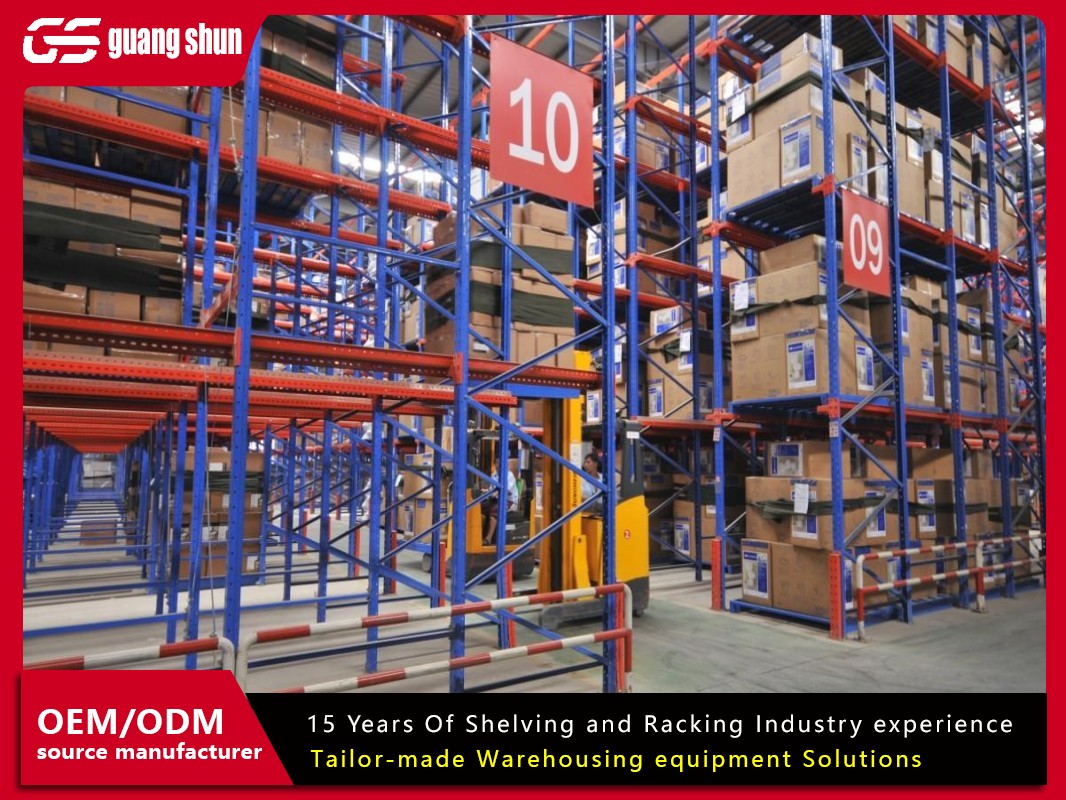
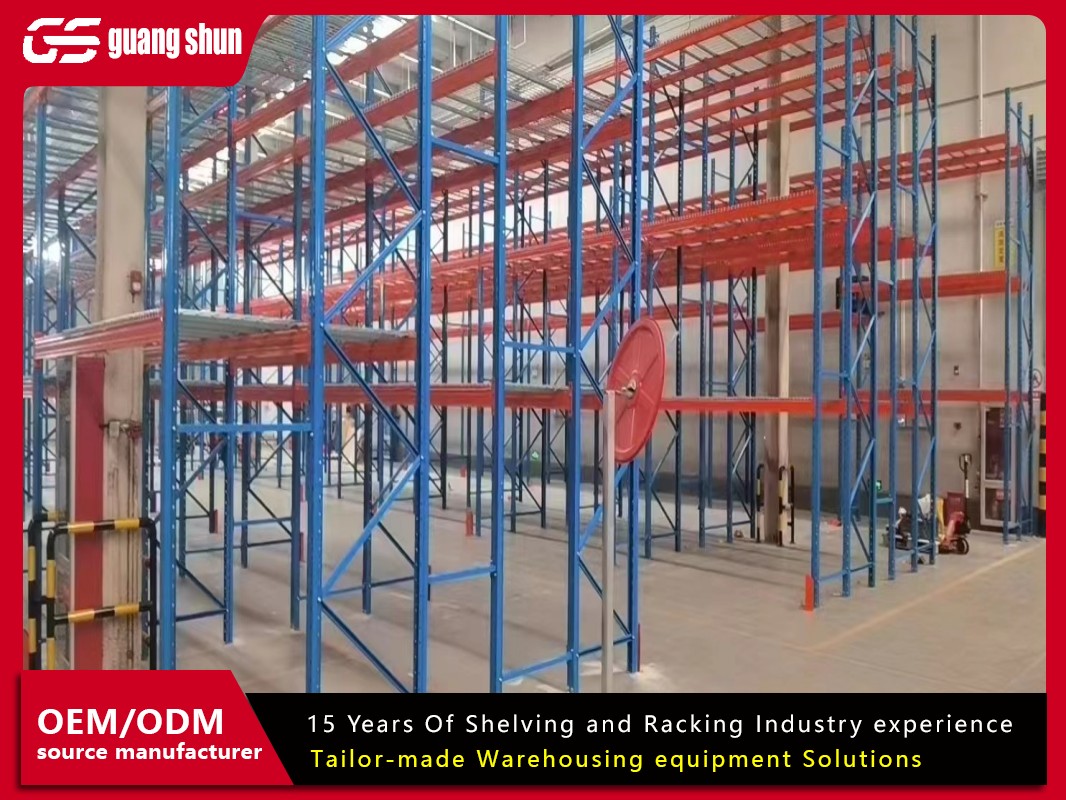
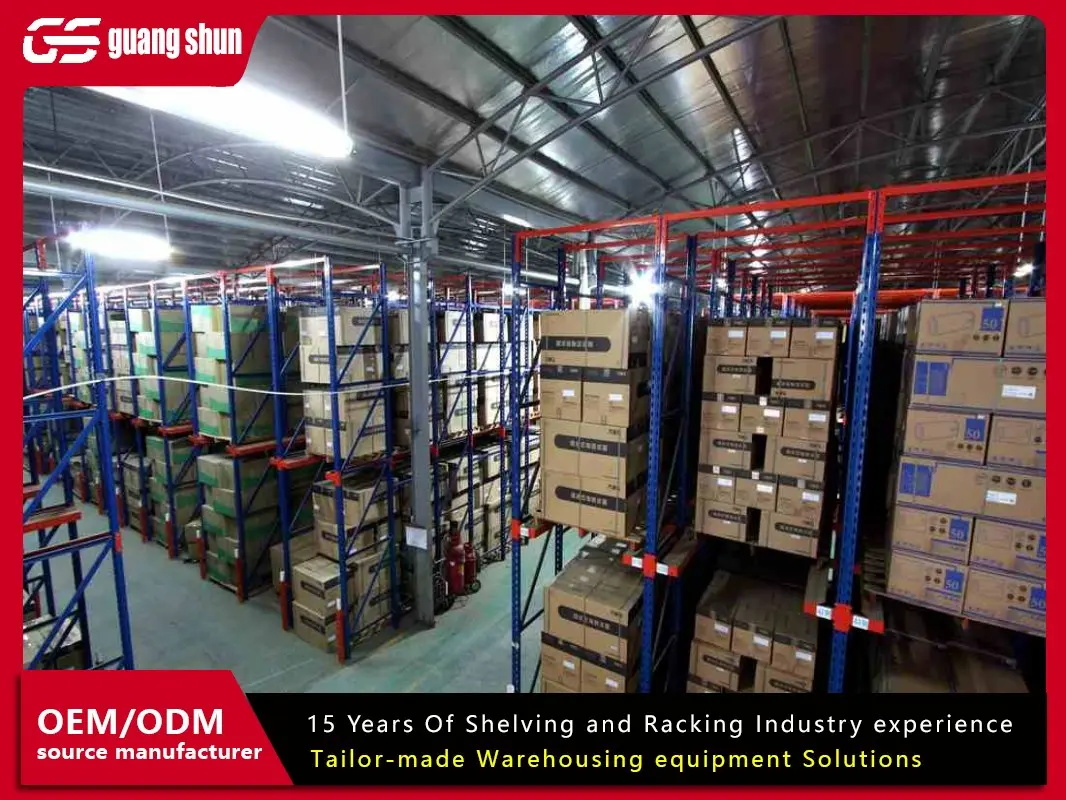
In the world of industrial storage, the difference between operational efficiency and costly downtime often comes down to the strength of your shelving. For facility managers and procurement specialists, selecting the correct heavy duty shed shelves is not merely a purchase; it is a long-term investment in safety and productivity. This guide provides a technical deep dive into the specifications, applications, and engineering principles that define true industrial-grade storage solutions.

Before integrating any system into your supply chain, you must verify the engineering data. The term "heavy duty" is often misused, but in a B2B context, it refers to specific, testable metrics.
Static load refers to the weight a shelf can hold when stationary—essential for long-term storage. Dynamic load accounts for movement, such as forklifts placing pallets. Our engineering team at Guangshun designs systems where the dynamic load capacity never compromises the static integrity. A standard heavy duty shed shelves system should support a minimum of 2,000 lbs per level, but industrial applications often require 4,000 lbs or more. Always request the deflection test reports; a quality unit will show less than 1/1000th of the span in deflection under full load.
The gauge of steel is critical. Industrial shelves typically use cold-rolled steel ranging from 14-gauge to 7-gauge. Thicker steel resists torsion and buckling. Furthermore, the protective coating must withstand humidity and chemical exposure. Look for a zinc-phosphate pre-treatment followed by a powder coat exceeding 60 microns. For environments prone to moisture, heavy duty shed shelves from Guangshun often feature a hot-dip galvanized option, which provides cathodic protection against rust.
A one-size-fits-all approach fails in specialized warehousing. The configuration of your shelving must match the inventory's dimensions and the workflow of the facility.
Freezer environments cause metal to contract. Standard shelving can become brittle or misaligned. Specifically engineered heavy duty shed shelves used in cold storage must utilize specialized welding techniques and expansion gaps. Guangshun's cold-storage line uses low-temperature tolerant steel and includes slotted base plates to accommodate concrete floor heave.
Heavy parts like transmissions or engines require reinforced beams. In these scenarios, the shelving must integrate with bin systems and flow rails. Using heavy duty shed shelves with reinforced corrugated decks prevents small parts from falling while supporting concentrated loads.
Decking Options: Wire decks for fire safety and visibility, or solid steel for debris containment.
Upright Frames: Perforated frames allow for vertical adjustability at 2-inch increments, adapting to varying product heights.
Seismic Ratings: In active zones, only shelving with VMA (Rack Manufacturers Institute) seismic certification is acceptable.
Safety is non-negotiable. The heavy duty shed shelves you select must comply with international safety standards such as OSHA, AS4084, or FEM. This is where the E-E-A-T principle of expertise becomes tangible.
A shelving system is only as strong as its connection to the floor. Proper heavy duty shed shelves installation requires chemical or mechanical anchors embedded into the concrete. The baseplate must be thick enough (typically 6mm to 8mm) to distribute the point load without deforming. Guangshun's engineering team provides stamped anchor plans specific to your facility's PSI concrete rating.
Racking collapse is a leading cause of warehouse injuries. To mitigate this, heavy duty shed shelves must include safety locks on beams and row spacers to prevent chain-reaction collapses. Regular audits are easier if the manufacturer provides clear load identification placards for each bay, a standard feature on all systems supplied by Guangshun.
Even the highest quality steel fails if improperly installed. The logistics of assembling industrial shelving require precision and planning.
To reduce labor costs, some suppliers offer pre-assembled sections. However, this increases shipping cube and potential damage. Heavy duty shed shelves are often shipped in knocked-down format for maximum density. On-site assembly by certified riggers ensures that all bolts are torqued to specification and that the structure is perfectly plumb.
Post-installation, a maintenance schedule must be established. Look for signs of impact damage—forklift strikes are the number one cause of rack failure. Annually, a professional engineer should inspect the heavy duty shed shelves for:
Twisted uprights.
Sheared safety clips.
Corrosion on load-bearing welds.
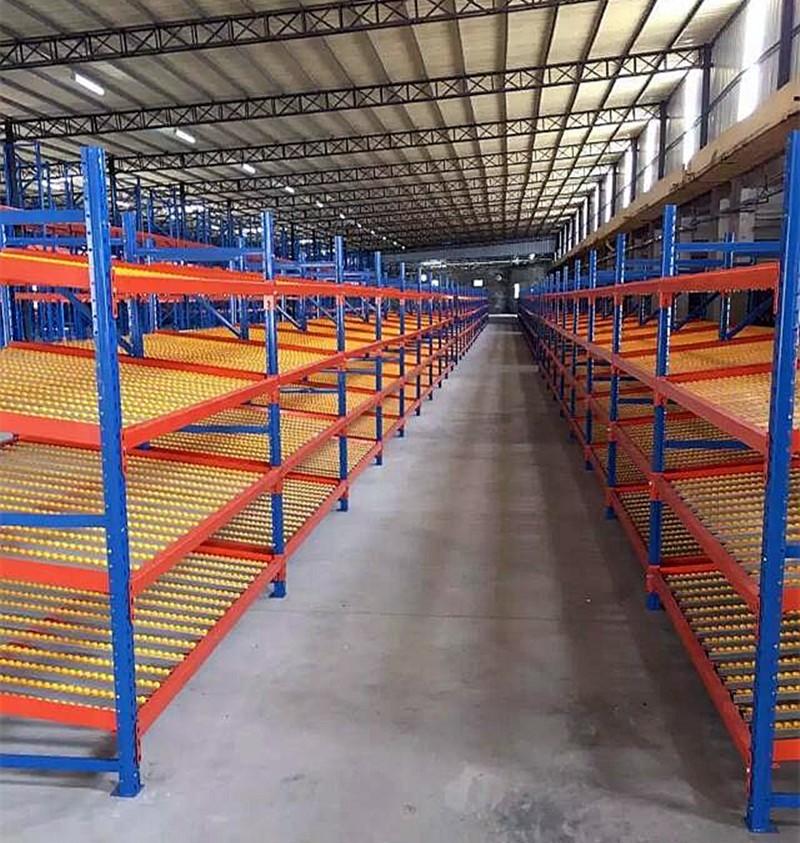
Investing in premium heavy duty shed shelves directly impacts your bottom line. By utilizing high-strength steel, we reduce the weight of the rack without sacrificing capacity, lowering shipping costs. Furthermore, the modular design of Guangshun systems allows for reconfiguration as your warehouse needs evolve, extending the lifecycle of the product beyond a decade. Our clients report a 30% reduction in storage-related retrieval times due to optimized vertical space utilization.
A1: Industrial-grade heavy duty shed shelves typically range from 1,500 lbs to 4,000 lbs per level, depending on the beam gauge and the span between uprights. Custom engineering can achieve up to 10,000 lbs for specialized applications, but this requires thicker beams and closer column spacing.
A2: Yes, but only if specified correctly. Standard powder-coated shelves are for indoor use. For outdoor sheds, you require hot-dip galvanized heavy duty shed shelves. Guangshun offers a heavy-gauge galvanized option that withstands rain and snow exposure by creating a sacrificial zinc layer, preventing red rust for decades.
A3: The shelf depth should match the depth of your stored goods. For pallet storage, the pallet overhang should not exceed 3 inches. For loose items, measure the largest item and add 2 inches for clearance. Standard depths are 24, 36, and 48 inches for heavy duty shed shelves.
A4: It depends on the chemical. Powder coating is excellent for abrasion resistance and comes in various chemical-resistant formulas (epoxy or polyester). Galvanizing is superior for alkaline environments. For highly corrosive acids, stainless steel is required. Consult the Guangshun chemical resistance chart before purchasing heavy duty shed shelves for chemical storage.
A5: Lead times vary based on volume and coating type. For custom-sized heavy duty shed shelves using standard powder coating, production typically takes 3-4 weeks. For hot-dip galvanized custom orders, please allow 6-8 weeks to account for the galvanizing bath scheduling and quality inspections at Guangshun's facility.
Selecting the appropriate heavy duty shed shelves is a critical decision that impacts safety, efficiency, and capital expenditure. By focusing on material integrity, compliance, and application-specific design, you ensure that your storage infrastructure supports your business growth for years to come.

 Wechat
Whatsapp
Wechat
Whatsapp