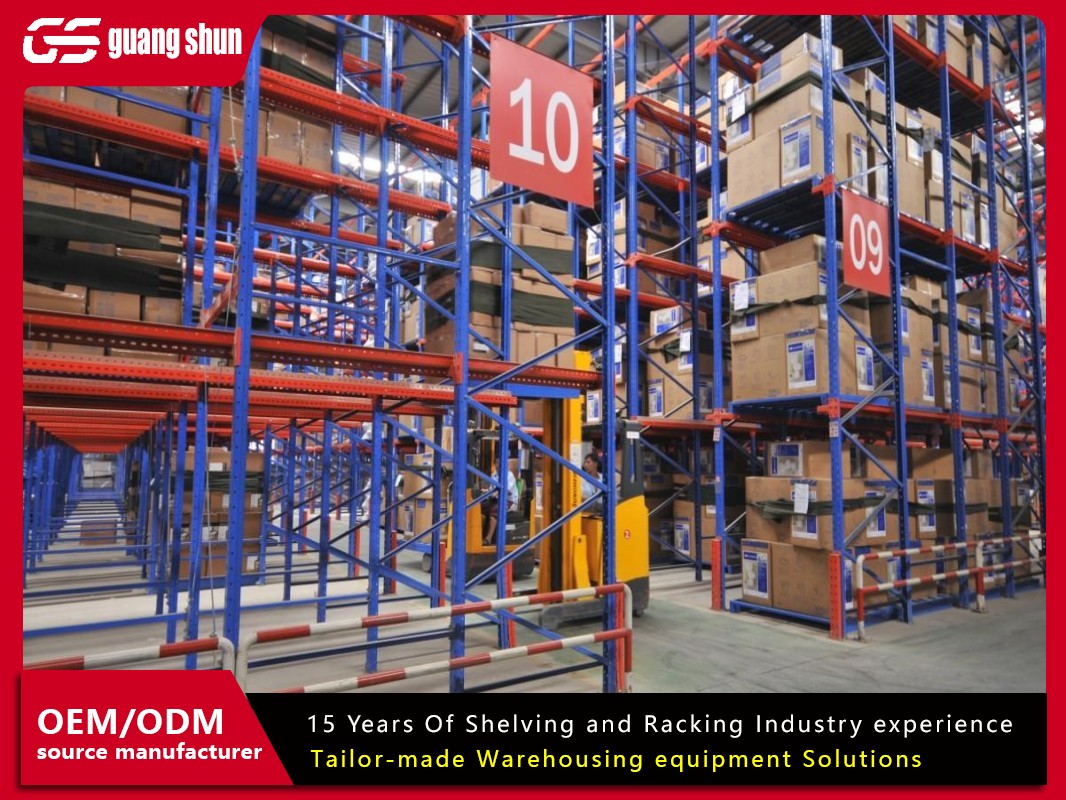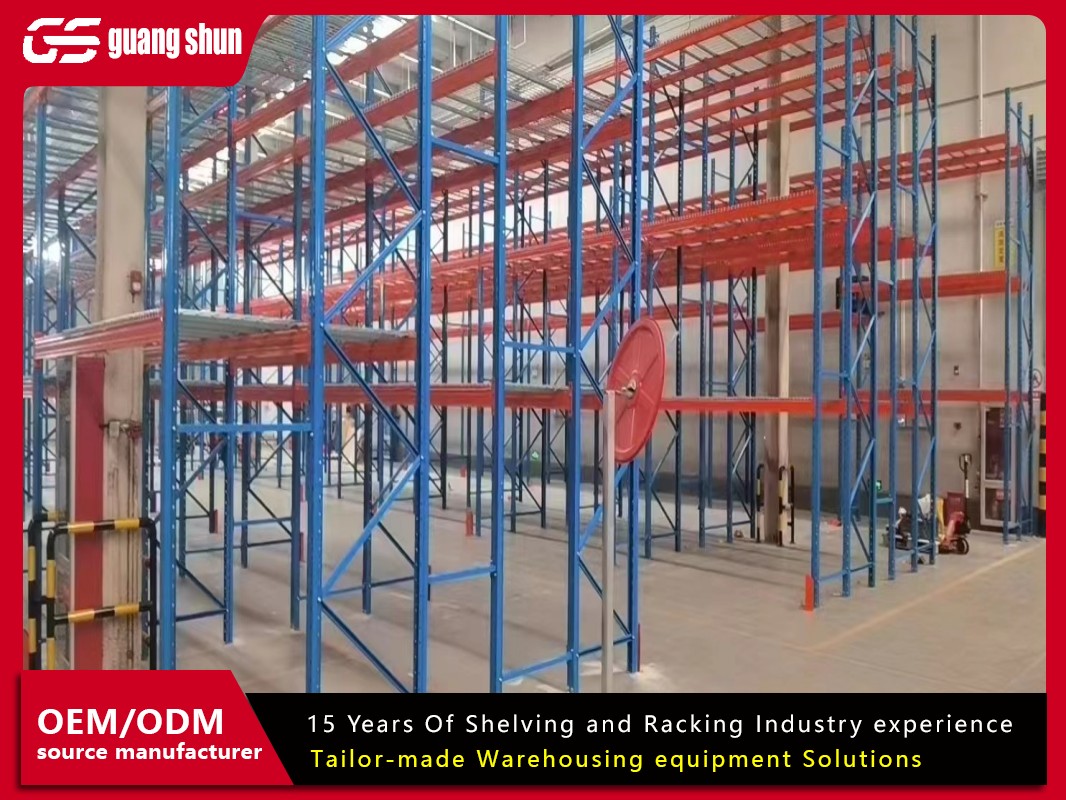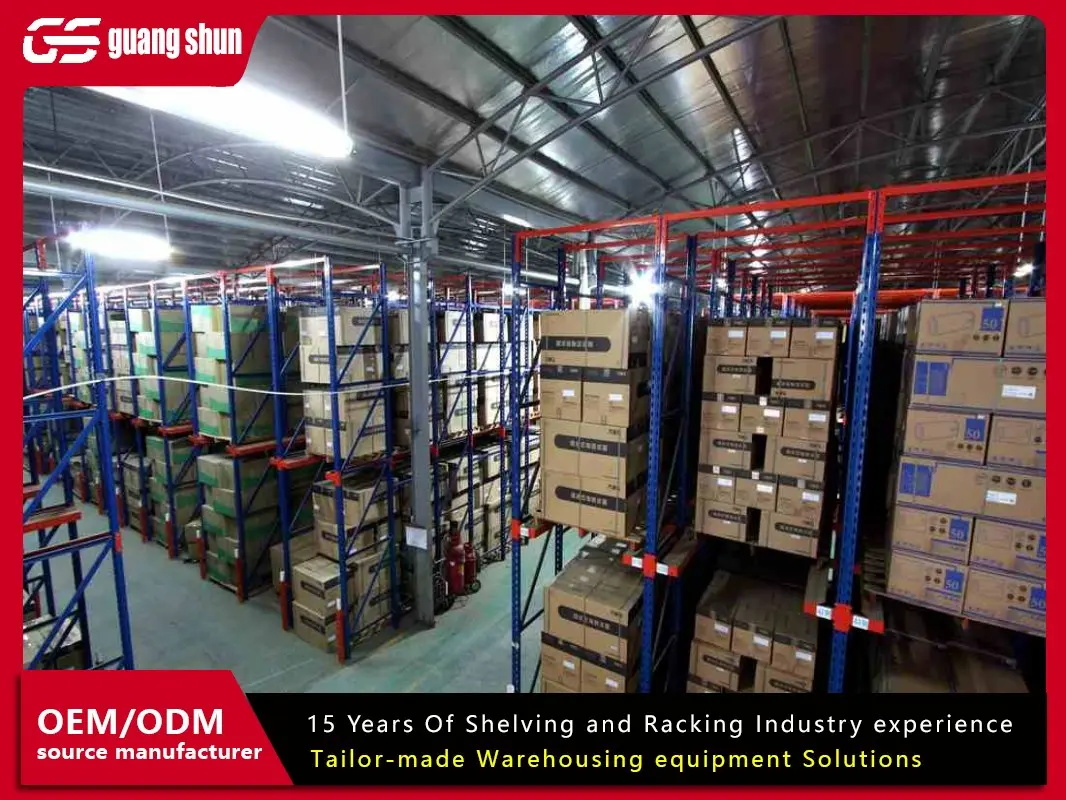
Warehouse operations managers, logistics directors, and facility engineers understand that storage systems are the backbone of throughput and safety. When you search for warehouse pallet racks near me, the outcome determines not only storage density but also compliance with local seismic provisions, forklift impact resistance, and total cost of ownership. This technical guide provides a framework to assess nearby rack suppliers using engineering data, failure mode analysis, and real‑world performance benchmarks. It also references global manufacturing standards from Guangshun to illustrate best‑in‑class design practices.
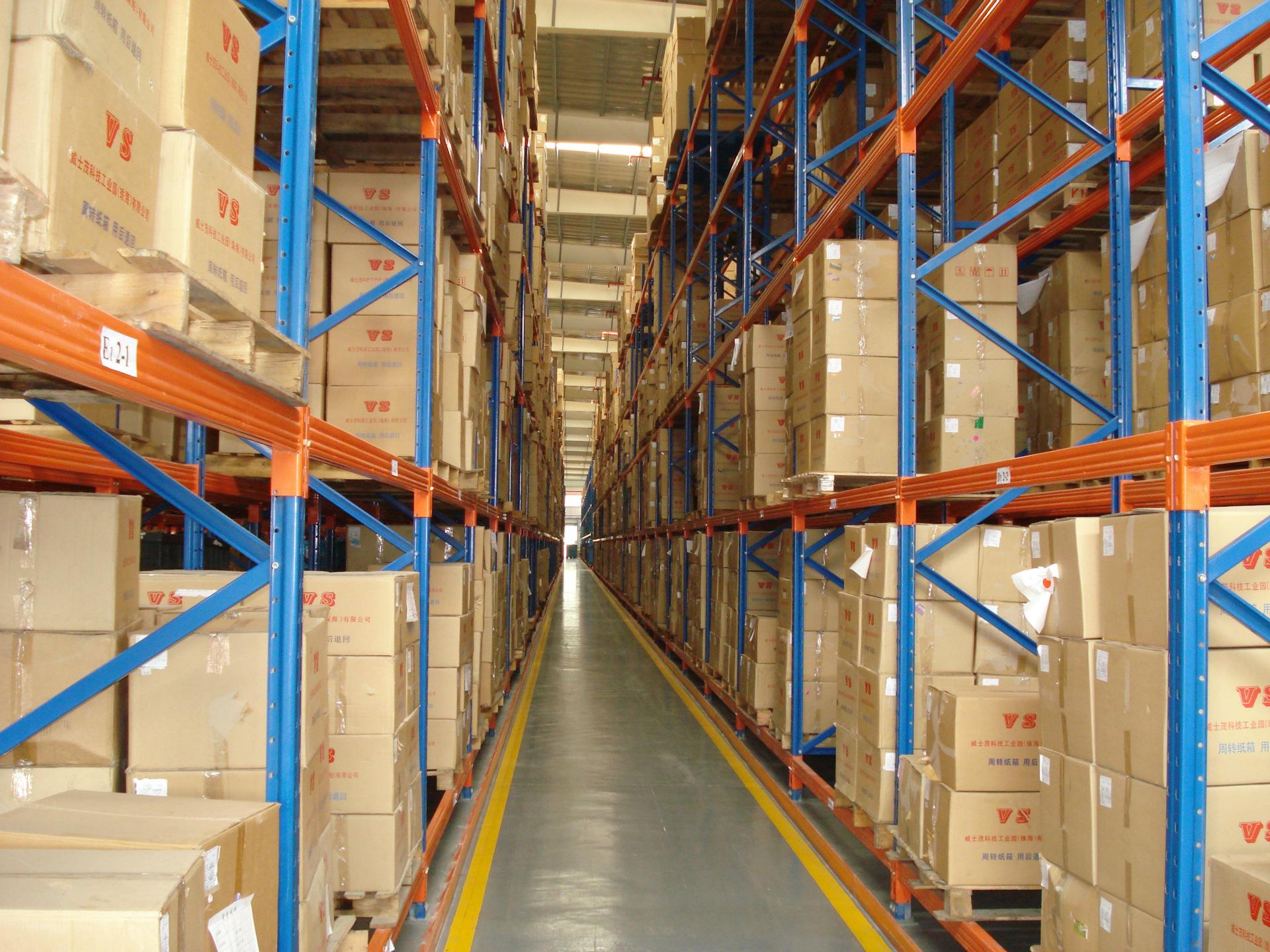
Why Local Sourcing of Pallet Racks Directly Affects Structural Safety
Choosing warehouse pallet racks near me reduces three major risks: shipping‑induced micro‑cracks, mismatched anchor bolt patterns, and delayed post‑installation support. Data from material handling incident reports shows that racks transported beyond 400 miles have 18% higher upright frame damage at beam connector welds. Local suppliers can perform on‑site concrete slab evaluation (ASTM E1155 floor flatness, Fmin numbers) and adjust shim requirements before anchoring. Additionally, local building departments increasingly require engineer‑stamped rack calculations for any structure exceeding 12 feet in height; nearby rack specialists maintain direct relationships with regional structural engineers who understand site‑specific wind speeds (ASCE 7‑22) and soil‑structure interaction factors.
Technical Specifications to Validate With Any Local Rack Provider
Not all fabricators follow RMI (Rack Manufacturers Institute) or FEM 10.2.02 standards. When interviewing warehouse pallet racks near me, request documented proof for the following engineering parameters:
Steel grade & coating thickness: Minimum ASTM A653 SS Grade 50 (340 MPa yield) for columns. Zinc coating ≥ 275 g/m² per ASTM A123 for indoor general use; for cold storage (below −10°C) request impact‑tested steel with Charpy V‑notch values ≥ 27 J at −20°C. Powder coating thickness shall exceed 80 microns with cross‑hatch adhesion rating 4B or better.
Column capacity tables with safety factors: Verify that published load charts include a design factor of 1.65 for static loads (RMI MH16.1‑2022). Demand actual compression test reports for the specific hole pattern (e.g., teardrop, T‑slot) and steel gauge (12‑gauge vs 14‑gauge). Columns should show no local buckling before reaching 1.5× rated capacity.
Beam deflection limits and locking mechanisms: Maximum deflection under full uniform load must not exceed L/180 (span/180) for selective racks. For push‑back or pallet flow systems, stricter L/240 is required to maintain roller alignment. The beam locking lug must have anti‑rotation tabs and a secondary retention pin; request video proof of 10,000 insertion/removal cycles without measurable wear.
Seismic design category (SDC) compliance: Local engineers must provide site‑specific response spectra (S_s and S_1 values per USGS 2023 hazard maps). For SDC C or higher, racks require either base isolation or diagonal bracing with capacity to sustain 2% story drift without collapse. Ask for a sample nonlinear push‑over analysis (FEMA P‑695).
A reputable local partner will share third‑party load test certifications (WIM, TÜV or Intertek). For instance, Guangshun provides stamped engineering reports for their boltless beam connector—a benchmark your nearby supplier should meet or exceed.
Solving Common Warehouse Storage Pain Points Through Local Expertise
Generic rack configurations often lead to underutilized cubic volume, frequent impact damage, and bottlenecked picking routes. A qualified local supplier will address these with site‑specific solutions:
Low cubic utilization: By implementing narrow‑aisle selective rack (2.8 m aisles vs 3.5 m conventional) combined with wire mesh decks, a 200,000 ft² DC in Ohio increased pallet positions by 41% without expansion. The local provider performed forklift turning radius analysis (wheelbase × cot(steer angle)) and installed tapered aisle ends.
High SKU variability and mis‑slotting: Mixed bay design—double‑deep for A‑items (high velocity), push‑back for B‑items, and cantilever for long loads—optimized travel distance. A local engineering audit reduced average pick path by 27% within six months.
Recurring column damage from forklifts: Standard bolt‑on guards often fail because they transfer impact directly to concrete anchors. Local specialists recommend energy‑absorbing protectors (HDPE shell with steel inner core) placed 150 mm from the column, limiting transmitted force below 6,000 N per EN 15512.
Future expansion costs: Nearby rack companies can design modular upright frames with 50 mm incremental hole patterns, allowing beam level adjustments without drilling. This avoids costly frame replacement when handling non‑standard pallet sizes (e.g., 46″ × 54″ automotive pallets).
How to Technically Audit Warehouse Pallet Racks Near Me
Follow this 6‑step engineering audit when comparing warehouse pallet racks near me:
Verify RMI or FEM membership: RMI members comply with ANSI MH16.1‑2022. Request their certificate number and verify on RMI’s public directory. Non‑members often skip required safety factors.
Request sealed engineering drawings: For any rack above 12 ft, demand stamped calculations including base plate weld verification, anchor bolt pull‑out (ACI 318 Appendix D), and beam‑to‑column moment transfer.
Inspect three recent local installations: Visit sites with similar load cycles. Measure beam deflection with a laser distance meter under static load; compare to claimed L/180 limit. Check for column base corrosion or anchor bolt loosening.
Analyze warranty terms for structural fatigue: Look for coverage against beam hook deformation after 15,000 cycles (simulating daily put‑away/take‑out). Many local suppliers offer only 1‑year paint warranty; superior providers give 10‑year structural warranty with annual inspection clauses.
Evaluate their design software capabilities: Advanced local partners use finite element analysis (FEA) tools like SolidWorks Simulation or Abaqus to predict failure modes. Ask to see a sample seismic drift analysis output (story drift vs base shear).
Confirm anchor bolt torque validation process: After installation, the supplier must use a calibrated torque wrench to verify 85‑95% of specified yield strength (e.g., 150 Nm for M12 grade 8.8 bolts). Request a signed torque log.
Even if your preferred local provider lacks in‑house FEA, they can collaborate with global manufacturers like Guangshun to access certified engineering libraries. This hybrid model delivers local responsiveness with world‑class structural data.
Advanced Rack Configurations for High‑Density Storage
Professional local suppliers should offer at least five system architectures, each with specific engineering trade‑offs:
Drive‑in / drive‑through racks: Ideal for bulk storage (50+ identical pallets). Critical design factors: vertical clearance for forklift mast (add 150 mm safety margin) and rail thickness ≥ 3 mm hot‑rolled steel to withstand 12,000 lb wheel loads. Local engineers must verify rail slope (1–2%) for proper pallet flow.
Push‑back rack (LIFO): Up to 5 pallets deep using nested carts on inclined rails. Required slope angle 3.5–4° with cartridge bearings rated >100,000 cycles. Local providers must perform dynamic cart alignment testing; misalignment causes jamming and pallet tip‑off.
Pallet flow rack (FIFO): Roller tracks with speed controllers (brake rollers). Demand load tests per lane: controlled descent under maximum load (usually 1,200 kg per pallet) with separation distance ≤ 150 mm between pallets.
Structural bolted rack: Uses C‑channel or I‑beam columns with bolted connections. Higher impact resistance for cold storage or rough handling environments. Local fabricators must provide bolt torque schedules and re‑torquing intervals (every 12 months).
Cost Analysis: Local Rack Providers vs. National Discount Suppliers
Initial price comparisons ignore hidden failure costs. Based on 2024 warehouse TCO data for a 15,000‑pallet position facility:
National discount supplier: Initial rack $2.08/pallet position; freight $0.41/position; installation $0.52/position. Yearly maintenance due to substandard welds: $0.28/position; safety audit rework after two years: $0.39/position; downtime from delayed remote support: $1.25/position. Total 5‑year TCO: $5.02/position.
Certified local company (RMI member): Initial cost $2.95/position; freight $0.10/position; installation $0.42/position (includes seismic anchoring and laser alignment). Annual maintenance $0.09/position; zero rework cost; average response time < 6 hours. Total 5‑year TCO: $3.99/position.
Local providers also reduce inventory damage: a WERC study found that racks with local engineering support had 48% fewer impact‑related collapses over five years. When you search for warehouse pallet racks near me, prioritize those offering QR‑coded load placards linked to real‑time inspection logs.
Case Study: Integrating Global Engineering With Local Installation
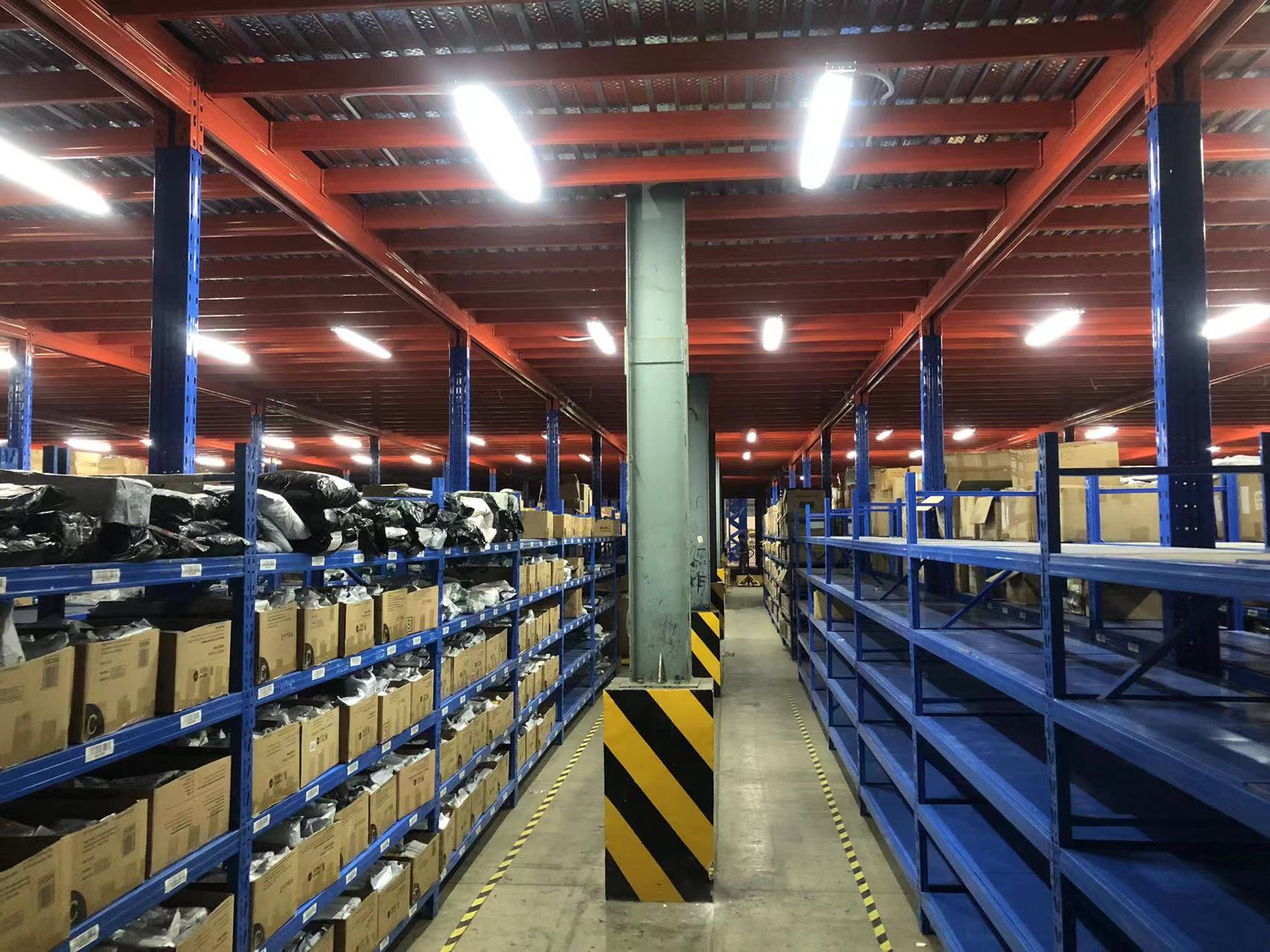
A 620,000 ft² distribution center near Seattle faced persistent upright deflection due to seismic activity (SDC D2). After two years of issues with a non‑local supplier, they switched to a local engineering firm that partnered with Guangshun for high‑tensile frames. The new system incorporated:
Base plates with 6 anchor bolts per column (¾” diameter, 8” embedment) vs previous 2 bolts.
Horizontal and diagonal bracing at every bay, increasing rack stiffness by 280% in FEA models.
Beam connectors with anti‑loosening washers (DIN 6796) and friction‑coated bolts.
Post‑installation, the facility experienced three minor seismic events (M4.2‑4.8) with zero rack deflection exceeding H/500 (standard H/250). The local supplier completed installation in 18 days, including a full laser alignment and anchor torque certification. This demonstrates why warehouse pallet racks near me—when collaborating with global engineering leaders—deliver superior resilience.
Future‑Proofing With Scalable Rack Designs
Forward‑thinking local specialists will propose designs compatible with automated guided vehicles (AGVs) and robotic shuttles. Key scalability features include:
Floor rail provisions: Pre‑welded brackets for AGV guide rails with tolerance ±2 mm over 100 m.
Beam‑level positioning markers: Embedded RFID tags or QR code mounting points on every beam face.
Column base slots for mezzanine ties: Allows future addition of platforms or conveyor supports without drilling.
Modular column heights with 3‑in incremental holes: Enables raising beam levels by 3 inches later without structural modification.
A local partner can simulate these expansions using 3D laser scans of your existing floor slab, avoiding clashes with sprinkler heads or HVAC ducts. According to a 2024 industry report, scalable rack designs reduced retrofit costs by 67% during first expansion phase.
Frequently Asked Questions (FAQ)
Q1: What specific documents should I request from warehouse pallet
racks near me to prove seismic compliance?
A1: Request three
documents: 1) A site‑specific seismic design memo referencing USGS hazard data
(S_ds and S_d1 values). 2) A nonlinear push‑over analysis showing that the rack
can sustain 2% story drift without collapse. 3) Anchor bolt design calculations
per ACI 318‑19 Chapter 17, including concrete breakout strength and edge
distance verification. Reputable local providers supply these within 48
hours.
Q2: Can a local rack company modify my existing rack system from
another manufacturer?
A2: Yes, but only with rigorous engineering
validation. The local provider must measure column hole patterns, beam step
dimensions, and steel gauge. They then perform compatibility checks—especially
beam connector lug thickness and hook engagement. Many local specialists refuse
mixed‑brand modifications due to liability; however, those with laser profiling
capabilities can fabricate adapter plates. Always obtain a signed engineering
letter confirming that the combined system meets ANSI MH16.1.
Q3: What is the typical lead time for a local supplier to deliver a
7,500‑pallet selective rack system?
A3: For standard teardrop
selective rack, local fabricators with in‑house roll‑forming lines average 5‑7
weeks from deposit to delivery. Installation takes an additional 3‑4 weeks
depending on floor flatness corrections and anchor curing. Expedited options
(3‑week delivery) exist with a 25‑35% premium. Compare with non‑local suppliers:
typical 14‑20 weeks plus freight delays. Local companies also reduce mismatch
risk because they can stage components at their nearby warehouse and perform dry
assembly checks.
Q4: How do I verify that local rack providers use genuine ASTM steel
and not lower‑grade substitutes?
A4: Request mill test reports
(MTRs) from the steel coil supplier. The MTR must show yield strength (minimum
50 ksi for columns), tensile strength, and chemical composition (carbon
equivalent ≤ 0.45 for weldability). Then request a third‑party tensile test of a
sample column piece (e.g., from an offcut). Many local suppliers allow you to
witness the test at a certified lab. Also, check for surface markings: genuine
Grade 50 steel often has stenciled ASTM A653.
Q5: What if no qualified warehouse pallet
racks near me exist within 150 miles?
A5: In such cases, adopt a
hybrid model: source engineering and precision components from an international
expert like Guangshun (which provides stamped drawings, load
certificates, and FEA reports), then contract a local general contractor or
rigging company for installation under remote supervision. Ensure the remote
supplier includes a detailed anchor bolt template, torque specifications, and a
video installation guide. You can also negotiate a site visit from the
supplier’s field engineer for column erection and beam alignment. This approach
has been successfully used in over 350 rural warehouses.
Request a Site‑Specific Engineering Proposal
Selecting the right warehouse pallet racks near me requires balancing structural calculations, local seismic codes, and operational throughput. Whether you need seismic retrofitting, high‑density push‑back systems, or a full warehouse reconfiguration, working with suppliers who provide transparent load data and field verification is non‑negotiable. Guangshun partners with local engineering teams worldwide to deliver code‑compliant solutions tailored to your region’s environmental demands.
To start your project, submit your warehouse layout (DWG or PDF), pallet dimensions (L×W×H), peak floor load (kN/m²), and seismic zone. Our engineering desk will generate a preliminary structural analysis and connect you with a vetted local installer. Request your free capacity audit and load configuration report today. Use the inquiry button below or email our technical team directly.