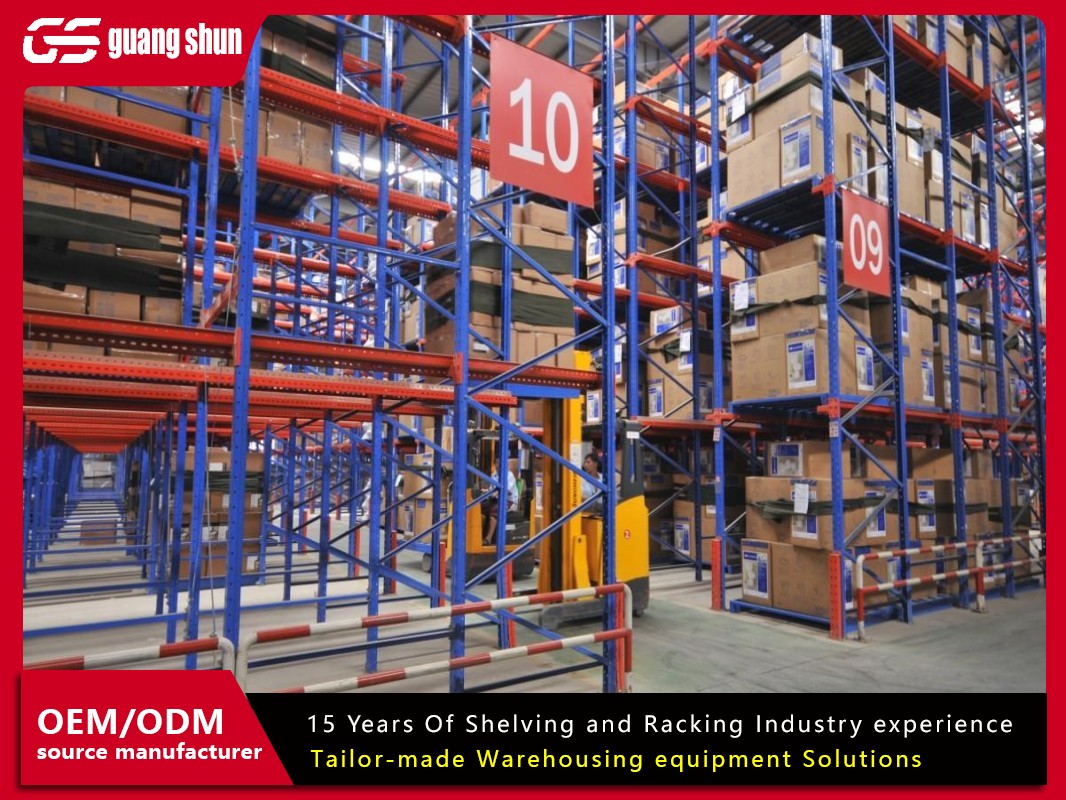
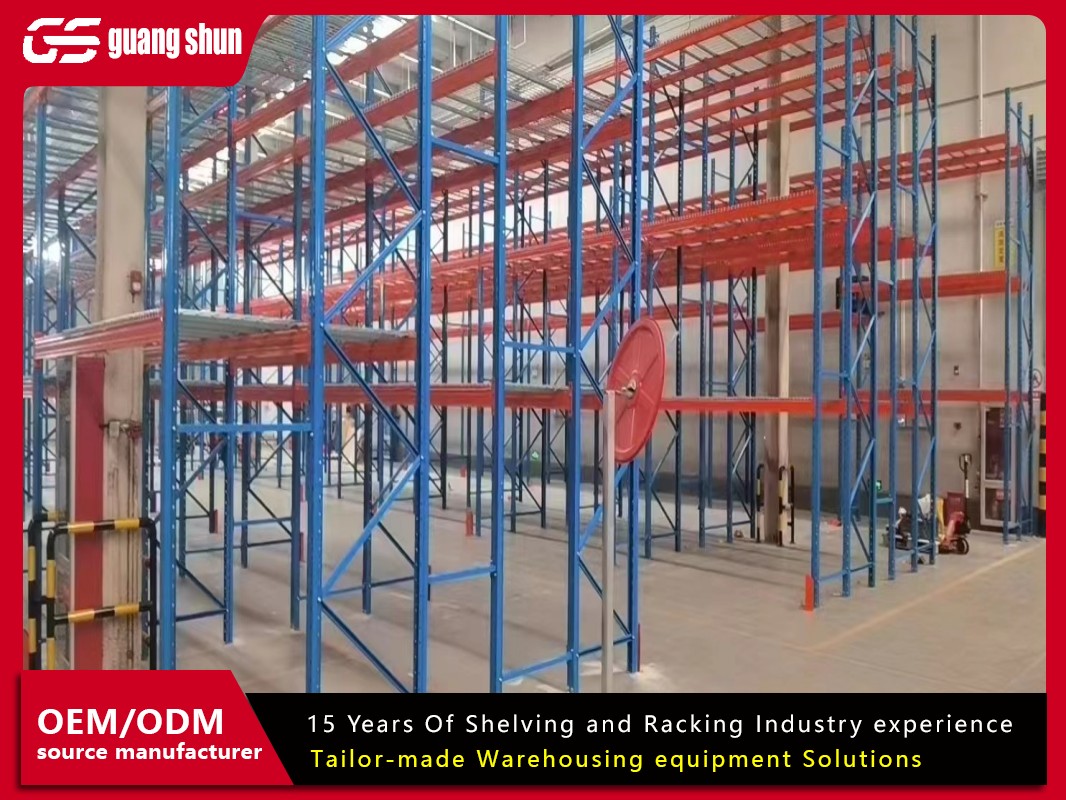
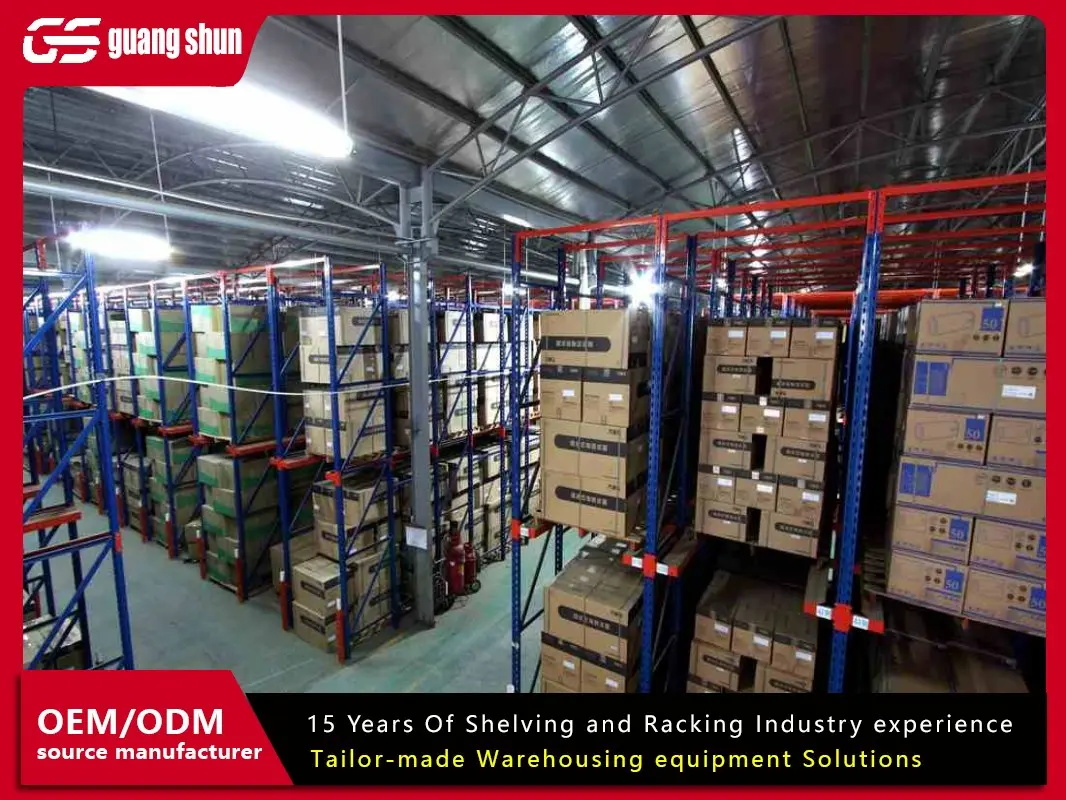
Industrial storage demands robust solutions that balance strength, adaptability, and installation speed. Traditional bolted shelving, while strong, often introduces lengthy assembly times and limited reconfiguration flexibility. In contrast, the heavy duty boltless shelving system has emerged as the preferred choice for distribution centers, manufacturing facilities, and cold storage warehouses. By eliminating loose hardware and relying on precision‑engineered connections, these systems deliver exceptional load‑bearing capacity while cutting labor costs. This article provides a technical deep dive into the design, applications, and financial justification of boltless shelving, drawing on the expertise of Guangshun, a global leader in material handling solutions.
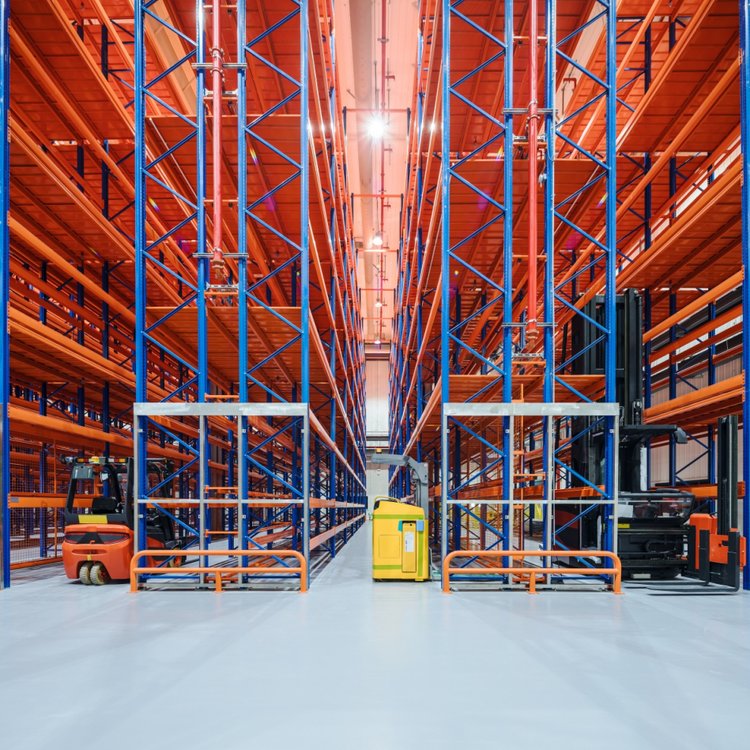
At the heart of every heavy duty boltless shelving system lies the rivet‑locking or clip‑in mechanism. Instead of nuts and bolts, upright posts are perforated with rectangular or keyhole slots at precise intervals. Shelf beams are equipped with integral lugs or rivets that snap securely into these slots.
The most common boltless design uses a triple‑rivet connection. Three cylindrical rivets on each beam end engage with the upright slots. Once the beam is tapped into place, the rivets wedge against the steel, creating a rigid, vibration‑resistant joint. This design distributes shear forces across multiple points, ensuring that even under dynamic loads the connection does not loosen. For a heavy duty boltless shelving system, uprights are typically roll‑formed from high‑tensile steel (≥ 550 MPa yield strength) with thicknesses ranging from 1.5 mm to 2.5 mm, depending on the required frame capacity.
To withstand continuous industrial use, the vertical frames must resist buckling. Engineers calculate the slenderness ratio of the uprights and often add diagonal or horizontal bracing for tall installations. Guangshun’s heavy duty models incorporate closed‑section profiles that increase torsional rigidity, allowing frame heights up to 6 meters without sacrificing load tolerance. The modular nature of the boltless design means that frames can be joined back‑to‑back or side‑by‑side to create continuous runs, a feature essential for large‑scale warehouses.
Understanding load ratings is critical when selecting a shelving system. The term “heavy duty” implies per‑shelf capacities typically exceeding 500 kg, with some industrial configurations supporting 1,500 kg per level.
A heavy duty boltless shelving system is rated for uniformly distributed loads across the entire shelf surface. Point loads—such as those from machinery feet or concentrated pallet corners—require additional load‑spreading measures, like plywood decking or steel sheets. Manufacturers provide deflection limits; for example, a beam spanning 2.5 meters should not deflect more than L/200 (12.5 mm) under full load to maintain structural integrity.
One of the primary advantages of boltless technology is infinite adjustability along the upright. Shelf beams can be repositioned in seconds without tools, accommodating changing inventory heights. In practice, a well‑designed heavy duty system allows beam level increments of 25 mm or 50 mm, giving operators fine control over storage cube utilization. This flexibility directly reduces wasted vertical space—a key factor in ROI calculations.
Time is money in logistics. Traditional bolted shelving requires wrenches, torque specifications, and multiple workers to align pre‑drilled holes. A boltless system, by contrast, can be assembled by two people using a rubber mallet.
Case studies from third‑party logistics providers indicate that installing a boltless shelving system consumes 40‑60% fewer man‑hours compared to conventional bolted rack. For a 1,000‑bay installation, this translates into thousands of dollars in direct labor savings. Moreover,因为没有 bolts, there is no hardware to lose or sort—a common delay factor on busy warehouse floors.
Seasonal peaks or shifts in product mix often require layout changes. With a bolted system, reconfiguration means drilling new holes or wrestling with rusted fasteners. A heavy duty boltless shelving system can be dismantled and rebuilt in a fraction of the time. This agility supports lean warehousing principles, where storage layouts evolve continuously to minimize travel distances.
The robustness of these systems makes them suitable for a wide range of industries:
Automotive Parts Warehousing: Engines, transmissions, and heavy castings require shelves capable of supporting 800‑1,200 kg. Boltless systems with reinforced beams and double‑thick uprights are common in this sector.
Manufacturing & MRO: Tooling, dies, and spare parts are stored in boltless units near assembly lines, allowing quick access without the need for heavy forklifts.
Cold Storage: Freezers demand corrosion‑resistant finishes. Guangshun offers a galvanized option for its heavy duty boltless shelving, preventing rust in high‑humidity environments.
Retail Distribution: Large‑format retail DCs use boltless systems for palletized goods that require case‑picking from shelves rather than pallet racks, combining density with picker accessibility.
When selecting between bolted and boltless designs, facility managers weigh several factors:
Installation Speed: Boltless wins decisively (2‑3 times faster).
Structural Rigidity: High‑quality boltless connections now meet or exceed bolted joint strength in shear tests, thanks to advanced stamping techniques.
Adjustability: Boltless offers continuous vertical adjustment; bolted systems require pre‑punched holes at fixed intervals.
Seismic Performance: In earthquake zones, both systems can be reinforced with cross‑aisle bracing. However, boltless frames often include integrated clip‑in bracing that speeds installation while maintaining code compliance.
Cost: Initial material costs are comparable, but the total installed cost favors boltless due to reduced labor.
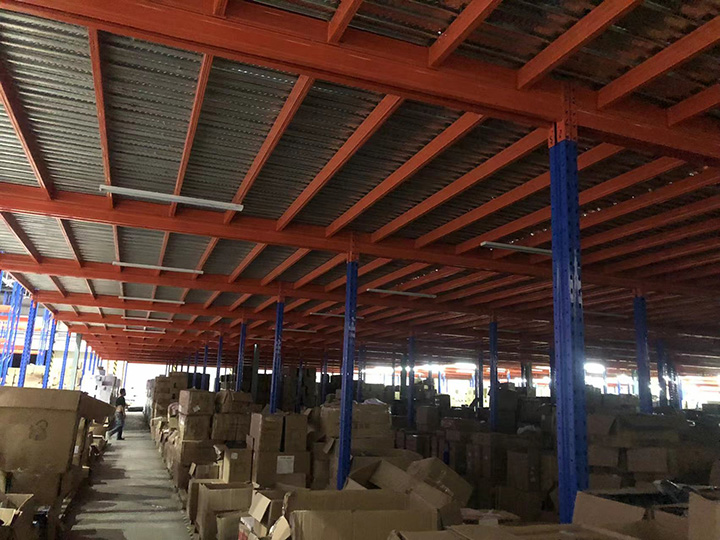
Safety is paramount in any storage installation. A heavy duty boltless shelving system must comply with regional standards such as ANSI MH16.1 (USA), FEM 10.2.02 (Europe), or AS 4084 (Australia).
In active seismic zones, the shelving must be anchored to the floor and tied into a bracing plan. Boltless systems accommodate diagonal or “X” bracing that clips directly to the uprights. Guangshun’s seismic kits are tested to resist lateral forces up to 1.5g, ensuring that stored goods remain secure during tremors.
Reputable manufacturers provide load capacity charts derived from physical testing. For a heavy duty boltless shelving system, look for certification from an independent laboratory (e.g., TÜV or UL) verifying that beams and frames meet claimed capacities. Additionally, clear signage indicating maximum shelf loads should be posted to prevent accidental overloading.
To maximize utility, boltless shelving can be outfitted with a range of accessories:
Steel Decks and Wire Decks: Provide a stable surface for small items or allow fire sprinkler water to pass through.
Back and Side Panels: Prevent items from falling and create segregated storage areas.
Drawer Modules and Bin Fronts: Enable small‑parts storage within the same footprint.
Base Plates and Leveling Feet: Compensate for uneven floors, critical for maintaining upright plumb.
Guangshun’s engineering team works with clients to design hybrid configurations, integrating boltless shelving with mezzanines or carton flow racks for multi‑level picking.
Investing in a heavy duty boltless shelving system delivers measurable returns. Consider a 5,000 m² warehouse currently using bolted shelving. By switching to boltless, the facility can:
Reduce installation labor by $15,000 – $25,000 (based on 1,000 bays).
Increase storage density by 10‑15% because of finer beam adjustability.
Cut future reconfiguration costs by 70% when SKU profiles change.
Improve safety compliance with certified, tested connections, potentially lowering insurance premiums.
Over a ten‑year lifespan, the total cost of ownership of a boltless system is typically 20‑30% lower than that of an equivalent bolted installation.
In conclusion, the heavy duty boltless shelving system represents a convergence of strength, speed, and flexibility. Its engineering eliminates the weaknesses of traditional fasteners while opening up new possibilities for dynamic warehouse layouts. Guangshun continues to innovate in this space, offering systems that not only meet but exceed the demands of modern industrial storage. Whether you are equipping a new facility or retrofitting an existing one, boltless shelving deserves serious consideration as the backbone of your storage strategy.
Q1: What is the maximum load per shelf in a heavy duty boltless shelving system?
A1: Load capacity depends on beam length and profile. Standard heavy duty beams (e.g., 150x50 mm box section) can support 800‑1,200 kg per level over a 2.5 m span. Custom profiles are available for up to 2,000 kg per level; consult Guangshun’s load tables for exact specifications.
Q2: Can boltless shelving be disassembled and reused without losing strength?
A2: Yes, one of the main advantages of boltless systems is their reusability. The rivet‑locking mechanism is designed for repeated assembly and disassembly without deformation, provided the beams are not overstressed. Always inspect the connections for wear after multiple moves.
Q3: Do I need special tools to assemble or adjust the shelves?
A3: No specialized tools are required. Assembly is typically done with a soft‑faced mallet to seat the beams into the upright slots. Adjustment is completely tool‑free—simply tap the beam upward to disengage the rivets and relocate it.
Q4: Are heavy duty boltless systems suitable for outdoor storage?
A4: Standard systems are designed for indoor use. For outdoor applications, Guangshun offers a weather‑resistant finish (hot‑dip galvanized or polyester powder coat) to prevent corrosion. Additional precautions, such as wind bracing and anchored bases, are necessary for exposed sites.
Q5: How do I ensure the system meets seismic safety requirements?
A5: You must select a system tested to local seismic standards. Guangshun provides seismic calculations and bracing kits that comply with IBC and CBC codes. A professional engineer should review the layout and anchor plan before installation.
Q6: What is the typical lead time for a heavy duty boltless shelving system?
A6: Lead times vary by configuration and quantity. Stock sizes (standard heights and depths) can ship within 1‑2 weeks. Custom colors, special beam lengths, or integrated accessories may extend lead time to 4‑6 weeks. Contact Guangshun for a project‑specific timeline.
Q7: Can boltless shelving be integrated with automated guided vehicles (AGVs)?
A7: Yes, boltless systems can be designed with clear floor areas and AGV‑compatible clearances. Because there are no diagonal braces at floor level (they can be placed at higher positions), AGVs can navigate beneath the shelving. Guangshun has implemented several AGV‑ready installations in e‑commerce fulfillment centers.
Q8: What accessories are available for organizing smaller parts within the shelves?
A8: Common accessories include bin dividers, shelf liner mats, plastic totes, and pull‑out drawer units. These attach without tools and help compartmentalize storage for fast‑moving SKUs.
For more detailed product specifications or to request a quote, visit Guangshun’s website or explore the heavy duty boltless shelving system page directly.

 Wechat
Whatsapp
Wechat
Whatsapp