If your operation deals with bulky parts, oversized materials, or substantial unit loads, you know that standard shelving often falls short. You need a storage solution built for serious weight and tough conditions. That’s where heavy duty stack racks come into play.
These versatile, open-frame structures are a cornerstone of industrial storage. They provide a robust and adaptable way to organize and protect heavy, irregularly shaped items that don’t fit neatly on standard pallet racking or shelves.
This article explains what heavy duty stack racks are, where they excel, and what to look for when selecting them for your facility.
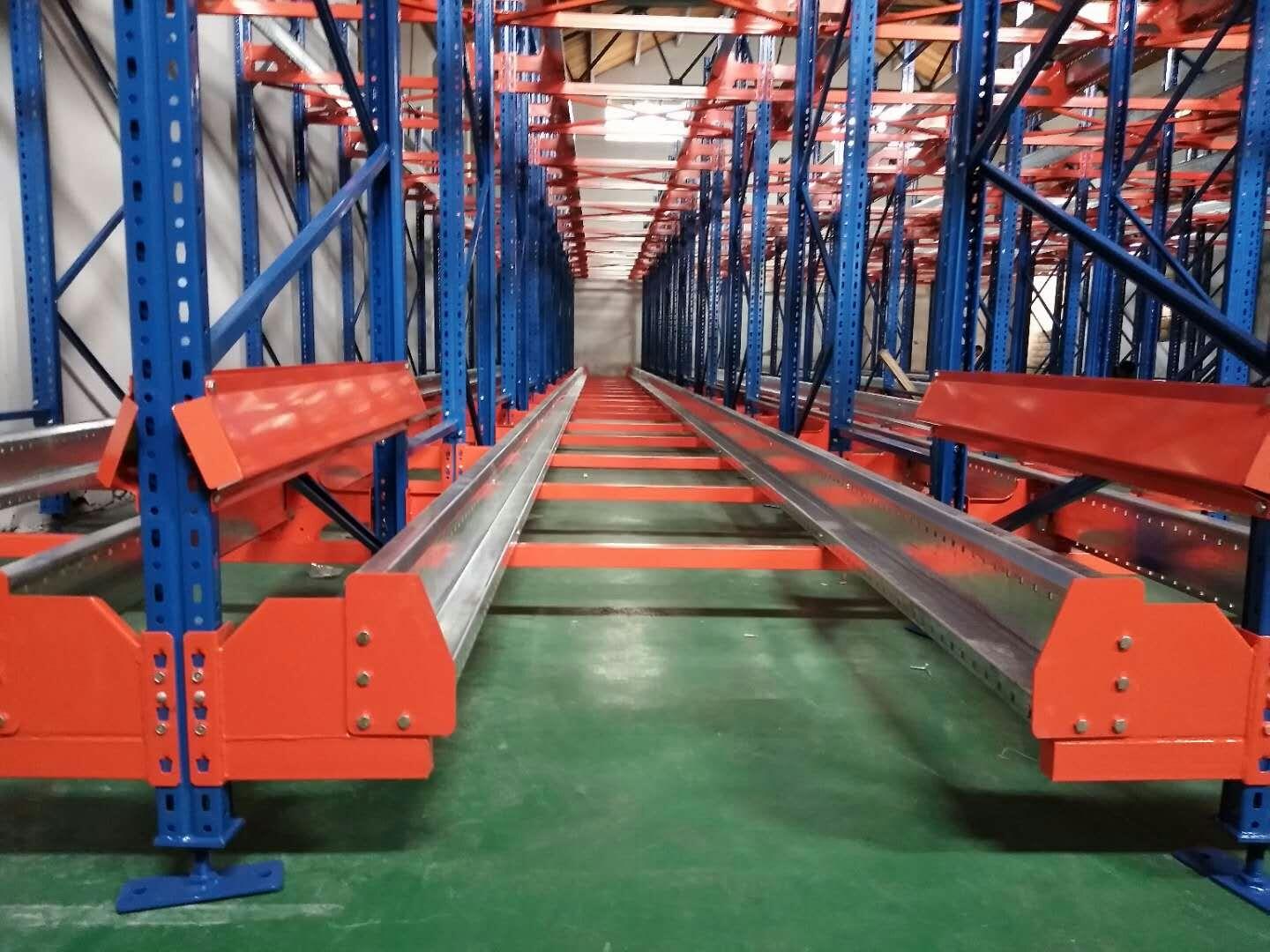
At their core, heavy duty stack racks are modular, open-frame containers made from welded steel tube or angle iron. Think of them as extremely strong, industrial-grade cages or baskets. They are designed to be stacked safely on top of one another, both when full and when empty, to maximize vertical space.
Unlike enclosed containers, their open design allows for easy visibility and access from all sides. Forklifts can insert their tines directly into the base frame for lifting and transport. This combination of strength, accessibility, and stackability makes them a uniquely flexible industrial storage solution.
They are also known by related terms like industrial stackable racks, stackable storage racks, or heavy duty stacking frames.
The strength and open design of stack racks make them indispensable across numerous sectors. Their primary role is in handling large, heavy, or awkward items.
In manufacturing plants, they are perfect for storing work in progress (WIP), raw material like steel bars or tubing, and large fabricated components. The open sides make it easy for overhead cranes or forklifts to place and retrieve items.
Warehouses and distribution centers use them for bulk storage of durable goods like appliances, auto parts, or packaged building materials. They consolidate multiple loose items into a single, secure, and movable unit load.
The automotive industry relies heavily on heavy duty stack racks for transporting and storing body panels, bumper assemblies, and other large sub-assemblies. They protect delicate finished parts from damage.
In the aerospace and metalworking sectors, they safely hold expensive, heavy, and precisely machined parts. The rigid structure prevents bending or warping.
Choosing industrial stack racks over alternative methods brings several tangible benefits to your operation.
The most obvious is exceptional durability and strength. Constructed from high-grade steel with reinforced corners and seams, they are built to withstand years of heavy loading, impact, and harsh industrial environments without failing.
They offer superior organization and space efficiency. By containing loose items, they eliminate clutter and safety hazards. Their stackable nature lets you utilize the full clear height of your facility, freeing up valuable floor space for other activities.
Product protection is another major advantage. The welded steel frame creates a protective barrier that prevents items from being crushed or damaged during handling or while in storage. This is crucial for high-value or fragile industrial components.
Their design enables improved material handling. Forklifts can quickly pick up and move an entire rack load, streamlining the flow of materials from receiving, to storage, to the production line. This reduces handling time and labor costs.
Finally, they offer long-term versatility and cost-effectiveness. A well-made heavy duty stack rack is a capital asset that lasts for decades. Its open design can accommodate a wide variety of item shapes and sizes over its lifetime, adapting to changing storage needs.
Not all stackable storage racks are created equal. Paying attention to these design elements will ensure you get a safe and long-lasting product.
Load Capacity and Construction are paramount. Always check the dynamic (moving) and static (stacked) load ratings. Look for racks made from thick-wall steel tubing (e.g., 11-gauge or thicker) with full, continuous welds at all critical joints, not just spot welds.
Safety and Stability Features are non-negotiable. The best racks have positive stacking features like interlocking corner posts or stacking cups. This prevents racks from shifting when stacked. Rounded edges and smooth surfaces minimize the risk of injury and product snagging.
Consider customization options. Many manufacturers offer added features like solid steel or wire mesh side panels for containing small parts, divider walls to create compartments, or drop-down gates on one side for easier manual access. Removable skid bases can also be useful.
Sizing and Dimensions must fit your needs and space. Standard sizes exist, but custom dimensions are common. Consider both the internal dimensions (for your product) and the external footprint (for your floor space and aisle width). Ensure the height allows for safe stacking within your building's clear height.
Selecting the correct heavy duty stack racks requires a practical assessment of your specific situation.
Start by analyzing your stored items. What are their exact dimensions, weight, and shape? Are they fragile or durable? This determines the required internal size, load capacity, and whether you need added protection like mesh liners.
Evaluate your handling equipment. What is the lifting capacity of your forklifts? What is the width of their forks? Ensure the rack's base channels are compatible with your equipment's fork dimensions and that the total loaded weight is within your lift truck's capacity.
Plan for stacking height. Determine how many loaded racks you need to stack. Multiply the height of one loaded rack and ensure you have enough overhead clearance. Remember that stability decreases with each additional tier; never exceed the manufacturer's rated stacking height.
Finally, calculate the total cost of ownership. While initial price is a factor, prioritize quality and safety. A slightly more expensive, properly rated rack that lasts 20 years is a far better investment than a cheaper one that fails or causes an accident in five years.
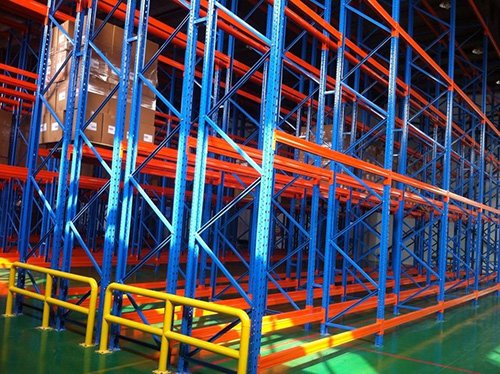
To maximize the benefits and lifespan of your heavy duty stack racks, follow these operational guidelines.
Always adhere to the rated load capacity. This is the most critical rule. Never exceed the weight limit, and distribute the weight evenly across the rack's floor. Overloading is the fastest way to cause a catastrophic failure.
Inspect racks regularly. Look for signs of damage: bent uprights, cracked welds, or significant rust. Immediately remove any damaged rack from service for repair or replacement. A formal inspection schedule is recommended.
Follow proper stacking procedures. Ensure stacking features (cups, posts) are fully engaged before releasing the load. Always stack racks squarely on top of each other; a misaligned stack is unstable and dangerous.
Train your equipment operators. Everyone who handles stack racks with forklifts must be trained on proper lifting techniques—inserting forks fully, lifting smoothly, and traveling with the load lowered. They should also understand the visual inspection criteria.
Q1: What is the typical weight capacity for a heavy duty stack rack?
A1: Capacities vary significantly based on design and construction. Common heavy duty stack racks can range from 2,000 lbs to 8,000 lbs per rack or more for dynamic (moving) loads. Static (stacked) capacity is often higher. Always check and follow the manufacturer's specific rating plate or documentation for each rack.
Q2: Can stack racks be used with very small parts or items that might fall through?
A2: Yes, with modification. For small parts containment, you can order racks with welded wire mesh panels on all sides and the bottom. Alternatively, you can line standard open racks with corrugated cardboard, plywood, or custom-fitted plastic liners to create a solid barrier.
Q3: How do stack racks differ from pallet racking?
A3: Pallet racking is a fixed, structural system in your warehouse designed to hold palletized loads. Stack racks are themselves portable containers that hold loose items and can be placed on the floor, on pallet racking beams, or stacked upon each other. Stack racks add organization and protection within a storage system.
Q4: Is it safe to stack different sizes or brands of stack racks together?
A4: It is not recommended. Different manufacturers use different stacking mechanisms and design tolerances. Mixing sizes or brands can create unstable stacking interfaces. For safety and stability, only stack identical racks designed to interlock with each other.
Q5: What floor surface is required for stacked heavy duty stack racks?
A5: A level, smooth, and structurally sound concrete floor is essential. The floor must be able to support the immense point load of a stacked column of fully loaded racks. Uneven or soft floors can cause racks to tilt or settle unevenly, leading to instability. Consult a structural engineer if you have concerns about your floor's capacity.

 Wechat
Whatsapp
Wechat
Whatsapp