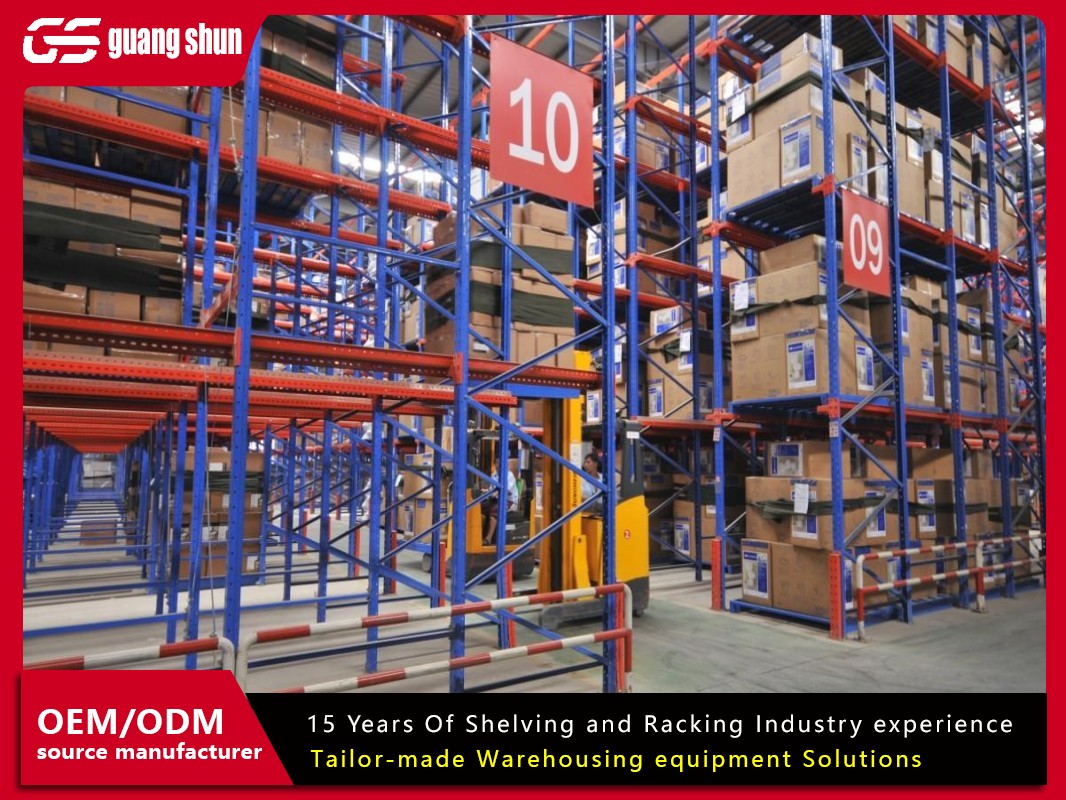
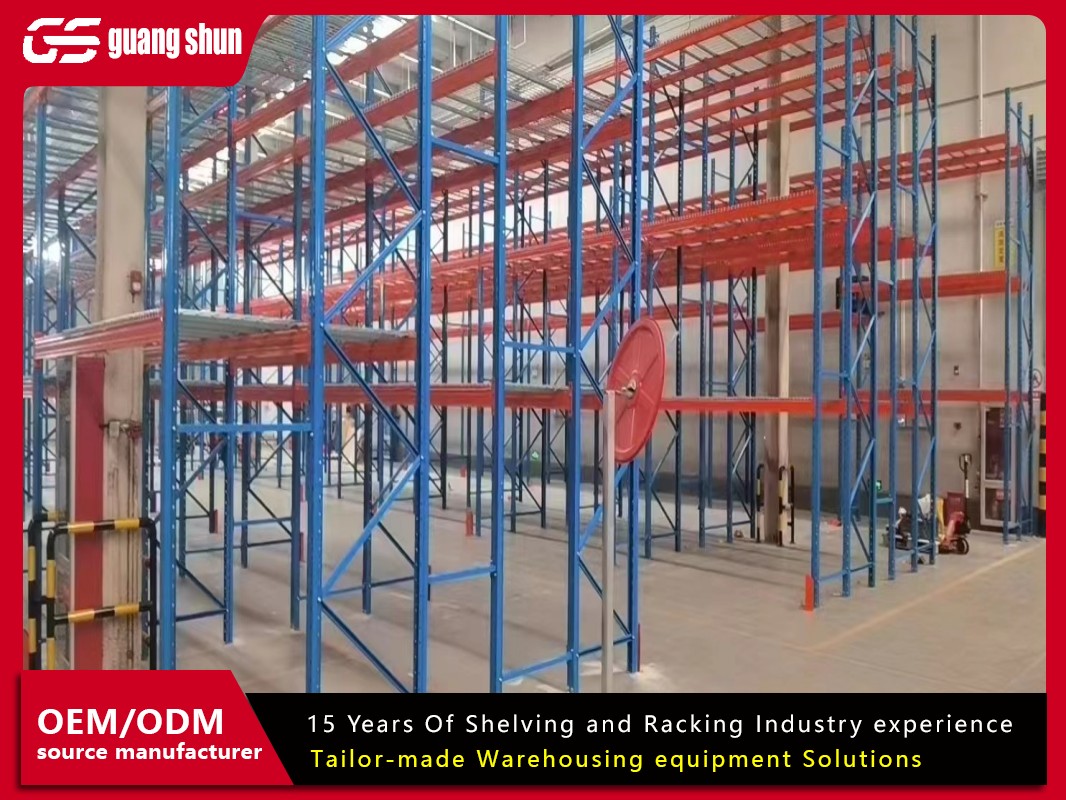
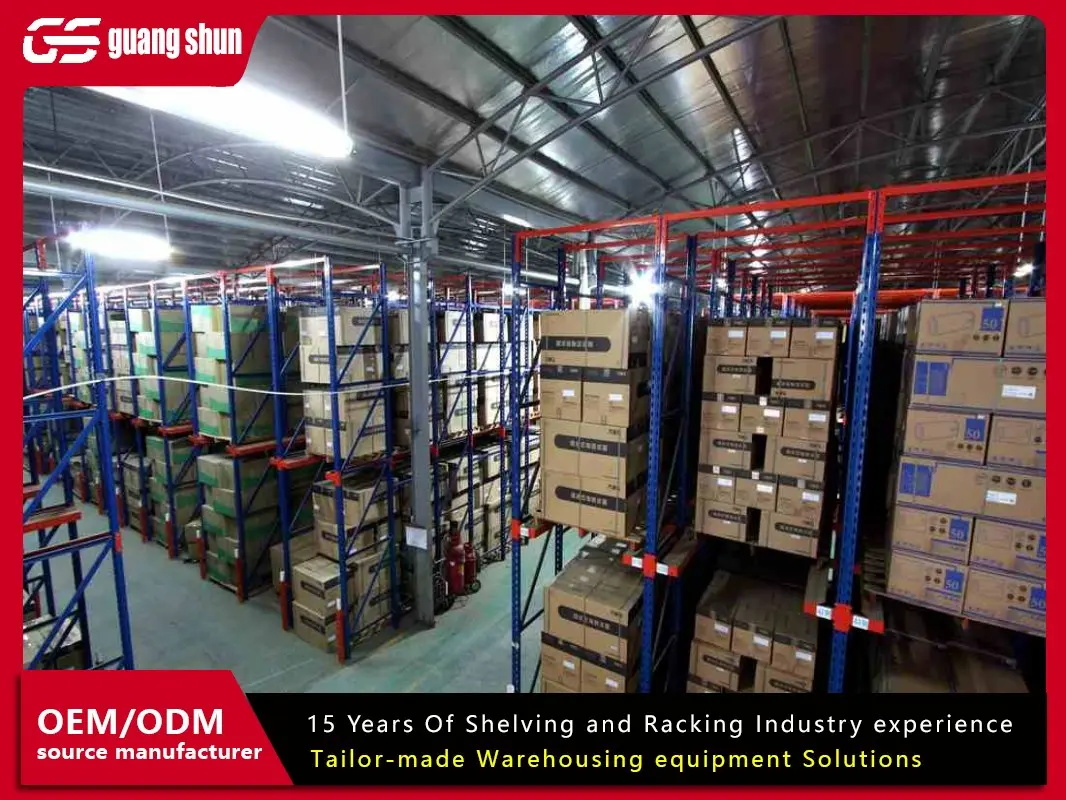
When planning a warehouse layout, every square foot counts. You need a storage system that is both highly accessible and space-efficient. For many operations, the ideal solution lies in a straightforward, reliable design: the single deep selective pallet rack.
This racking system is the cornerstone of countless warehouses, distribution centers, and manufacturing facilities. Its popularity stems from a perfect balance of direct access and dense storage for a wide range of goods.
Understanding its design, benefits, and optimal use cases can help you determine if this system is the right fit for your storage challenges.
Let's break down the name. "Single deep" means that pallets are stored one unit deep on each side of the aisle. "Selective" signifies that every pallet position is directly accessible from the aisle, with no need to move other pallets for retrieval. "Pallet rack" defines its core function.
In essence, it is a system of upright frames and horizontal load beams that create storage levels. Each pallet sits on these beams, with its face perpendicular to the aisle. This creates clear, accessible lanes of storage.
It is the most common type of pallet racking globally. Its simplicity offers unparalleled flexibility for storing SKUs with high turnover rates.
Why does this rack design remain so prevalent? Its advantages address fundamental warehouse needs.
Direct Load Accessibility
Every pallet is immediately available. This is crucial for first-in, first-out inventory management. It speeds up order picking and simplifies cycle counting. Operators spend less time maneuvering to reach specific items.
Optimal Space Utilization for Its Design
While not as dense as drive-in or push-back racks, it makes excellent use of available cube storage. It minimizes aisle space compared to some systems while maintaining full selectivity. Vertical space is fully leveraged up to safe heights.
High Flexibility and Scalability
The system is inherently adaptable. Beam levels can be easily adjusted without tools to accommodate products of different heights. The rack can be reconfigured, expanded, or relocated as needs change. It handles a vast array of pallet sizes and weights.
Cost-Effectiveness
Its simple design translates to a lower initial investment per position compared to more complex dynamic systems. Installation is generally quicker and requires less specialized labor. Maintenance is straightforward, involving only the inspection of components.
Compatibility and Ease of Use
It works seamlessly with all standard material handling equipment. Counterbalance forklifts, reach trucks, and order pickers can all operate efficiently in the aisles. This reduces training time and increases overall operational safety.
The single deep selective rack is not a one-size-fits-all solution, but it excels in specific environments.
General Warehouse and Distribution
It is perfect for facilities storing a large number of SKUs. Each product line has its dedicated, accessible location. This supports efficient picking for less-than-pallet-load orders.
Cold Storage Facilities
In freezer and cooler environments, minimizing time spent in aisles is vital. The direct access feature allows forklift operators to retrieve loads quickly, reducing energy loss and improving worker comfort.
Manufacturing and Raw Material Storage
It provides organized storage for production components. Both raw materials and finished goods can be stored systematically, supporting just-in-time manufacturing processes.
Retail Backroom Storage
For stores with significant bulk inventory, these racks organize palletized goods behind the sales floor. Quick access is key for restocking shelves efficiently.
Archived Records and Seasonal Items
While often used for active goods, it also excels at storing items with lower turnover that still require occasional direct access, like documents or seasonal products.
A successful installation depends on proper planning and understanding the core parts.
Upright Frames
These are the vertical columns. Their gauge, depth, and height are determined by the load capacity, seismic requirements, and overall system height. Proper anchoring to the floor is non-negotiable for safety and stability.
Load Beams
These horizontal members connect the uprights and directly support the pallets. They feature a safety lock to prevent accidental dislodgement. Beam capacity must be carefully calculated based on the weight of the stored unit loads.
Frame and Beam Connectors
The connection points are engineered for strength. Teardrop-style or bolt-together designs provide a secure link between beams and upright frames.
Accessories for Enhanced Functionality
Wire Mesh Decking: Provides a surface for non-palletized items or small boxes.
Pallet Supports: Used as an alternative to beams for certain applications.
Row Spacers: Ensure consistent aisle width and overall alignment.
Column Protectors: Guard uprights from impact damage.
Aisle Guides: Help guide forklifts and protect the rack structure.
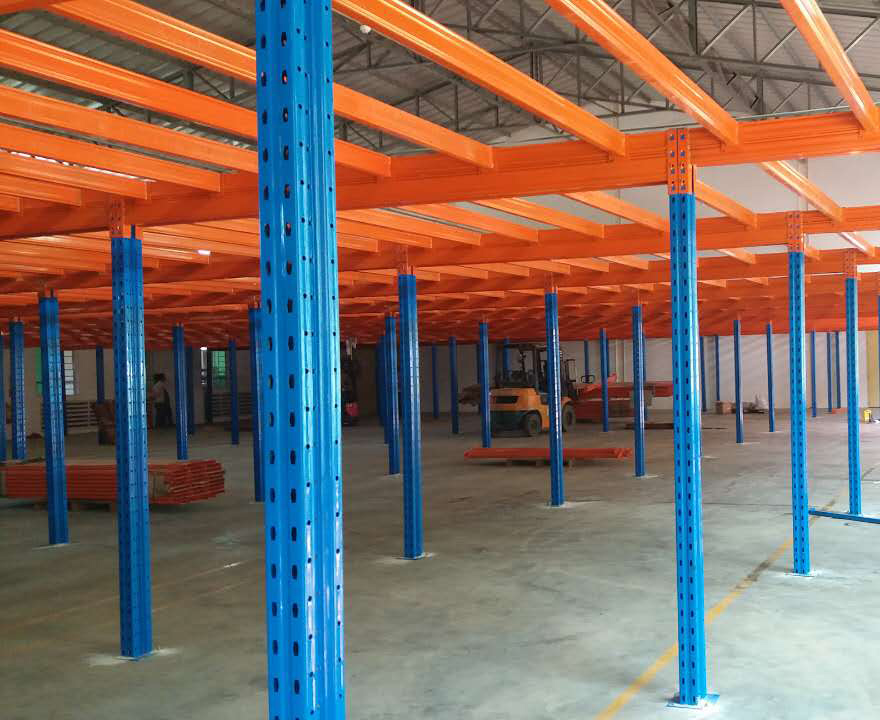
Selecting a single deep selective pallet rack involves more than just ordering shelves. Key factors must be evaluated.
Analyzing Your Inventory Profile
Consider your pallet dimensions, average weight per load, and total number of SKUs. The system must be sized to handle your heaviest unit load safely. A mix of SKU velocities will also influence layout.
Determining Required Capacity
Always work with a qualified engineer or supplier. They will calculate the required load capacities for upright frames and beams based on your operational data, including potential seismic factors.
Layout and Aisle Width Planning
Aisle width is dictated by the type of forklift used. A reach truck requires a narrower aisle than a counterbalance truck. Proper planning here maximizes storage density while maintaining smooth traffic flow.
Safety and Compliance Standards
The rack system must be designed and installed in compliance with local building codes and industry standards. Regular inspections are essential to identify and repair any damage from impacts.
It's helpful to understand where this system fits among other options.
Compared to Double Deep Racking
Double deep stores pallets two units deep on each side. It increases density but requires a specialized deep-reach forklift. It loses true selectivity, as the back pallet is blocked by the front one.
Compared to Drive-In Racking
Drive-in racks are high-density systems where the forklift drives into the rack structure. They are suitable for bulk storage of identical items but offer very low selectivity and slower throughput.
Compared to Push Back Racking
Push back systems store pallets multiple deep on inclined carts. It offers good density and selectivity for a few SKUs, but is more complex and costly than a simple single deep selective system.
The choice always comes down to the trade-off between storage density and accessibility.
Q1: What is the main disadvantage of a single deep selective pallet rack?
A1: The primary trade-off is storage density. Because it prioritizes direct access to every pallet with dedicated aisles, it typically stores fewer total pallets in the same footprint compared to high-density systems like drive-in or push-back racking.
Q2: How wide do aisles need to be for this type of rack?
A2: Aisle width depends entirely on the forklift. For a standard counterbalance forklift, aisles can be 11-13 feet wide. Using a narrow-aisle reach truck can reduce aisle width to 8-10 feet, significantly increasing storage density.
Q3: Can I adjust the shelves after installation?
A3: Yes, one of the key features is adjustability. Horizontal load beams can be relocated up or down the upright frame column without tools (in teardrop designs) or with simple tools, allowing you to reconfigure storage heights as inventory changes.
Q4: What weight capacities can these racks handle?
A4: Capacities vary greatly based on component design. Light-duty systems may hold 1,000 lbs per beam pair, while heavy-duty industrial single deep selective pallet rack systems can handle 10,000 lbs or more per beam level. A professional capacity analysis is required.
Q5: Are there any special safety inspections required?
A5: Yes, regular inspections are critical for safety. A formal rack inspection program should be in place, with documented checks for any beam deflection, upright frame damage, connection integrity, and proper anchoring. Any damage should be repaired immediately by a qualified person.

 Wechat
Whatsapp
Wechat
Whatsapp