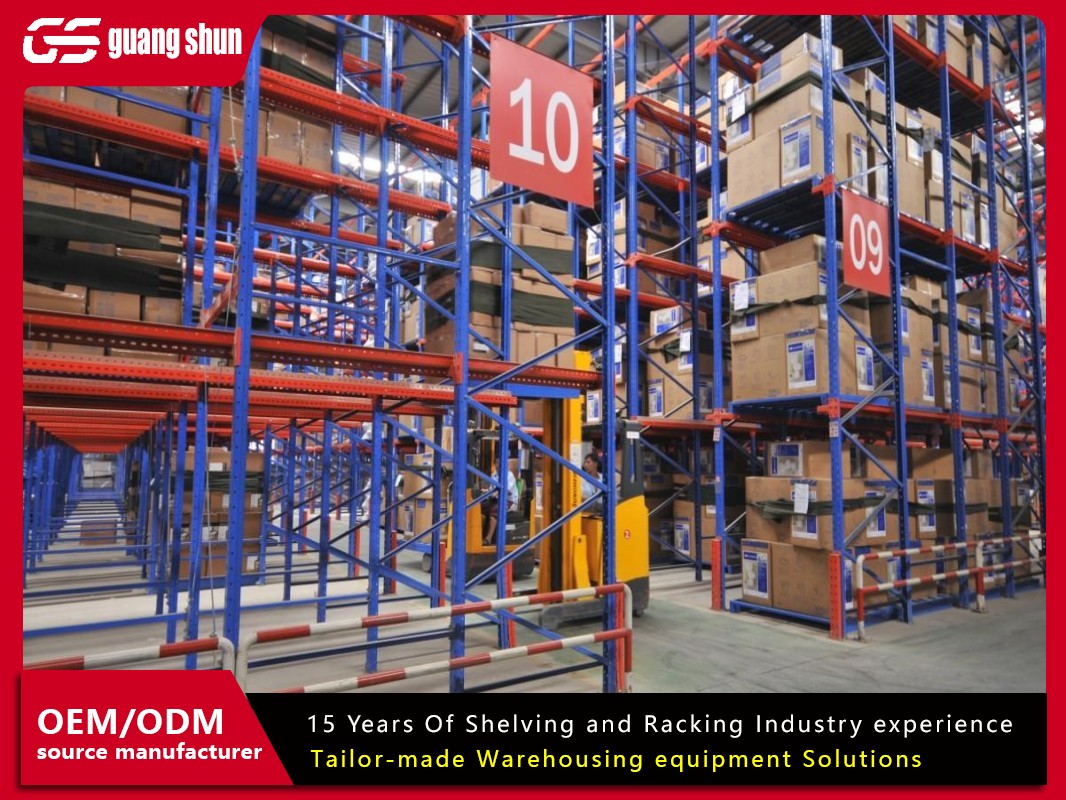
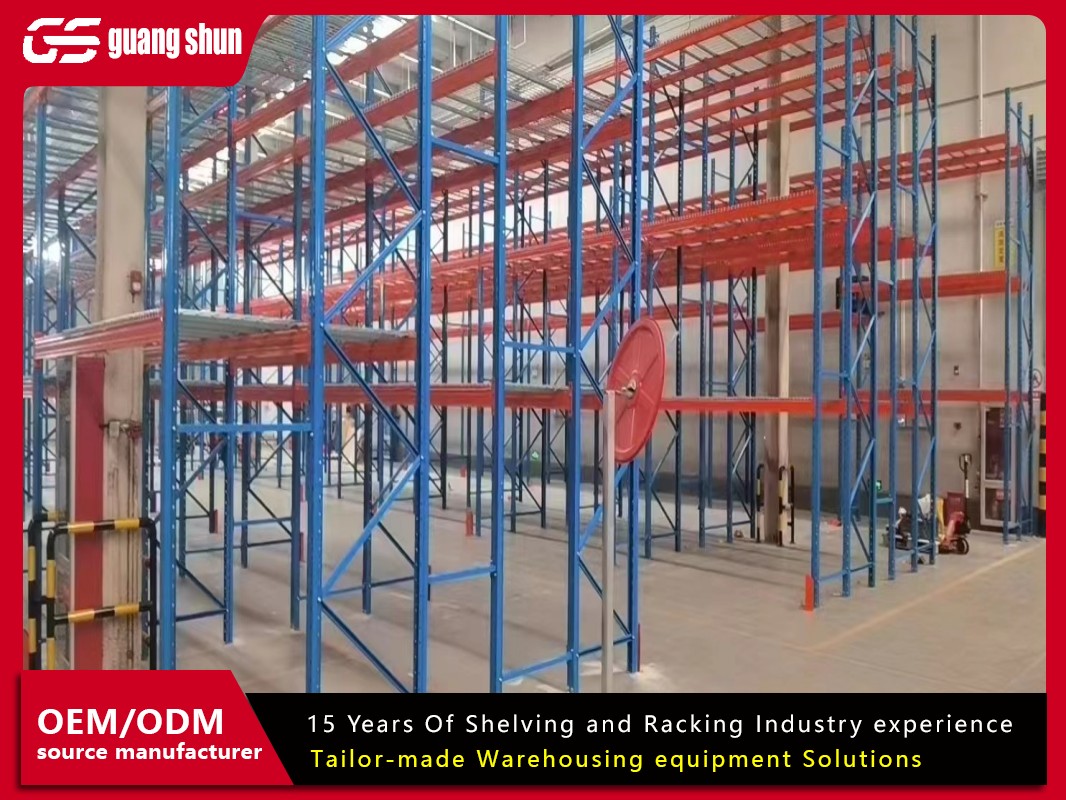
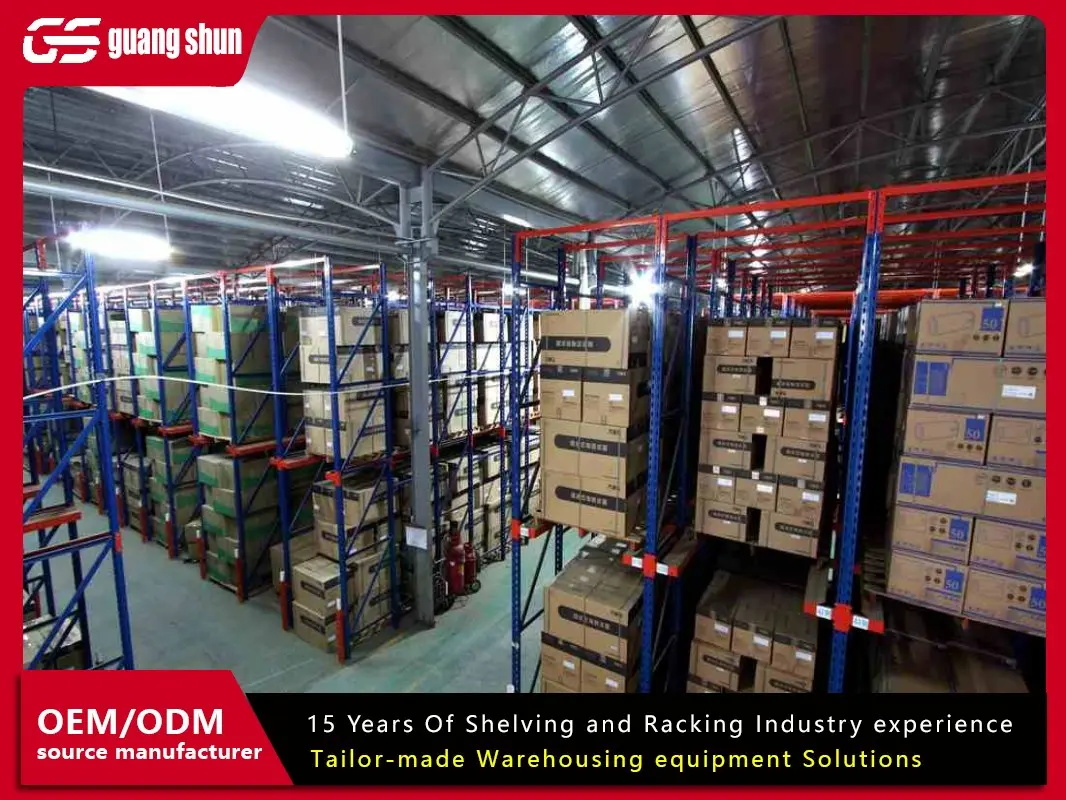
Modern manufacturing and distribution facilities face a persistent challenge: how to store increasing volumes of raw materials, work-in-progress components, and finished goods within finite floor spaces. Inefficient layouts lead to extended forklift travel paths, elevated risk of product damage, and higher operational expenses. factory racking systems provide the structural backbone for resolving these constraints, but only when engineered with precision. This guide examines material specifications, static/dynamic load calculations, compliance with global standards (FEM, RMI, SEMA), and configurable rack typologies. Guangshun has delivered such engineered solutions to automotive, logistics, and heavy equipment sectors, demonstrating measurable gains in storage density and picking accuracy.
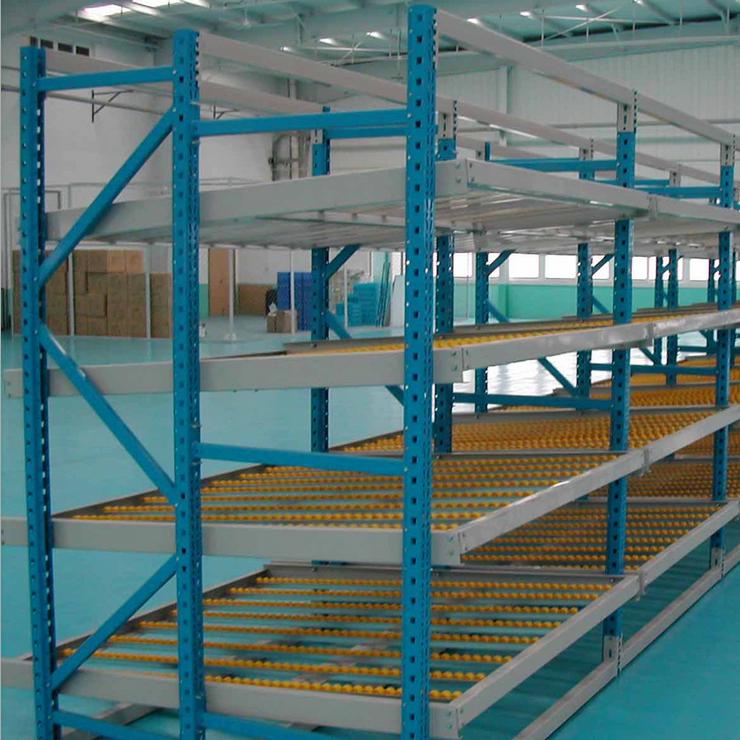
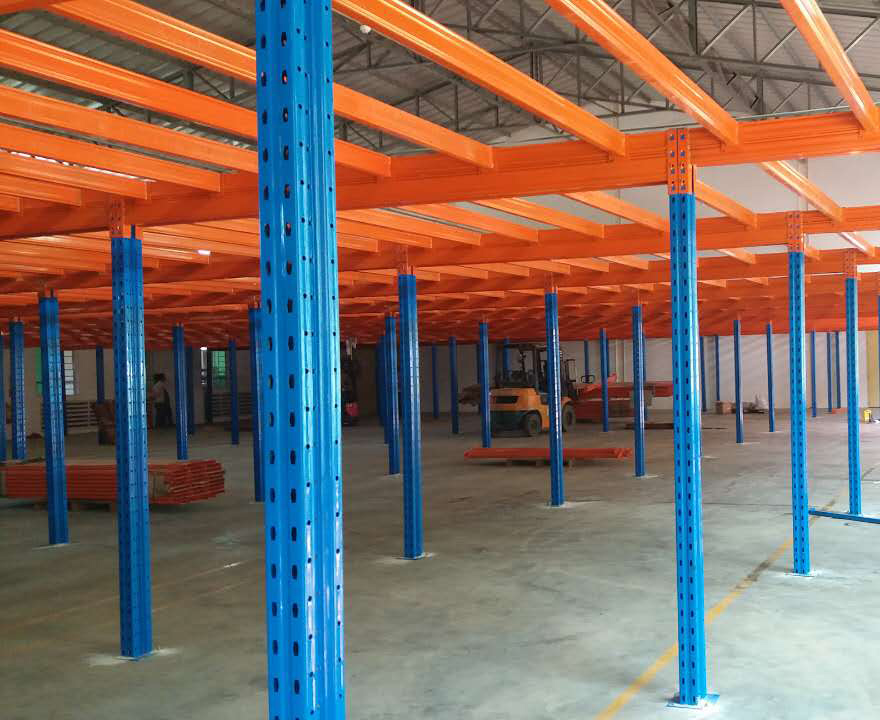
Industrial rack structures are not generic steel assemblies. Each factory racking systems comprises several load-bearing components that must withstand static weights, dynamic impacts, and seismic forces. The primary elements include:
Upright frames (columns): Fabricated from hot-rolled steel coils, typically grade Q235B or Q355B, with a minimum yield strength of 235 MPa. Section profiles (C-channel, box, or perforated) determine column buckling resistance.
Beam connectors & step beams: Roll-formed steel with 1.5mm to 2.5mm thickness, featuring integral safety locks to prevent accidental dislodging under vibration.
Diagonal bracing: X-bracing or K-bracing patterns increase lateral stability; required for rack heights exceeding 6 meters or seismic zones.
Footplates & anchor bolts: M16 to M24 galvanized bolts with pull-out resistance calculated per concrete compressive strength (minimum 25 MPa).
Protective add-ons: Column guards, end-of-aisle barriers, and beam safety clips mitigate forklift collisions.
Surface treatment involves electrostatic powder coating (60–80 μm thickness) or hot-dip galvanizing for corrosive environments. Guangshun applies a three-step pre-treatment (degreasing, phosphating, passivation) to ensure salt spray resistance exceeding 500 hours per ASTM B117.
Selecting the correct configuration directly affects inventory turnover rates and space utilization. Below are the dominant types used in high-throughput factories:
Selective pallet racking: Provides 100% accessibility to each pallet. Beam load capacities range from 1,500 kg to 5,000 kg per level. Aisle widths typically 2.8–3.5 meters. Best for SKU-diverse operations (e.g., spare parts distribution).
Drive-in / drive-through racking: Continuous rails allow forklifts to enter the storage lane. LIFO (last-in, first-out) orientation maximizes density but reduces selectivity. Ideal for homogeneous products like raw plastic granules or canned goods.
Push-back racking: Utilizes nested carts on inclined rails. Each lane stores 2–6 pallets deep. FIFO or LIFO based on cart arrangement. Increases storage density by 40% compared to selective racking while maintaining moderate selectivity.
Pallet flow racking (gravity flow): Roller tracks with controlled brakes; pallets move from loading to picking side. FIFO discipline with 90%+ space efficiency. Common in food/beverage production lines with expiration date sensitivity.
Cantilever racking: Designed for long or irregular loads (steel bars, pipes, lumber). Arms extend from a single column row, accommodating lengths up to 8 meters.
Each variant imposes different floor load distributions and aisle requirements. For factory racking systems in high-bay warehouses (exceeding 12 meters), sway frames and seismic bracing become mandatory per EN 15512.
Structural reliability depends on five interlinked calculations that engineers must validate before installation:
Beam deflection limits: Maximum vertical deflection ≤ L/180 (L = beam span). Excessive deflection leads to pallet instability and rack tilt. Verified via finite element analysis (FEA) with point loads applied at quarter-span points.
Column slenderness ratio (KL/r): For upright frames, the effective length factor (K) combined with radius of gyration (r) determines buckling risk. Ratios below 120 are mandatory for steel industrial racks per RMI specification.
Seismic force resistance: In regions with peak ground acceleration (PGA) > 0.2g, racks require base shear calculations per ASCE 7-22. Cross-aisle horizontal forces are resisted by diagonal bracing; down-aisle forces by rigid frame action.
Anchor bolt pull-out & shear: Each column base transfers vertical loads (dead + live) and horizontal seismic/shear forces. Required edge distance from concrete slab edge ≥ 150 mm to avoid blowout failure.
Dynamic load factor (DLF): Forklift braking or acceleration applies impact loads. Industry standard applies a 1.2–1.4 DLF to live loads for fatigue design, especially for racks subject to >500 cycles per shift.
Sophisticated providers use validated software (MDesign, RackView) to output load notices and capacity labels per beam level. factory racking systems that lack certified load labels violate OSHA and local workplace safety regulations.
Real-world factory environments present non-negotiable limitations: low overhead clearance, irregular column grids, vibration from stamping presses, or corrosive airborne particles. Engineered solutions include:
Low-ceiling scenarios (under 5 meters): Use double-deep selective racking with shorter uprights and reinforced beam steps. Achieve 45% more positions than standard selective racks by reducing aisle count.
Obstruction navigation (building columns, fire sprinklers): Rack layouts incorporating notched beams or cut-out footplates that encircle columns without compromising load path. Fire sprinkler clearance maintained to NFPA 13 (minimum 460 mm below deflector).
High-vibration zones: Install neoprene isolation pads between footplates and floor. Add horizontal row spacers every three bays to dampen harmonic vibration from adjacent heavy machinery.
Corrosive or wet environments: Specify hot-dip galvanized finish (ASTM A123) or stainless steel fasteners. Polyurethane topcoats provide chemical resistance against hydraulic fluids and coolants.
For a heavy equipment manufacturer in the Midwest U.S., Guangshun conducted 3D laser scanning of a 40-year-old facility with 5.2m ceiling height. The team designed a custom drive-in rack with reduced bay depths and additional horizontal ties, increasing storage of cast iron components by 3,200 positions while maintaining seismic compliance. This project achieved a payback period of 11 months through reduced offsite warehousing costs.
Quantifying the return on investment for industrial rack upgrades requires baseline data. Below are empirically derived improvements from 12 factory implementations using engineered factory racking systems:
Space utilization increase: Switching from selective racking to push-back racking (3-deep) improved cube utilization from 38% to 71% in a plastics injection molding plant.
Travel time reduction: Drive-in racking reduced average forklift round-trip distance by 62% compared to floor stacking, measured via telematics data over 6 months.
Inventory accuracy: Pallet flow racking with barcode locations reduced cycle count discrepancies from 7.2% to 1.8% within 90 days, as FIFO discipline eliminated obsolete stock.
Damage rate decline: Installation of column protectors and beam end guards decreased rack impact repairs by 83% in a beverage distribution center.
A typical 5,000 m² factory can expect gross storage capacity growth from 2,400 pallet positions to 4,100 positions after reconfiguring to mixed selective/drive-in systems. At a rental cost equivalent of $8/m²/month, annual savings exceed $163,000.
Non-compliant rack structures expose operators to catastrophic collapse risks and regulatory penalties. Certification to the following standards verifies engineering integrity:
RMI ANSI MH16.1 (USA): Specifies design, testing, and utilization of industrial steel storage racks. Requires minimum safety factor of 1.5 against yielding and 1.8 against buckling.
EN 15512 (Europe): Mandates tolerance classes for upright frames (±1.5 mm over 2m), beam end connector strength verification via cyclic loading tests (100,000 cycles at 120% rated load).
AS4084 (Australia/New Zealand): Includes additional seismic provisions for regions with PGA > 0.1g and requires regular statutory inspections every 12 months.
ISO 9001:2015 for manufacturing: Certifies traceability of steel batches, weld procedure specifications (WPS), and non-destructive testing (NDT) for critical joints.
All Guangshun racking components are produced under ISO 9001:2015 and undergo third-party load testing per EN 15512. Detailed load notices are provided for each beam level, and seismic calculations are stamped by structural engineers for local permitting.
As factories transition toward automated guided vehicles (AGVs) and robotic goods-to-person systems, rack infrastructure must adapt. Key integration considerations include:
AGV navigation tolerance: Rack aisles require consistent floor flatness (±3 mm over 1m) and magnetic tape or LiDAR reflector strips attached to upright faces. Clearance for AGV lifting forks demands beam height adjustments.
Sensor & RFID mounting: Pre-drilled holes on upright frames simplify installation of presence sensors, temperature monitors, and RFID gate antennas without welding.
AS/RS compatibility: Automated storage and retrieval systems (stacker cranes) require extremely tight tolerances (upright straightness within ±1mm per 10m). Beams must be designed for rail attachment and vertical mast guidance.
Digital twin readiness: Provide BIM models (Revit, Navisworks) of rack layouts to integrate with warehouse control system (WCS) simulations, reducing commissioning time by 30%.
In a recent AGV retrofit for a German automotive parts supplier, Guangshun replaced 6,000 existing selective rack positions with new tapered beam designs that increased under-beam clearance by 80 mm, enabling MiR 1350 robots to pass without lifting conflicts. Throughput improved 27% with zero structural modifications to the building.
Q1: What load capacity should I specify for factory racking systems
in a heavy metal stamping plant?
A1: For stamping plants handling
dies and coil stock, specify beam load capacities of 5,000–8,000 kg per level.
Upright frames must be reinforced with thicker steel (3.0mm minimum) and
additional horizontal bracing. Also require dynamic load testing because
forklifts in stamping areas often operate at higher speeds. Consult the rack
supplier’s structural engineer to account for eccentric loads from irregular die
shapes.
Q2: How do I calculate the seismic resistance of factory racking
systems without expensive software?
A2: Basic seismic assessment
follows the equivalent lateral force (ELF) procedure from ASCE 7. Determine site
PGA, rack weight (dead + 75% live load), and response modification factor (R=3
for unbraced racks, R=5 for braced frames). The base shear V = (SDS * Ie * W)/R.
However, for racks above 8m or in zones with SDS > 0.5g, nonlinear pushover
analysis is mandatory. Most local building departments require sealed
calculations.
Q3: Can drive-in racking be converted to selective racking
later?
A3: Partial conversion is possible but not cost-effective.
Drive-in racks use continuous rail beams and staggered uprights. Converting to
selective racking would require removing all rails, replacing beams, and
potentially relocating uprights. A better strategy is designing modular rack
sections: 30% of the factory area using bolted selective bays and 70% drive-in
lanes. This hybrid configuration allows future reconfiguration with about 20%
new beam purchases.
Q4: What are the mandatory inspection intervals for factory racking
systems under OSHA/RMI guidelines?
A4: RMI recommends a formal
structural inspection by a certified rack safety professional every 12 months.
Additionally, trained staff perform daily visual checks for damaged uprights
(bent flanges, missing anchor bolts, deformed beam locks). Any upright with a
dent deeper than 10 mm or twist exceeding 5 degrees requires immediate unloading
and replacement. OSHA can issue fines exceeding $13,000 for non-compliant
damaged racks.
Q5: How does Guangshun handle custom seismic bracing for factory
racking systems in high-risk zones?
A5: Guangshun deploys a five-step seismic design protocol: (1) On-site measurement of soil
type and building response spectrum; (2) Selection of moment-resisting frames or
concentric braced frames; (3) Finite element validation with pushover curves
showing collapse margin ratio ≥ 2.0; (4) Fabrication of special ductile
connectors that dissipate energy via yielding; (5) Post-installation vibration
testing to verify natural frequency > 3 Hz. All designs are stamped by a
licensed structural engineer and comply with ASCE 7-22.
Q6: What is the typical ROI timeline for upgrading from floor
stacking to engineered pallet racking?
A6: Based on 14 industrial
projects, the median payback period is 9–14 months. Floor stacking uses 60% of
footprint for aisles and offers no vertical storage. Engineered selective
racking at 6m height yields 210% more positions. Factoring labor savings from
reduced forklift travel (30% reduction) and lower product damage (40%
reduction), a 4,000 m² facility recovers rack investment in under one year.
Lease cost avoidance usually provides the largest portion of ROI.
Q7: Are there specific fire code requirements for factory racking
systems storing combustible goods?
A7: Yes, NFPA 13 and local
amendments apply. Racks storing Class III or IV commodities require in-rack
sprinklers at every tier if rack height exceeds 3.7m. Flue spaces (vertical and
horizontal) must be maintained: minimum 150 mm transverse flue at each beam
level, 75 mm longitudinal flue every 9m. Fire-retardant paints or intumescent
coatings may be required for steel protection. Always coordinate with a fire
protection engineer before specifying high-density racking.
Q8: How often should anchor bolts be re-torqued in vibrating factory
environments?
A8: For facilities with vibrating machinery (presses,
grinders, conveyors), perform torque checks at 3 months, 6 months, then
annually. Use a calibrated torque wrench to verify values specified by the rack
engineer (typically 120–200 Nm for M16 bolts). Loose bolts increase rack sway
and fatigue cracking. Apply thread-locking compound (Loctite 243) and mark
torque lines for quick visual verification during weekly safety walks.

 Wechat
Whatsapp
Wechat
Whatsapp