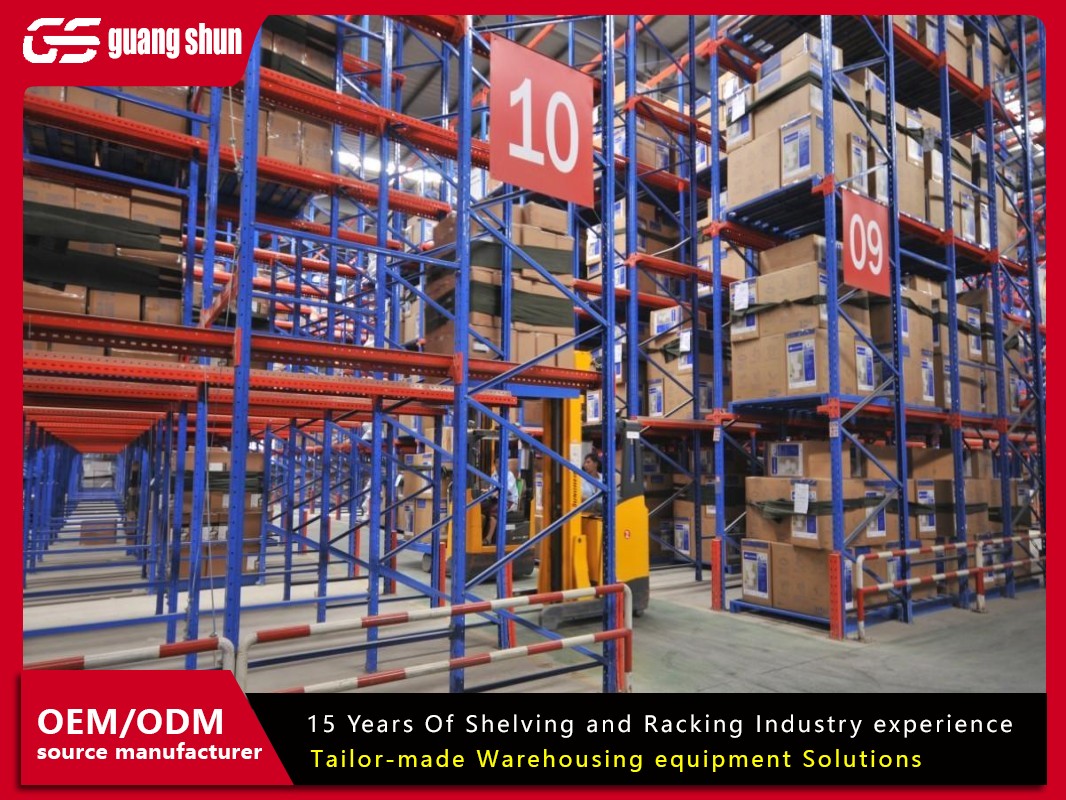
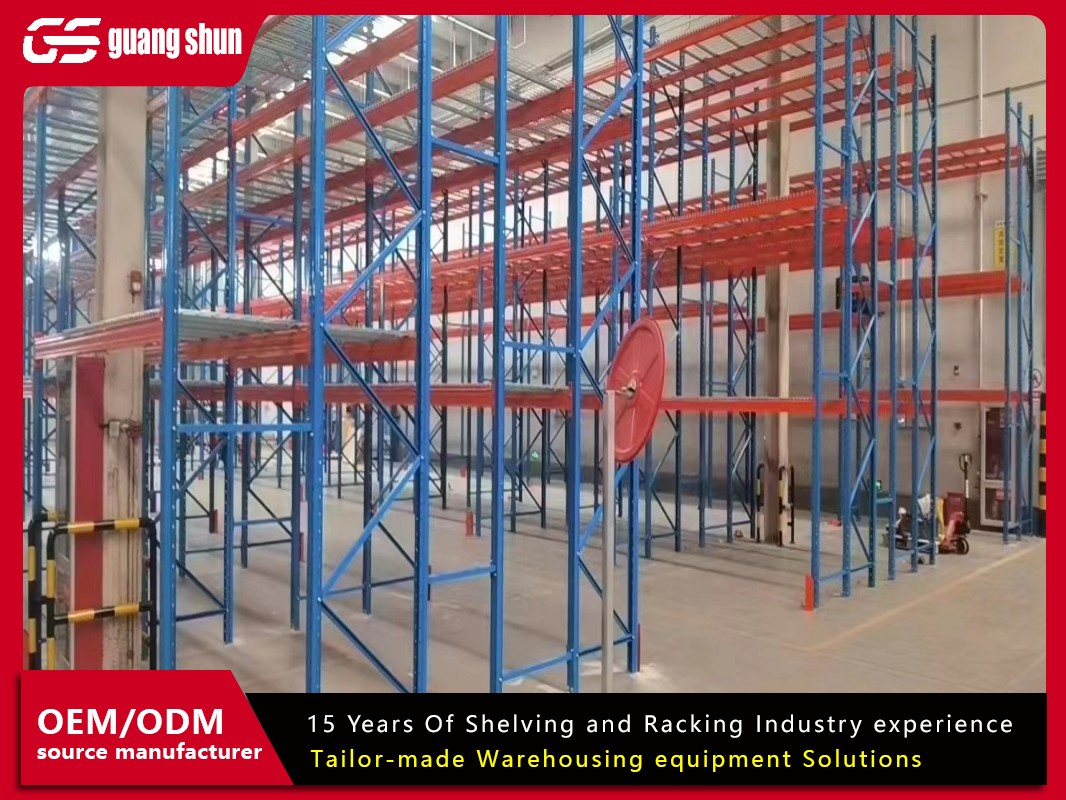
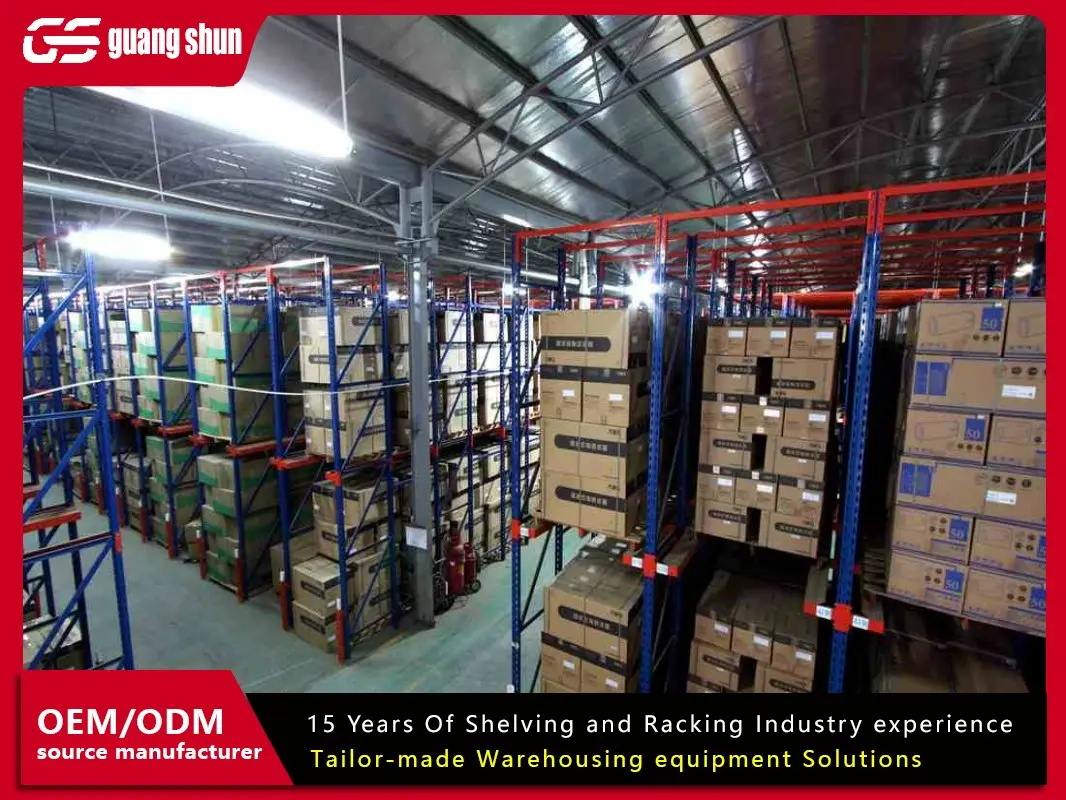
In markets where land and building costs move in only one direction, double deep storage is one of the most frequently misapplied options in a warehouse planner's toolkit. It promises 30% to 40% savings on cost per pallet position, but it delivers that figure only when the storage unit profile, batch structure and throughput curve actually fit the concept. What follows is an engineering-led walkthrough of the decisions that determine whether the system pays back in eighteen months or becomes a permanent bottleneck.
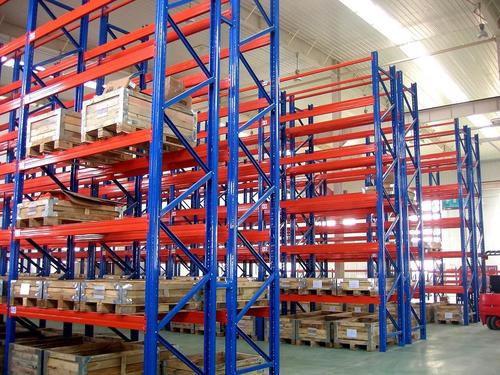
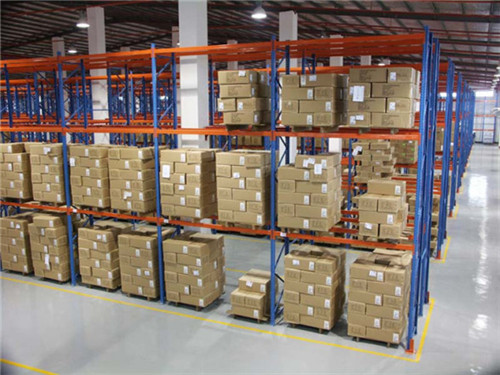
The concept is narrow and well defined: pallets are stored two positions deep in each bay, accessed from a single aisle side. The rear pallet is reached only after the front pallet in the same lane is removed. Everything else — the density gain, the selectivity loss, the equipment specification — follows from that one geometric constraint.
The problems it genuinely solves:
Building footprint that is already fixed, expensive, or impossible to expand.
High-volume, low-SKU-count inventories where each article occupies many pallet positions.
Projects where the capital budget per pallet position is the binding constraint.
The problems it does not solve, despite frequent claims in tenders:
Fast-moving, wide-assortment operations with hundreds of active SKUs per aisle.
Operations that require strict FIFO rotation for date-coded or regulated goods.
Sites with unstable throughput peaks above roughly 25 pallets per hour per aisle.
The system is LIFO by construction. Any application that requires the oldest batch to ship first will need a rotation workaround that erodes most of the density advantage.
A typical bay is configured with four to five pallets across and two pallets deep, on double-entry or single-entry upright frames. Beam levels are set by the tallest load plus a clearance of 100 mm to 150 mm, and by the lift height of the truck selected. Standard configurations run to seven or eight beam levels at 6 to 9 metres of usable height; above 10 metres the truck specification and the sprinkler design both become limiting factors.
The rear position requires a fixed stop or back guard. Pallet position tolerance matters more here than in single-deep racking: a pallet that overhangs its rear beam by more than 50 mm can obstruct the next placement in the lane, and damaged timber pallets are the single most common cause of pick-face damage in these installations.
Access to the second position requires either a reach truck with a pantograph or extending fork carriage, or in some layouts an articulated forklift. This directly sets aisle width. A conventional counterbalance truck needs 3.5 to 4.0 metres; a reach truck typically needs 2.7 to 3.0 metres in a two-deep configuration because the fork extension stroke has to clear the front pallet and the load's forward centre of gravity shifts during the reach.
Narrow-aisle and very narrow-aisle variants with rail guidance exist, but the cost of guided equipment and the flatness requirements of the floor slab (often measured against DIN 15185 or an equivalent tolerance band) need to be evaluated against the density gain before committing.
Selectivity is the most quoted and least understood figure. In a two-deep lane, roughly half the pallet positions are blocked at any moment by a pallet in front of them. Practically:
Single-deep selective racking: 100% of positions accessible at any time.
Two-deep configuration: approximately 50% immediately accessible.
Density gain in the same footprint: typically 35% to 40% more pallet positions.
Cost per pallet position compared with single-deep: 25% to 40% lower, depending on steel prices and height.
Those two numbers — 40% more positions and 50% less selectivity — are the entire trade. A site that ignores the second one builds a warehouse that cannot ship.
Two pallets deep means the beam carries two pallets rather than one, so beam load ratings and deflection limits are set by the two-pallet span. Upright frames must account for the additional impact risk in the rear position, which is harder for operators to inspect visually. Specify frames with a minimum of 90 mm face and consider double-entry frames where lane counts allow, since they reduce steel per position and simplify the sprinkler layout.
Fire protection is where many two-deep projects are lost at the permit stage. The pallet arrangement creates a deeper, more enclosed flue space than single-deep racking, which affects the assumed fire growth curve. Under NFPA 13 provisions for rack storage, in-rack sprinklers are almost always required, and the transverse and longitudinal flue dimensions must be maintained within the lane. Any deviation — an overhanging pallet, an added deck, a later retrofit of a mesh guard — can invalidate the original hydraulic design. Engage the fire protection engineer before the racking layout is frozen, not after.
Rear positions receive less operator attention. A rear-position pallet that is damaged or out of square often stays in place for months because it is invisible from the aisle. Add a periodic rear-position inspection to the maintenance schedule and train operators to report any load that does not sit flush against the rear stop.
The system performs when the SKU profile is deliberately managed. The working rules that hold up across projects:
Assign at least four pallet positions per SKU per lane group. Below that threshold, replenishment and retrieval block each other constantly.
Rank SKUs by pallet velocity, not unit velocity. A SKU that ships in high unit volumes but with mixed pallets may not belong in a two-deep lane at all.
Pair SKUs with complementary seasonality in the same lane group. When one article's demand curve peaks, the other's trough leaves the rear positions free.
Reserve the front positions for the faster mover and hold the slower mover at the back. This sounds obvious and is routinely violated once slotting is left to the WMS default.
Keep a fixed-lane map and audit it quarterly. Slotting drift is the most common cause of a dense installation underperforming its design throughput.
Firms that implement disciplined slotting governance alongside a two-deep installation typically recover 5% to 8% of the theoretical throughput loss within the first two quarters. The racking is the same steel; the operating discipline is what differs.
The performance penalty is measurable and predictable. Each retrieval from a rear position requires one extra fork cycle, and each storage into a rear position requires the front pallet to be removed and replaced. Indicative figures for a reach truck operation:
Single-deep putaway or retrieval: 45 to 60 seconds per pallet movement.
Front-position movement in a two-deep lane: 50 to 70 seconds.
Rear-position movement: 95 to 130 seconds, including the extra shuffling cycle.
Effective throughput at steady state: 18 to 25 pallets per hour per truck, against 30 to 40 in single-deep racking.
The important modelling point is that the penalty is not uniform. It scales with the ratio of rear-position to front-position movements. If 80% of activity touches front positions, the throughput loss is modest. If the mix is closer to 50/50, truck hours rise by roughly a third and the fleet count must be recalculated. Run this calculation per aisle group, not as a site average, because averaging hides the lanes that will queue.
Storage density gains and handling-cost increases have to be compared on the same basis — total cost per pallet moved, not cost per pallet stored. For a 1,500-position project, the crossover typically falls somewhere between a 55/45 and a 65/35 front-to-rear activity split.
Two-deep racking sits between single-deep selectivity and the far denser systems. A short comparison against the usual candidates:
Single-deep selective: highest selectivity and lowest throughput penalty, highest cost per position. Correct when the SKU count is high or the rotation requirement is strict.
Double deep: moderate density gain, moderate throughput penalty, lowest structural cost per position of the dense options. Correct when SKU count is limited and batch volumes are large.
Push-back: similar density with better FIFO behaviour on some designs, but more moving parts, higher maintenance, and a shorter practical lane depth.
Pallet shuttle: highest density per aisle metre and much higher throughput than two-deep, but a significantly larger capital requirement and more complex controls integration.
The decision should be driven by the SKU velocity profile and the fire protection strategy, not by a density comparison alone. Guangshun routinely runs this comparison as a pre-engineering exercise, because a layout that fails the selectivity test fails it regardless of how the steel is priced.
Before signing a purchase order for a two-deep installation, confirm each of the following:
SKU count per aisle group, with the share of SKUs holding four or more pallet positions.
FIFO or FEFO obligations written into the quality or regulatory procedure.
Throughput model that separates front-position and rear-position movements.
Fire protection engineering sign-off on lane depth and flue dimensions.
Truck specification matched to required lift height and aisle width, with the reach stroke verified against the load depth.
Floor flatness survey against the applicable tolerance for the chosen truck type.
Slotting governance owner named, with an audit cadence agreed.
Sites that work through this list before committing to double deep storage consistently report fewer surprises at commissioning. The converse is also true: most underperforming installations trace back to a decision made on density alone, without the throughput and fire protection consequences modelled in advance. Project teams that want a second opinion on the layout can review reference configurations with Guangshun before the fire protection design is finalised.
A1: In the same building envelope and at the same height, a two-deep layout typically yields 35% to 40% more pallet positions, which translates to a 25% to 40% lower cost per position. The exact figure depends on aisle count, lane length and the number of single-entry versus double-entry frames. Longer lanes produce better savings because the fixed cost of each aisle is spread over more positions.
A2: Not without a workaround. The rear pallet physically cannot be reached until the front pallet is removed, so strict first-in-first-out rotation is impossible within a single lane. Operations with date-coded goods usually apply a batch-level rotation rule, where the front position holds the older batch and replenishment is managed at the lane level. If the regulation requires per-pallet FIFO, a different racking type should be selected.
A3: A reach truck with a pantograph or extending fork carriage is the standard choice, with aisle widths typically between 2.7 and 3.0 metres. The reach stroke must be verified against the load depth plus pallet overhang, because the effective forward centre of gravity increases during extension and reduces residual capacity. Articulated forklifts are an alternative in tighter footprints, and rail-guided narrow-aisle equipment is possible but raises floor flatness requirements.
A4: The deeper, more enclosed pallet arrangement almost always triggers in-rack sprinkler requirements under NFPA 13 rack storage provisions, and the flue space dimensions within the lane become a design constraint rather than a detail. Any later change to the lane — adding decking, a mesh guard or an oversized pallet — can invalidate the hydraulic calculation. Engage the fire protection engineer while the racking layout is still editable.
A5: High-volume articles with large batch quantities, ideally four or more pallet positions per SKU per lane group, and a manageable total SKU count per aisle. Seasonal products that peak at different times of year pair well in the same lane group, because the rear positions free up when one article's demand drops. Fast-moving, wide-assortment operations should stay with single-deep selective racking.
A6: For projects above roughly 1,500 pallet positions, payback on the incremental investment versus a single-deep alternative usually falls between 18 and 30 months, driven mainly by the reduction in cost per position and the reduced building envelope required. The payback extends quickly if the throughput penalty forces an additional truck shift, which is why the front-to-rear activity split must be modelled before the layout is fixed.
Double deep racking is a precision tool, not a default answer to a space problem. It rewards operations with concentrated SKU profiles, disciplined slotting and a throughput model that has been tested against real front-to-rear movement ratios. It penalises operations that adopt it purely on cost per pallet position. Teams that run the selectivity calculation, the truck cycle model and the fire protection review before committing to double deep storage end up with a dense, predictable facility. Teams that skip those steps end up with an aisle full of blocked pallets and a fleet that never quite keeps up.

 Wechat
Whatsapp