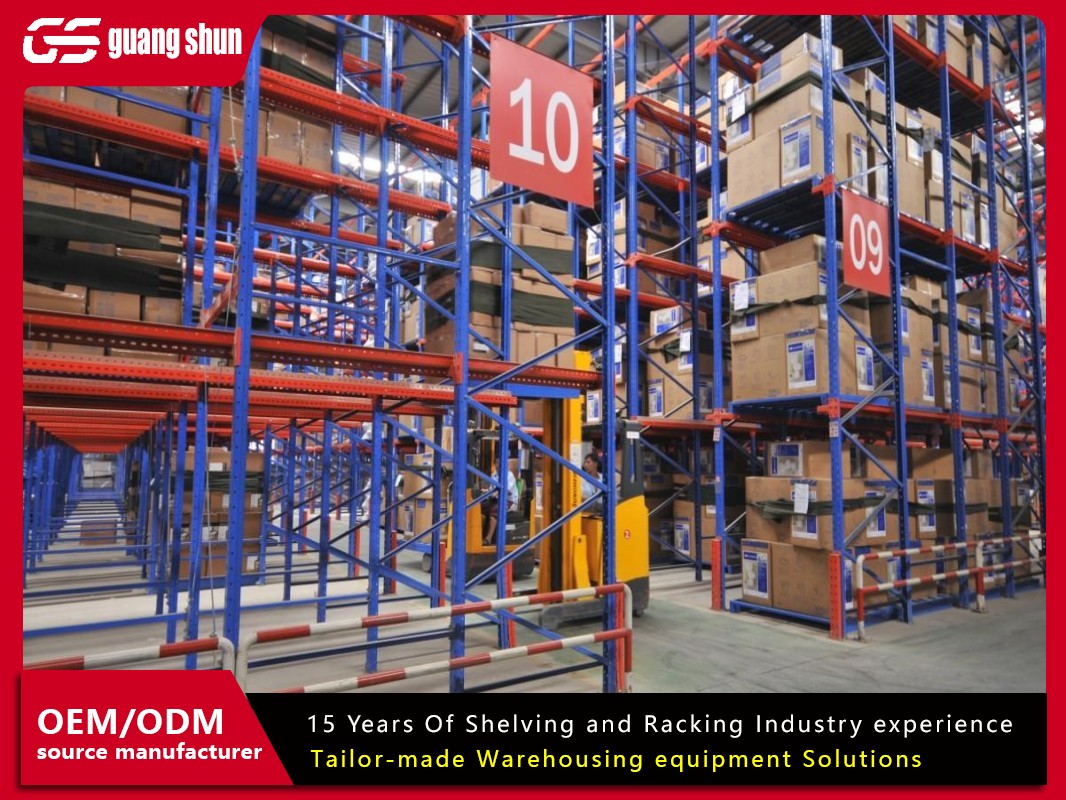
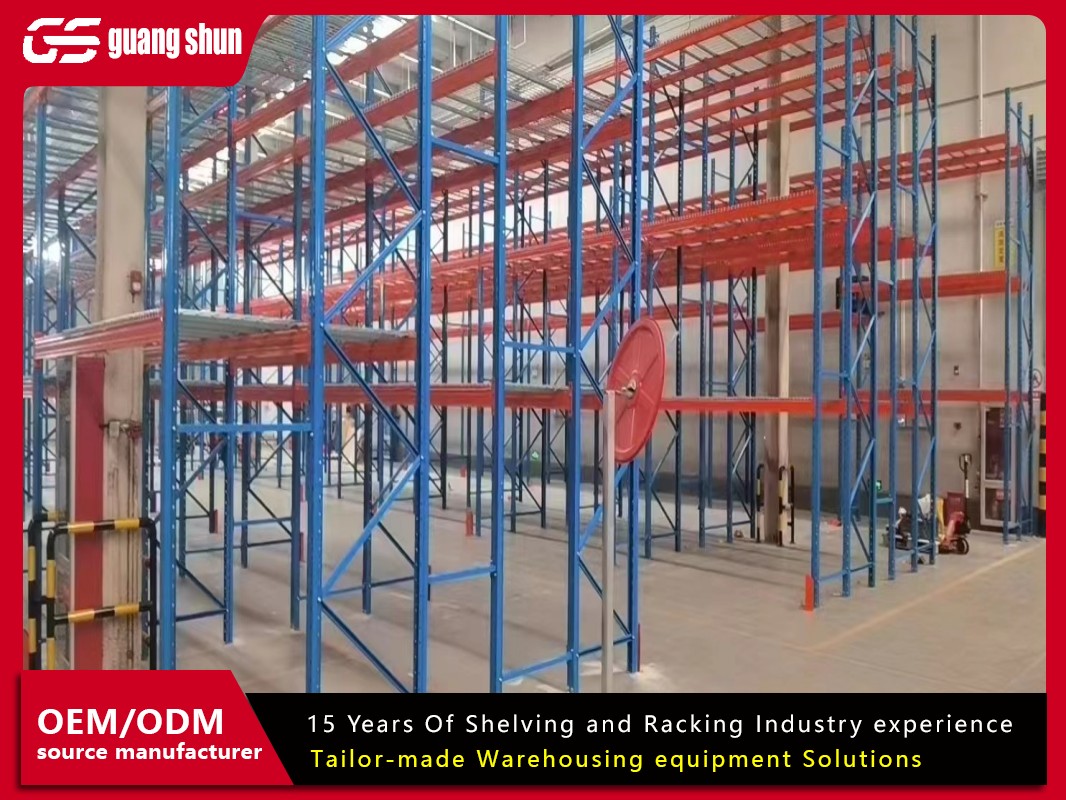
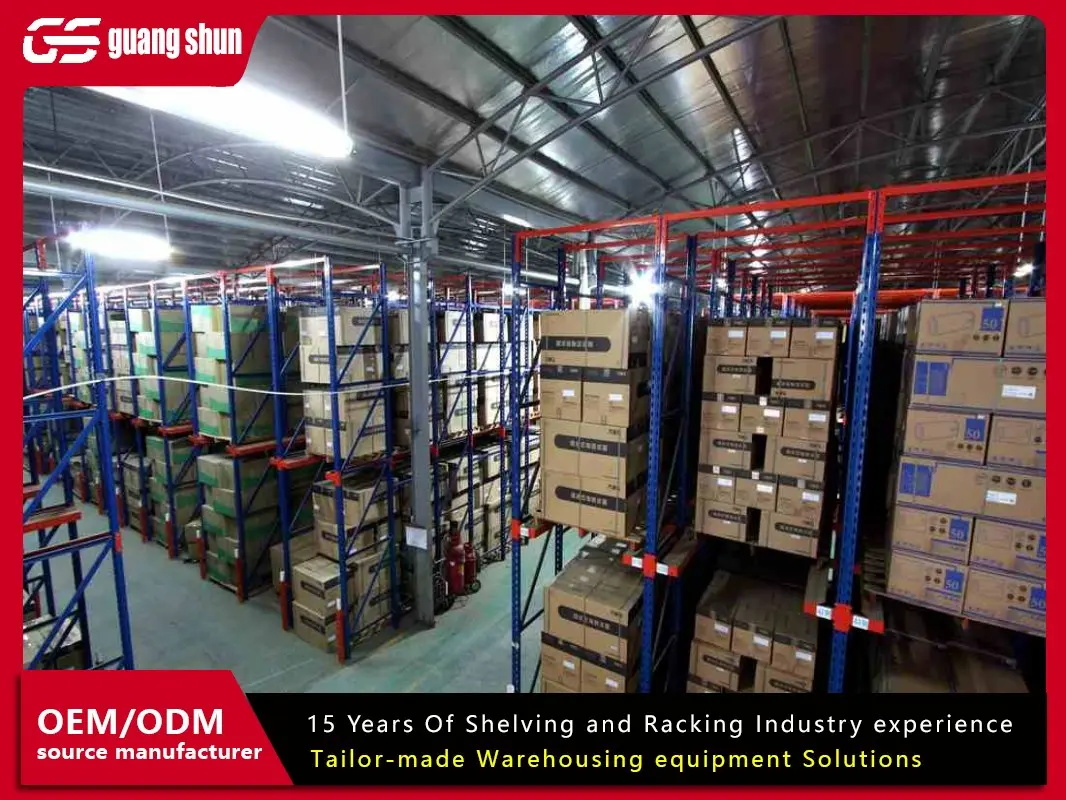
You’re running out of space. Your warehouse is a maze of aisles, and the empty air above your shelves is starting to feel like wasted rent. The search for a solution often leads to one phrase: drive in pallet racking. It promises to cram more pallets into your existing square footage.
But is it the right tool for your operation? The answer isn't a simple yes or no. This system is a specialist, not a generalist. Understanding its core mechanics, its ideal application, and its significant trade-offs is the only way to make a smart decision.
Let's break down exactly what drive in pallet racking is, and more importantly, when you should and shouldn't use it.
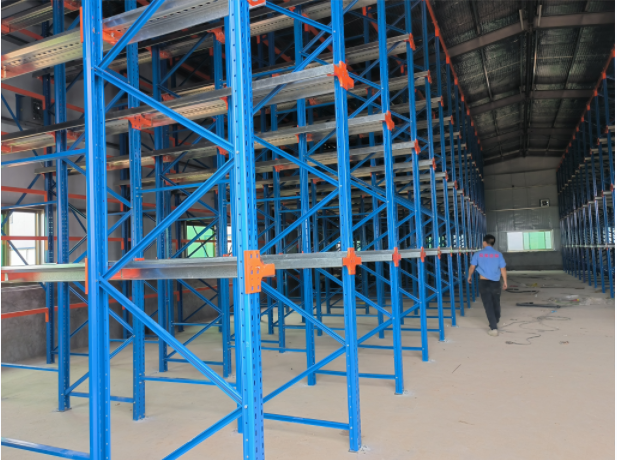
Imagine a parking garage for pallets. Instead of having an aisle for every row of storage, you have a single, deep lane. Forklifts drive in to that lane to place or retrieve a load.
The structure itself consists of upright frames on either side of the lane, with horizontal rails running along the depth. Pallets sit on these rails, typically two to six pallets deep on each side of the aisle. There is no dedicated aisle for each vertical level (or "lane").
To access a specific pallet, the forklift operator must enter the common aisle, navigate to the correct level, and then drive in to the required depth. This is a Last-In, First-Out (LIFO) system. The last pallet you put in is the first one you must take out.
The design inherently sacrifices selective access for incredible space utilization. It turns multiple aisles into one, converting that reclaimed floor space into pure storage volume.
The primary benefit of a drive in pallet system is impossible to ignore: massive space savings. By eliminating numerous aisles, you can increase storage density by up to 75% compared to traditional selective racking. For operations paying a premium per square foot, this translates directly to lower storage costs per pallet.
This makes it a champion for high-density storage of similar products. If you have a large quantity of a single SKU, or a product with a slow turnover rate where you won't need to access older pallets frequently, it’s a perfect match.
The structure itself is also relatively straightforward. While engineering is critical, the concept of uprights and rails is simpler than some automated systems. For the right inventory profile, it offers a powerful density boost without extremely complex technology.
Let's be blunt. The efficiency gains in space come with significant operational costs.
The most critical limitation is LIFO inventory management. You cannot access any pallet you want at any time. If you need a pallet that's behind a newer one, you must first remove the pallet in front. This is a deal-breaker for operations with strict First-In, First-Out (FIFO) requirements, like food or pharmaceuticals.
It also creates a higher risk of product damage. The operator is maneuvering in a confined, tunnel-like space. Bumping the rack structure or adjacent pallets is more likely. This demands skilled, careful forklift drivers and perfectly maintained equipment.
Throughput speed suffers. Each put-away or retrieval is a careful navigation exercise. It is inherently slower than grabbing a pallet from a wide-open selective rack aisle. This system is designed for storage, not for speed.
Finally, the cost of pallets is often overlooked. You must use exceptionally strong, uniform, and defect-free pallets. A single weak pallet failing deep within the lane can cause a cascade of damage and create a major retrieval headache.
How does drive in pallet racking stack up against other options? It’s not the only game in town for dense storage.
Compared to Selective Pallet Racking, the choice is about access vs. density. Selective offers 100% immediate access to every pallet but uses much more aisle space. Drive in pallet systems flip that script.
Push-Back Racking offers higher density than selective racking with better access than drive-in. It operates on a LIFO basis but allows pallets to be stored 2-5 deep with each lane on a slight decline. Retrieving the front pallet allows the ones behind to gently roll forward. It’s often a more flexible, though more expensive, compromise.
Pallet Flow Racking is the high-density champion for FIFO. It uses dynamic rollers and gravity to move pallets from the load end to the pickup end automatically. It’s excellent for high-throughput, date-sensitive goods but comes with a much higher price tag and more complex maintenance.
The drive in system sits as a cost-effective, high-density option specifically for deep storage of non-FIFO, uniform goods.
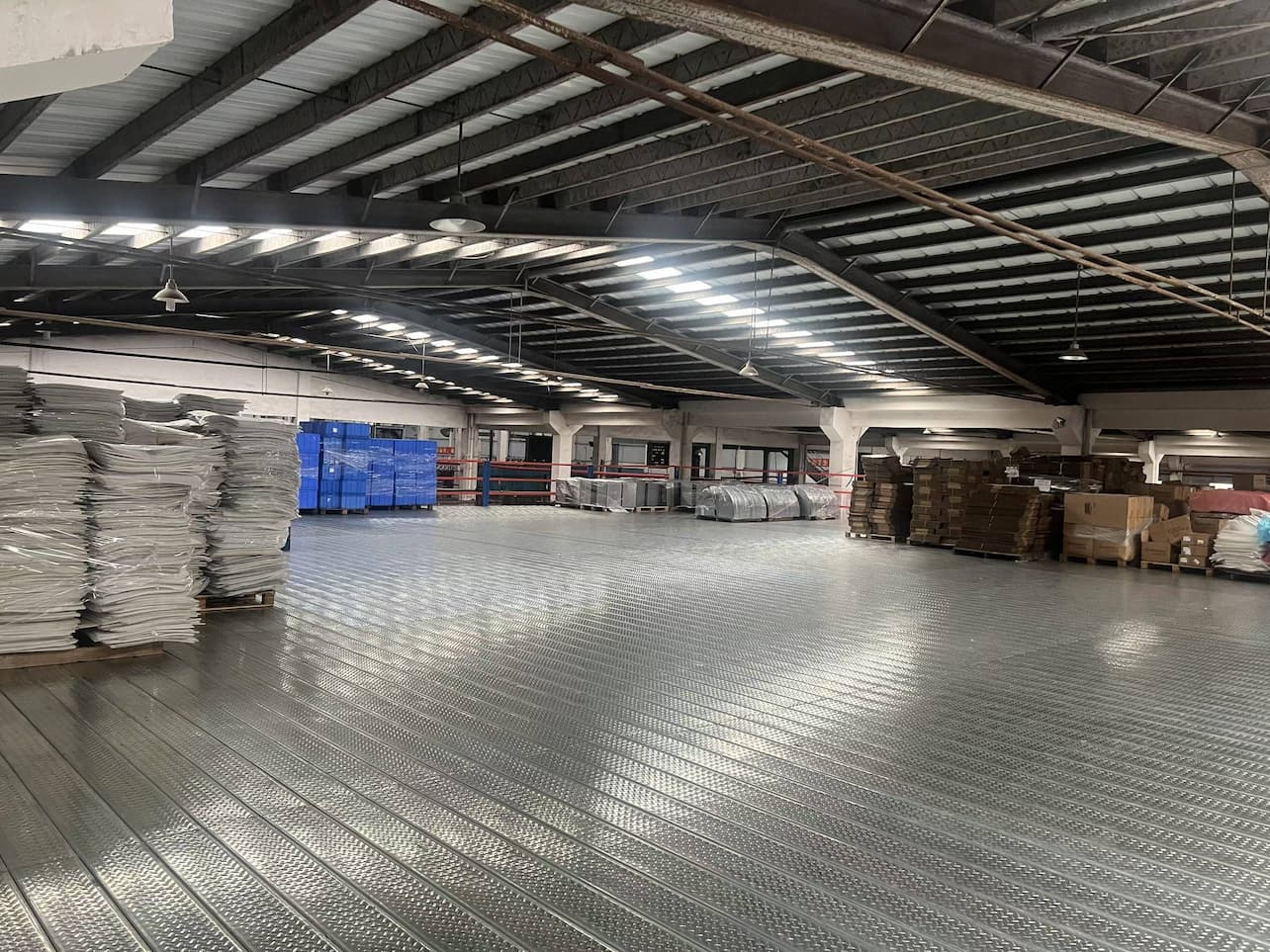
Before you request a quote, answer these questions honestly about your business. Your answers will determine if this is a brilliant solution or a costly mistake.
What is your inventory profile? This is the first and most important filter. Do you have large quantities of identical SKUs? Is your product non-perishable with no FIFO concerns? If yes, proceed. If you have many SKUs or need FIFO, stop here.
What are your throughput demands? How many pallets do you move in and out per day? A drive in pallet system will slow down these operations. If your operation is already high-speed, this friction can create bottlenecks.
Do you have the right team and equipment? You need well-trained, patient forklift operators. Your forklifts must be in top condition, with perfect alignment and braking. You will also need to invest in a dedicated, high-quality pallet pool.
Is your warehouse layout suitable? You need long, clear runs for the lanes. Obstructions like columns, doors, or major traffic crossings in the middle of a potential lane can kill the feasibility.
When evaluating drive in pallet racking, think in terms of total cost of operation, not just the price of the steel.
The upfront material and installation cost is typically higher than basic selective racking but lower than highly automated systems like pallet flow. You are paying for more steel per storage location due to the deep rail structure.
However, the real financial analysis is in the cost per stored pallet. When you factor in the dramatic increase in pallet positions within the same floor space, the drive in pallet system often wins on this metric for the right inventory.
Remember to budget for the ancillary costs: specialized pallets, potential floor marking/guidance systems, comprehensive safety signage, and ongoing operator re-training. Ignoring these will lead to a flawed financial picture.
Q1: What is the main difference between drive-in and drive-through racking?
A1: The key difference is access. Drive in pallet racking has a dead-end lane; you enter and exit from the same side (LIFO). Drive-through racking has lanes that are open on both ends, allowing FIFO (First-In, First-Out) inventory control if loading from one end and unloading from the other.
Q2: How deep can a typical drive-in lane be?
A2: Lanes are commonly between 3 to 6 pallets deep per side. Going deeper increases space utilization but also increases the access time, accident risk, and the consequences of a pallet failure deep in the lane. The practical limit is often determined by the forklift operator's comfort and the total product turnover.
Q3: Can drive-in racking be used for FIFO inventory?
A3: No, a standard drive in pallet system is inherently LIFO. For FIFO requirements in a high-density setup, you must consider alternatives like drive-through racking (with disciplined loading/unloading) or pallet flow racking.
Q4: What are the biggest safety concerns with this system?
A4: The primary concerns are forklift collisions with the rack structure (due to confined maneuvering) and the risk of a pallet collapsing within the deep lane. Mitigation requires excellent operator training, strict speed limits, high-quality pallets, frequent rack inspections, and physical column protectors.
Q5: Is this system a good choice for a cold storage or freezer warehouse?
A5: It can be, due to the high cost of cooled space, making density a top priority. However, the challenges are amplified. Moisture and cold affect pallet integrity, and slower operator movement in freezers can further reduce throughput. Special attention must be paid to pallet specification and system coatings designed for low-temperature, high-humidity environments.

 Wechat
Whatsapp
Wechat
Whatsapp