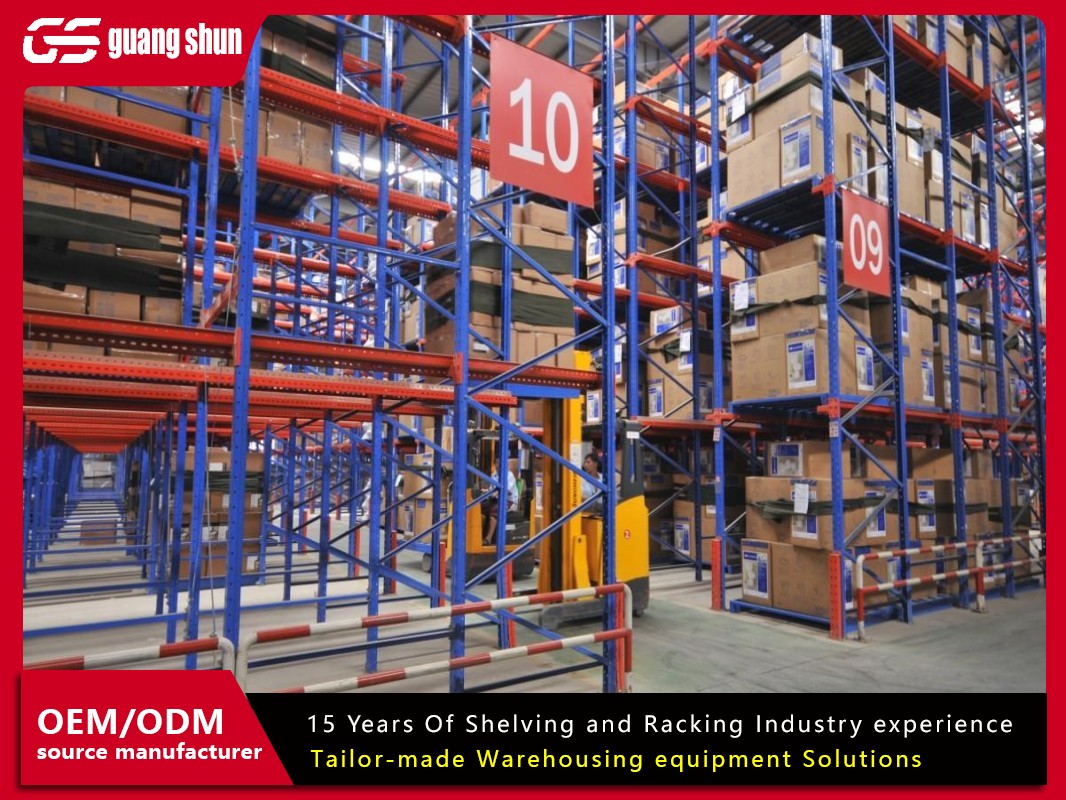
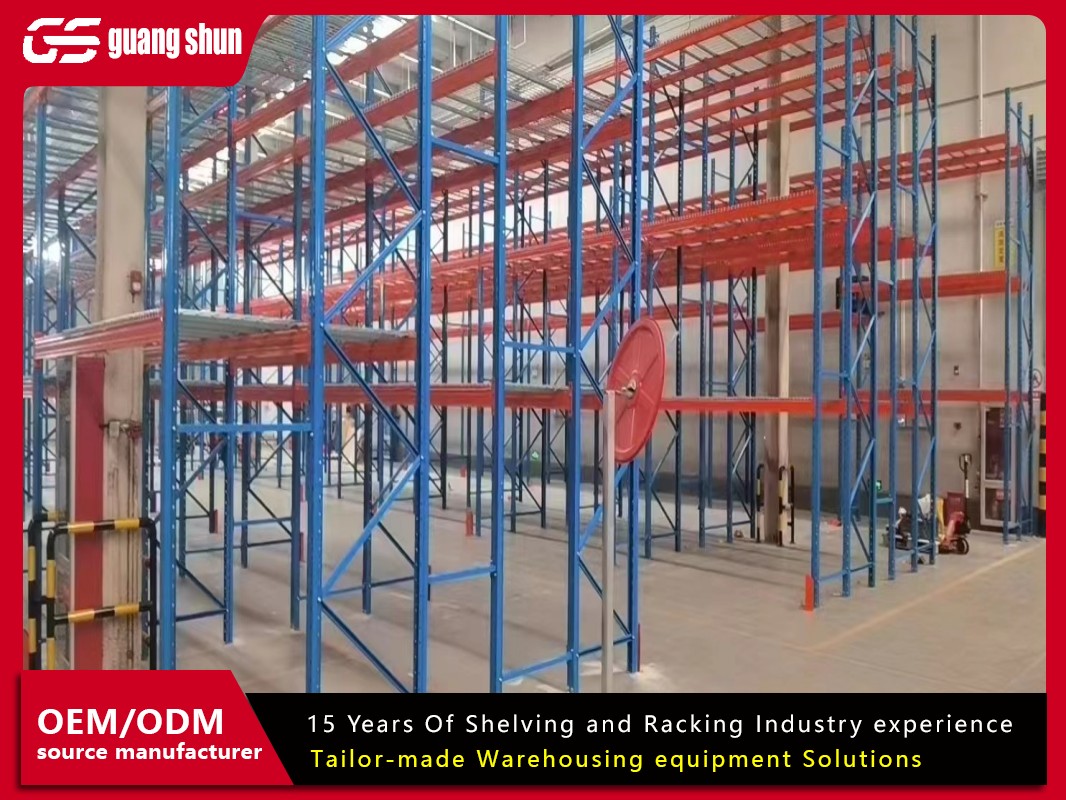
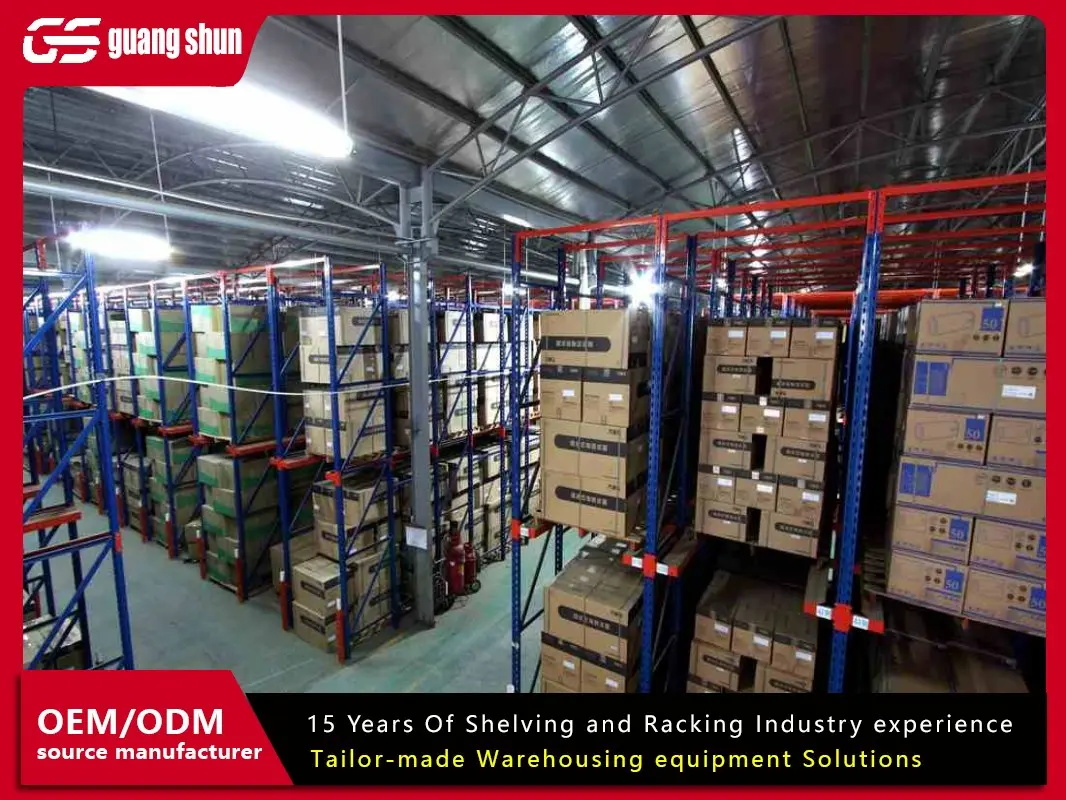
Warehouse operators facing cubic capacity constraints often struggle to balance accessibility against storage density. For facilities handling large volumes of homogeneous SKUs with low rotation frequency, a drive in racks warehouse offers a proven engineering response. Unlike selective pallet racking, this system eliminates most operating aisles, creating continuous deep lanes where forklifts drive directly into the rack structure. The outcome is a space utilization rate that frequently exceeds 75% of available floor space—a critical advantage in cold storage, raw material depots, and high-throughput distribution centers. This guide provides a technical breakdown of design principles, structural components, application-specific performance data, and maintenance protocols for drive in racks warehouse configurations.

A drive in racks warehouse operates on a last-in-first-out (LIFO) inventory logic. The system comprises several load-bearing elements designed to withstand dynamic forklift interaction while maintaining structural integrity under full pallet loads.
Upright frames: Heavy-duty column sections (typically 100x120mm rolled steel) with bolt-on footplates. Frame depths vary from 800mm to 1500mm depending on pallet size and load weight.
Rail beams: Horizontal C-shaped or Z-shaped rails that support pallets along the depth of the lane. Rail thickness usually ranges from 2.5mm to 4.0mm, with reinforced end connectors.
Back-tie bars and diagonal bracing: Critical for lateral stability, especially in lanes longer than 6 pallet positions. Bracing patterns follow FEM 10.2.02 standards.
Floor anchors and base plates: Each upright frame is fixed to the concrete slab using chemical or mechanical anchors, with pull-out resistance calculated for seismic zones or heavy forklift braking forces.
Typical lane depth ranges from 3 to 8 pallet positions, although custom drive in racks warehouse designs can extend to 10 positions when using guided forklifts or reinforced rails. The entry height clearance—often the first point of impact—is protected by replaceable column guards and guide rails.
Selecting between drive-in and selective racking requires quantitative evaluation of inventory characteristics. Below is a data-driven comparison based on common warehouse metrics.
| Parameter | Drive In Racks Warehouse | Selective Pallet Racking |
|---|---|---|
| Space utilization (floor-to-ceiling) | 75% – 85% | 35% – 45% |
| Access method | LIFO (direct forklift entry) | FIFO or random access |
| Typical cost per pallet position | $45 – $75 | $90 – $150 |
| Annual throughput (pallet moves/hour) | 10 – 18 (per lane) | 25 – 40 (per aisle) |
| Best application | Uniform products, >25 pallets per SKU | Mixed SKUs, high rotation |
The efficiency gap widens in refrigerated warehouses where every saved cubic meter reduces energy consumption by approximately 12% per year. For operations storing 2,000+ pallets of identical goods, a drive in racks warehouse can reduce the building footprint by 40% compared to selective racking, directly lowering lease or construction costs.
Several industries derive maximum ROI from drive-in configurations. The common denominator is high quantities of low-turnover or batch-stored SKUs.
Freezer warehouses ( -25°C ) benefit from reduced aisle space, which lowers the volume of refrigerated air and cuts defrost cycles. A case study of a Midwest food distributor showed that converting to drive-in lanes reduced refrigeration energy costs by 18% annually while increasing pallet density from 1,200 to 2,100 positions.
Manufacturing plants storing steel coils, plastic granules, or castings often use drive in racks warehouse lanes for WIP (work-in-progress) inventory. LIFO naturally suits batch production where the most recent material is consumed first.
Uniform case sizes and predictable expiration date management allow operators to rotate using LIFO without quality loss, especially for non-perishables. Major breweries deploy drive-in lanes for finished goods before distribution staging.
While dense storage delivers economic benefits, safety risks increase if design parameters are exceeded. Professional engineering assessment must address the following points before installing any drive in racks warehouse system.
Forklift impact protection: Install reinforced column guards at every entry point. Use low-profile guide rails to center the forklift mast, reducing side impacts by 70%.
Load deflection limits: Rail beams must not exceed L/200 deflection under full load. Calculate pallet weight distribution; point loads from uneven pallet bases can cause rail twisting.
Seismic bracing: In regions with peak ground acceleration >0.3g, add horizontal diagonal braces at every third upright frame. Guangshun provides finite element analysis for seismic compliance.
Pallet overhang control: Maximum allowable overhang is 50mm per side. Overhang beyond this leads to rail dislodgement and product falls.
Regular anchor torque testing (every 6 months) and visual inspections of rail end connectors reduce catastrophic failure risks. Industry data from RMI (Rack Manufacturers Institute) indicates that 64% of drive-in rack collapses originate from unrepaired impact damage—preventable with scheduled audits.
Successful deployment begins with a site-specific engineering survey. Parameters collected include floor flatness (maximum deviation ±5mm over 3m), concrete compressive strength (minimum 25 MPa), and forklift specifications (lift height, mast tilt, turning radius).
For a lane holding 6 pallets of 1,200 kg each, the total vertical load per lane is 7,200 kg. However, dynamic factors (forklift braking, uneven insertion) multiply the effective load by a factor of 1.5. Thus, the rail system must support a live load of 10,800 kg without plastic deformation. Guangshun engineers apply FEM 10.2.08 safety coefficients (minimum 1.5 for static, 1.8 for dynamic) to each component.
Professional integrators also calculate the optimal lane depth based on forklift reach capability. Counterbalance trucks with a 3m mast can typically access the 5th pallet position before visibility drops below safety thresholds. For deeper lanes, guided very narrow aisle (VNA) trucks are mandatory.
Selecting a supplier with structural engineering credentials directly impacts long-term operational costs. Guangshun provides ISO 9001-certified drive-in systems with hot-dip galvanized finishes (≥85µm coating) for corrosive environments such as cold storage or chemical warehouses. Their design process includes:
3D load simulation using Autodesk Inventor
Prototype impact testing per AS4084-2012 standards
Custom lane depths up to 12 pallets for automated forklift integration
A recent installation for a European automotive supplier replaced five rows of selective racking with two double-deep drive-in lanes. The project achieved 112% density improvement while maintaining LIFO compliance. Guangshun also offers on-site installation supervision and load testing certificates, ensuring compliance with local safety regulations.
To achieve a 20+ year service life from a drive in racks warehouse, facilities must adopt a three-tier inspection schedule:
Daily operator checks: Visual scan for dislodged rails, missing safety clips, and anchor bolt loosening.
Monthly engineering audit: Measure column verticality (tolerance ±10mm over 6m height). Test torque on 10% of floor anchors.
Annual third-party inspection: Ultrasonic testing of rail welds, corrosion mapping, and load test verification for high-use lanes.
Repairs should follow the "cut-and-splice" method for damaged uprights, never simple welding. Replace entire rail sections if deformation exceeds 15mm over 2m length. Documentation of all repairs and load tests forms part of OSHA/ISO compliance records.
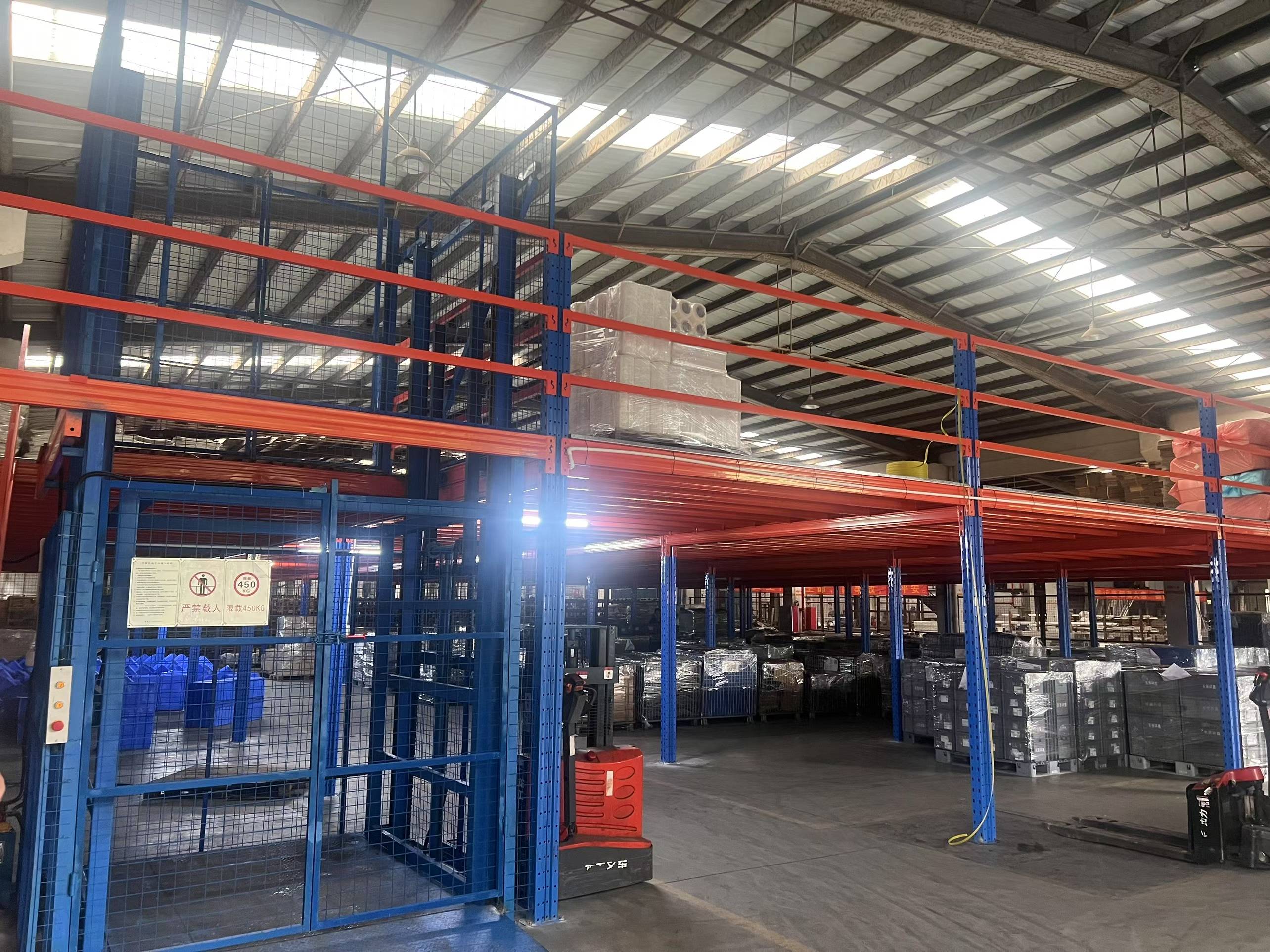
A drive in racks warehouse delivers exceptional volumetric efficiency for uniform, low-rotation inventory. By understanding LIFO limitations, investing in impact protection, and adhering to strict maintenance schedules, operators achieve 40–60% lower cost per stored pallet compared to selective systems. For cold storage, raw materials, or high-quantity finished goods, drive-in technology remains a cornerstone of industrial warehousing. Partnering with experienced manufacturers like Guangshun ensures that structural calculations, safety factors, and regional building codes are integrated from the first design drawing.
A1: Standard drive-in lanes operate strictly on LIFO because the first pallet loaded becomes the last one accessible. However, a modified “drive-through” rack (with openings at both ends) can achieve FIFO. This design requires rear access aisles, reducing density gain to approximately 50% compared to closed-end drive-in. For true FIFO with high density, consider pallet shuttle systems or push-back racking.
A2: Industry practice limits lane depth to 6–8 pallet positions for standard counterbalance forklifts. Depths beyond 8 positions cause two problems: excessive fork deflection and poor visibility of rear pallets. With guided VNA trucks or wire-guided forklifts, depths up to 10 positions are feasible. Always confirm maximum depth with a structural analysis of rail deflection under dynamic loads.
A3: Seismic zones require additional horizontal bracing and reinforced base plate connections. Without bracing, upright frames can experience racking deformation during ground motion. Engineers use response spectrum analysis per ASCE 7-22 to calculate required bracing density. In high-seismic regions (Zone 4), drive-in racks must include X-bracing at every second frame and oversized anchor bolts.
A4: According to industry incident databases, three causes dominate: 1) unrepaired forklift damage to upright columns (58% of cases), 2) overloading rails beyond their uniform load capacity (22%), and 3) missing rail safety clips or back-tie bars (15%). Routine audits using a damage severity classification (green/yellow/red tags) reduce collapse probability by 80%.
A5: Conversion is rarely economical because upright frame spacing, beam connectors, and floor anchoring patterns differ completely. Selective racks use wide aisles and fixed beam levels, while drive-in requires continuous rail sets and deeper frames. However, you can repurpose floor space by removing selective bays and installing new drive-in modules. Guangshun offers free layout simulations to evaluate conversion feasibility without structural compromise.
A6: Three-wheel electric counterbalance forklifts with a low mast tilt (≤5 degrees) are preferred. Their compact turning radius (under 2,500mm) allows safe entry into 3m-wide lanes. For lanes deeper than 6 pallets, use reach trucks with integrated camera systems for rear pallet positioning. Avoid using oversized diesel forklifts—they increase column impact force by up to 300%.
A7: Use this formula: ROI = (annual rental savings + labor reduction + energy savings) / total installed cost. Example: A 3,000-pallet facility saves 600m² of warehouse space at $120/m²/year = $72,000 annual savings. Install cost of $180,000 yields a 2.5-year payback. Include factors like reduced travel time (30% fewer forklift miles) and lower lighting costs (fewer aisles to illuminate).

 Wechat
Whatsapp
Wechat
Whatsapp