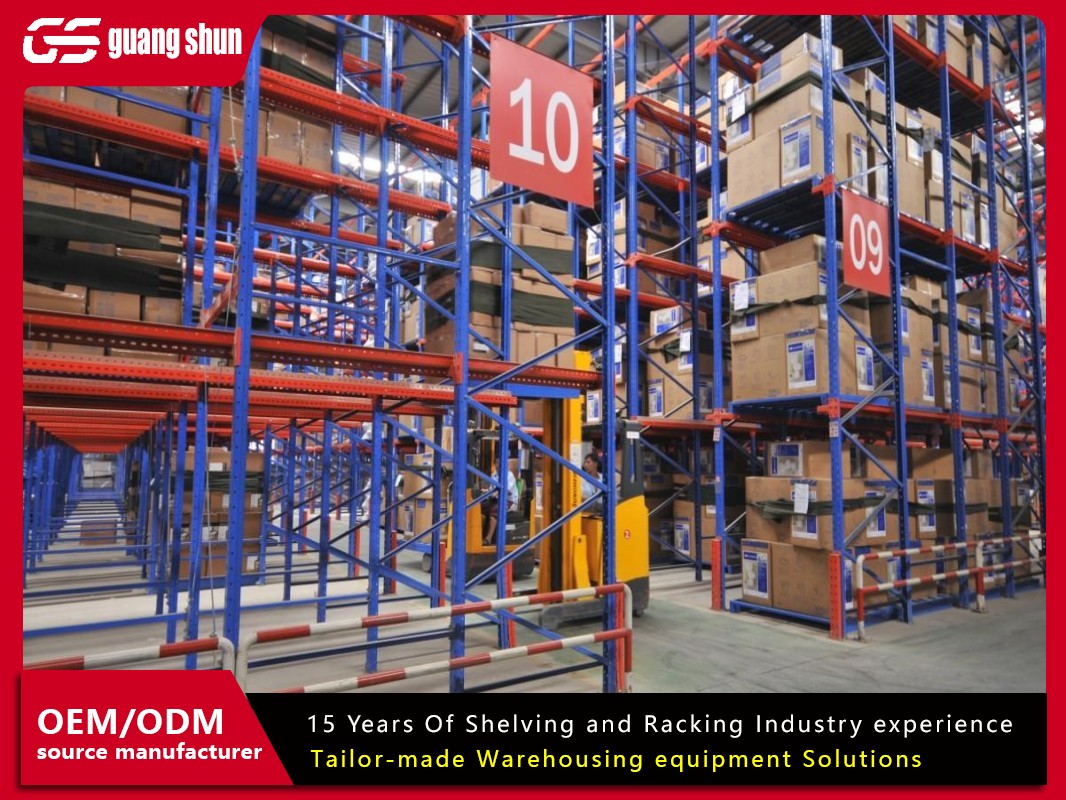
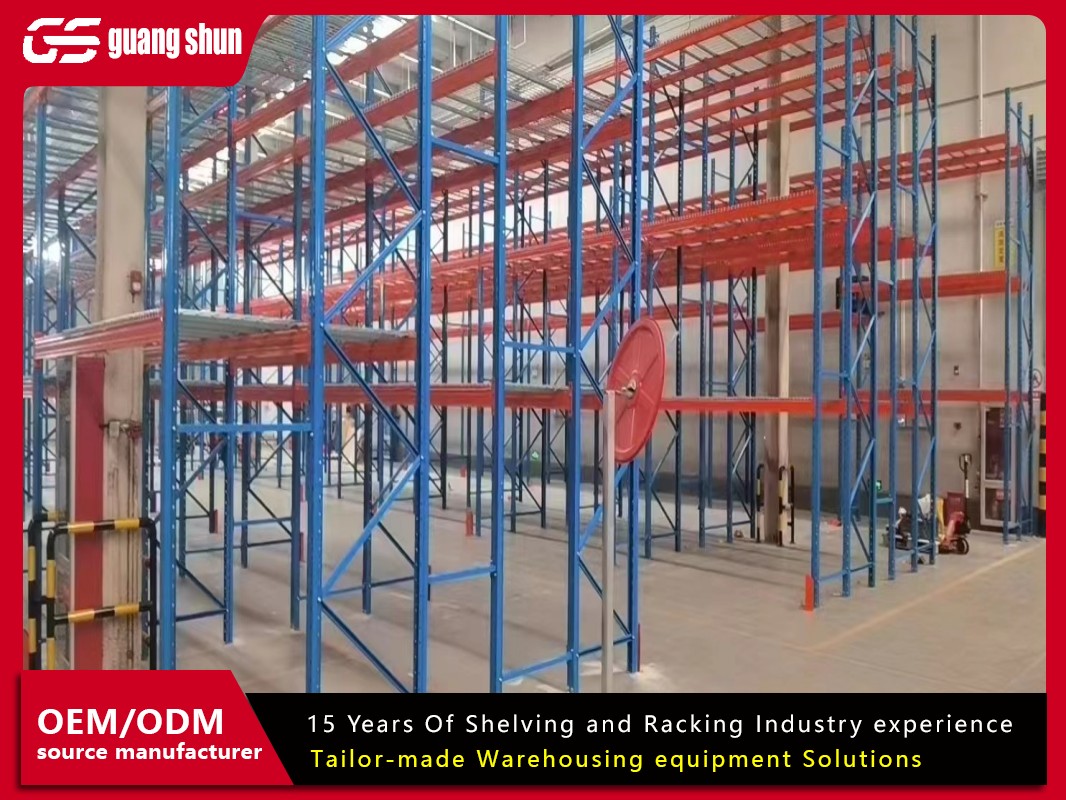
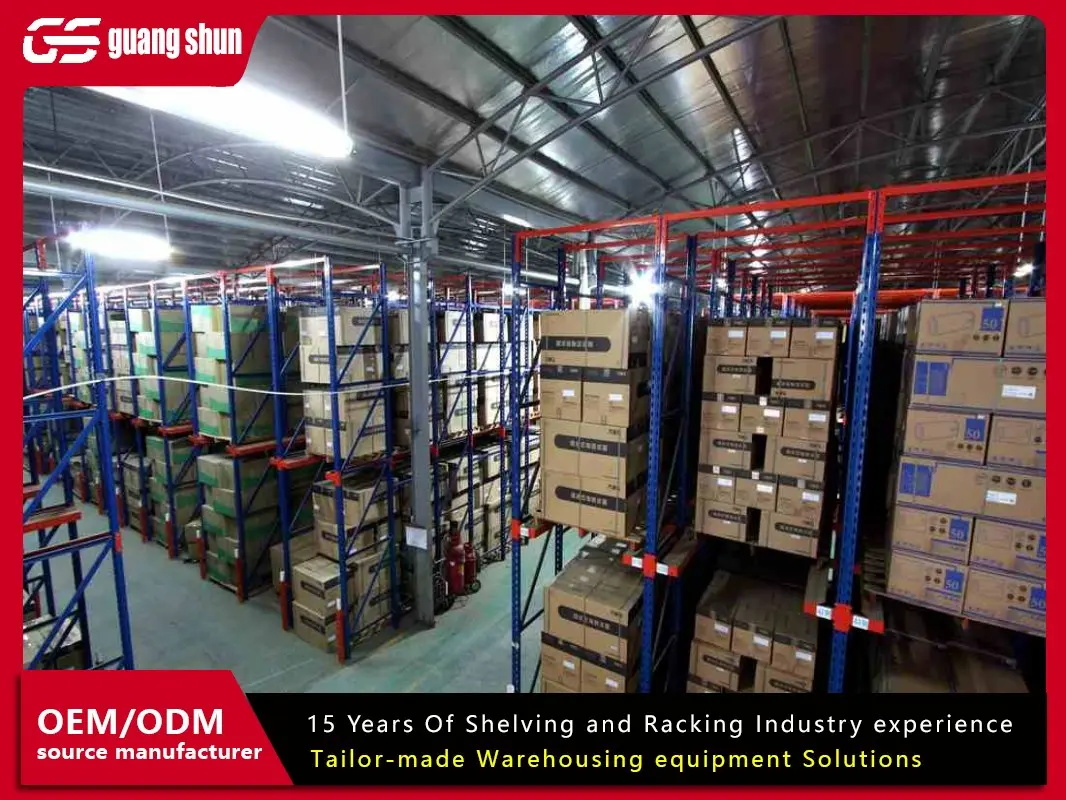
Every warehouse manager faces the same core challenge: storing more goods in less space while moving them out faster. Traditional static shelving often creates bottlenecks, wasted space, and inefficient picking processes. For operations dealing with high volumes of similar products, there is a smarter, more dynamic solution.
This is where live pallet racking systems come into play. They are not just storage; they are a high-density, high-throughput material handling solution designed for speed and space maximization.
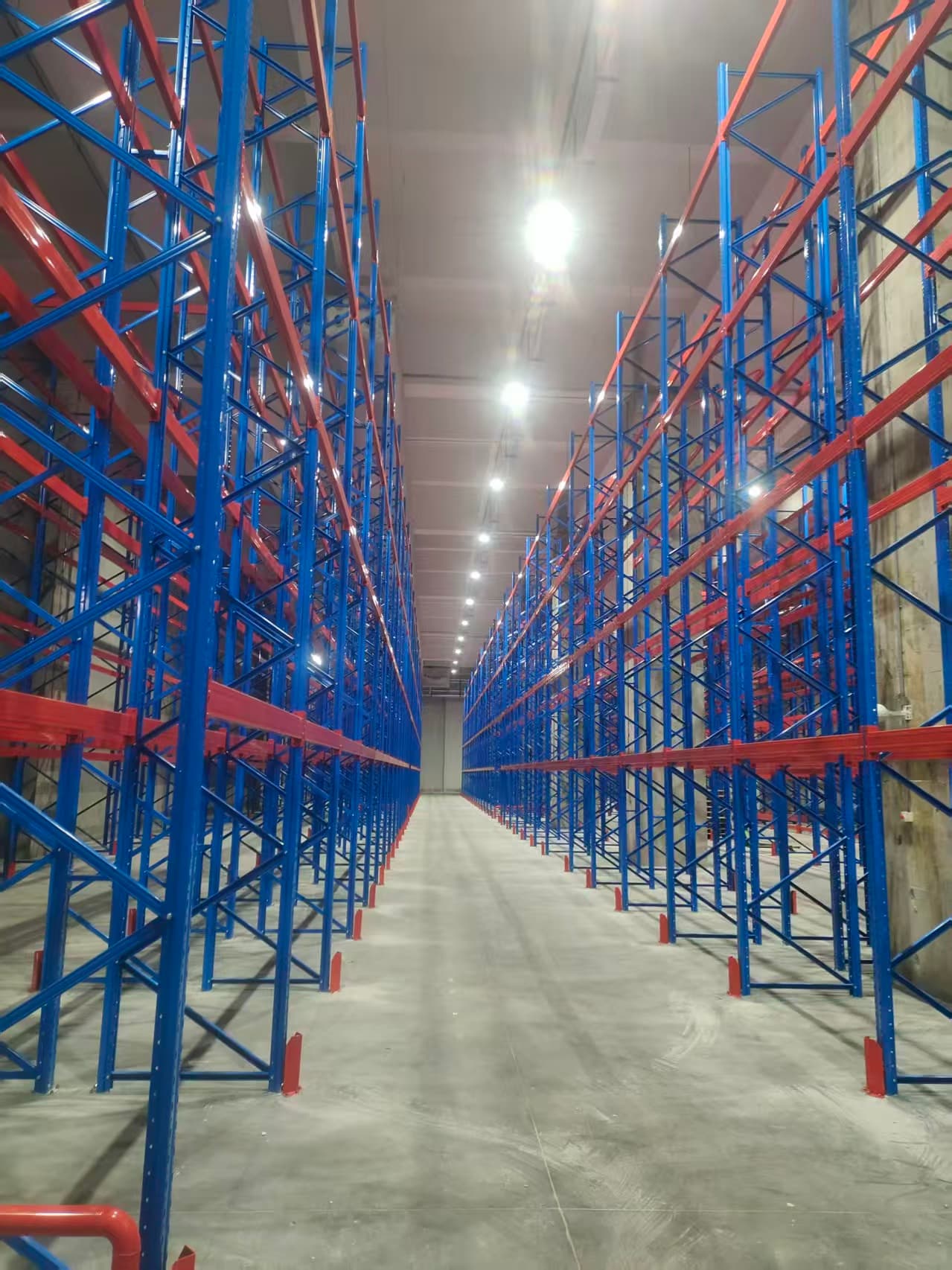
Unlike conventional static racking where pallets sit on fixed beams, live pallet racking systems are gravity-flow systems. Pallets are loaded from a higher incline at one end and glide on wheel or roller tracks to the other end, where they are unloaded.
This creates a continuous "first-in, first-out" (FIFO) inventory flow. The system uses gravity to move stock automatically, eliminating the need for lift trucks to navigate deep into aisles for every pick. It's a cornerstone of high-density storage.
Understanding the mechanics helps in planning. A standard live pallet racking system consists of a few key parts. The structural framework is similar to selective racking, providing the overall support.
Inside each lane, inclined flow rails or tracks are installed. These tracks contain specially designed rollers or wheels that allow pallets to glide smoothly. The incline gradient is precisely calculated based on your pallet weight and size.
Speed controllers or brakes are installed at intervals. These vital components regulate the pallet's descent, preventing collisions and ensuring safe, controlled movement from the loading to the unloading face.
The benefits of live pallet racking systems are substantial for the right operation. The most significant gain is in space utilization. By eliminating multiple access aisles, you can increase storage density by up to 75% compared to standard racking.
Operational efficiency sees a major boost. Pickers work from a single, ergonomic "face" or "unloading bay." This drastically reduces travel time, congestion, and labor costs. FIFO flow is automatic and guaranteed, which is critical for perishable goods or items with expiration dates.
Safety improves as forklift traffic is minimized to the loading side only. The controlled flow also reduces product damage from impacts during put-away and retrieval.
Live pallet racking is not a one-size-fits-all solution. It excels in specific scenarios. It is perfect for high-turnover SKUs where stock rotates frequently. Industries like food and beverage, pharmaceuticals, and cold storage rely on it for strict FIFO management.
Manufacturing facilities use it for raw material staging and finished goods buffer storage. Distribution centers handling large quantities of similar-sized cases or pallets find it invaluable for cross-docking and order consolidation. Any operation with a need for high-density, high-throughput pallet flow systems is a prime candidate.
Successful implementation requires careful planning. Pallet specifications are paramount. The system must be engineered for your specific pallet dimensions, weight, and bottom surface condition. Wooden pallets work best; damaged or soft-bottom pallets can jam.
Throughput volume must be analyzed to determine the correct lane depth and number of lanes. The building's floor flatness and column spacing also impact the design and layout feasibility. Consulting with a qualified storage solutions engineer is highly recommended.
To keep your live pallet racking systems running smoothly, regular inspection is key. Schedule checks of the flow tracks and rollers for debris or damage. Ensure speed controllers are functioning correctly to maintain safe flow.
Always use pallets within the system's specified weight and size ratings. Train staff on proper loading and unloading procedures. A well-maintained live storage racking system will provide decades of reliable service, making the initial investment worthwhile.<h2>Comparing Live Racking to Other High-Density Options</h2>
It's useful to see where live pallet racking fits among other dense storage. Drive-in racking offers high density but operates on a last-in, first-out (LIFO) basis, which isn't suitable for all products. Push-back racking offers some density with selectivity but has a more complex mechanism.
Mobile pallet racking saves space by moving entire aisles, but access can be slower. The gravity-flow live racking system stands out for its perfect blend of high density, guaranteed FIFO, simplicity, and reliability, with no ongoing energy costs.
Consider a live pallet racking system if you have consistent, high-volume movement of palletized goods of uniform size. If your operation requires strict lot rotation or deals with time-sensitive products, the FIFO advantage is a game-changer.
Evaluate your available space footprint versus your needed storage capacity. If you are space-constrained but need to grow throughput, this system is likely an excellent investment. The return comes from labor savings, reduced operating space needs, and faster order fulfillment.
Q1: What is the main difference between live pallet racking and selective pallet racking?
A1: Selective racking allows direct access to every pallet position but requires many aisles, using more space. Live pallet racking systems use gravity flow in deep lanes, with access only at the load and unload faces, offering much higher storage density and automatic FIFO inventory management.
Q2: What types of pallets work best with a live pallet flow system?
A2: Standard, durable wooden pallets in good condition are ideal. They have a rigid, smooth bottom that glides well on the rollers. Plastic pallets can work if specified. Damaged, soft-bottom (like some pressboard), or irregular pallets can cause jams and should be avoided.
Q3: How do you control the speed of pallets in the system?
A3: Speed is controlled by a combination of the lane's incline angle and mechanical devices like rotary brakes or dampers installed on the tracks. These components create friction to ensure pallets descend smoothly and safely without impacting the one ahead at full force.
Q4: Are live pallet racking systems suitable for very slow-moving inventory?
A4: Generally, no. They are designed for high-turnover products. Slow-moving inventory can sit stagnant at the unloading face, blocking the entire lane behind it. For slow-moving items, selective or bulk storage is usually a more appropriate choice.
Q5: What is the typical lifespan of a well-maintained live racking installation?
A5: With proper installation, use of approved pallets, and regular maintenance inspections, a high-quality live pallet racking system can last 20 years or more. The structural frame has a very long life, while wear parts like rollers or brakes may need occasional replacement based on usage intensity.

 Wechat
Whatsapp
Wechat
Whatsapp