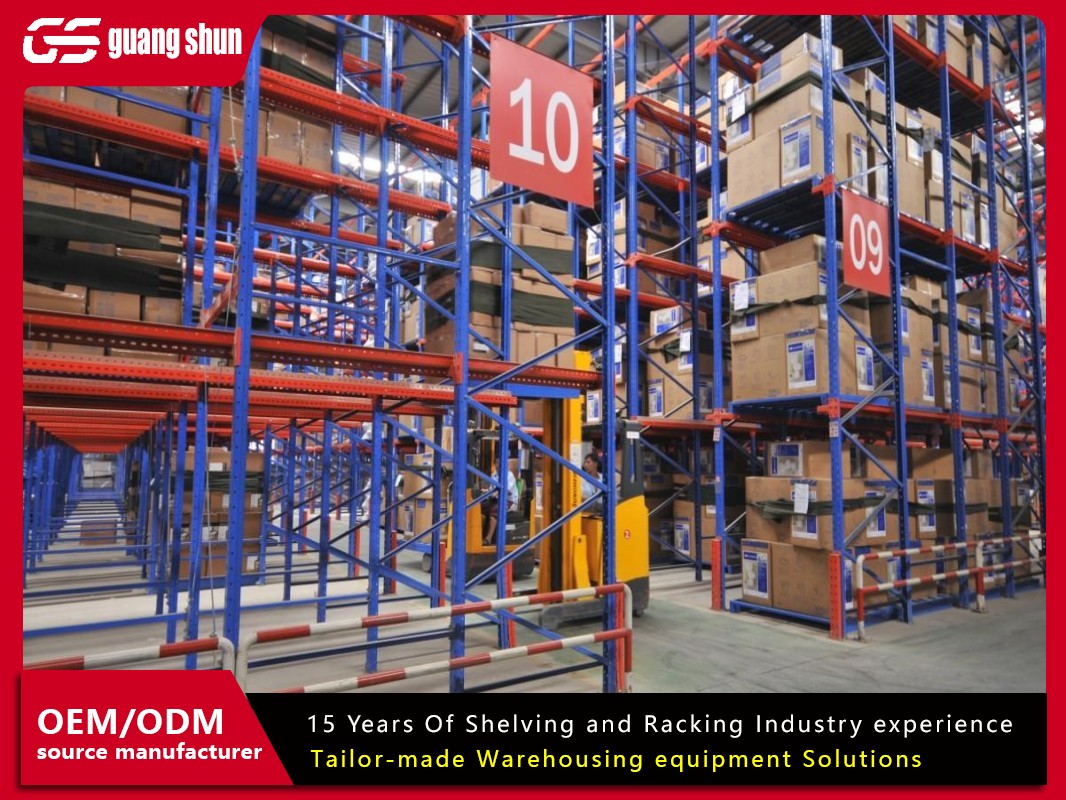
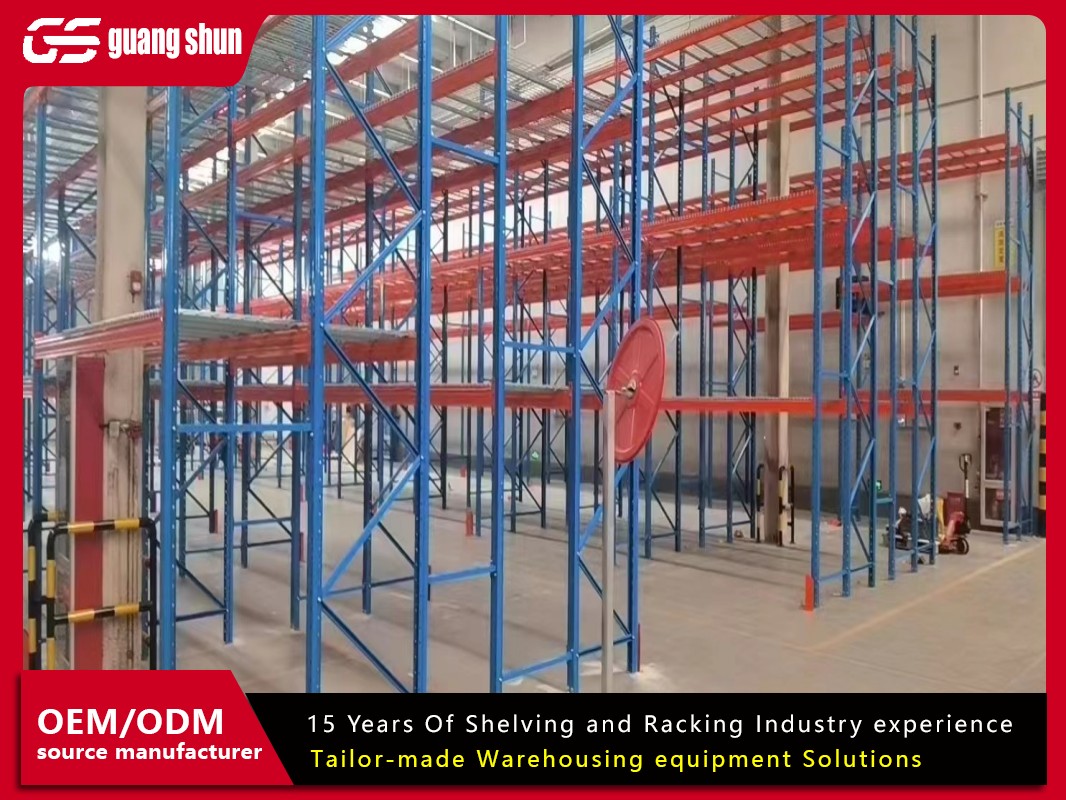
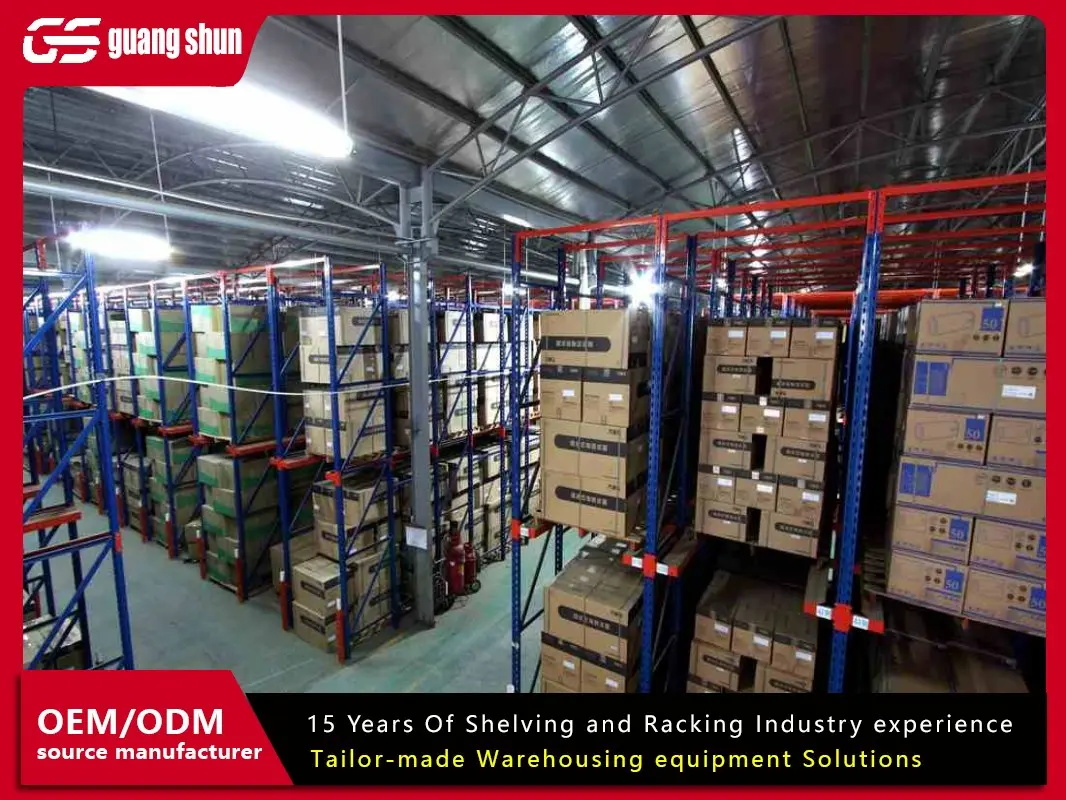
Warehouse operators face a persistent challenge: rising real estate costs and SKU proliferation demand higher storage density without sacrificing accessibility or safety. The most effective answer lies in the vertical dimension—specifically, how you stack a rack. But stacking racks is not about simply placing one beam level above another. It requires rigorous engineering, precise load calculations, and an intimate understanding of rack configuration dynamics. With decades of structural storage experience, Guangshun provides industrial-grade solutions that maximize vertical cube utilization while maintaining strict compliance with RMI and FEM standards.
This technical guide addresses the core physics, common failure modes, and proven strategies to stack a rack correctly—whether you operate selective pallet racks, drive-in systems, or push-back configurations. We integrate real-world load data, seismic considerations, and ROI metrics to help you make decisions that lower cost per pallet position.
When a warehouse decides to stack a rack beyond basic single-deep selective levels, the structural loads transform significantly. Each additional beam level adds vertical eccentricity, increases the moment at the column base, and raises the center of gravity. According to industry data, a 30% increase in stacking height can double the seismic overturning moment if not properly braced. Many facilities face these critical issues:
Upright frame buckling – High slenderness ratios reduce safe load capacity.
Anchor bolt fatigue – Repeated dynamic loads from forklift traffic weaken connections.
Beam deflection and product damage – Overloaded beams sag, damaging pallets and goods.
Poor horizontal bracing – Leads to rack sway and instability under lateral forces.
Proper stacking methodology addresses each of these pain points. Guangshun engineers apply nonlinear finite element analysis (FEA) to validate column profiles and bracing patterns, ensuring every stacking configuration meets or exceeds safety factors of 1.8 for static load and 2.0 for dynamic impact.
The vertical load capacity of an upright frame determines how high you can stack a rack. Standard 14-gauge steel (1.9 mm thickness) supports moderate stacking up to 4 levels, but heavy-duty applications require 12-gauge (2.6 mm) or even 10-gauge (3.5 mm) columns. For example, a 10-ft upright frame made from 12-gauge steel with a 4x4 closed section can safely support 18,000 lbs per leg when properly braced. Guangshun provides capacity charts per upright model, validated by third-party load tests.
Beam step (vertical interval between beam levels) is often underutilized. Standard steps are 3" or 4" increments, but high-density stacking demands precise beam placement to match pallet heights. Wasted vertical clearance (dead space) directly reduces ROI. By reducing beam step from 6" to 3" increments, you gain an extra level in a 30-ft clear height building. However, beam step reduction affects rack stiffness; cross-aisle horizontal bracing must be recalculated. Guangshun offers custom step design and seismic bracing packages for projects that require maximizing stacking density.
When you stack a rack above 24 ft, anchor bolts become critical. AISC (American Institute of Steel Construction) guidelines recommend ¾" diameter wedge anchors embedded at least 5" into concrete with a minimum compressive strength of 3,000 psi. Additionally, floor flatness (F-number) must exceed F-min 50 to prevent rack leaning. Uneven floors induce secondary bending moments in uprights, accelerating fatigue failure. Laser-screened floors with F-numbers above 100 are recommended for multi-level stacking operations.
In seismic zones (SDC C, D, E, or F), the way you stack a rack must comply with ASCE 7-22 provisions. Pallet racks are considered non-building structures; the seismic response modification factor (R) for unbraced rack is typically 1.5, while braced frames can reach R=3.0. Properly designed back-to-back row spacers, diagonal sway braces, and base plate shear keys increase lateral resistance. Guangshun’s seismic design packages include custom cross-aisle bracing and roof connection brackets for racks stacked over 35 ft.
Selective rack is the baseline, but high-density stacking often requires drive-in, push-back, or pallet flow systems. Each presents unique stacking constraints.
Drive-in / Drive-through racks: Stacking is achieved by continuous rails supported by upright frames. LIFO (last-in-first-out) configuration. Maximum stacking height is limited to 4-5 levels due to rail deflection. Using 4"×4" structural tubing instead of roll-formed rails increases allowable stacking levels to 6.
Push-back racks: Carts nest on inclined rails. Stacking capacity is determined by cart wheel fatigue and rail slope precision. For 4-deep push-back, maximum stacking height is 3 levels; adding a fourth level increases cart pull force by 180%, risking operator safety. Guangshun offers telescopic push-back systems with sealed bearings to enable 4-level stacking safely.
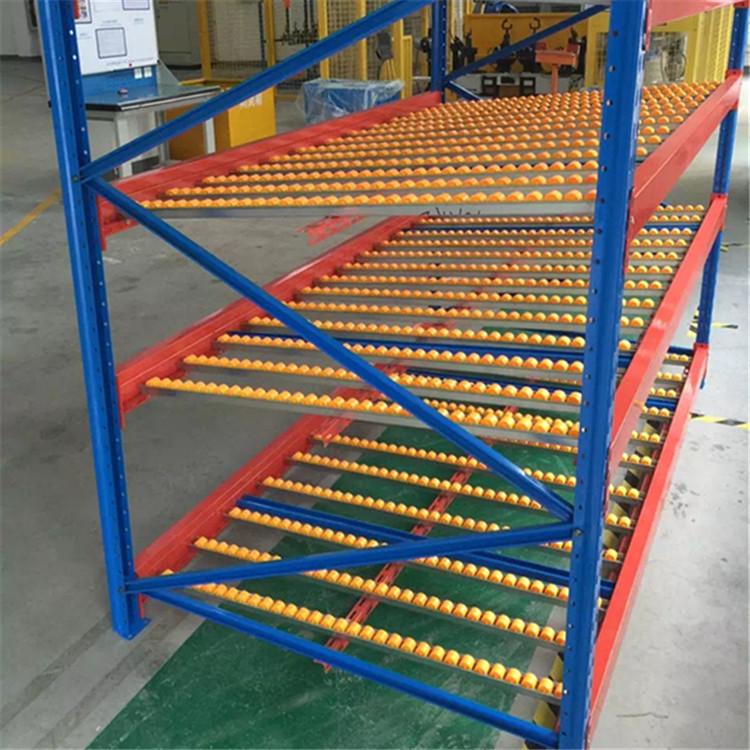
Pallet flow racks (FIFO): Gravity rollers require precise pitch angles (typically 1.5° to 3.0°). Stacking a rack with pallet flow lanes above 5 levels demands heavier-duty roller brakes and lane separators. Speed controllers are mandatory beyond 30-ft total track length to prevent pallet impact damage.
Selecting the wrong system when you stack a rack leads to frequent maintenance and safety risks. Guangshun provides free configuration audits based on your inventory turnover ratio and average pallet weight.
When you stack a rack using uprights from one brand and beams from another, connection tolerances vary. This mismatch reduces load transfer by up to 40%, as confirmed by static tests. Countermeasure: always use an integrated system from a single engineering provider. Guangshun’s components are designed with 0.5 mm manufacturing tolerances and load-tested as a complete assembly.
Forklifts insert pallets at speeds of 0.5–1.0 m/s, generating impact loads 150% of static weight. Over time, repeated impacts deform beam connectors and safety clips. Solution: install column protectors, reinforced beam end connectors, and limit forklift travel speed near racks to 5 km/h. For high-frequency zones, Guangshun supplies heavy-duty impact base plates with rubber dampers that absorb 30% of shock load.
In back-to-back rack rows, failing to install row spacers every 10 ft along the height permits independent sway of each rack row. During seismic events or sudden braking of forklifts, rows can collide and collapse. Install galvanized row spacers with bolted connections at each beam level. Guangshun’s seismic package includes row spacer kits with slotted holes for thermal expansion.
A Midwest third-party logistics provider operated with 12,000 pallet positions at 22 ft clear height. By re-engineering how they stack a rack—upgrading to 12-gauge uprights, optimizing beam step from 9" to 4.5", and adding seismic bracing—they increased pallet positions to 17,200 without expanding the building footprint. The investment in new racks and installation totaled $1.2M. Annual additional storage capacity generated $2.7M in new client contracts, yielding a payback period of 5.3 months.
Another Guangshun client in the automotive sector had chronic rack damage because they stacked a rack to 5 levels without proper anchor checks. After a Guangshun structural audit, we replaced 340 damaged uprights, installed 1,200 anchor bolts with epoxy grout, and provided load capacity placards per aisle. Six-month incident rate dropped by 92%, and insurance premiums decreased by 18%.
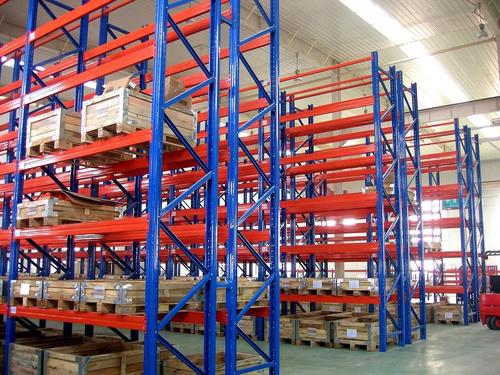
To ensure your stacking project passes internal audits and OSHA/ISO inspections, use this checklist:
Structural calculation report signed by a licensed professional engineer (P.E.).
Anchor bolt pull-out tests (ASTM E488) for random samples of 5% of all bolts.
Beam clip engagement check: visual indicator must show full insertion (gap ≤ 1/16").
Upright frame verticality within 1/500 of height (e.g., 0.6 inch over 30 ft).
Maximum intended pallet load vs. rated beam capacity — maintained within 85% to allow dynamic headroom.
Aisle width verification to accommodate forklift turning radius without hitting columns.
Guangshun provides on-site certification for all completed installations, including load test reports and lifetime traceability of components.
Q1: What is the maximum safe stacking height for a standard selective
pallet rack?
A1: For standard roll-formed upright
frames (14-gauge), the maximum stacking height is typically 25 ft (4-5 beam
levels) under normal seismic conditions. With heavy-duty structural steel
uprights (12-gauge or 10-gauge) and full seismic bracing, you can stack
a rack up to 45 ft (8-9 levels). However, local building codes and
floor flatness may impose lower limits. Always request a site-specific
engineering analysis from providers like Guangshun before exceeding 30
ft.
Q2: Can I stack a rack with different beam depths (e.g., 3" and 4"
beams) on the same upright?
A2: No, mixing beam
depths creates uneven load distribution and reduces the load-carrying capacity
by approximately 35%, as the smaller beam will deflect more under load. The
upright column’s slot pattern is designed for a specific beam end connector.
Always use beams from the same series and depth rating. Guangshun’s modular
design ensures consistent connector geometry across all beam depths from 2.0” to
5.0”.
Q3: How often should racks be inspected when I stack a rack above 30
feet?
A3: For racks exceeding 30 ft stacking
height, OSHA and RMI recommend visual inspections monthly and a detailed
engineering inspection every 6 months. Critical areas include beam connector
wear, upright base plate corrosion, and anchor bolt torque loss. After any
seismic event above magnitude 4.0, a full load test must be performed.
Guangshun offers annual rack inspection contracts with laser
alignment scanning and load rating updates.
Q4: What floor tolerances are required to stack a rack without
shims?
A4: To avoid shims (which introduce
eccentric loads), floor flatness must achieve F-min 50 with a maximum deviation
of 1/8" over 10 ft and 1/4" over 100 ft. For racks above 35 ft, specify F-min
75. Guangshun provides custom base plates with integrated leveling nuts for
floors with irregular flatness, eliminating the need for loose shims.
Q5: Does Guangshun provide seismic certification for rack stacking in
high-risk zones?
A5: Yes. Guangshun offers full seismic
compliance packages certified by third-party structural engineers per ASCE 7-22
and IBC 2024. We perform nonlinear time-history analysis for each stacking
configuration, provide ICC-ES evaluation reports, and supply seismic base
isolators where required. Contact our engineering team for a site-specific
seismic assessment.
Q6: How can I calculate the ROI of reconfiguring my existing racks to
stack higher?
A6: The baseline calculation is:
additional pallet positions × average rental cost per pallet per month ÷ total
project cost. For example, if you gain 1,000 new pallet positions and warehouse
lease cost is $0.45/pallet/day ($13.5/month), monthly revenue increases by
$13,500. If re-engineering costs $50,000, payback is 3.7 months. Include savings
from avoided expansion construction (typically $150–$250 per square foot).
Guangshun provides free ROI modeling for any stacking project.
Q7: What is the typical lead time to engineer and deliver a custom
high-stack rack system?
A7: After site survey and
engineering approval, Guangshun’s typical lead time for systems requiring
stacking above 35 ft is 8–12 weeks, including FEA analysis, prototyping (if
needed), and full assembly drawings. Standard stacking systems (25 ft or lower)
ship within 3–4 weeks.
Ready to optimize your vertical cube with expert-engineered rack stacking? Visit Guangshun for technical datasheets, 3D configuration tools, and professional load capacity certificates. For direct consultation on how to stack a rack that meets your exact throughput and safety targets, request a free warehouse storage audit today.

 Wechat
Whatsapp
Wechat
Whatsapp