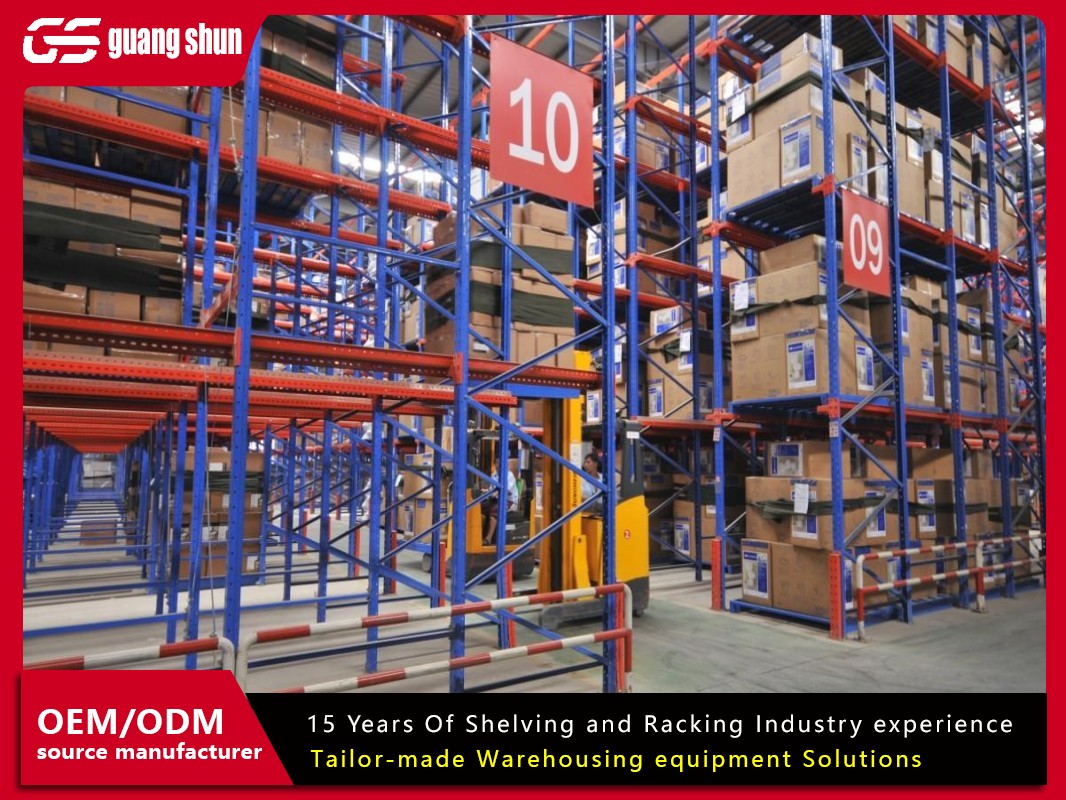
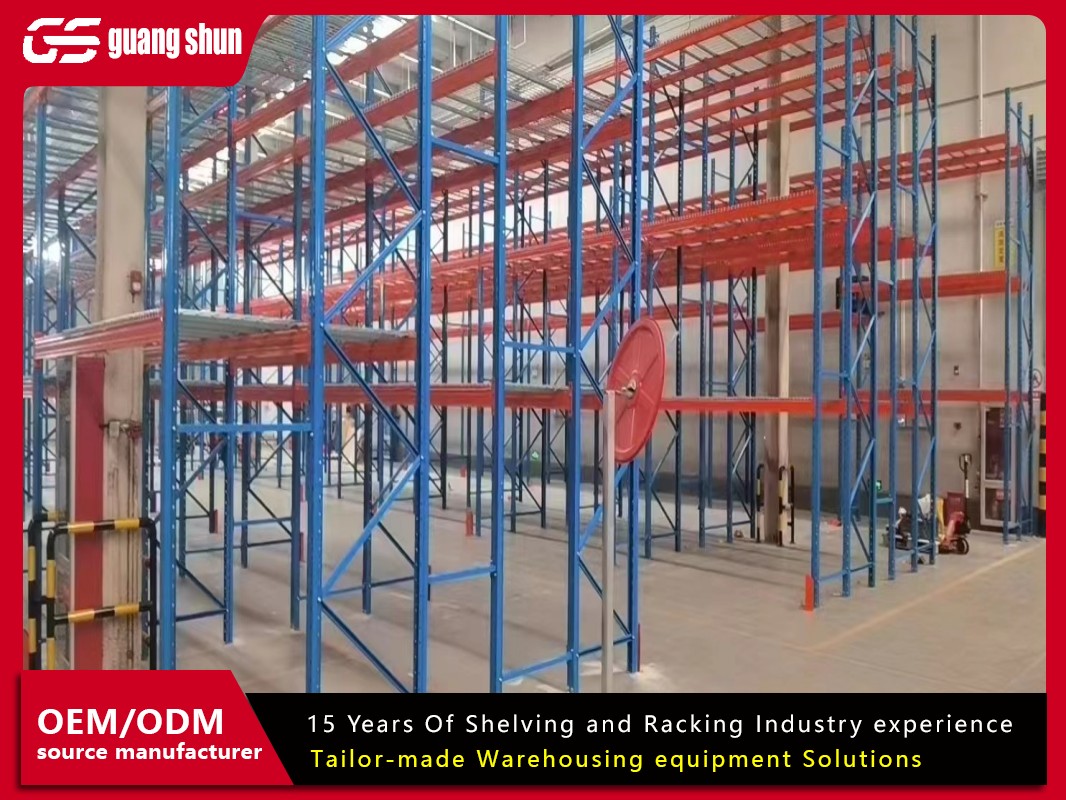
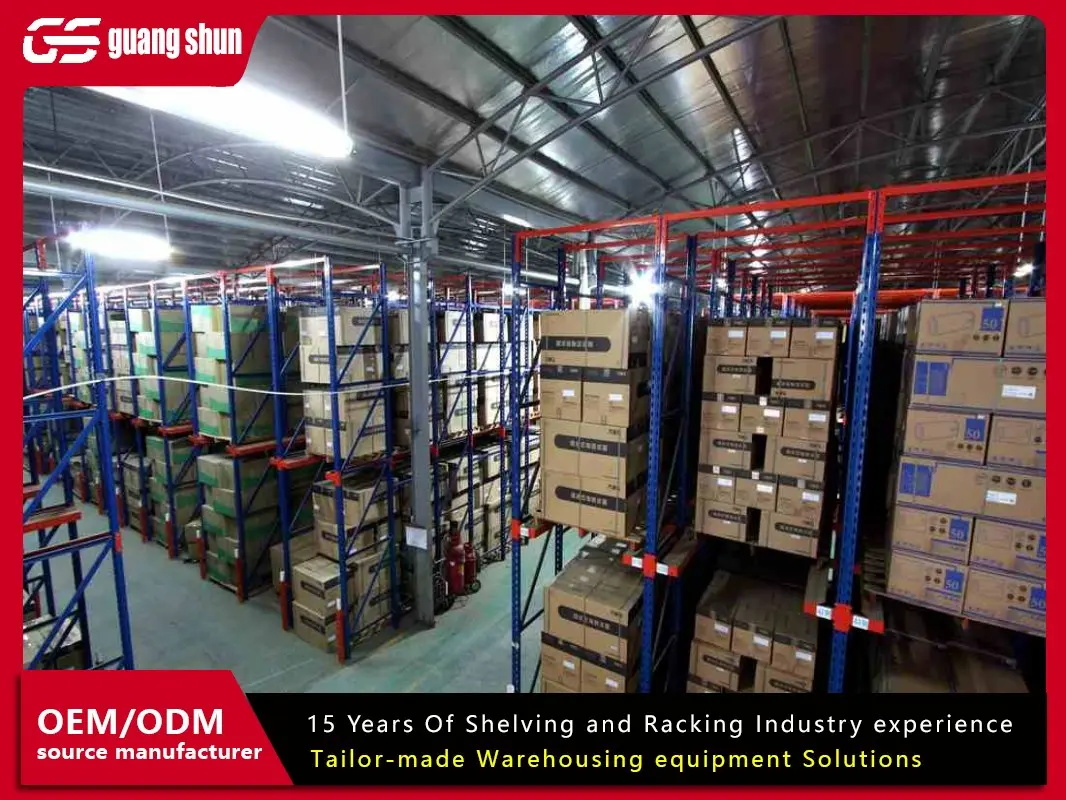
In the competitive landscape of modern logistics, maximizing every square meter of warehouse space is no longer just an option—it is a financial necessity. The rack shuttle system (often referred to as a radio shuttle or pallet shuttle) has emerged as the premier solution for high-density storage, bridging the gap between traditional static racking and fully automated AS/RS systems.
For warehouse managers facing rising real estate costs and labor shortages in 2025, moving to a shuttle-based system offers a tangible path to doubling storage capacity without expanding the facility's footprint. This article details the operational mechanics, cost-benefit analysis, and technical criteria for selecting the right system for your inventory.
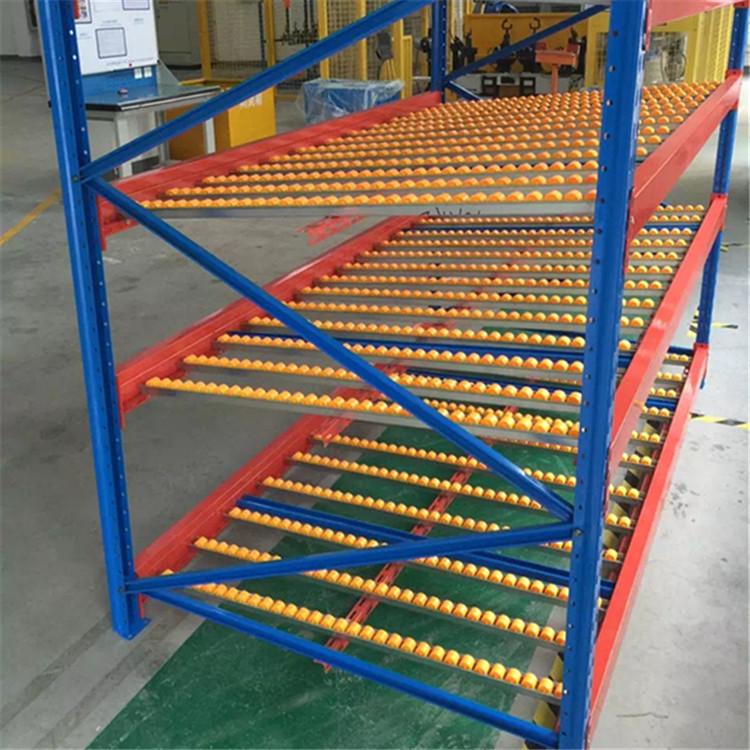
A rack shuttle system is a semi-automated deep-lane storage solution that uses a self-propelled, battery-operated vehicle to transport pallets inside racking channels. Unlike drive-in racking, where forklifts must physically enter the lanes—creating safety hazards and slowing down operations—the shuttle does the travel work.
The operator simply places the radio shuttle cart at the start of a lane using a standard forklift. Once loaded with a pallet, the shuttle lifts the load and transports it to the furthest available position at a speed of approximately 0.8 to 1.5 meters per second. While the shuttle is moving the pallet deep into the rack, the forklift driver is free to retrieve the next pallet, significantly boosting throughput and warehouse automation efficiency.
To understand the value of this system, one must look at the underlying technology. In 2025, the industry standard has shifted heavily towards Lithium-Ion power and smart integration.
Modern radio shuttle racking utilizes industrial-grade Lithium-Ion batteries. Unlike older lead-acid models that required long charging times and heavy maintenance, current lithium units offer:
Fast Charging: A full charge in under 3 hours, often supporting "opportunity charging" during breaks.Cycle Life: Exceeding 3,000 charge cycles, providing 8–10 years of service life.Weight: Significantly lighter, reducing energy consumption for the shuttle motor.
Efficiency is measured in pallet movements per hour.A standard high-performance shuttle can travel at:
Empty: 1.0 – 1.2 m/sLoaded: 0.8 – 1.0 m/s
This speed allows a single shuttle car to handle between 30 and 40 pallets per hour depending on lane depth, which is roughly double the efficiency of a drive-in rack system where forklift travel time kills productivity.
Standard systems are engineered to handle:
Weight: Up to 1,500 kg (3,300 lbs) per pallet.Pallet Sizes: Adaptable to standard GMA (40"x48"), Euro Pallets (1200x800mm), and chemical industry pallets (1200x1200mm).
Upgrading to a shuttle racking system solves several chronic warehouse pain points simultaneously.
The primary draw is high-density storage. By eliminating the need for forklift aisles between every rack row, you can utilize up to 85% of your available floor volume. Lanes can be designed to be 20, 40, or even 60 pallets deep—far deeper than what is safe for drive-in racking.
In traditional drive-in systems, forklift impact is the leading cause of rack collapse and inventory damage. With a pallet shuttle system, the forklift never enters the rack structure. It stays in the main aisle. This "zero-entry" approach virtually eliminates rack upright damage and significantly reduces the risk of collisions involving personnel.
Versatility is a key advantage.The system can be configured for:
LIFO (Last-In, First-Out): The shuttle loads and unloads from the same side (common for maximizing wall-to-wall storage).FIFO (First-In, First-Out): The shuttle loads from one side and unloads from the opposite side. This is critical for food and beverage or pharmaceutical sectors where expiration dates dictate inventory flow.
While versatile, the rack shuttle system delivers the highest ROI in specific operational environments.
Cold storage is the most expensive real estate in logistics. Cooling air is costly, so wasting space on aisles is financial waste. Cold storage racking using shuttles allows freezers to be built smaller and more energy-efficient. Specialized "Cold Store" shuttles are rated to operate reliably in temperatures as low as -30°C (-22°F), featuring heated electronics and specialized battery insulation.
Facilities that produce or distribute large quantities of the same product (e.g., bottling plants, paper mills, or raw material storage) are ideal candidates. If you have 200 pallets of "Product A," you can store them in a single deep lane. The shuttle system excels here, whereas selective racking would waste enormous space for such uniform inventory.
Understanding the financial landscape is crucial for decision-makers.
Selective Racking: Lowest upfront cost but lowest storage density. Requires a huge warehouse footprint. High long-term operational cost due to travel time.Drive-In Racking: Moderate density and cost. High risk of damage and slow operation. "Honeycombing" (empty slots that can't be filled) is a major issue.Rack Shuttle System: Higher initial investment (cost of shuttles and rails).However, it offers the lowest cost per pallet position over 5 years due to labor savings, zero rack damage, and maximized density.
For a new warehouse build, using a shuttle system often means you can build a smaller building to store the same amount of goods, saving millions in construction and land costs.
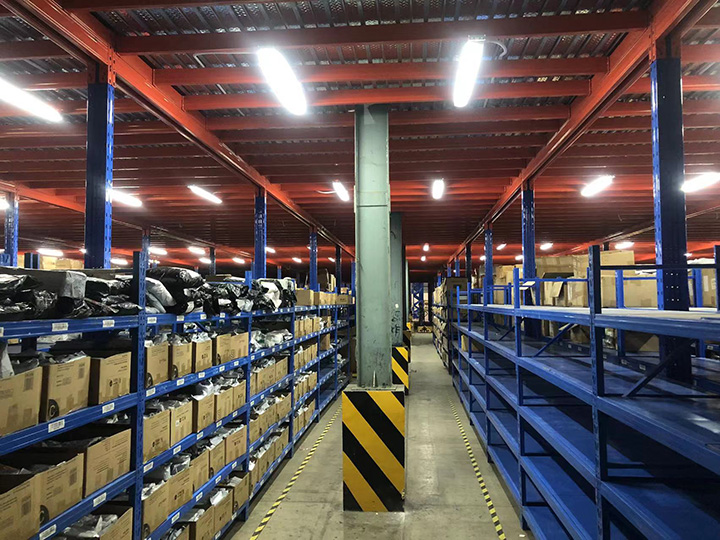
When looking for a rack shuttle system manufacturer or supplier, avoid generic importers. The hardware (steel) is simple, but the reliability of the shuttle cart is critical.
Battery Chemistry: Insist on Lithium-Ion with a Battery Management System (BMS).After-Sales Service: If a shuttle fails, your inventory is stuck. Ensure the supplier has local spare parts (wheels, sensors, batteries) and a rapid response team.WMS Integration: Can their proprietary remote or tablet control integrate with your existing Warehouse Management System (WMS)? 2025 systems should offer API integration for real-time inventory tracking.Local References: Ask to visit a site where their system has been running for more than 3 years. This proves durability.
Q1: How many shuttle carts do I need for my warehouse?
A1: The general rule of thumb is one shuttle for every 1,500 to 2,000 pallet positions, but this depends heavily on your turnover rate. A system with high throughput (fast moving consumer goods) may need one shuttle per 500 pallets, whereas long-term storage might only need one shuttle per 3,000 pallets.
Q2: Can the shuttle system handle different pallet sizes in the same lane?
A2: Generally, no. A single lane is set to a specific rail width. However, advanced "adjustable" shuttles exist, or more commonly, the warehouse is designed with different zones—Zone A for 1200x1000mm pallets and Zone B for 1200x800mm pallets.
Q3: What happens if a shuttle breaks down deep inside the rack?
A3: This is a common fear but rarely an issue with quality systems. Manufacturers provide a specialized "rescue cart" or a manual retrieval hook that attaches to a forklift. This tool hooks onto the disabled shuttle to pull it out for maintenance.
Q4: Is the rack shuttle system compatible with my existing drive-in racking?
A4: Usually, no. Shuttle racking requires specific rails and beam supports that are different from the angle-iron rails used in drive-in racks. However, the upright frames might be reusable if they are engineered to handle the dynamic loads of a moving shuttle, but a retrofit typically requires significant re-engineering.
Q5: What is the maintenance requirement for the shuttle cart?
A5: Maintenance is minimal compared to forklifts. Daily tasks involve checking the wheels for debris (shrink wrap is the enemy) and charging the battery. Quarterly checks should inspect the sensors, chain/belt tension, and rail alignment. Modern brushless motors are virtually maintenance-free.

 Wechat
Whatsapp
Wechat
Whatsapp