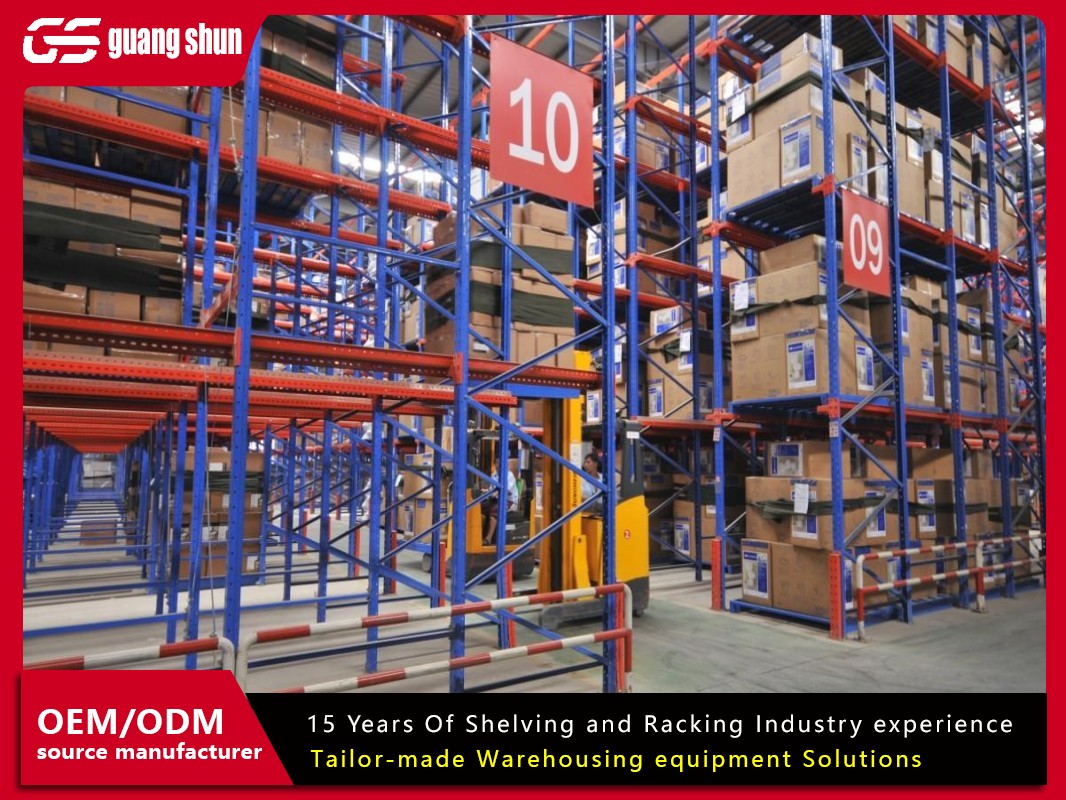
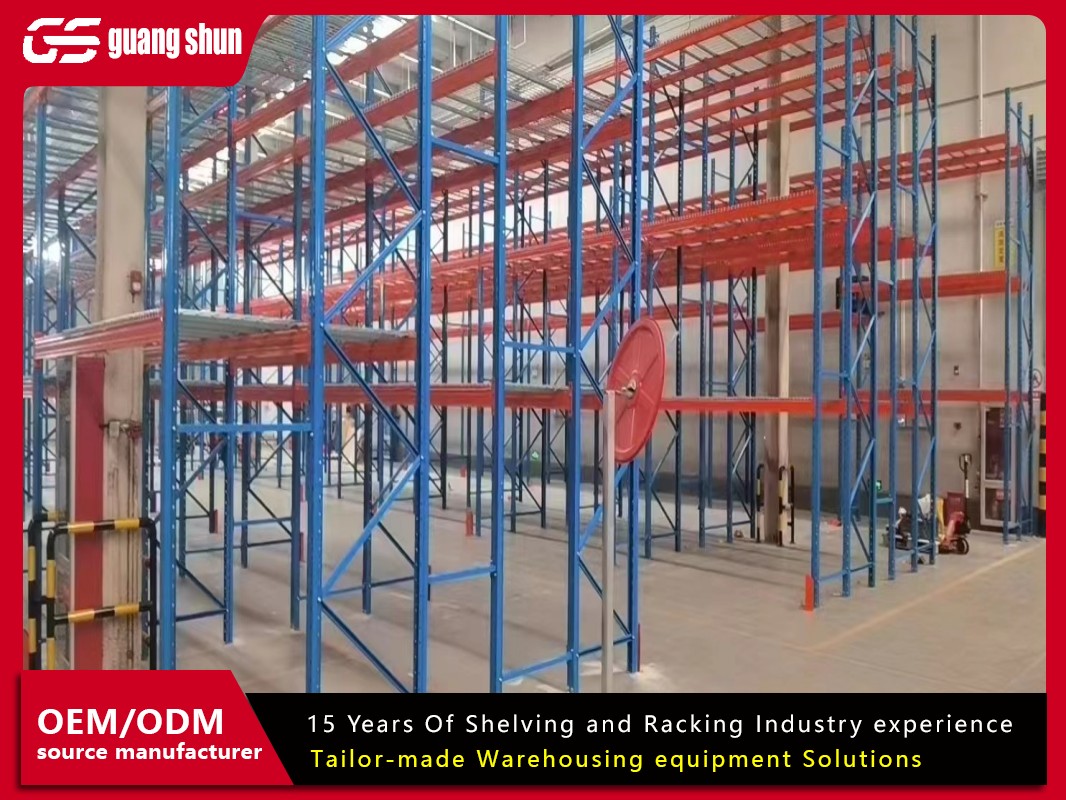
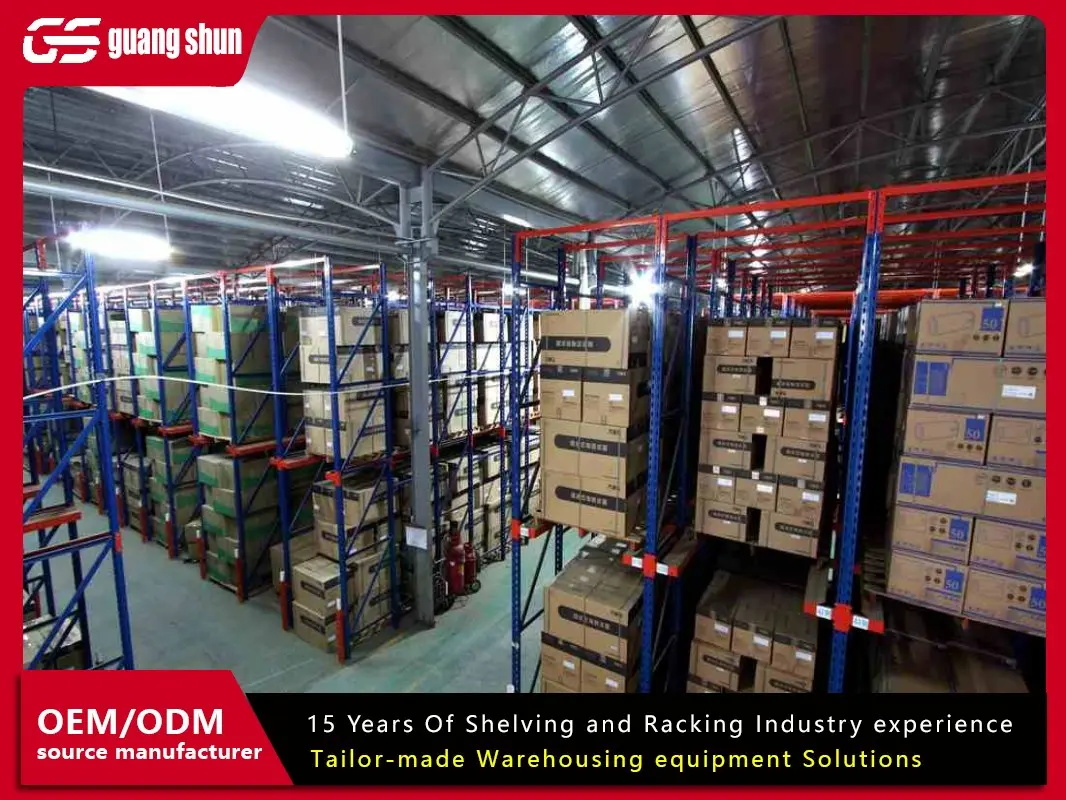
In any pallet racking installation, the horizontal members that support the stored loads – the beams – are the most stressed components. While they may appear to be simple steel profiles, structural pallet rack beams are precision‑engineered elements whose design dictates the safety, durability, and overall storage capacity of a warehouse. A beam failure can lead to catastrophic collapse, product damage, and risk to personnel. Therefore, selecting the correct beam type, understanding its load limits, and maintaining its integrity are non‑negotiable responsibilities for warehouse operators and facility managers. This article examines the technical specifications, compliance standards, and real‑world challenges associated with these critical components, drawing on extensive application data from industry specialists like Guangshun.
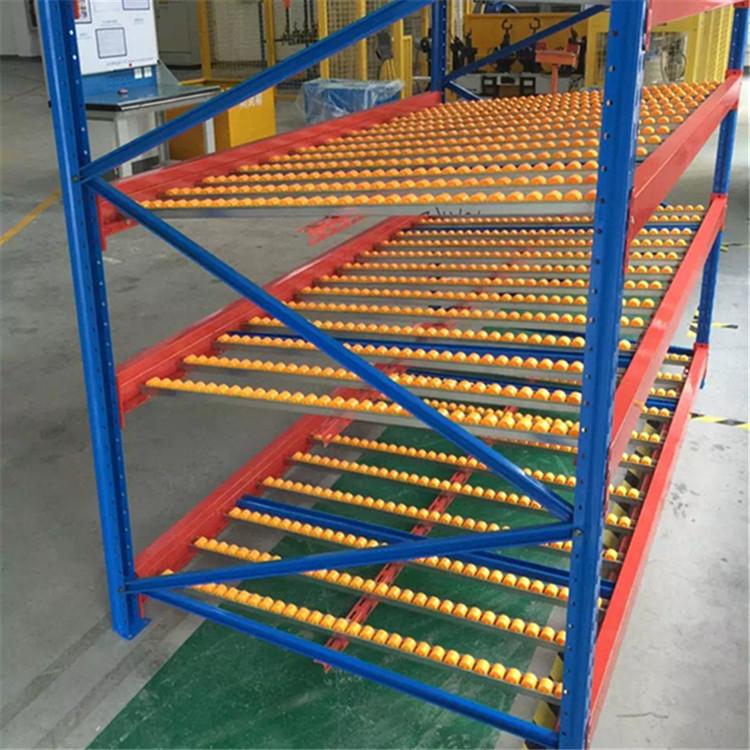
Structural pallet rack beams are typically cold‑formed from high‑strength steel, with yield strengths commonly ranging from 350 MPa to 550 MPa. The choice of steel grade directly affects the beam’s moment of inertia and its ability to resist bending under load. Two predominant profile geometries dominate the market:
Box (tubular) sections: Closed profiles offering high torsional resistance, ideal for seismic zones and applications where lateral forces are significant.
Step beams (open back): The most common design, featuring a recessed ledge that accepts various decking types (wire mesh, particle board, roll‑formed shelves). They provide excellent compatibility with standard pallets.
C‑channel beams: Often used in lighter duty or specialised systems; less torsionally rigid but economical.
The profile depth and flange thickness are calculated to meet specific load‑deflection limits (typically L/180 or stricter), ensuring that the beam does not sag excessively under full load, which could cause pallet instability or interfere with forklift operations.
A fundamental relationship exists between beam span and load capacity – capacity decreases exponentially as length increases. For example, a 3‑metre beam might safely support 4 tonnes, while a 4‑metre beam of the same profile may only carry 2.5 tonnes. This inverse square relationship (bending moment ∝ span²) means that engineers must precisely match beam length to the expected unit load. Guangshun provides detailed load tables for each beam series, allowing designers to optimise bay widths without compromising safety margins.
The rated capacity of a beam is not simply its ultimate breaking strength; it is the load at which the beam remains within acceptable deflection limits. The RMI (Rack Manufacturers Institute) and FEM (Fédération Européenne de la Manutention) standards stipulate that beam deflection under rated load should not exceed 1/180th of the span, or about 17 mm for a 3 m beam. This conservative limit ensures that:
Pallet overhang does not cause interference with adjacent racks.
Dynamic impacts from forklifts are absorbed without permanent deformation.
The beam’s integral safety locks remain properly engaged with the uprights.
Beyond deflection, every beam must be tested for its moment capacity, shear capacity at the end connections, and resistance to lateral‑torsional buckling. These values are rarely published in simple brochures; they require certified engineering calculations.
Most structural pallet rack beams are rated for uniformly distributed loads (UDL) – meaning the load is spread evenly along the beam’s length. However, in practice, loads are often concentrated at pallet support points (e.g., two fork pockets). If a beam is used with point loads that exceed the design assumptions, localised bending can occur, potentially leading to premature failure. Engineers must verify that the beam’s flange width and deck support configuration can handle concentrated forces, especially when using timber decks or wire decks with widely spaced supports.
The interface between beam and upright is arguably the most safety‑critical zone in a rack structure. Structural pallet rack beams are equipped with integral end connectors – welded components that engage with slots in the upright columns. These connectors incorporate:
Safety locks (spring‑loaded or bolt‑type): Prevent the beam from being accidentally dislodged by forklift impact. Seismic zones often require additional bolt‑through connections.
Vertical load transfer plates: Distribute the beam’s shear forces into the upright column.
Weld quality: The welds joining the connector to the beam body must be inspected for penetration and absence of cracks. Many failures originate from poor weld fusion.
Installation torque and lock engagement must be verified regularly. Guangshun recommends quarterly inspections of all beam connectors in high‑traffic warehouses, using calibrated tools to ensure that locking mechanisms are fully seated.
In regions prone to earthquakes, beam design must accommodate not only vertical loads but also lateral forces that induce sway. Special seismic ratings (e.g., RMI’s seismic‑design category D, E, F) require that beams and their connections possess adequate ductility – the ability to deform without brittle fracture. This often leads to the specification of thicker beam end plates, reinforced weld details, and the use of high‑strength bolts rather than friction‑fit connectors alone. Furthermore, deflection limits may be relaxed during seismic events to allow energy dissipation, but the system must retain its integrity. Compliance with local building codes (IBC, ASCE 7) is mandatory, and manufacturers like Guangshun provide seismic certification packages based on full‑scale shake‑table testing.
Even the most robust structural pallet rack beams face daily threats that degrade their performance. Three common issues account for the majority of beam replacements:
Overloading: Operators sometimes stack pallets with total weights exceeding the beam’s rated capacity, often unaware that capacity decreases with span. Overloading accelerates creep (permanent sag) and can cause sudden collapse.
Forklift impact: Beams are frequently struck by mast or carriage, leading to dents, twists, and compromised strength. A dent as shallow as 6 mm in the flange can reduce load capacity by 20% or more.
Corrosion: In cold storage (humidity cycles) or chemical environments, protective coatings can fail, leading to section loss. Galvanised beams are often specified for such applications.
Mitigation strategies include installing column and beam protectors (polyurethane or steel guards), conducting regular capacity audits, and training forklift operators in rack‑safe driving techniques.
To counter the damage patterns described above, several design innovations have been introduced:
Impact‑resistant edge profiling: Beams with thicker front flanges or integrated wear strips can absorb minor impacts without permanent deformation.
Replaceable wear plates: Some systems allow the bolt‑on replacement of the front flange section, avoiding full beam replacement.
High‑visibility coatings: Bright safety‑yellow paint on beam fronts alerts forklift operators to proximity and improves spatial awareness.
Beam locking indicators: Visual markers that show whether the safety pin is fully engaged, simplifying inspection.
When damage does occur, replacement beams must match the original manufacturer’s specifications exactly. Mixing beams from different suppliers can lead to mismatched end connectors and unsafe load transfer. Guangshun stocks a wide range of beam profiles that are dimensionally compatible with major rack brands, ensuring that repairs maintain structural integrity.
Two environments place extreme demands on beams: low‑temperature freezers and very‑high‑bay warehouses (above 12 m). In freezers, the combination of low temperatures (‑30 °C) and thermal cycling stresses both the steel and the connections. Steel becomes more brittle at low temperatures, so materials with sufficient Charpy impact toughness are specified. Beams in these environments often incorporate special sloped decks to allow air circulation, and the beams themselves may be galvanised to resist condensation‑induced rust. In high‑bay warehouses, beams must be designed to resist wind sway (if the building envelope is not fully sealed) and to support integrated sprinkler systems, which add considerable dead load to the beam. Structural pallet rack beams used in these applications are typically deeper (up to 200 mm) and feature thicker steel to maintain rigidity under combined loads.
Q1: How do I determine the correct beam capacity for my pallet loads?
A1: You need to know the maximum weight per pallet position and the number of pallets stored per beam level. For a two‑pallet‑deep bay with each pallet weighing 800 kg, the beam must support 1,600 kg uniformly distributed. Always consult the manufacturer’s load chart for the specific beam length and profile. If in doubt, engage a structural engineer or request a certified capacity calculation from your supplier, such as Guangshun.
Q2: Can I replace a damaged beam with a beam from a different manufacturer?
A2: It is strongly discouraged unless the replacement beam has been verified to have identical end‑connector geometry, steel grade, and moment capacity. Even small differences in the connector hook profile can lead to improper seating and sudden failure. Many manufacturers, including Guangshun, offer cross‑reference guides to ensure compatibility with existing systems.
Q3: What is the acceptable deflection for a structural rack beam?
A3: Industry standards (RMI, FEM) limit deflection under rated load to 1/180th of the span. For a 108‑inch (2.7 m) beam, maximum sag is about 0.6 inches (15 mm). This ensures that stored pallets remain stable and that clearances to sprinklers or lighting are maintained.
Q4: How often should rack beams be inspected?
A4: A formal inspection by a qualified person should occur at least annually, but monthly visual checks by warehouse staff are recommended. After any known impact event, the affected beam and its connections should be examined immediately. Look for dents, bends, cracks in welds, and any signs of the safety lock being disengaged.
Q5: Are galvanised beams necessary in a dry warehouse?
A5: Not strictly necessary, but galvanising provides excellent corrosion resistance and may extend service life, especially in environments with high humidity or where occasional wash‑downs occur. For most ambient warehouses, high‑quality powder‑coated paint offers sufficient protection at lower cost.
Q6: What is the difference between a step beam and a box beam?
A6: Step beams have an open back with a recessed ledge, ideal for supporting decking or pallets directly. They are easier to install and lighter. Box beams are fully enclosed (rectangular tube), offering higher torsional rigidity and better resistance to twisting – often required in seismic areas or when the beam is very long. The choice depends on structural demands and storage medium.
Q7: Can a dented beam be repaired?
A7: Generally, no. Cold straightening or welding of damaged beams is not recommended because it alters the material properties and may introduce stress concentrations. The safest practice is to replace the beam entirely. Some minor cosmetic dents that do not affect the flange or web geometry may be acceptable, but only after evaluation by a qualified engineer.
Selecting and maintaining structural pallet rack beams requires rigorous attention to engineering principles, load data, and safety standards. By partnering with experienced manufacturers like Guangshun and adhering to a strict inspection regime, warehouse operators can ensure their storage systems remain safe, compliant, and productive for decades.

 Wechat
Whatsapp
Wechat
Whatsapp