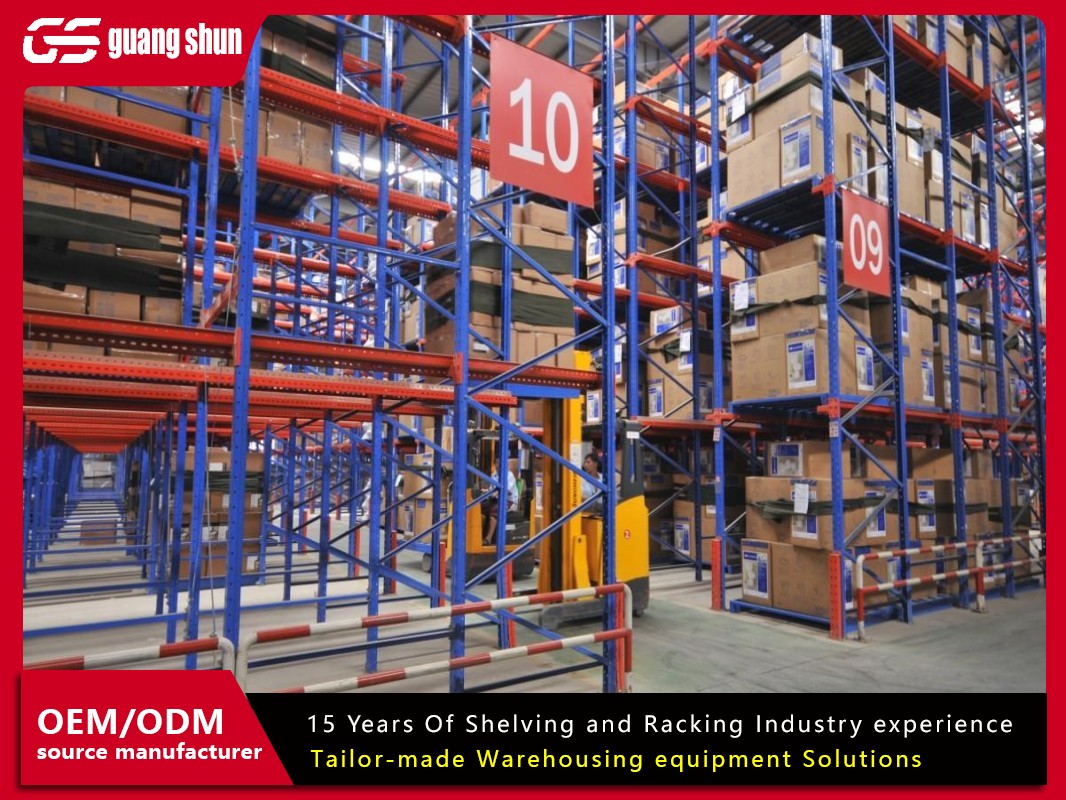
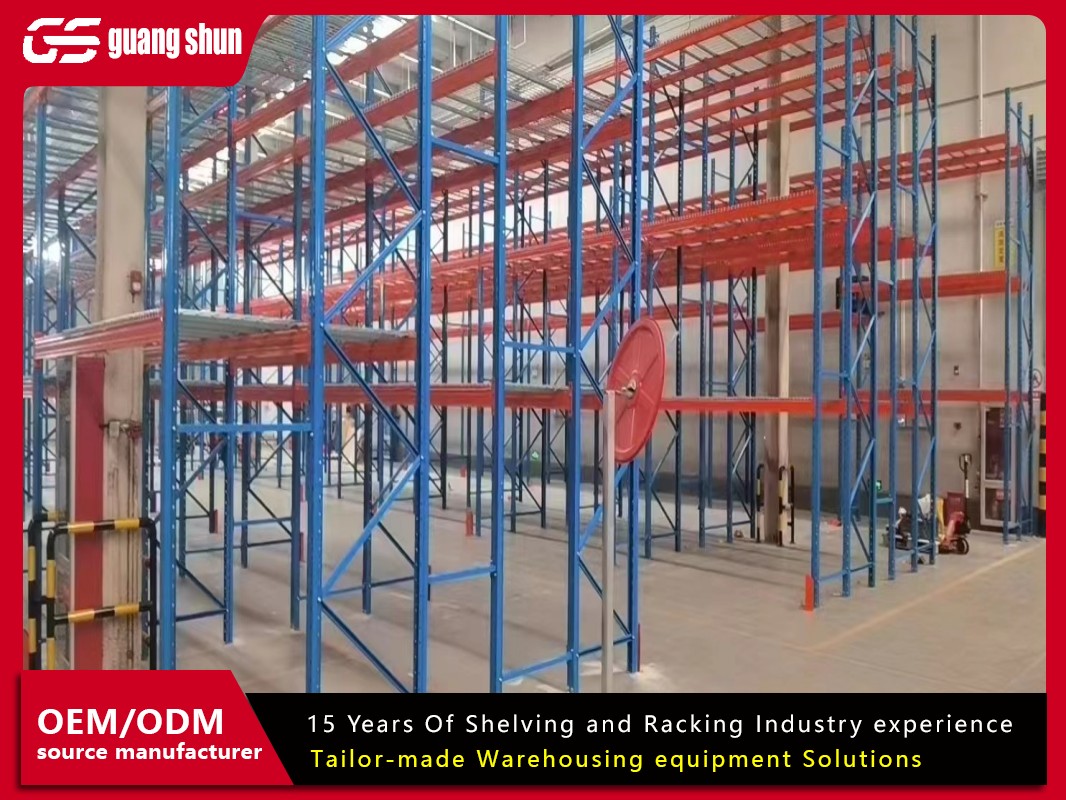
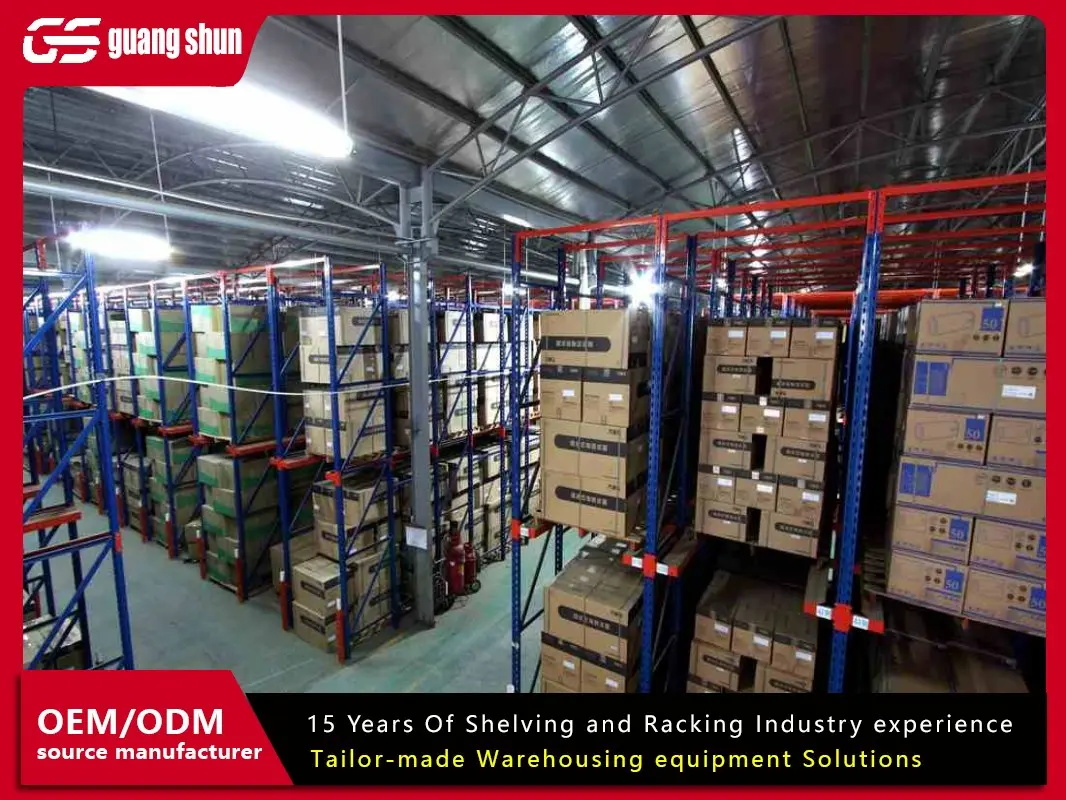
Warehouse operations depend on the integrity of their storage infrastructure. A failure in strong metal racking can halt logistics, damage inventory, and pose life-safety risks. While the term "heavy-duty" is often used loosely, true structural strength in industrial racking is defined by measurable parameters: steel yield strength, connection rigidity, and system-level stability under dynamic loads. This article provides a deep technical examination of strong metal racking—from raw material selection to compliance with international standards—offering warehouse professionals a framework for specification, audit, and long-term asset management. Drawing on manufacturing expertise from companies like Guangshun, we focus on data-backed decisions that prevent over-specification or, worse, under-engineering.
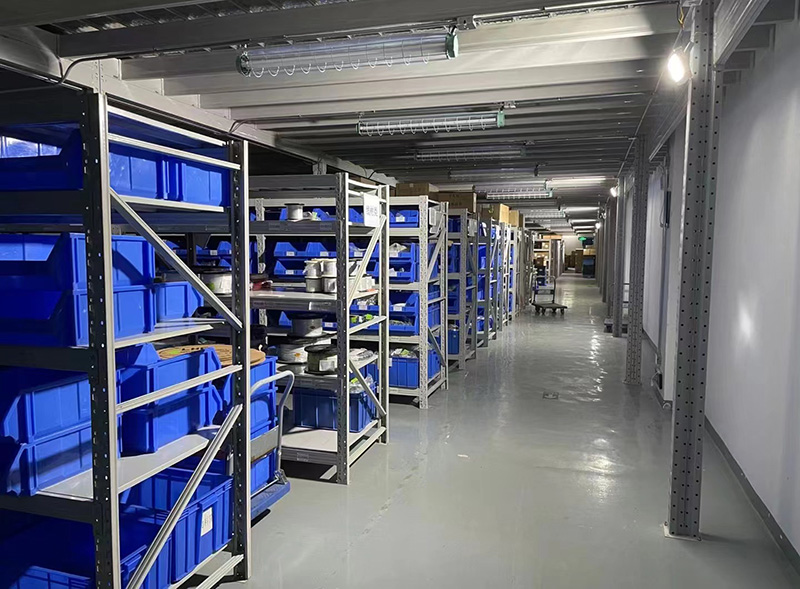
The "strength" of metal racking originates in the steel itself and how it is transformed. Engineers must look beyond simple thickness to understand mechanical properties.
Industrial racking typically uses cold-formed structural steel per standards like ASTM A653 or EN 10346. The yield strength (e.g., 350 MPa or 550 MPa) determines how much load the section can support before permanent deformation. For high-seismic zones or heavy dynamic loads, strong metal racking often employs high-strength low-alloy (HSLA) steel, which provides higher strength-to-weight ratios, reducing material usage while maintaining capacity.
Open vs. closed sections: Open-back uprights allow for easy beam connection but may have lower torsional resistance. Closed sections (like tubular columns) offer higher resistance to impact but complicate beam attachments. Advanced roll-forming lines, such as those operated by Guangshun, ensure consistent cross-section dimensions and hole patterns (±0.5 mm tolerance).
Coating systems: Corrosion protection is integral to long-term strength. Hot-dip galvanizing (Z275 or heavier) provides sacrificial protection; for indoor applications, polyester powder coating over pre-galvanized steel offers an economical balance. In cold storage, special primers prevent rust from condensation.
Welds at beam-to-column connections must be able to transfer moment and shear. Puddle welds or plug welds are common in roll-formed sections. Non-destructive testing (NDT) per AWS D1.3 is recommended for critical installations. The strength of strong metal racking is only as good as its weakest weld.
Load capacity tables from manufacturers must be scrutinized. They are derived from physical tests (per RMI or FEM standards) and finite element analysis.
Typical design limits for beams in strong metal racking systems are L/180 deflection under rated load (where L is beam length). This ensures that pallets do not become trapped and that beam connectors do not experience fatigue. For example, a 108-inch beam rated for 4,000 lbs uniformly distributed load must not deflect more than 0.6 inches at mid-span. Actual tests measure both elastic and plastic behavior; safety factors of 1.5 to 2.0 against yielding are standard.
Frame spacing and diagonal bracing: Frames must resist buckling in both down-aisle and cross-aisle directions. X-bracing or K-bracing using steel angles or rods provides lateral stability. Seismic zones require additional base plates and anchor bolts designed for overturning moments.
P-delta effects: Under heavy loads, frame deflections can increase due to the vertical load acting on the deformed shape. Advanced analysis software accounts for these second-order effects. Guangshun uses proprietary algorithms to optimize frame designs while complying with ASCE 7 or Eurocode 8.
The connection between rack and floor must transfer shear and uplift forces. Chemical anchors or expansion anchors in concrete are specified based on pull-out tests (e.g., 4:1 safety factor). For high seismic categories, baseplate stiffeners and shim plates are used to ensure full contact.
Strength alone does not guarantee safety. Operational factors—forklift impacts, off-center loads, and fire protection—must be considered.
According to industry data, 80% of rack failures begin with an impact damage that weakens a column. Strong metal racking can be enhanced with:
Column guards (steel or polymer) bolted to the floor.
Removable end frames that can be replaced after impact.
Higher wall thickness for base sections (e.g., 3.0 mm vs. 2.0 mm) to absorb energy.
Regular inspections per ANSI MH16.1 or EN 15635 are mandatory to identify bent components.
In regions prone to earthquakes, strong metal racking must meet specific ductility requirements. This involves:
Special "sacrificial" fuses in connections to dissipate energy.
Restraint systems to prevent pallets from falling (e.g., wire mesh, back panels).
Shake-table testing of full-scale prototypes. Guangshun has tested systems for Zone 4 seismic (0.4g acceleration) with verified performance.
Intumescent coatings or sprinkler system integration are critical. However, these must not compromise the steel's mechanical properties (e.g., welding of brackets). Standard powder coatings can burn off in fire, but the steel's load capacity degrades above 550°C. Fire engineering calculations often use protected steel temperatures as input.
Different industries require modifications to the basic strong metal racking design.
AS/RS (automated storage and retrieval) systems impose precise positioning demands. Frames must maintain verticality within ±3 mm over 20 m height. This requires high-tolerance manufacturing and often stiffer sections. Guangshun supplies such systems with laser-cut base plates and precision shim packs.
In these systems, forklifts enter the rack structure. This demands special rail guides and reinforced uprights to withstand lateral forces from trucks. The strong metal racking must resist both vertical loads and horizontal impacts. Typical rail sections are 10 mm thick hardened steel.
For lumber, pipes, or steel bars, cantilever arms project from a central column. The base must resist high overturning moments. Arm capacities up to 3,000 kg per arm require deep columns and heavy-duty base anchors.
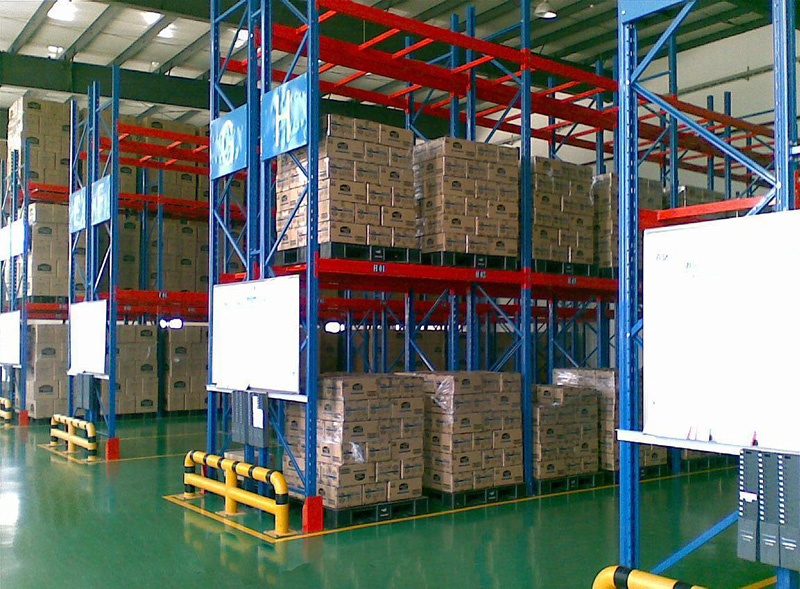
A strong metal racking system can last 25+ years if properly maintained. Key factors:
Corrosion protection: In humid environments, galvanic corrosion can occur if dissimilar metals contact. Use of isolation pads is recommended.
Regular audits: Inspect for loose connections, bent uprights, or missing safety clips. Use a calibrated load chart and ensure it is posted.
Repair protocols: Never weld damaged components without engineering approval—heat can alter steel properties. Replacement parts should match original specifications.
Dynamic load monitoring: Some modern systems embed strain gauges to alert when loads exceed design thresholds.
A1: Capacities vary widely based on beam length, section depth, and steel gauge. Common selective pallet rack beams (8–12 ft length) support between 2,000 and 5,000 lbs per pair. High-capacity beams using 5" or 6" tall sections can handle up to 10,000 lbs per level. Always refer to the manufacturer's load table, which is based on full-scale testing.
A2: Industry best practices (RMI/ANSI MH16.1) recommend a formal inspection at least annually by a qualified person. Additionally, a quick visual check should be done weekly by warehouse staff to spot obvious damage like bent uprights or missing safety pins. After any significant impact, an immediate inspection is required.
A3: Yes, with modifications. Steel becomes more brittle at low temperatures, so impact toughness must be verified (Charpy V-notch tests at -20°C or lower). Galvanized or epoxy coatings are essential to resist condensation corrosion. Guangshun offers specialized freezer racking with low-temperature lubricants and thermal breaks at anchors.
A4: Roll-formed racking is made by cold-forming coils into C or Z sections; it is lighter and more economical for most applications. Structural steel racking uses hot-rolled beams and columns (e.g., I-beams) which are heavier and more resistant to impact. The choice depends on load requirements and budget. Guangshun manufactures both types.
A5: Seismic design adds lateral force requirements. Racks must be anchored to resist horizontal accelerations (e.g., 0.5g). Diagonal bracing must be stronger, and connections must allow some ductility. Additionally, pallet retention bars or mesh may be required to prevent stored goods from falling during an earthquake. Guangshun provides seismic-rated systems with certified test reports.
A6: Mixing components is not recommended without engineering review. Beam end connectors are often proprietary, and mismatched tolerances can lead to connection failure. If you must integrate, consult both manufacturers and perform physical tests. Many suppliers, including Guangshun, offer retrofit components designed to match existing systems.
Strong metal racking is a capital investment that requires careful engineering evaluation. From steel grade selection and connection design to seismic compliance and maintenance protocols, each element contributes to system safety and ROI. By partnering with experienced manufacturers like Guangshun and adhering to recognized standards, warehouse operators can achieve high-density storage without compromising structural integrity. Always demand test certificates and engage a structural engineer for custom configurations.
For detailed specifications or to request a site assessment, contact Guangshun’s engineering team.

 Wechat
Whatsapp
Wechat
Whatsapp