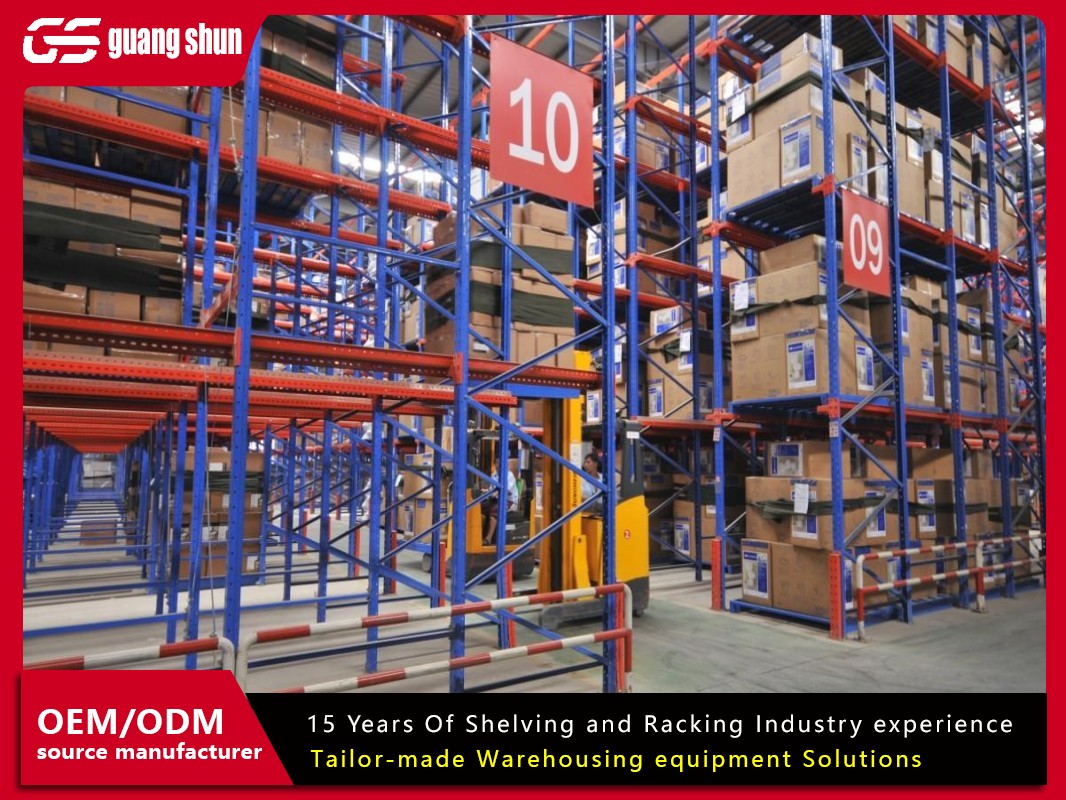
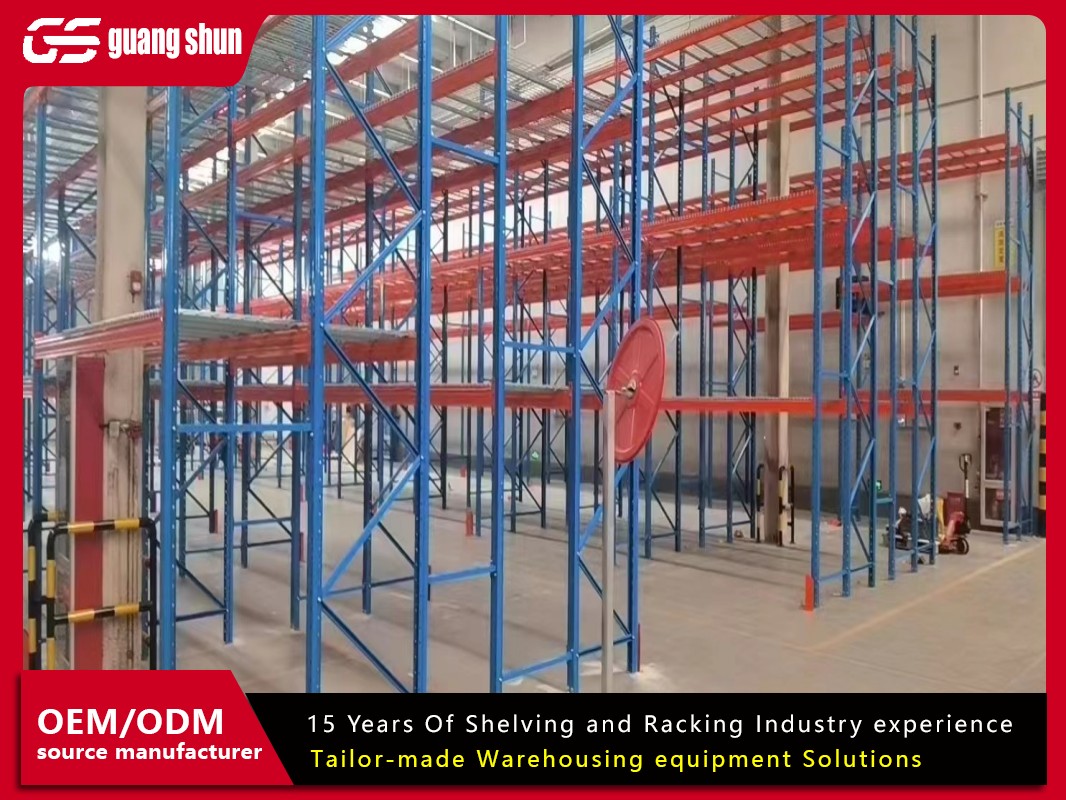
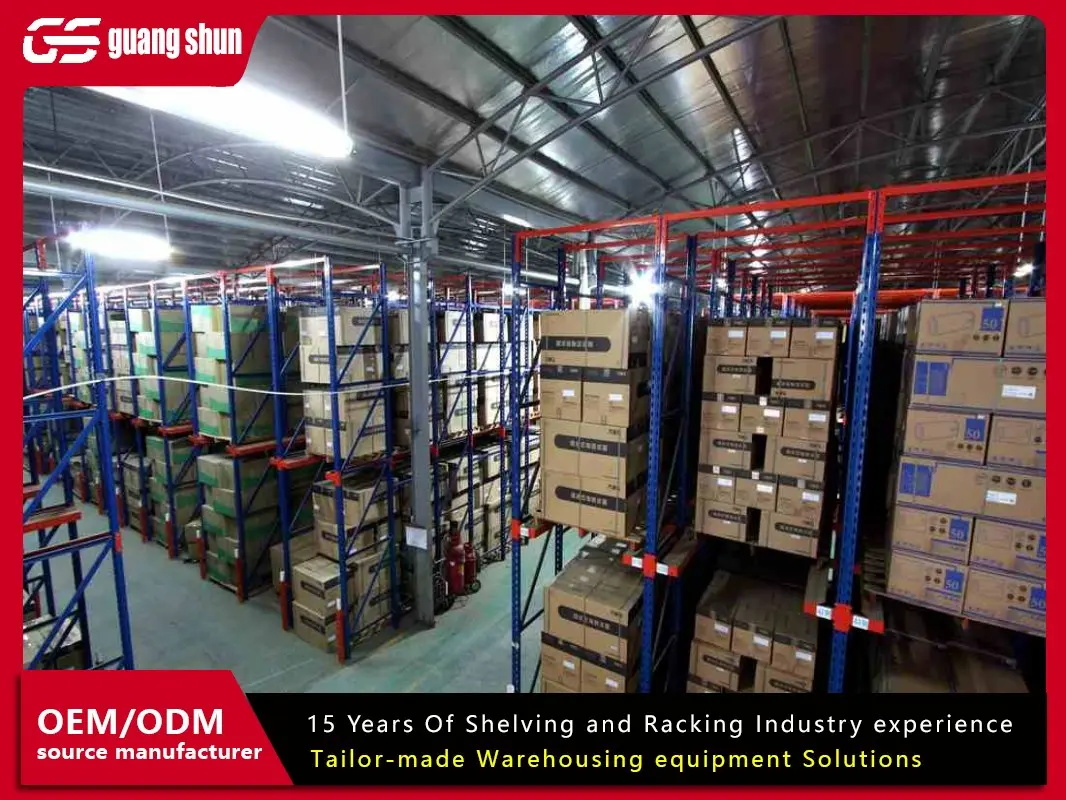
If you run a warehouse or distribution center, managing inventory flow is a constant challenge. Storing products is one thing, but ensuring the oldest stock is used first is another. That's where First In First Out Racking comes in.
This storage system is designed for one core principle: the first pallet loaded into the system is the first one to be retrieved. It's a direct answer to problems like product spoilage, obsolescence, and financial losses from dead stock.
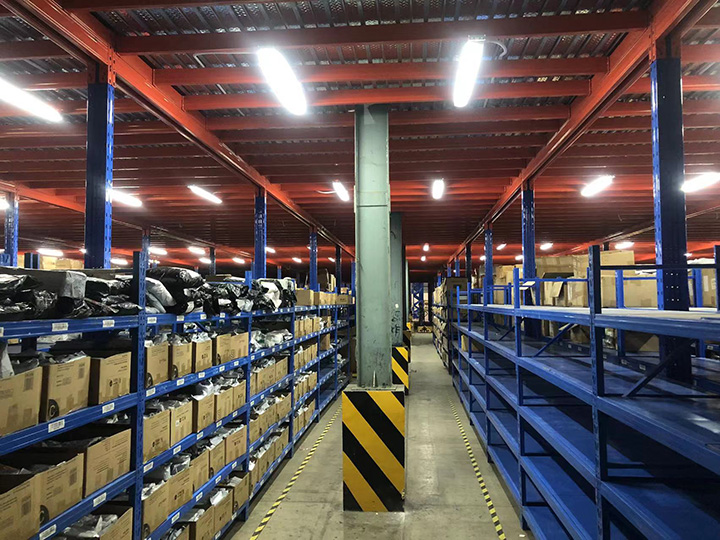
First In First Out Racking is a type of high-density pallet storage system. It enforces a chronological flow of goods. In simple terms, goods are loaded from one side of the racking system and unloaded from the opposite side.
This ensures automatic stock rotation. The oldest inventory at the back is always the next to be dispatched. It’s a physical manifestation of the FIFO accounting and inventory management method.
This system is crucial for products with a limited shelf life. It prevents older items from being buried behind newer ones.
The mechanics of a FIFO racking system are intuitive but highly engineered. Typically, these systems use gravity or guided flow to move pallets.
The most common design involves sloped rails or wheeled tracks. Pallets are loaded at the higher, "infeed" side of the racking bay. Using gravity, they then glide slowly and controlled down the slight incline towards the lower, "pick-face" side.
Each bay holds multiple pallets deep. As a worker removes the front pallet for order picking, the entire lane slides forward. This brings the next pallet into the pick position. New inventory is always loaded at the rear, maintaining the perfect First In First Out sequence.
This design minimizes the need for forklifts to navigate deep into narrow aisles. It enhances both speed and safety.
Why should a business invest in this specific system? The benefits are clear for the right operations.
The most significant advantage is perfect inventory rotation. For food, beverages, pharmaceuticals, or chemicals, this is non-negotiable. It drastically reduces waste from expired goods.
It also improves warehouse space utilization. By storing pallets multiple deep in a single lane, you use your cubic space more efficiently than with selective racking. This high-density storage can lower your cost per stored pallet.
Order picking becomes faster and more predictable. Operators always know where the next available pallet is—right at the front. This reduces travel time and search time.
Finally, it enhances inventory accuracy. The enforced flow makes it much harder for specific pallets to get lost or forgotten in the system.
While powerful, First In First Out Racking is not a universal solution. It's important to understand its limitations.
This type of system typically requires a higher initial investment than simple selective pallet racking. The gravity flow components and precise installation add to the cost.
It is also less flexible for handling products with multiple SKUs in a single lane. Each lane is usually dedicated to a single SKU to function correctly. This can be a constraint for operations with vast product variety.
Maintenance of the rollers or wheels is another factor. While generally robust, they require periodic inspection to ensure smooth, safe operation.
Furthermore, if inventory turnover is very slow, the capital tied up in the system may not justify the cost. It shines in medium to high-turnover environments.
The main alternative to a FIFO storage system is LIFO—Last In, First Out. The choice between them is driven by your product characteristics.
First In First Out Racking is essential for perishable goods, items with expiration dates, or those subject to model year changes. Think milk, batteries, or fashion goods.
LIFO racking, often seen in push-back rack systems, allows the last pallet stored to be the first retrieved. This can be suitable for non-perishable, identical goods like building materials (bags of cement, tiles) or stable raw materials where rotation is unimportant.
Choosing the wrong system can lead to significant financial loss. Always base your decision on the nature of your inventory first.
Several racking designs are built to achieve the First In First Out principle.
Drive-In Racking is a classic, though less pure, form of FIFO. Forklifts drive into the rack structure to place or retrieve pallets from the front of a lane. True FIFO requires disciplined operation to always access the rear pallet first, which can be challenging.
Gravity Flow Racking is the most automated and pure form of FIFO racking. It uses sloped rails with gravity rollers or wheels, as described earlier. It offers the highest throughput and most reliable rotation for fast-moving goods.
Pallet Flow Racking is essentially another name for gravity flow racking. It emphasizes the smooth movement of pallets through the lane from load to pick face.
Each type has its place, with gravity flow being the most dedicated to enforcing the FIFO rule.
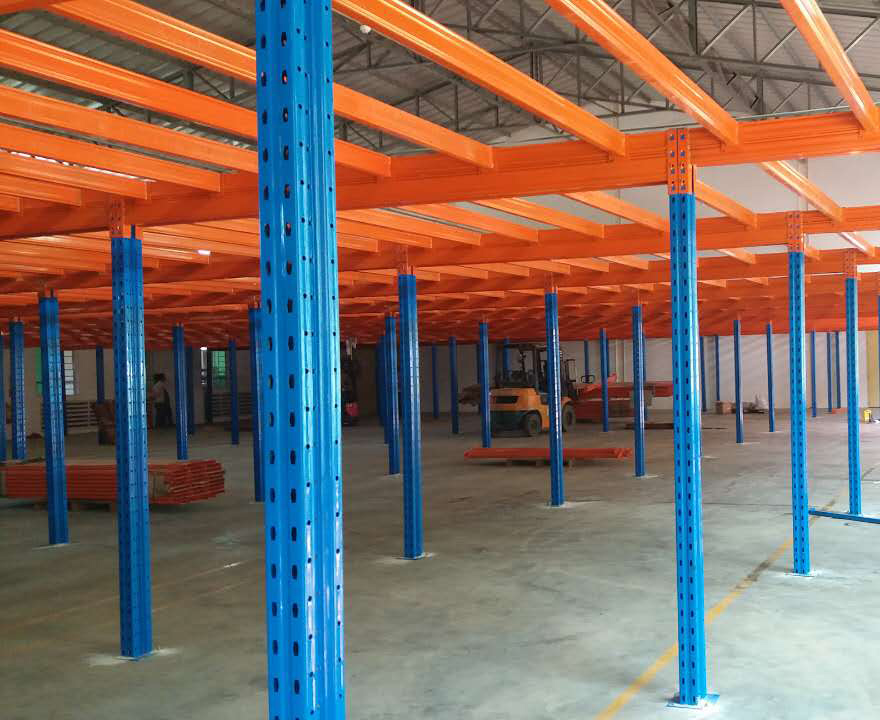
Where do you most commonly find First In First Out Racking in action? Any industry where time is a critical factor for product integrity.
The food and beverage industry is the prime example. Warehouses for dairy, meat, frozen goods, and canned products rely on it to prevent spoilage and ensure freshness.
The pharmaceutical and healthcare sector depends on strict lot tracking and expiration date management. FIFO storage systems are a foundational part of compliance.
Chemical and paint manufacturers also use these systems. Many chemical products have a stable but finite shelf life that must be managed.
Even in non-perishable sectors, like automotive parts for current model years, FIFO ensures older stock is circulated before newer arrivals.
Implementing the racking is just the start. Proper operational practices are key to success.
Always dedicate a single SKU per lane. Mixing products in one lane breaks the First In First Out principle immediately.
Ensure clear labeling and signage at both the load and unload sides. Operators must never confuse the inflow and outflow points.
Establish strict loading procedures. Supervisors should verify that new stock is consistently placed at the correct rear loading bays.
Regularly audit lane depth and product flow. Check for any jams or stalling pallets that could disrupt the automatic rotation. A blocked lane defeats the entire purpose of the system.
To maximize efficiency, your FIFO racking system should not operate in a silo. Integration with a Warehouse Management System (WMS) is powerful.
A modern WMS can direct forklift operators to the exact rear loading bay for a specific product. It also instructs pickers from the correct front facing lane.
This integration provides real-time visibility into stock levels per lane. It can trigger replenishment tasks and provide crucial data for inventory forecasting.
The combination of physical First In First Out flow and digital intelligence creates a seamless, high-velocity operation. It minimizes human error and maximizes throughput.
Q1: Is First In First Out Racking only for perishable goods?
A1: While it is essential for perishable goods, FIFO racking is also highly beneficial for any product with an expiration date, lot number tracking requirements, or where obsolescence is a risk, such as electronics or seasonal items.
Q2: How deep can a typical FIFO lane be?
A2: Lane depth can vary significantly based on the system's design and weight capacity. Common configurations range from 3 to 10 pallets deep, and sometimes even more for very high-density, uniform product storage.
Q3: What is the main difference between Drive-In and Gravity Flow FIFO systems?
A3: The main difference is manual operation vs. automated flow. In drive-in racking, a forklift must enter the lane to access each pallet, relying on discipline for FIFO. Gravity flow racking uses slopes and rollers to move pallets automatically to the pick face, enforcing FIFO by design.
Q4: Can FIFO racking be used for slow-moving inventory?
A4: It can, but it is often not cost-effective. The higher investment in a FIFO system is best justified by medium to high-velocity inventory. For very slow-moving goods, simpler and cheaper selective racking is usually sufficient.
Q5: Are there significant safety concerns with these systems?
A5: As with all storage systems, safety is paramount. Properly designed and installed FIFO racking includes brakes and speed controllers to prevent pallets from rolling too fast. Regular safety inspections of the structure and flow mechanisms are critical to prevent accidents or product damage.

 Wechat
Whatsapp
Wechat
Whatsapp