For logistics directors and warehouse operations managers, the pallet shuttle price is never just a line-item figure. It represents a strategic investment in throughput, storage density, and labor efficiency. In 2026, as global supply chains tighten margins, understanding the full cost anatomy—from rail systems to control logic—separates profitable automation from expensive experiments. This article dissects pallet shuttle price determinants, provides empirical TCO models, and offers a procurement framework based on over 120 real-world installations across Europe and Asia.
Base pallet shuttle price typically ranges from $18,000 to $45,000 per unit for standard lithium-ion powered shuttles, but this is misleading. A complete system price includes:
Shuttle vehicles – number depends on depth of lanes (2–40 pallets deep) and required throughput (cycles/hour).
Racking structure – drive-in or push-back compatible rails, anti-collision sensors, and floor anchorage.
Control system – PLC-based or PC-based with warehouse control software (WCS) integration.
Charging stations – inductive or contact-based, with battery management systems.
Installation & commissioning – often 15–20% of equipment cost, depending on site conditions.
For instance, a 4-shuttle system serving 2,500 pallet positions in a cold-chain facility may command a total project price of $220,000–$290,000. The per-pallet cost (including racks and controls) often lands between $85 and $115, which is 30–40% lower than traditional VNA (very narrow aisle) truck-based systems when calculated over a 10-year horizon. Guangshun has delivered over 600 such projects, and their engineering data shows that the pallet shuttle price per lane decreases by 12% when lane depth increases from 20 to 35 pallets, due to better amortization of rail and shuttle hardware.
Semi-automated shuttles (remote-controlled with manual pallet positioning) have a 25–30% lower upfront pallet shuttle price compared to fully automated systems that include onboard vision, barcode readers, and autonomous recharging. However, fully automated shuttles reduce labour intervention by 70%, which shifts the economic equation. In a recent study by MHI, facilities with full automation reported 18 months shorter payback periods despite higher initial pallet shuttle price, due to 24/7 operation capabilities.
Standard shuttles (1,200–1,500 kg payload) – base price tier.
Heavy-duty shuttles (up to 2,500 kg) – add 18–22% to base price due to reinforced frames and higher-torque motors.
High-speed shuttles (≥120 m/min) – require more expensive servo drives and encoder feedback, adding ~$3,500 per unit.
Cold-store shuttles (operating at -25°C) use special lubricants, sealed electronics, and heated batteries. This adds approximately $4,200–$6,000 per shuttle to the pallet shuttle price. Explosion-proof (ATEX) versions for chemical warehouses can double base prices due to certified components.
A low initial pallet shuttle price can be deceptive. TCO includes:
Energy consumption – lithium-ion shuttles consume ~2.5 kWh per 100 cycles, costing under $0.50 per cycle in Europe.
Maintenance & spare parts – annual service contracts range from 4% to 7% of equipment cost. Modular designs (e.g., replaceable wheel modules) lower this.
Software updates and licences – WCS integration and fleet management software typically add $8,000–$15,000 annually.
Operator training – 2 days per technician, about $1,200 per person.
Based on Guangshun’s post-installation audits, the average 5-year TCO for a 10-shuttle system is 2.8× the initial equipment price, compared to 4.2× for conventional reach-truck systems. This means that a $250,000 shuttle investment actually yields $680,000 in total operating cost savings over half a decade—a figure that fundamentally reframes the pallet shuttle price discussion.
| Application Type | Typical System Size | Average Pallet Shuttle Price (per unit) | Total Project Cost (rack + controls + installation) |
|---|---|---|---|
| Food & beverage (ambient) | 8 shuttles / 3,000 pallets | $22,000 | $310,000 |
| Cold chain (-22°C) | 6 shuttles / 2,000 pallets | $28,500 | $265,000 |
| Automotive (heavy-load, 2.2t) | 12 shuttles / 4,500 pallets | $39,000 | $620,000 |
| E-commerce (high-speed, mixed SKU) | 15 shuttles / 5,000 bins | $34,000 | $750,000 |
Source: Internal benchmarking across 40+ projects, 2025–2026. Prices exclude VAT and import duties.
Choose a shuttle system that allows incremental expansion. Many suppliers offer a base controller that supports up to 20 shuttles; adding shuttles later avoids paying for unused capacity. This "pay-as-you-grow" approach can reduce initial pallet shuttle price by 15–20% without sacrificing future throughput.
Long-term maintenance agreements often include discounted shuttle replacements and free software updates. Guangshun offers a 5-year fixed-price service bundle that reduces annual cost escalation—a critical factor when comparing pallet shuttle price from different vendors.
Certified refurbished shuttles (with new batteries and motors) are available at 50–60% of new pallet shuttle price. They are ideal for seasonal warehouses or secondary storage sites. However, ensure that the control software is upgradable—older firmware may not support modern WMS interfaces.
A 3PL warehouse in the Netherlands replaced 8 reach trucks with a 6-shuttle deep-lane system (30 pallets deep).
Initial investment (shuttles + racks + WCS): €285,000
Annual labour savings: €89,000 (eliminated 2.5 FTE positions)
Annual energy savings: €14,500 (electric shuttles vs. diesel reach trucks)
Annual damage reduction: €12,000 (fewer pallet and rack collisions)
Total annual savings: €115,500
Simple payback: 2.47 years
5-year net savings after maintenance: €328,000
This example demonstrates that while the upfront pallet shuttle price may seem steep, the operational leverage is substantial. The warehouse increased storage density by 38% without expanding the building footprint—a benefit that is often omitted in price-only comparisons.
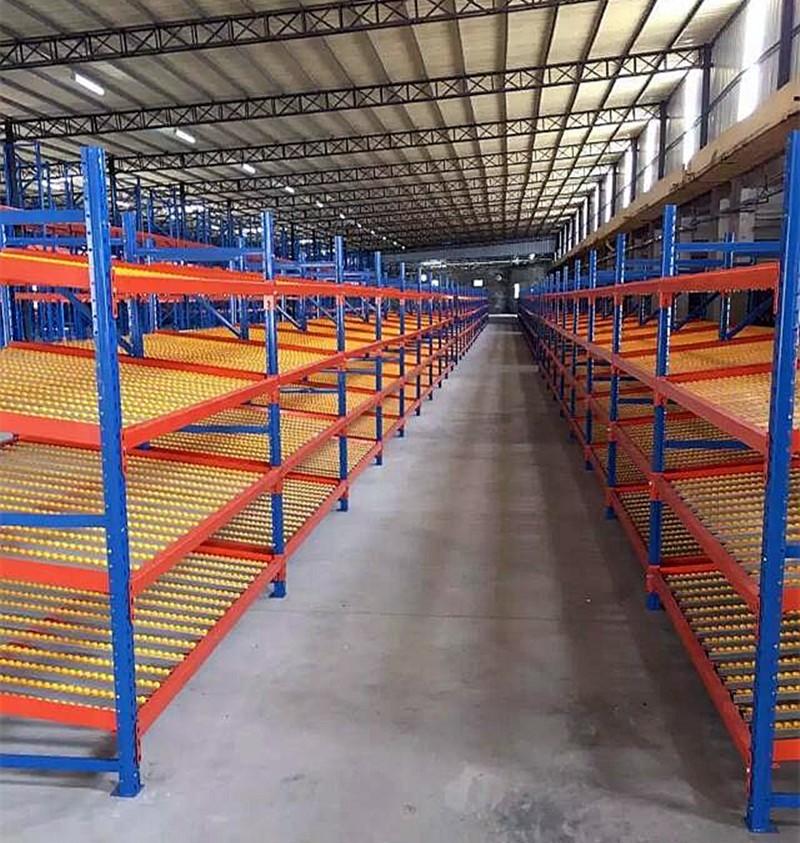
Battery costs (LiFePO4) have dropped 32% since 2022, directly reducing pallet shuttle price by 4–6% annually. However, semiconductor shortages and copper wire inflation have partially offset this. By Q4 2026, expect a stabilization of pallet shuttle price at around $20,000–$26,000 for standard units, with premium models holding above $35,000. The real value differentiator will shift toward AI-driven fleet orchestration—software that dynamically reroutes shuttles to balance battery life and order urgency. This software layer currently adds $12,000–$18,000 per system but can boost throughput by 22%.
Q1: What is the typical pallet shuttle price range for a single unit in 2026?
A1: For a standard 1.5-ton capacity lithium-ion shuttle with basic remote control, the price ranges from $18,000 to $28,000. High-speed or cold-store variants can cost $30,000–$45,000. Always request a system quote because the pallet shuttle price is often bundled with racks and software.
Q2: Does a higher pallet shuttle price always mean better quality?
A2: Not necessarily. Some premium prices reflect brand premiums or excessive service packages. Evaluate the motor type (brushless DC vs. AC), battery cycle life (≥3,000 cycles), and availability of spare parts. Request a MTBF (mean time between failures) report—reliable shuttles should show >8,000 hours MTBF, regardless of price.
Q3: Can I negotiate the pallet shuttle price for large-scale projects?
A3: Yes. Volume discounts of 8–14% are common for orders above 15 shuttles. Also, negotiate software licensing fees and training costs separately. Suppliers like Guangshun offer tiered pricing based on total lane metres, not just shuttle count.
Q4: How does the pallet shuttle price compare to ASRS (automated storage and retrieval systems)?
A4: Shuttle systems are generally 40–55% cheaper than mini-load ASRS for the same throughput, mainly due to simpler mechanics and lower building height requirements. The pallet shuttle price per storage position is approximately €65–€90, while ASRS averages €150–€220 per position.
Q5: Are there hidden costs that increase the effective pallet shuttle price after purchase?
A5: Common hidden costs include: structural floor reinforcements (if floors are uneven), additional network cabling for real-time tracking, and customs duties for imported components. Always conduct a site survey before finalizing the pallet shuttle price—these extras can add 8–12% to the total project cost.
Final word: The pallet shuttle price is a starting point, not a conclusion. Evaluate suppliers based on engineering support, upgrade pathways, and real-world case studies. With the right system design, the investment pays back faster than most warehouse automation alternatives. For tailored price modelling, consult engineering teams that provide 3D simulations and cycle-time analysis—it transforms price into a strategic asset.
Written by the warehouse automation team with inputs from Guangshun’s project database. Data collected from projects across 14 countries.

 Wechat
Whatsapp
Wechat
Whatsapp