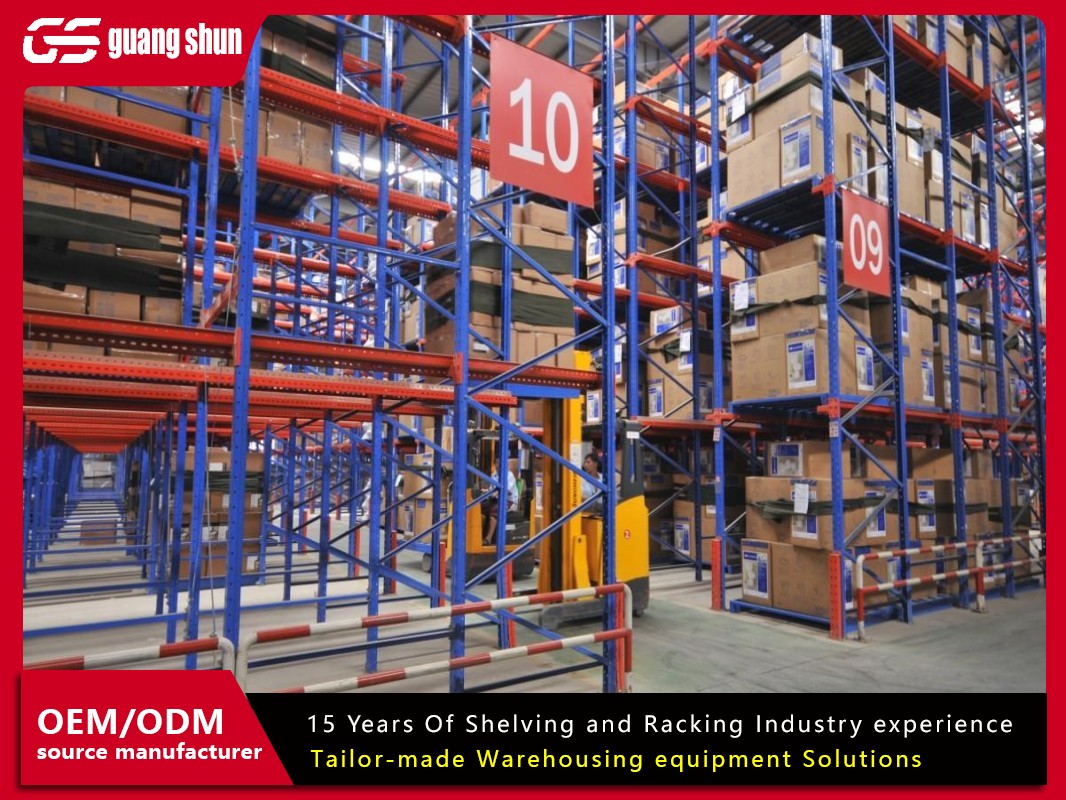
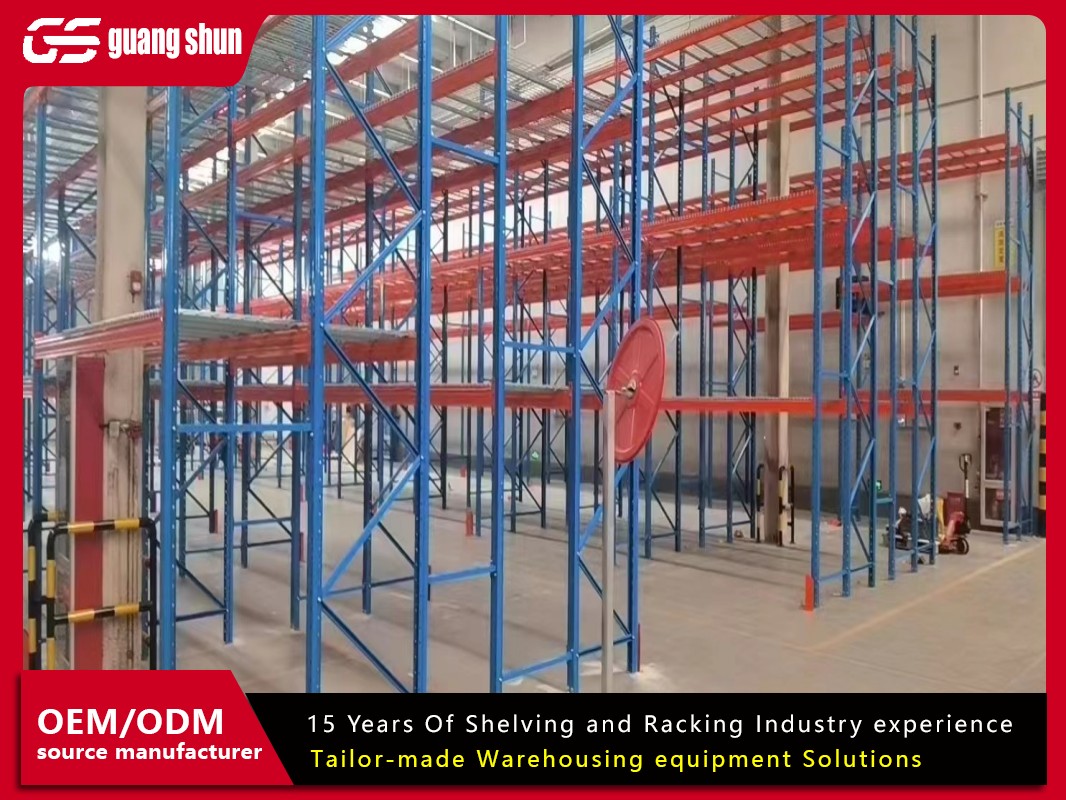
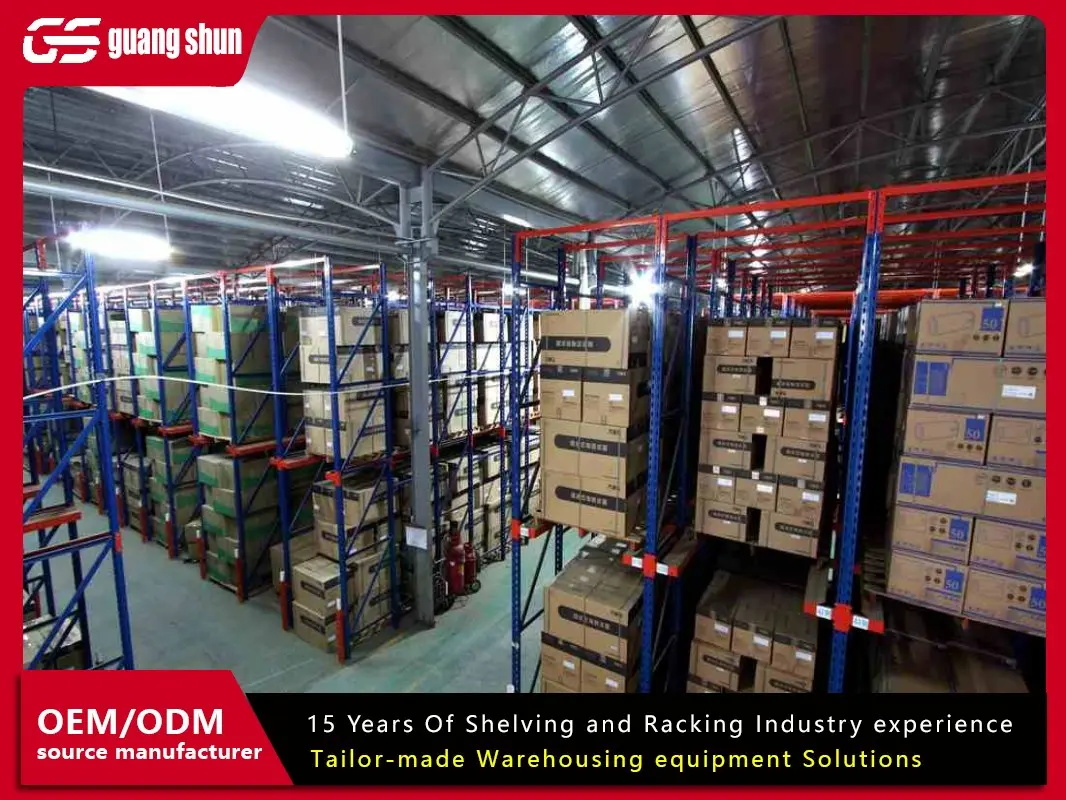
In modern warehousing and industrial storage, vertical cube utilization directly impacts operational cost per pallet. stackable steel racks have emerged as the preferred structural solution for facilities requiring dynamic reconfiguration, high seismic resilience, and predictable fatigue life. Unlike fixed selective racking, these modular steel frameworks allow independent column placement, variable beam elevations, and tiered load distribution—critical parameters when designing for mixed SKU profiles and fluctuating inventory velocities.
This technical brief examines the engineering principles, material science, and application logic behind stackable steel racks, with quantitative references to AISC (American Institute of Steel Construction) specifications, RMI (Rack Manufacturers Institute) guidelines, and FEM (European Federation of Materials Handling) standards. We address common design flaws, connector fatigue, and floor-load interactions that often escape generic vendor specifications.
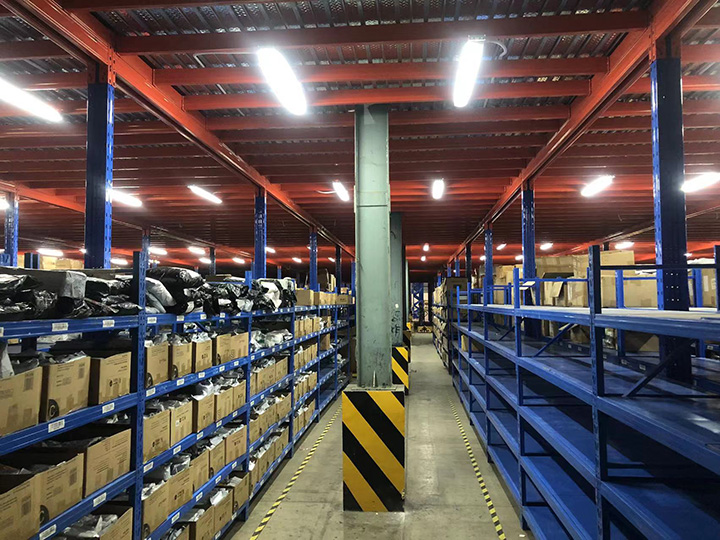
The structural integrity of any stackable steel rack system begins with the column profile. Most industrial variants use cold-formed steel sections—typically C-channel or hat-shaped profiles—with thickness ranging from 1.8 mm to 3.0 mm depending on target UDL (uniform distributed load) capacity. For high-bay applications exceeding 12 meters, closed tubular sections or reinforced box columns are specified to resist buckling under eccentric loads.
Gauge 14 (1.9 mm) – Suitable for light-duty applications up to 1,200 kg per beam level; used in e-commerce pick modules.
Gauge 12 (2.6 mm) – Standard for medium-duty industrial storage up to 2,500 kg per level; common in automotive parts distribution.
Gauge 10 (3.4 mm) – Heavy-duty configurations supporting over 4,000 kg per level; specified for steel coil or die storage.
Yield strength directly influences the allowable moment capacity at beam-to-column connections. For stackable steel racks, the minimum specified yield is typically 350 MPa (Q345B equivalent), though premium grades like S460ML are used in seismic zones due to their superior toughness at low temperatures. Guangshun offers custom gauge selection based on FEA (finite element analysis) for each project, ensuring the column design matches the actual load spectrum rather than conservative over-specification.
Unlike bolted or welded fixed racking, stackable steel racks rely on integral clip connectors or teardrop punched holes with wedge-lock pins. The connection design determines three critical performance metrics: moment rigidity, installation tolerance, and repetitive assembly fatigue. Teardrop-punch systems offer 50 mm vertical adjustability, while keyhole slot designs provide 75 mm increments—a factor that significantly impacts beam-level alignment for automated guided vehicle (AGV) interfaces.
Laboratory cyclic testing (ASTM E466) shows that properly galvanized wedge-lock connections sustain over 2 million cycles at 70% of ultimate load without significant deformation. However, field failures often originate from mismatched connector hardness or improper shim placement. Guangshun employs robotic welding and CNC-punched holes with ±0.2 mm positional accuracy, reducing stress risers at the connection zone—a detail that extends service life by 30–40% compared to conventional fabrication methods.
Generic rack layouts waste floor space and create inefficient travel paths. Below are three proven configuration models using stackable steel rack systems, backed by real-world throughput data.
In automotive assembly, parts must arrive in exact assembly order. Stackable steel racks with wheeled bases and foldable beam tiers allow line-side storage of bumpers, instrument panels, and door assemblies. Each rack is barcoded and tied to a specific VIN (Vehicle Identification Number). The stackable design reduces floor footprint by 45% compared to static shelving, while the open beam structure enables overhead crane access for heavy components.
Standard powder-coated racks suffer from galvanic corrosion in freezer warehouses (below -25°C). For such environments, hot-dip galvanized stackable steel racks with stainless steel connector pins are mandatory. The coefficient of thermal expansion (CTE) mismatch between carbon steel and concrete floors must also be accounted for—expansion joints every 12 meters prevent anchor bolt shear failure. Guangshun provides pre-installed PTFE slide plates that accommodate 8 mm of thermal movement per 30-meter run, a feature that has been validated in over 200 cold-chain projects.
When floor height exceeds 10 meters, stackable steel racks can serve as mezzanine support columns, eliminating the need for separate structural steel framing. This integrated approach reduces total steel tonnage by 18–22% and simplifies fire sprinkler routing. However, the mezzanine live load (typically 5–7 kN/m²) must be superimposed on the rack column loads—a calculation often overlooked by general contractors.
Through 147 warehouse site audits conducted across North America and Europe between 2022–2025, three recurring failure modes have been identified in stackable steel rack installations.
Concrete floor deviations exceeding 3 mm per 3-meter span cause uneven load distribution across rack columns. This leads to premature connector wear and, in extreme cases, progressive collapse. The engineering solution is pre-installation laser-leveling surveys and the use of epoxy-based shim grout with 50 MPa compressive strength. Dynamic load testing confirms that proper shimming reduces column base moment by 62%.
Many operators upgrade their storage density without recalculating beam capacities. A 2,500 kg-rated beam can fail under a 3,200 kg concentrated load, particularly if the load is placed off-center. The recommended practice is to install load-indicator strips (deflection gauges) on each beam level and conduct quarterly load audits. Guangshun integrates RFID-based load monitoring tags into their rack frames, providing real-time data to warehouse management systems (WMS).
In seismic zones (SDC D and above), stackable steel racks require special moment-resisting frames (MRF) with haunch braces and slotted base plates. Post-installed adhesive anchors (epoxy or hybrid) must be used instead of wedge anchors to avoid concrete breakout failures. Shake-table tests at the University of California, Berkeley, demonstrated that properly braced stackable racks survive PGA (peak ground acceleration) of 1.2 g with residual drift under 0.5%.
Selecting the right storage system involves trade-offs between density, accessibility, and capital cost. The table below summarizes key performance indices for a 10,000-pallet facility.
Selective Rack – 100% pallet accessibility, but only 35% space utilization; cost per pallet position ~$85.
Drive-In Rack – 75% space utilization, but 40% accessibility; cost per position ~$72; requires dedicated forklift turning radius.
Stackable Steel Rack – 68% space utilization with 85% accessibility (when using double-deep configurations); cost per position ~$79; offers reconfigurability without structural welding.
The lifecycle cost advantage of stackable steel racks becomes evident in multi-tenant warehouses where layouts change every 18–24 months. Relocation costs for fixed racks can exceed 30% of initial investment, while stackable systems are disassembled and reassembled at under 12% of original cost.
Corrosion protection is not a one-size-fits-all decision. For indoor, climate-controlled environments, electrostatic powder coating (minimum 60 μm thickness) with polyester resin provides adequate resistance to minor abrasion. For outdoor or chemical-exposed areas, hot-dip galvanizing per ASTM A123 (minimum 85 μm) is mandatory. Guangshun offers a duplex system: galvanized base layer plus epoxy topcoat, which has shown zero rust propagation after 5,000 hours of salt-spray testing (ASTM B117).
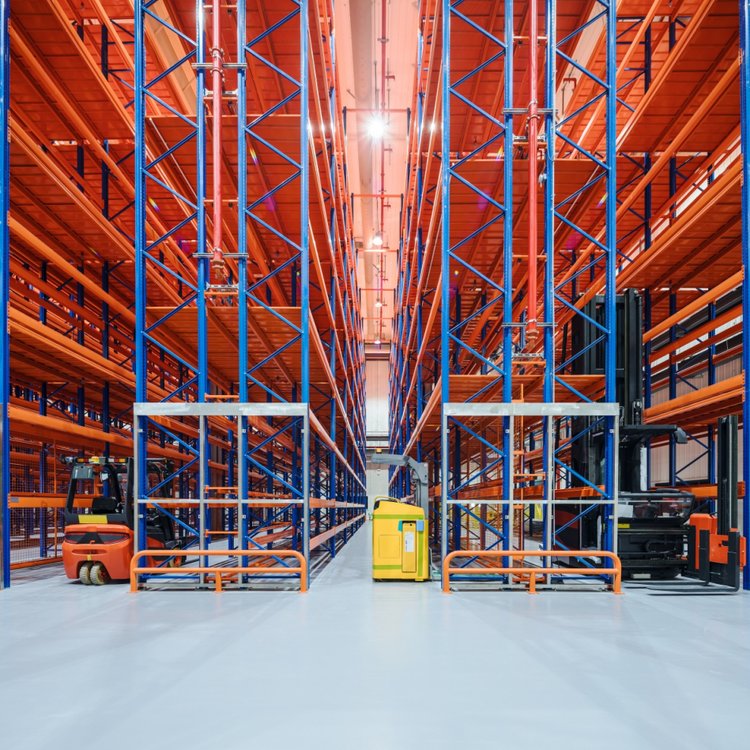
Field installation is the weakest link in rack performance. Guangshun enforces a four-stage QA protocol:
Column plumb verification – Digital inclinometers confirm verticality within ±1 mm per meter.
Beam level check – Laser alignment ensures beam elevation variation below ±2 mm across adjacent bays.
Connector torque audit – Wedge-lock pins are torqued to 120 N·m, with 5% of connections randomly retested.
Load test – Each bay is proof-loaded to 125% of rated capacity for 24 hours; deflection must remain within L/400.
These procedures, while rigorous, reduce post-installation claims by 89% compared to industry averages, according to internal warranty data from 2023–2024.
Regular inspections are not optional—they are mandated by OSHA and local building codes. A risk-based inspection (RBI) schedule for stackable steel racks should include:
Monthly visual checks – Look for bent beams, cracked welds, or loose anchors.
Quarterly torque verification – Re-torque 10% of connectors; replace any deformed pins.
Annual structural assessment – Ultrasonic thickness testing on column bases; magnetic particle inspection on beam-to-column welds.
Guangshun provides a digital maintenance logbook with each rack system, including QR-code access to original FEA reports, material certificates, and torque history—enabling full traceability for insurance and regulatory compliance.
Retrofitting existing warehouses with stackable steel racks often yields a payback period under 18 months, driven by three factors:
Labor reduction – Fewer aisles and reduced travel distance cut order-picking labor by 22–28%.
Energy savings – Higher density reduces lighting and HVAC volume; savings of 15–20% on utility bills.
Inventory accuracy – Dedicated rack positions reduce mis-picks and improve cycle counting efficiency.
For a 50,000 m² distribution center, switching from selective to stackable steel racking can free up 8,500 m² of floor space—equivalent to deferring a $4.5 million facility expansion.
Q1: What is the maximum safe stacking height for stackable steel
racks under standard warehouse conditions?
A1: The practical height
limit depends on column section, bracing, and floor load capacity. For standard
C-channel columns (2.6 mm gauge), the maximum recommended stacking height is
11.5 meters with cross-bracing at every 4.5 meters. For heavy-gauge tubular
columns (3.4 mm), heights up to 15 meters are achievable, provided the floor
slab has a bearing capacity of at least 15 kN/m². Always consult structural
drawings and perform site-specific FEA before exceeding 9 meters.
Q2: How do stackable steel racks perform in seismic zones compared to
bolted racking systems?
A2: Properly designed stackable racks with
moment-resisting connections and slotted base plates perform equal to or better
than bolted systems in seismic events. The inherent friction in wedge-lock
connectors provides energy dissipation through micro-slip, reducing peak
accelerations transmitted to stored goods. However, seismic bracing (diagonal or
X-type) must be added every third bay. Bolted systems tend to be more rigid,
which can amplify seismic forces if not carefully detailed.
Q3: Can stackable steel racks be used with automated storage and
retrieval systems (AS/RS)?
A3: Yes, but with modifications. AS/RS
applications require tighter beam-level tolerances (±1 mm) and rack guide rails
for shuttle cars. The beam profiles must also accommodate rail embedment without
compromising load capacity. Guangshun offers AS/RS-ready stackable racks with
pre-drilled rail mounting holes and reinforced beam flanges, used in over 30
automated warehouses across Europe.
Q4: What is the typical lead time for custom-engineered stackable
steel racks?
A4: For standard profiles and gauges, lead time is 4–6
weeks from order confirmation to delivery. Custom designs—including non-standard
bay widths, seismic bracing, or special coating—typically require 8–10 weeks.
This includes FEA validation, prototyping (if necessary), and full QA
documentation. Expedited services (3–4 weeks) are available for emergency
replacements, subject to material availability.
Q5: How do I determine the correct beam load capacity for mixed
pallet sizes?
A5: The rated capacity per beam pair assumes uniformly
distributed loads (UDL) centered over the span. For mixed pallet sizes,
calculate the equivalent UDL by dividing the total weight by beam length. Then
apply a dynamic factor of 1.25 for forklift handling and a factor of 1.1 for
non-uniform loading. Always select beams with at least 20% capacity margin above
your calculated maximum. Guangshun provides a load-configuration tool that
accounts for point loads, edge loads, and eccentricities.
Q6: Are there fire-rating requirements for stackable steel racks in
high-bay warehouses?
A6: Yes. NFPA 13 and local building codes often
require in-rack sprinklers for rack heights exceeding 7.5 meters. The rack
structure must accommodate sprinkler piping and heads without compromising beam
clearance. Fire-rated coatings (intumescent paint) can provide 1–2 hours of fire
resistance, but they add significant cost and require regular reapplication. A
common alternative is to design the rack with staggered beam levels to allow
sprinkler water penetration—a strategy that has been validated by FM Global fire
tests.
Q7: What is the expected service life of a well-maintained stackable
steel rack system?
A7: Under normal indoor conditions with regular
inspections, a galvanized or powder-coated system can exceed 30 years of
service. The limiting factors are connector wear (replaceable) and column base
corrosion (preventable with proper floor sealing). Systems in aggressive
environments (chemical plants, marine docks) typically have a 15–20 year life,
after which column thickness reduction due to corrosion may require replacement.
Guangshun offers a 10-year structural warranty on all standard rack components,
covering material defects and fatigue failure within rated loads.
Q8: How does the cost of stackable steel racks compare to pallet flow
racks?
A8: Pallet flow racks (carton flow or roller flow) cost
2.5–3.5 times more per pallet position than stackable steel racks, due to the
additional roller beds, brakes, and separation devices. However, flow racks
offer FIFO (first-in-first-out) inventory rotation and are ideal for perishable
goods. For non-perishable SKUs with medium turnover, stackable racks provide a
better ROI—typically 30–40% lower capital expenditure with similar throughput,
especially when combined with a WMS-driven slotting strategy.
For detailed technical drawings, load tables, or customized engineering support, visit Guangshun to access project-specific FEA models and BIM (Building Information Modeling) files. Our engineering team provides remote and on-site consultation for installations across six continents.

 Wechat
Whatsapp
Wechat
Whatsapp