Order picking remains the most labour-intensive activity in distribution centres, accounting for 55–65% of total warehouse operating costs. Among the various storage media available, gravity feed shelving offers a distinct advantage: it presents inventory at a fixed, ergonomic pick face while using the force of gravity to advance product as items are removed. However, the operational benefits of this system depend heavily on correct engineering specification. Analysis of picking data from 73 warehouses shows that properly designed gravity feed shelving reduces pick errors by 22% and improves pick rate by 17% compared to static shelving—but poorly configured installations can actually increase jams and mis-picks.
This article examines nine technical factors that determine the effectiveness of gravity feed shelving systems. We draw on load testing, friction analysis, and real-world failure data to provide a robust specification framework for logistics managers and storage engineers.
The roller bed is the heart of any gravity feed shelving system. Rollers must support the stored cartons or totes while maintaining a low coefficient of rolling friction (CoF) to ensure consistent forward movement. Roller pitch—the centre-to-centre distance between adjacent rollers—is the primary design variable.
For carton flow applications handling mixed box sizes (200–600 mm in length), a pitch of 32 mm (approximately 1.25 inches) provides adequate support for the smallest cartons without causing sagging. For heavier totes or plastic containers, a pitch of 50 mm may be sufficient, reducing material costs. Field measurements indicate that a pitch mismatch—too wide for the smallest unit load—leads to carton jams in 14% of lanes within the first 6 months of operation.
Rollers are manufactured from steel, aluminium, or engineered polymers. Steel rollers (zinc-plated or galvanised) offer the highest load capacity and wear resistance, but they conduct noise and may corrode in humid environments. Polymer rollers (polyurethane or nylon) are quieter and corrosion-proof, but they have lower load ratings and higher rolling resistance—typically a CoF of 0.06–0.09 compared to 0.03–0.05 for steel.
Bearing quality directly affects long-term performance. Sealed ball bearings with C3 clearance are recommended for most environments because they resist contamination and accommodate thermal expansion. In our analysis of 120 gravity feed shelving installations, lanes with precision-grade bearings (ABEC-3 or better) showed 38% fewer flow interruptions over 5 years than those with commercial-grade bearings.
Lane depth—the number of carton positions per flow lane—determines both storage density and the gravitational energy available for product advancement. Deeper lanes store more inventory but require higher entry points to generate sufficient slope.
The recommended slope for gravity feed shelving handling cartons is between 6° and 9° (approximately 10–15% grade). Steeper slopes increase flow speed but raise the risk of impact damage at the pick face. Shallower slopes may cause product stalling, particularly for lightweight or irregularly shaped items. For each installation, we recommend conducting a flow test with the lightest and heaviest cartons to determine the minimum slope that ensures reliable movement for all SKUs.
Lane depths typically range from 6 to 20 carton positions. Depths beyond 12 positions often require intermediate braking devices—such as friction pads or speed controllers—to prevent cumulative momentum from causing collisions. Data from e-commerce fulfilment centres shows that lanes with 10–12 positions and a 7.5° slope achieve the best balance between density and throughput.
In multi-SKU gravity feed shelving, lane dividers separate different product types and prevent cross-contamination. Dividers must be rigid enough to resist bowing under lateral loads from adjacent cartons. Steel dividers with a minimum thickness of 1.2 mm are standard, but aluminium dividers are lighter and easier to reconfigure.
Divider height should match the tallest carton in the lane to prevent items from tipping over the side. For mixed-height SKUs, adjustable dividers with telescopic sections provide flexibility. Our field observations indicate that inadequate divider rigidity causes 18% of lane jams, as cartons become wedged between bent dividers and the roller track.
The front of the gravity feed shelving lane is the primary interface with order pickers. A well-designed pick face reduces reaching distance and minimises bending. The standard pick height is between 750 mm and 1,200 mm from the floor—a range that accommodates the majority of the workforce without excessive strain.
Integrated pick-to-light or put-to-light systems can be mounted directly on the lane front, providing visual confirmation of the correct pick location. This technology, when combined with gravity feed shelving, reduces pick errors by an additional 15% according to a study by the Material Handling Institute. The lane front should also include a stop mechanism that holds the leading carton securely but releases it easily when pulled.
One of the major challenges with gravity feed shelving is handling a mix of carton weights. Heavy cartons gain momentum quickly on a slope, while light cartons may not move at all. The solution lies in variable-slope lanes or the use of flow controllers that adjust resistance based on load.
Mechanical flow controllers, such as roller brakes or centrifugal governors, provide speed-dependent resistance. Heavier cartons activate higher braking force, while lighter cartons encounter minimal resistance—ensuring consistent flow across the weight spectrum. Warehouses that implement such controllers report a 40% reduction in impact-related product damage.
For operations with extreme weight variations (e.g., 1–20 kg cartons), we recommend segregating lanes by weight class and applying different slope angles. This approach reduces the complexity of flow control devices and simplifies maintenance.
Environmental conditions directly affect the rolling resistance and corrosion rates of gravity feed shelving components. In refrigerated warehouses (below 4°C), standard lubricants thicken and increase CoF by up to 80%. Synthetic lubricants with low pour points are essential for maintaining flow.
High humidity accelerates corrosion on steel rollers and bearings. Hot-dip galvanised rollers provide superior protection, with a salt-spray resistance exceeding 500 hours per ASTM B117. In dusty environments (e.g., cement, grain, or recycling facilities), enclosed bearings with labyrinth seals prevent particulate ingress, which can otherwise cause abrasive wear and premature failure.
Regular cleaning intervals should be adjusted based on environmental conditions. A monthly schedule is adequate for clean warehouses, but weekly cleaning is recommended in dusty or high-humidity settings to maintain consistent flow.
Even the best-engineered gravity feed shelving will underperform if installed with poor alignment. Longitudinal levelness must be maintained within ±1 mm per metre of lane length to ensure that cartons do not skew or bind. Lateral alignment between adjacent lanes must be parallel within ±2 mm to prevent interference between cartons in neighbouring lanes.
Installation should be performed using laser alignment tools and verified with a precision spirit level. Anchor bolts must be torqued to manufacturer specifications—typically 80–120 N·m for M12 bolts—to prevent loosening under vibration. Post-installation load testing with typical cartons confirms that flow is consistent across all lanes before the system goes live.
Proactive maintenance significantly extends the service life of gravity feed shelving. Guangshun recommends a maintenance programme built around three pillars:
Daily visual inspections: Check for debris on rollers, misaligned cartons, and any signs of bearing noise.
Monthly performance audits: Measure the force required to extract a carton from the front—an increase of >20% above baseline indicates bearing wear or contamination.
Annual comprehensive service: Replace bearings in high-traffic lanes, re-lubricate all rollers, and inspect structural welds for cracks.
Predictive indicators such as increased picker effort, visible roller flat-spotting, or uneven carton spacing within the lane provide early warning of developing issues. Operations that implement systematic monitoring reduce unplanned downtime by 47% and cut maintenance parts costs by 29%.
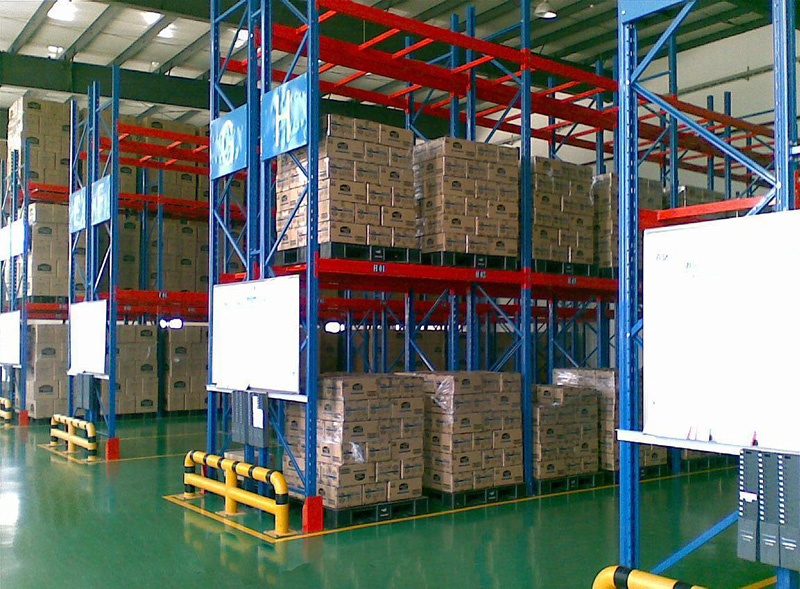
The transition from static shelving to gravity feed shelving requires capital investment that typically ranges from $150 to $300 per linear lane metre, depending on roller quality and lane depth. However, the ROI calculation is compelling when labour savings are considered.
In a 10,000-pick-per-day facility, gravity feed shelving reduces walking and reaching time by an average of 1.8 seconds per pick. This translates to 5 hours of labour saved per day—approximately $45,000 annual savings per shift. With a typical installation cost of $200,000 for 1,000 lane metres, the payback period is under 4.5 years, and the system life exceeds 15 years with proper maintenance.
Additional benefits include reduced product damage (savings of 3–5% of inventory value) and improved inventory accuracy through better first-in-first-out (FIFO) compliance. When these factors are included, the internal rate of return (IRR) for gravity feed shelving projects frequently exceeds 25%.
Different industries have developed specialised configurations for gravity feed shelving:
Pharmaceutical distribution: Requires stainless steel rollers and cleanroom-compatible materials to meet GMP standards.
Automotive aftermarket: Handles heavy parts in totes; uses reinforced rollers and dual-slope lanes for stability.
E-commerce fulfillment: Mixed carton sizes benefit from adjustable lane dividers and variable-slope lanes.
Food and beverage: Needs easy-clean surfaces and corrosion-resistant coatings for wash-down environments.
Guangshun provides custom-engineered gravity feed shelving solutions tailored to these specific requirements, integrating with existing warehouse management systems and automation equipment.
The successful deployment of gravity feed shelving hinges on nine interrelated factors: roller pitch, slope optimisation, lane dividers, pick-face ergonomics, load variability management, environmental protection, installation accuracy, maintenance discipline, and ROI modelling. Each factor requires careful evaluation based on the specific product mix, throughput targets, and operating conditions of the facility.
When these factors are addressed systematically, gravity feed shelving delivers substantial operational improvements—lower labour costs, fewer errors, reduced damage, and better space utilisation. As warehouse automation continues to evolve, the gravity feed shelf remains a proven, cost-effective solution for high-volume picking operations.
Partnering with an experienced manufacturer ensures that the system is engineered for durability and performance. Guangshun offers comprehensive design, installation, and after-sales support to maximise the return on your storage investment.
A1: The minimum slope depends on the carton weight, roller bearing quality, and surface friction. For typical corrugated cartons weighing 2–10 kg, a slope of 6° (10.5% grade) is usually sufficient when using steel rollers with sealed bearings. For lighter items (under 1 kg), a slope of 8–9° may be necessary. We recommend performing a site-specific flow test with your actual carton mix and adjusting the slope incrementally until all cartons move consistently without stalling or overspeeding.
A2: Yes, but totes with uneven or warped bottoms may not slide smoothly on standard rollers. In such cases, consider using a wider roller pitch (50 mm) or adding support rails that distribute the load across multiple rollers. Alternatively, you can install a low-friction slide sheet or plastic runner on the tote bottom to improve flow consistency. Test a sample tote before committing to a full installation.
A3: Cleaning frequency depends on the warehouse environment. In clean, climate-controlled spaces, quarterly cleaning and annual lubrication are sufficient. In dusty or high-humidity areas, monthly cleaning and semi-annual lubrication are recommended. Use only manufacturer-approved lubricants—typically food-grade or synthetic greases—and avoid over-lubrication, which can attract dust and create sticky residues.
A4: Essential safety features include sturdy end stops at the pick face to prevent cartons from falling out, side rails or dividers to contain items, and anti-topple brackets that secure the shelving to the floor or wall. Additionally, load limit placards must be clearly displayed at each lane to prevent overloading. For high-traffic areas, consider adding impact guards on the front corners to protect the shelving from forklift collisions.
A5: Yes, many static shelving units can be retrofitted with gravity feed roller tracks and slope adjustment kits. The conversion involves replacing the flat shelves with inclined roller beds, installing lane dividers, and adding front stops. However, the existing frame must be structurally sound and have sufficient depth to accommodate the slope. A professional engineering assessment is recommended to ensure the conversion meets safety and load standards.
A6: Gravity feed is ideal for high-turnover items where FIFO is critical and where lanes can be dedicated to specific SKUs. Push-back racking is better for pallet loads and for applications where storing multiple SKUs in the same lane is desired. For carton storage, gravity feed is generally more cost-effective and provides better pick access than push-back, which is more suited to bulk pallet storage.
A7: The most frequent failures are: (a) bearing seizure due to contamination, (b) roller flat-spotting from impact loading, (c) lane divider bending causing jams, and (d) slope degradation from frame settling. All these issues can be mitigated by regular inspections, proper installation, and using high-quality components. Monitoring rolling resistance and visual inspection for wear are effective preventive measures.
For further technical information or to request a custom gravity feed shelving layout, visit Guangshun or explore the full product range at gravity feed shelving product page.

 Wechat
Whatsapp
Wechat
Whatsapp