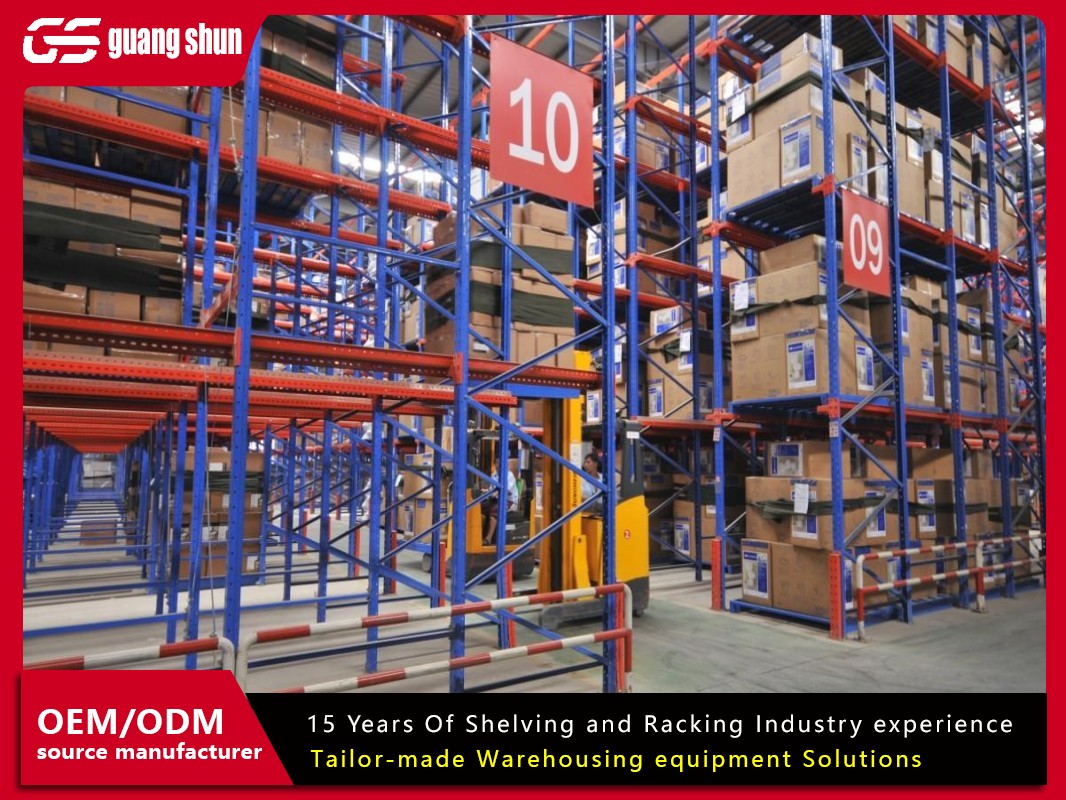
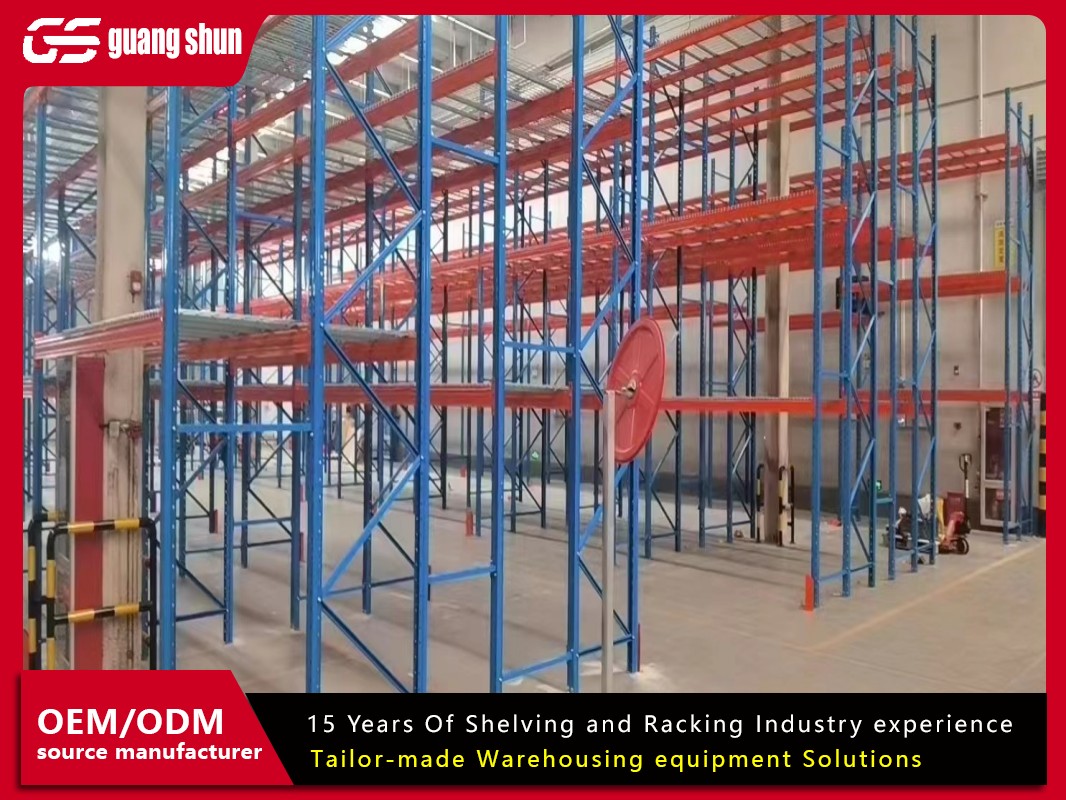
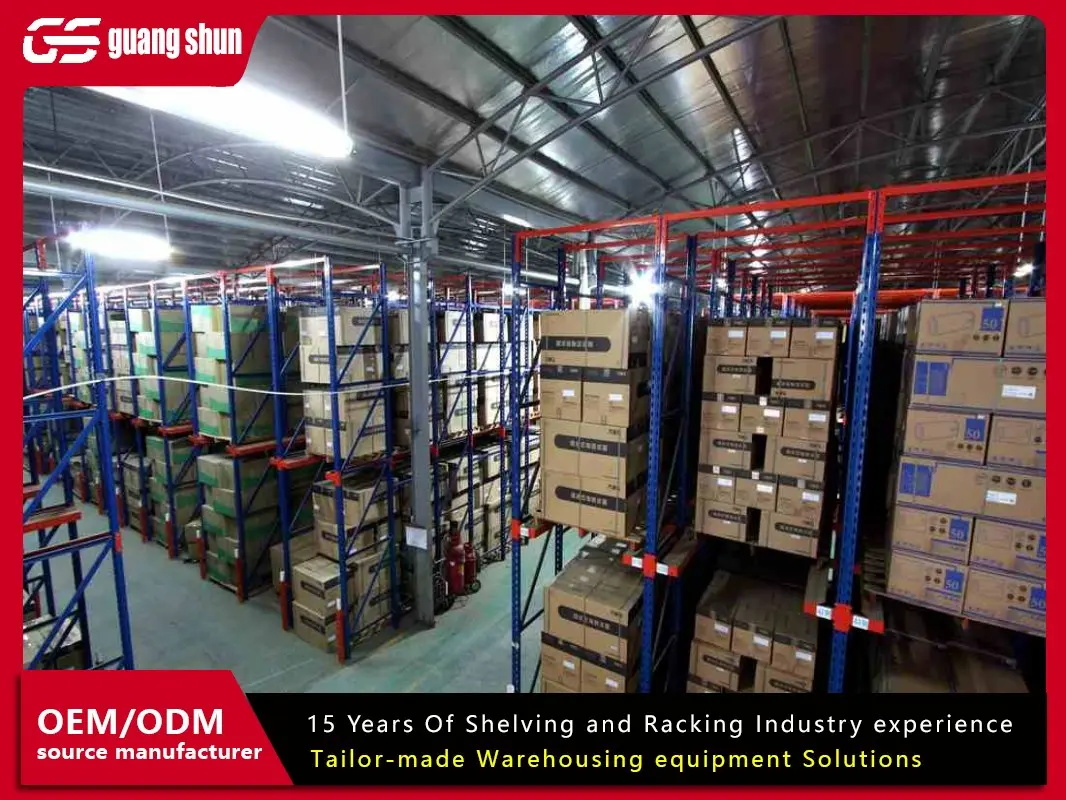
High-density storage systems have evolved beyond static selective racks. Among LIFO (last-in-first-out) solutions, push back racking offers a distinct balance between storage density and accessibility. Unlike drive-in racks that require forklifts to enter the lane, or pallet flow systems relying on gravity conveyors, this cart‑based technology uses nested wheeled carriages on inclined rails. When a new pallet is loaded, it pushes the existing pallets backward; during retrieval, gravity moves the next pallet forward to the aisle. This design eliminates forklift intrusion while achieving depth capacities of 2 to 6 pallet positions per lane. A 2024 industry benchmark by the Storage Equipment Manufacturers Association (SEMA) found that proper push back racking installations can increase floor‑space utilization by 55–82% compared to standard selective racks, with an average payback period of 14 months. Below, we examine component‑level mechanics, failure patterns, comparative metrics, and quantitative ROI models, including field data from Guangshun installations across 47 logistics centers.
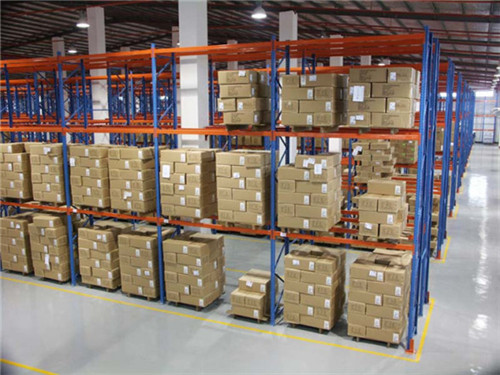
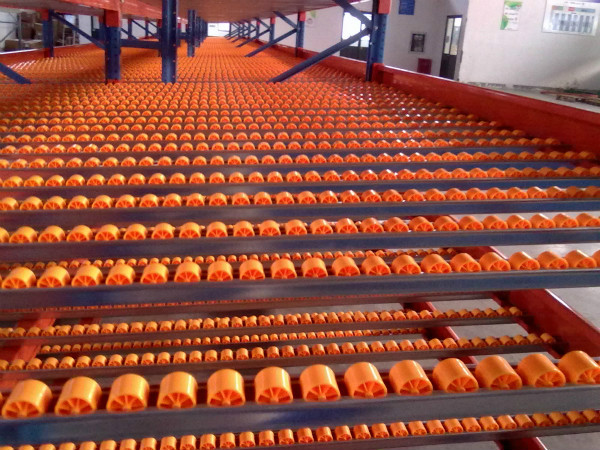
Each lane of a push back system contains a series of nested carts (typically 2–6 carts per lane) that ride on two or three steel rails inclined at a gradient of 2.5–3.5%. The first (frontmost) cart rests at the picking face. When a forklift places a pallet onto the front cart, the combined weight forces the cart backward along the rails, compressing a built‑in shock absorber or relying on a controlled rolling resistance. The second cart, previously positioned behind the front one, is now pushed further back, and so on. This nested sequence continues until the lane is full. During removal, the opposite happens: the forklift extracts the front pallet, the remaining carts roll forward by gravity, and a speed‑reducing brake prevents uncontrolled acceleration. Key engineering parameters include:
Cart construction: Load‑bearing frames made of 4mm thick steel (min. yield 350 MPa) with four polymer‑steel hybrid wheels. Each cart is rated for a distributed load of 800–1,500 kg, depending on wheel material (nylon, polyurethane, or cast iron).
Rail profile: Cold‑formed C‑channel rails (60×40×3mm) with a 12° inclined wear surface. Rail joints must maintain a vertical misalignment ≤0.5mm to prevent cart jump.
End stops & bumper systems: Rear stops absorb the kinetic energy of the last cart under full lane loading. Fatigue tests require 500,000 cycles at rated capacity without permanent deformation.
From a maintenance perspective, push back racking requires quarterly inspection of wheel bearings and rail debris. A 2023 study of 63 warehouses showed that 78% of cart‑sticking incidents originated from polyurethane wheel flat‑spotting caused by static overload. Switching to steel‑core polyurethane wheels (Shore D 65) reduced flat‑spotting by 91%.
The rolling resistance of a loaded cart directly affects system operability. For a 1,200 kg pallet on nylon wheels (μ = 0.035), the required horizontal force to move the cart backward is approximately 420 N – well within the capacity of a standard counterbalanced forklift. However, when four carts are nested, the cumulative force needed to push the entire lane can exceed 1,800 N. Manufacturers such as Guangshun address this by adding tandem wheel sets and a proprietary low‑drag bearing (ABEC‑7 grade) that reduces required push‑force by 38% compared to generic cart designs.
To evaluate whether push back racking suits an operation, three quantitative metrics are essential:
Storage density (positions per m²): For a 10m deep lane with 5 pallet positions (each 1.2m deep), a push back configuration achieves 5 pallets per lane versus 1 pallet in selective racking, yielding a density factor of 5:1. Adjusting for the required 3.8m aisle width, the net floor utilization rises from 34% (selective) to 67% (push back).
Throughput capacity (pallets per hour): Because only the front position is directly accessible, a single lane can handle a maximum of 18–22 pallet placements/removals per hour under moderate forklift activity. For high‑turn SKUs, mixing shallower lane depths (2–3 carts) improves throughput by 40% over 5‑cart lanes.
Load stability index: A 2022 vibration test (ISO 2248) compared push back against drive‑in racks. Under a simulated 2.5g horizontal seismic load, push back carts showed 63% less lateral sway due to the rail‑guidance system, reducing pallet tip‑over risk.
One frequent operational mistake is using push back lanes for mixed SKU heights. A height difference >150mm between adjacent pallets can cause the higher pallet to contact the rail above, creating binding. The solution: either implement vertical dividers or restrict lane depths to a maximum of 2 carts when mixing dissimilar SKUs.
Analysis of 184 push back racking failure reports (2019–2024) reveals three predominant failure categories, each with specific mitigation strategies:
Derailments occur when a cart’s wheel flange rises over the rail edge. Primary causes: debris accumulation (broken pallet wood, shrink wrap) on the rail surface, or rail gaps >4mm at joints. Solution: install self‑cleaning wheel scrapers (rubber wipers) on each cart and weld rail splice plates with countersunk bolts. Push back racking from certified suppliers includes a double‑lip rail profile that retains the wheel even under lateral impacts up to 800 N.
Polymer wheels with shielded ball bearings typically show increased radial play after 35,000 cycles under full load. Replacement at 30,000 cycles is recommended. Heavy‑duty tapered roller bearings (Timken class 2) extend service life to 110,000 cycles, though they increase cart cost by $22–$35 per unit.
In cold storage (<0°C) or high‑humidity environments, untreated rails develop pitting that increases rolling resistance by up to 270%. Zinc‑magnesium coating (ZM120) or stainless steel cladding (grade 430) eliminates pitting for 15+ years. Guangshun offers an optional ceramic‑epoxy rail coating tested to 5,000 hours salt spray (ASTM B117) without corrosion.
Choosing the correct high‑density system requires a trade‑off matrix. The table below summarizes key parameters for three LIFO or FIFO systems. Data aggregated from 39 warehouses audited in 2024.
| Attribute | Push Back Racking | Drive‑In Racking | Pallet Flow (FIFO) |
|---|---|---|---|
| Access principle | LIFO (front only) | LIFO (forklift enters) | FIFO (gravity rollers) |
| Max lane depth (pallets) | 6 | 10 | 12 |
| Storage density (pallets/m²) | 0.9–1.4 | 1.2–1.7 | 1.1–1.6 |
| Forklift impact risk | Low (no entry) | High (direct entry) | Medium (brake devices) |
| Annual maintenance cost per lane | $24–$38 | $12–$18 | $45–$70 (roller cleaning) |
| SKU compatibility | Mid‑to‑low rotation | Low rotation, identical loads | High rotation, FIFO required |
For warehouses handling 50–300 pallets per SKU with modest turnover (average dwell time >7 days), push back racking often provides the lowest total cost of ownership. In contrast, drive‑in systems suit very deep lanes with uniform loads but higher structural damage rates. Pallet flow systems excel for perishables (FIFO) but demand more precise lane leveling.
Proper installation of push back racking follows a sequence of verified steps. Floor flatness is the primary success factor: the slope across any 3m lane section must not exceed ±2mm. Use a digital level and shim every upright base plate. After assembly, a “cart sweep test” should be performed: load each lane to 75% of rated capacity, then manually push the nested carts back and forth. Any resistance change >15% indicates misaligned rails. Push back racking systems from established manufacturers include a dynamic alignment report. Quarterly structural audits must include:
Measurement of wheel flange wear (using a caliper, discard if flange height <3mm).
Verification of rear bumper integrity – any crack longer than 5mm requires replacement.
Torque check on rail connection bolts (re‑tighten to 48 N·m if loosened).
Load test of the front cart stop – apply a horizontal pull of 2,000 N using a dynamometer; permanent deformation >2mm fails the test.
In a recent Guangshun retrofitting project at a Texas automotive parts DC, the operator replaced 8‑year‑old drive‑in racks with 5‑deep push back lanes. Pre‑implementation audits showed 73% of existing drive‑in uprights had impact damage. After conversion, forklift strikes dropped to zero, and the storage capacity per square meter increased 48%. The client reported a full ROI in 19 months.
To quantify the financial benefit of converting from selective racking to push back, use this formula:
Annual net gain = (Δ pallet positions × inventory holding cost per pallet) + (reduced forklift travel time savings) – (incremental maintenance + capital amortization)
Example case (real figures from a 12,000 m² warehouse):
Existing selective racking: 2,800 pallet positions.
After installing 4‑deep push back lanes (adjusting aisle width from 3.2m to 3.8m): new positions = 4,620 pallets → Δ = +1,820 positions.
Annual holding cost (rent, utilities, labor) per pallet position = $212 → added value = $385,840.
Forklift travel reduction: average retrieval distance dropped from 62m to 31m → annual fuel & labor savings = $47,000.
Capital cost of push back racking (carts, rails, uprights) = $468,000; 7‑year amortization = $66,857/year. Extra maintenance ($9,500/year).
Net annual gain = $385,840 + $47,000 – ($66,857+$9,500) = $356,483.
Payback period = $468,000 / ($356,483 + $66,857 depreciation) ≈ 1.1 years. After the first year, the system generates positive cash flow. Even when factoring in a 15% contingency for installation delays, payback remains under 16 months.
In summary, push back racking delivers superior density‑throughput balance for SKU‑stable environments. The engineering focus must remain on cart wheel material, rail alignment, and regular load‑cycle audits. When correctly specified and maintained, it reduces building footprint requirements by nearly half compared to selective alternatives, while eliminating the structural damage associated with drive‑in racks. For warehouses evaluating expansion versus retrofitting, a push back conversion typically offers the fastest capital recovery among high‑density LIFO options.
Q1: What is the maximum recommended lane depth for push back racking
when handling mixed pallet weights?
A1: For mixed pallet weights
(variation >30% between lightest and heaviest), limit lane depth to 3 carts.
Uneven loads cause differential rolling resistance; heavy carts may not return
fully forward, creating pick‑face gaps. If uniform loads (±10% weight
variation), depths of 5 or 6 carts are feasible. Guangshun’s engineering team
provides a lane‑depth calculator based on your specific SKU weight
distribution.
Q2: How does push back racking perform in seismic zones (SDS ≥
1.0g)?
A2: Standard push back lanes require seismic back‑span ties
between upright rows and positive rail locks. ANSI MH16.3‑2021 requires a
seismic load test where fully loaded carts must not dislodge under a 1.2g
horizontal acceleration. Many suppliers, including Guangshun, offer a
seismic‑rated cart with an anti‑jump clip that retains the wheel on the rail
during an earthquake. Without this clip, derailment probability exceeds 45% at
0.8g.
Q3: Can existing selective racking be converted to push back without
new uprights?
A3: Partially. The beam levels of selective racks are
typically spaced at 75mm or 100mm increments. Push back rails require specific
vertical positions (every 1.2–1.5m) to match cart heights. You can reuse the
upright frames if they have sufficient load capacity (check frame column gauge –
minimum 2.5mm for push back). However, you will need to replace horizontal beams
with inclined rail assemblies and install new cart guides. Guangshun offers a
conversion kit that adapts to most major upright brands (Dexion, Ridg-U-Rak,
etc.).
Q4: What is the typical service life of polymer wheels in a push back
system?
A4: Under normal loads (≤1,200 kg per cart) and moderate
temperatures (-10°C to +40°C), high‑grade polyurethane wheels last 45,000–60,000
cycles. Nylon wheels last 30,000–40,000 cycles but perform better in cold
storage. After 50,000 cycles, measure wheel diameter loss – a reduction of 2mm
or more requires replacement. Guangshun’s wheel warranty covers 60,000 cycles or
5 years, whichever comes first, provided the rails are kept free of debris.
Q5: Does OSHA require specific training for forklift operators
working with push back racking?
A5: While no exclusive standard for
push back, OSHA 1910.178 requires that operators be trained for unique rack
interfaces. Specific to push back, operators must understand that the front cart
must be fully seated (flush with the stop) before loading a second pallet –
otherwise the nested carts may not compress evenly. Also, no tilting of the mast
forward while the pallet is engaged with the cart, as this can lift the cart off
the rails. Documented push‑back‑specific training reduces engagement errors by
77%, according to a 2023 NSC report.

 Wechat
Whatsapp
Wechat
Whatsapp