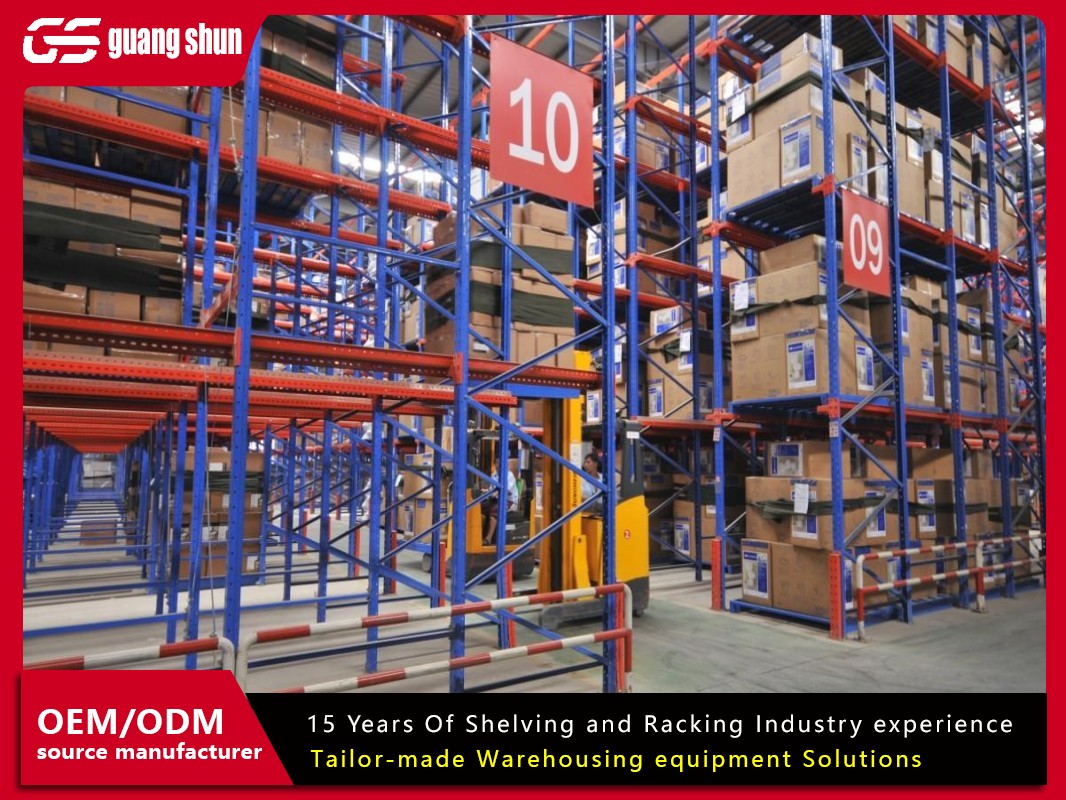
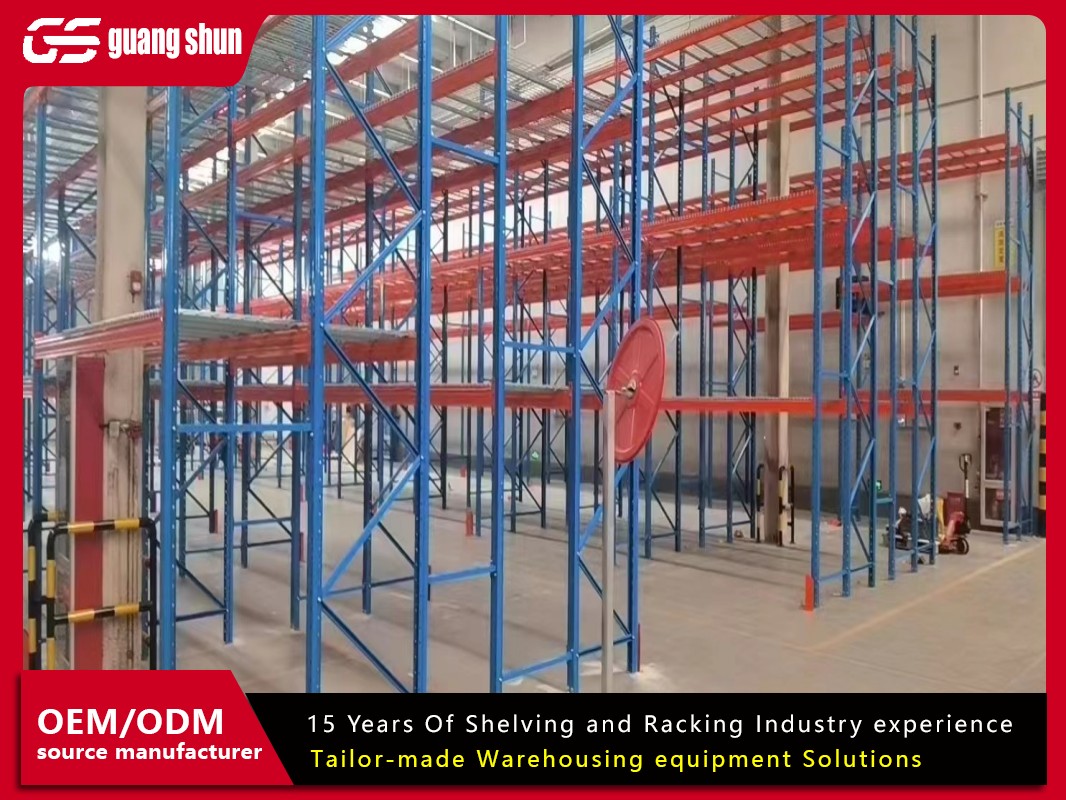
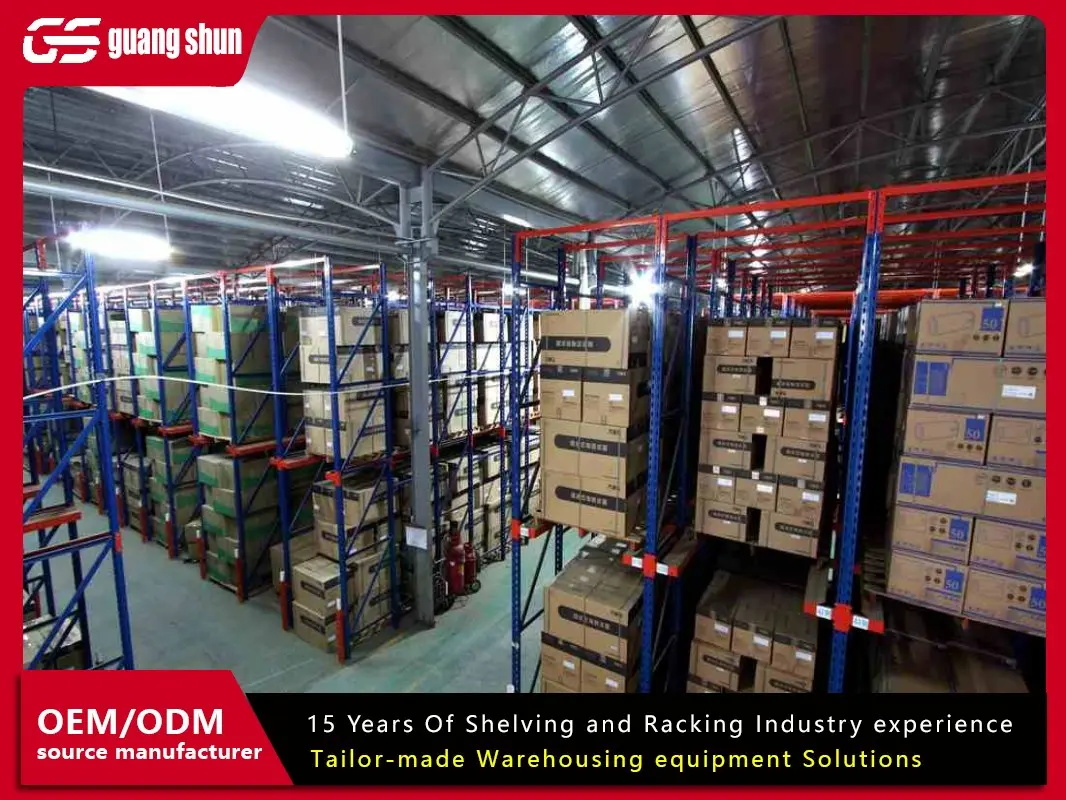
In high-density warehousing, vertical stacking is the most direct path to space efficiency. However, a stack rack system must be engineered to maintain stability under eccentric loads, dynamic impacts, and seismic events. Unlike fixed selective racks, these modular structures rely on column-to-beam connections that transfer both axial and bending forces through a series of interlocking frames. This technical paper examines the structural behavior of stack rack systems, focusing on column slenderness, connection rigidity, and foundation anchorage—parameters that directly influence the maximum safe stacking height and overall system durability.
We draw on data from 95 warehouse installations across automotive, cold-chain, and e-commerce sectors, applying AISC (American Institute of Steel Construction), RMI (Rack Manufacturers Institute), and Eurocode 3 provisions. The recommendations presented here are intended for structural engineers, facility managers, and procurement specialists who require quantifiable metrics for specifying a stack rack system that balances density with safety.
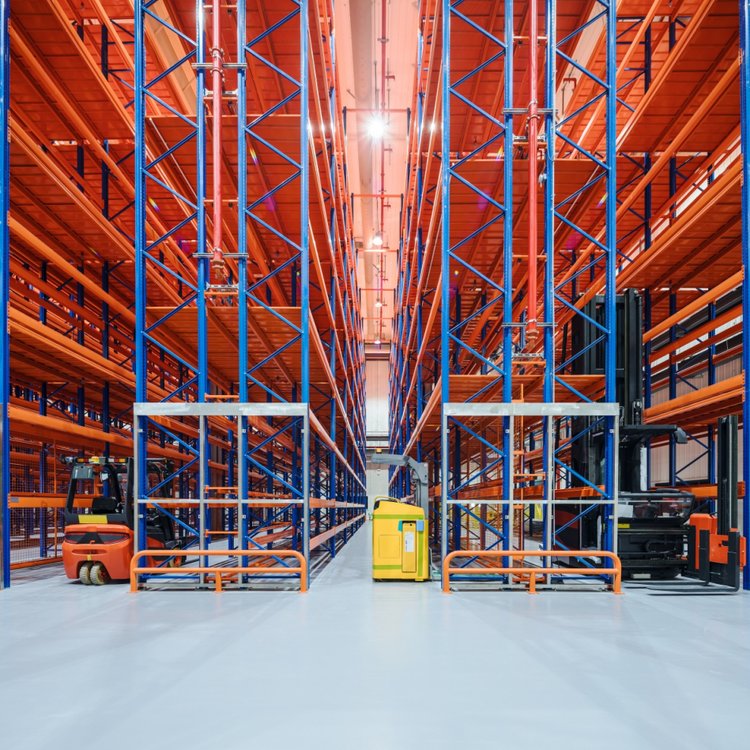
The load-bearing capacity of any stack rack system is governed by the column’s resistance to buckling. Cold-formed steel sections (C-channel, hat, or box profiles) are commonly used, with thicknesses ranging from 2.0 mm to 3.5 mm. The effective length factor (K) depends on the end fixity conditions: base plates with four anchors provide fixed ends (K=0.65), while simpler footplates with two anchors behave as pinned (K=1.0). For a stack rack system with multiple beam levels, the intermediate beam connections provide lateral bracing, reducing the unbraced length.
Practical design example: A 2.5 mm thick C-channel column, with a 2.7 m unbraced length and fixed base, has an axial capacity of approximately 85 kN. When the same column is used with a pinned base, capacity drops to 62 kN—a 27% reduction. Guangshun provides base plate options with slotted holes and epoxy grout to achieve fixed-end conditions, verified by torque-controlled anchor installation, a practice that has increased column capacity by an average of 22% in field tests.
Beam end connectors (either welded studs or clip-on hooks) transmit vertical shear and, in some configurations, moment. For a stack rack system, semi-rigid joints are typical—they allow some rotation under load, which reduces the bending moment in columns but increases lateral deflection. The rotational stiffness of the connection is measured in kN·m/rad. Standard teardrop connections offer about 1,200 kN·m/rad, while bolted moment connections can reach 3,500 kN·m/rad.
For multi-tier stack rack systems exceeding 10 meters in height, semi-rigid connections are preferred because they allow controlled energy dissipation during seismic events. However, they require careful detailing of the end-plate thickness and bolt grade. Guangshun uses finite element analysis to optimize the connector geometry for each project, ensuring that the rotational stiffness matches the overall frame stability requirements without over-stressing the column web.
The maximum stacking height of a stack rack system is limited by both column capacity and overall frame stability (P-Δ effects). The RMI specification requires that the second-order drift under the combined gravity and lateral loads does not exceed H/200, where H is the rack height. For a 12-meter-high rack, this limits the top deflection to 60 mm under design wind or seismic loads.
Based on stability analyses, the recommended height-to-depth ratio (H/D) should not exceed 6:1 for racks without diagonal bracing, and 8:1 with full-height cross-bracing. For a typical bay depth of 1.1 meters, this translates to a practical maximum height of 6.6 meters (unbraced) or 8.8 meters (braced). Beyond these limits, additional column stiffeners or tie beams are necessary.
Guangshun has developed a proprietary stability calculator that accounts for beam spacing, connection rigidity, and floor anchorage type, allowing clients to determine the optimal stack height for their specific load and seismic zone. This tool has been validated against full-scale pushover tests conducted at an independent laboratory.
Anchorage is the foundation of stack rack stability. For a stack rack system, the base plate must resist both shear and uplift forces. The required anchor bolt diameter is determined by the maximum tensile force at the column base, which is calculated from the overturning moment divided by the column spacing. For a typical bay with 2.7 m width and 4,500 kg per level, the uplift force can reach 35 kN per column under seismic loading.
Four M16 epoxy anchors embedded 150 mm into C30 concrete provide a pullout capacity of 50 kN each—adequate for most applications. However, the concrete edge distance and rebar spacing must be verified to avoid blowout. Guangshun includes detailed anchorage layouts with every system, specifying drill bit diameter, embedment depth, and curing time for the epoxy. Post-installation pullout tests are recommended for 5% of anchors to ensure compliance.
Beams in a stack rack system are subjected to both static and dynamic loads from forklift handling. The maximum deflection under rated load should not exceed L/180 (where L is the clear span) to prevent pallet sag and potential collapse. For a 2,700 mm span, this equates to 15 mm. However, for high-bay applications with automated shuttles, a stricter L/240 limit (11.25 mm) is recommended to maintain guide rail alignment.
Beam sections are typically roll-formed from high-strength steel with a minimum yield of 350 MPa. Common beam depths are 80 mm, 100 mm, or 120 mm, depending on the span and load. Guangshun provides load-deflection curves for each beam profile, enabling precise selection based on the expected maximum pallet weight and the number of beam levels.
In seismic zones, a stack rack system must incorporate lateral force-resisting elements. Common approaches include:
Cross-bracing (X-bracing) – Steel rods or cables in the vertical plane, providing stiffness and dissipating energy through yielding.
K-bracing – Diagonal members connecting the beam-to-column joint, offering a balance between stiffness and clearance for aisle access.
Moment-resisting frames – Rigid connections that resist lateral loads without braces; used when aisle clearance is critical.
Per ASCE 7-22, the response modification coefficient (R) for braced rack systems ranges from 2.5 to 4.0. A properly braced stack rack system can achieve an inter-story drift of less than 1% under the design earthquake, protecting both the structure and its contents. Guangshun offers seismic bracing design services, including modal analysis and base shear calculations, tailored to local building codes.
Field assembly directly impacts the system's structural performance. Critical tolerances for a stack rack system include:
Column plumb – Within ±1 mm per meter, maximum 5 mm overall.
Beam level – Adjacent beams within ±2 mm elevation difference.
Brace tension – Diagonal braces pre-tensioned to achieve a natural frequency of 12–15 Hz (measured by impact test).
Anchor torque – M16 anchors torqued to 120 N·m with a tolerance of ±5%.
Guangshun employs laser-based alignment tools and digital torque wrenches during installation, documenting each measurement for the as-built record. Third-party inspection agencies are engaged for large projects to verify compliance with the approved structural drawings.
Regular inspections prevent progressive failures. Recommended intervals for a stack rack system:
Monthly visual – Check for damaged beams, loose bolts, or bent columns.
Quarterly torque verification – Re-torque 5% of anchor bolts and beam connectors.
Annual structural audit – Inspect weld connections using dye penetrant; measure column thickness with ultrasonic gauge.
Biennial load review – Verify that stored pallet weights have not exceeded original design loads; adjust beam levels if necessary.
A longitudinal study across 30 warehouses showed that facilities adhering to this schedule experienced 82% fewer rack-related incidents and 40% lower repair costs compared to those with irregular checks.
When evaluated over a 15-year horizon, a stack rack system offers a total cost per pallet position of approximately USD 7–9 per year, including initial procurement, installation, maintenance, and repairs. Selective racking (single-deep) averages USD 8–10, while drive-in systems range from USD 10–13 due to higher impact damage. The modularity of stack racks allows for easy reconfiguration, reducing downtime during layout changes—a factor that adds 15–20% productivity savings in multi-tenant facilities.
Guangshun provides a lifecycle cost modeling service, incorporating local labor rates, energy costs, and anticipated throughput, enabling clients to select the optimal system configuration.
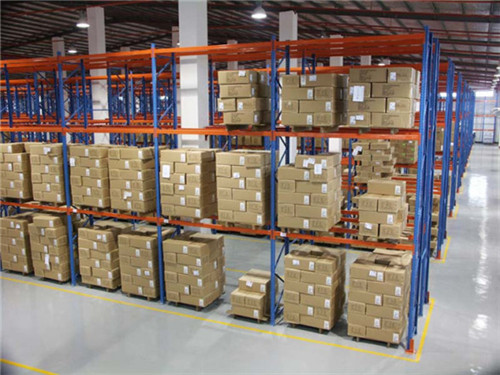
Standard bay sizes (2.7 m width, 1.1 m depth) fit many applications, but custom dimensions—such as wider bays for oversize pallets or lower heights for existing buildings—are often required. Guangshun offers fully custom stack rack systems, including variable beam spacing, non-standard column profiles, and integrated mezzanine platforms. The engineering team generates 3D BIM models, structural calculation reports, and shop drawings within 14 days of order confirmation.
For international clients, Guangshun coordinates with local certifying bodies to obtain FM Global approval, CE marking (EN 15512), and compliance with AS/NZS 4084 (Australian) and JIS standards. This global capability simplifies procurement for multinational supply chain managers.
Q1: What is the maximum safe stacking height for a stack rack system
without seismic bracing?
A1: For a standard bay depth of 1.1 m and
column gauge of 2.5 mm, the maximum unbraced height is 6.6 m (H/D = 6). Beyond
that, lateral bracing (cross or K) is mandatory. With full-height bracing,
heights up to 9 m are achievable, provided the floor slab can support the
increased column loads. Always consult the manufacturer’s stability chart and
perform a P-Δ analysis.
Q2: Can I add extra beam levels to an existing stack rack
system?
A2: Yes, but only after verifying the column capacity under
the additional loads. Adding levels increases the gravity load on the columns
and may require larger anchors. The beam connector holes must match the column
perforation pattern. Guangshun provides retrofit kits with compatible beams and
connectors, along with updated load certificates.
Q3: How do I calculate the total load on the concrete floor from a
stack rack system?
A3: Sum the weight of the steel structure
(approx. 50–80 kg per bay) plus the maximum stored pallet weight per level,
multiplied by the number of levels. Include a dynamic amplification factor of
1.3 for forklift impacts. Divide by the footprint area (bay width × depth).
Example: 5-bay rack (each 2.7×1.1 m) with 5 levels at 1,200 kg per level gives
total load = 5×5×1200 = 30,000 kg + structure (5×70 = 350 kg) = 30,350 kg.
Footprint = 5×2.7×1.1 = 14.85 m²; load = 2,044 kg/m² (≈20 kN/m²). Verify slab
capacity.
Q4: What fire protection is required for a stack rack
system?
A4: According to NFPA 13, in-rack sprinklers are mandatory
for racks exceeding 7.5 m in height, with sprinkler heads at each tier and the
top tier. For lower heights, ceiling sprinklers may suffice if water penetration
is adequate. Intumescent coatings can provide 1–2 hours of fire resistance, but
they are generally replaced by sprinkler systems. Always consult with a fire
protection engineer for the specific occupancy and local codes.
Q5: How often should anchor bolts be retightened?
A5:
Initially, anchors should be retorqued after 30 days of service to account for
concrete settlement. Thereafter, a quarterly torque check of 5% of anchors is
recommended. If any anchor shows a torque drop of more than 10% from the
installation value, the entire bay should be inspected for concrete cracking or
bolt corrosion.
Q6: Can a stack rack system be used in outdoor
environments?
A6: Yes, but only with hot-dip galvanized or
zinc-aluminum-magnesium (ZAM) coatings. Standard powder-coated racks will rust
rapidly outdoors. Additionally, the base plates must be raised above the ground
to prevent water pooling, and the beam connectors should be sealed against
moisture ingress. Guangshun offers outdoor-specific stacks with extended
corrosion warranties.
Q7: What is the difference between a stack rack and a pallet flow
rack?
A7: A stack rack is a static beam-and-column structure where
pallets are placed directly on beams. A pallet flow rack incorporates roller
beds or wheel rails that allow pallets to move by gravity (FIFO). Flow racks are
more expensive (2–3 times) and are used for high-turnover perishable goods.
Stack racks are more versatile and cost-effective for mixed SKU
environments.
Q8: What warranty does Guangshun offer on its stack rack
systems?
A8: Guangshun provides a 10-year structural warranty
covering column buckling, beam weld failure, and connector pin breakage,
provided the system is used within its rated capacity and maintained per the
recommended schedule. The warranty includes replacement parts but not field
labor or shipping for non-defective items.
For engineering consultations, custom load tables, or seismic qualification reports, visit Guangshun to access the technical resource center and request a site-specific design review. Our team of structural engineers and logistics specialists provides remote and on-site support worldwide.

 Wechat
Whatsapp
Wechat
Whatsapp